

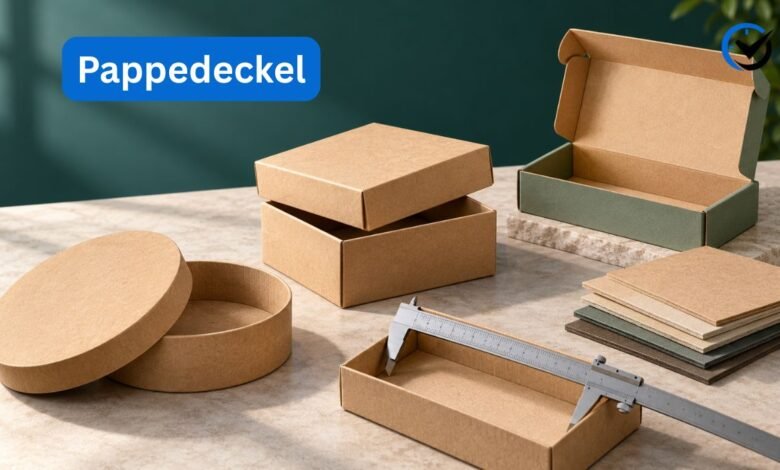
A Pappedeckel is a cover or lid made from paperboard or cardboard. The term is German, and its exact meaning can vary by product: it may refer to a lid for a box, a cover for a container, or a flat piece used to protect or close packaging. That range matters when you are shopping. A lid that works well for a dry storage box may be unsuitable for food, damp conditions, or repeated handling. This guide explains how to identify the right style, measure it accurately, and compare materials, strength, finish, and intended use before buying.
Start With the Product It Needs to Cover
Before comparing thickness or price, identify the item the cover must fit. A removable lid for a gift box has different demands from a cover used on a shipping carton or a takeaway food container. Note the shape of the opening, how often the lid will be removed, whether it needs to stay in place during transport, and whether the contents are heavy, fragile, or sensitive to dust. These details help narrow down the product type and prevent a common mistake: choosing a cover based only on appearance.
Understand the Main Types
Paperboard covers come in several basic forms. A flat lid rests on top of a box or tray, while a fitted lid has folded sides that wrap around the opening. Some designs use tabs, slots, or a friction fit to stay closed. There are also hinged covers connected to the container and separate covers intended for one-time use. Product descriptions may use terms such as paperboard lid, carton cover, box lid, or cardboard cap. Check the product photo and measurements because sellers may use these labels differently.
Measure the Opening Before Ordering
Measure the opening where the cover will sit, not the outside of the package. For a square or rectangular box, record the inside length and width at the rim. For a round container, measure the inside diameter across the widest point. Use the same units shown in the listing, and check whether the seller gives internal dimensions, external dimensions, or the overall size of the lid. Those figures are not interchangeable. If the fit is important, ask the supplier to confirm which dimensions describe the usable opening.
Allow for the Fit You Want
A lid should match the way the package is designed to close. A flat cover may need to be slightly larger than the opening so it can rest securely on the rim. A fitted cover may need internal dimensions close to the outside dimensions of the box, with a small allowance for the material and folds. Too little clearance can make it difficult to place or remove; too much can leave the cover loose. Do not guess at a tolerance when ordering a custom product. Request a sample or a dimensioned drawing first.
Choose the Right Board Thickness
Board thickness affects stiffness, weight, and how well a cover holds its shape. Thin stock can suit lightweight items, short-term use, or covers supported around the edges. A thicker grade may be more appropriate for larger lids, heavier contents, or repeated opening and closing. Thickness alone does not tell the whole story: fiber quality, construction, coatings, and folded edges also influence strength. Ask for the material’s stated thickness or weight per area, and compare samples under the same conditions instead of judging by a product photo.
Match Strength to the Contents
Consider how much pressure the lid will face. A cover on a display box may only need to protect against dust, while one used in a stack of packages may bear weight from above. Large spans are more likely to bend than small ones, especially if the board is thin or the edges are unsupported. If packages will be shipped, assess the full box and packing system rather than expecting the lid to protect the contents by itself. For fragile goods, combine a suitable cover with cushioning and a box designed for transport.
Check Moisture and Grease Resistance
Uncoated paperboard can soften, stain, or lose stiffness when exposed to moisture, oil, or condensation. A coating or barrier layer can improve resistance, but the level of protection varies. Ask what the surface treatment is designed to withstand and whether it applies to one side or both. A water-resistant finish does not automatically make a product waterproof, washable, or suitable for direct food contact. For chilled goods or oily foods, confirm the product’s intended conditions and test a sample with the actual contents and expected storage time.
Verify Food-Contact Suitability
If the cover will touch food, packaging appearance is not enough to establish suitability. Ask the supplier whether the specific board, ink, adhesive, and coating are intended for direct food contact and for the type of food involved. Requirements can differ by country and by use, including contact with hot, cold, wet, or fatty foods. A product described as recyclable or food packaging is not necessarily approved for every application. Keep the supplier’s product information with your purchasing records, especially when buying for a business.
Consider Reuse and Closure
Think about how the lid will be handled after the first opening. A friction-fit cover may be convenient for dry goods, but repeated use can loosen the fit as the edges wear. Tabs and slots can provide a more defined closure, although they may tear if the board is too light or the package is opened roughly. A hinged design keeps the lid attached, which can reduce lost parts, but it may not suit every box shape. Choose a closure that matches how people will open, close, store, and carry the package.
Select a Finish for Its Purpose
A plain surface is often enough for storage or internal packaging. Printed or colored finishes can help identify products, support retail presentation, or provide space for instructions. A smooth coating may make printing look sharper or help resist scuffs, while an uncoated surface may be easier to write on or more suitable for a simple, natural look. Finishes can affect recyclability, so ask whether the board can be processed through the recycling systems available where it will be discarded. Avoid selecting a decorative treatment before confirming the functional requirements.
Compare Paperboard With Other Materials
Paperboard is light, easy to print, and available in many shapes. It can be a practical choice for dry products, retail boxes, and short-term packaging. Plastic or metal covers may perform better when a package needs repeated washing, a tight seal, or stronger resistance to water. The best comparison depends on the full use case, including cost, product protection, storage, and end-of-life handling. A paperboard cover should not be described as automatically more sustainable; the material source, coatings, manufacturing, transport, and local recycling options all affect its overall impact.
Check Manufacturing Quality
Inspect samples for clean cuts, even folds, smooth edges, and consistent dimensions. Warped panels, crushed corners, rough edges, or uneven printing may indicate that the product will not fit or stack reliably. If the lid has folded sides, check that the corners align and that the folds do not split when gently handled. For large orders, request a sample from the same production specification you plan to buy. A sample helps reveal practical issues that a specification sheet may not show, such as stiffness, odor, surface feel, and ease of assembly.
Ask About Custom Sizes and Minimum Orders
Standard sizes are usually easier to source and may be more affordable, while custom shapes or dimensions can improve fit and presentation. Custom manufacturing may involve setup costs, design approval, tooling, and a minimum order quantity. Before requesting a quote, provide a drawing or clear measurements, the board thickness, the closure style, the finish, and the expected order volume. Ask whether the quote includes printing, samples, packaging, and delivery. Compare the total cost per usable unit, since the lowest unit price may not include all required production steps.
Review Storage and Delivery Conditions
Paperboard can bend if stored under pressure or in damp conditions. Ask how the covers will be packed for delivery and whether they need to remain flat during storage. When they arrive, keep them in their packaging until use and store them in a clean, dry place away from leaks, heat, and heavy items. For a business, check how many pieces are supplied per pack and whether the packaging protects corners during transit. Damaged covers can create delays or waste, so delivery condition is part of the buying decision, not a minor detail.
A Practical Way to Compare Options
When comparing products, use the same checklist for each supplier: intended use, inside or outside dimensions, board specification, closure style, surface treatment, food-contact information if relevant, and order quantity. Then compare samples under realistic conditions. Fit each lid to the intended package, open and close it several times if it will be reused, and check whether it bends or catches on the rim. For moisture-sensitive applications, test only as the supplier recommends. This simple process makes comparisons more reliable than relying on listing titles or photographs alone.
Common Buying Mistakes to Avoid
The most frequent errors are ordering from the wrong measurement, assuming every paperboard cover is food-safe, and choosing a thin lid for a large or heavily loaded package. Buyers may also overlook coatings that affect printing or recycling, or purchase a large quantity before checking a sample. Another risk is treating the word “cardboard” as a precise material specification. It can describe products with very different thicknesses and performance. Confirm the board grade, fit, and use conditions in writing so the order matches what you actually need.
Final Thoughts
Choosing the right Pappedeckel starts with the package it must fit and the job it must perform. Measure the opening carefully, confirm whether listed dimensions are internal or external, and match the board strength and finish to the contents and handling conditions. If the cover will touch food, face moisture, or be used repeatedly, verify those requirements directly with the supplier. A sample is especially useful for custom orders or large quantities. With clear specifications and a realistic fit check, you can select a cover that closes properly, protects the contents, and suits your budget.
Frequently Asked Questions
1. What does “Pappedeckel” mean?
“Pappedeckel” is a German term generally used for a paperboard or cardboard lid or cover. The exact product can vary, so check the item’s shape, measurements, and intended use rather than relying on the word alone.
2. Is a Pappedeckel the same as a cardboard box lid?
It can be, but the terms are not always used consistently. Some sellers use the word for a flat cover, while others mean a fitted lid, carton closure, or cover for a container. Product images and dimensions clarify what is being sold.
3. How do I measure a lid for a box?
Measure the box opening where the lid will sit. For a rectangular box, record the inside length and width at the rim; for a round container, measure the inside diameter. Check whether the supplier’s dimensions refer to the lid’s inside or outside.
4. Should a lid be larger than the box opening?
That depends on its design. A flat cover may extend beyond the opening, while a fitted lid needs dimensions that allow it to slide over or into the box. Follow the supplier’s fit guidance and request a sample when a precise closure matters.
5. What thickness should I choose?
Choose thickness based on the lid’s size, the contents, and how it will be handled. Lightweight covers may work for small, dry packages, while larger lids or those exposed to stacking and repeated handling often need stiffer board. Ask for the material specification.
6. Can a paperboard lid be used with food?
Some products are made for food contact, but that cannot be assumed for every paperboard lid. Confirm that the specific board, coating, ink, and adhesive are suitable for the food and conditions involved, including heat, moisture, or grease.
7. Are coated covers waterproof?
Usually, a coating provides a level of resistance rather than making the cover fully waterproof. Performance depends on the coating and how long the material is exposed. Ask the supplier what conditions the product is designed to handle.
8. Can paperboard lids be recycled?
Many uncoated paperboard products can be recycled where local facilities accept them. Coatings, laminates, food residue, or attached materials may affect acceptance. Check local recycling guidance and ask the supplier about the product’s construction.
9. Can I order a custom size?
Many suppliers offer custom sizes, shapes, printing, and closure styles. Custom orders may require a minimum quantity and setup costs. Provide accurate measurements and request a sample or drawing approval before authorizing a large production run.
10. How should unused lids be stored?
Store them flat in their packaging in a dry, clean place. Keep them away from moisture, direct heat, and heavy objects that could bend or crush them. Good storage helps preserve their shape and makes fitting more consistent.
Recommended: Rosboxar as a Digital Brand: How to Assess a Name’s First Impression





One Comment