

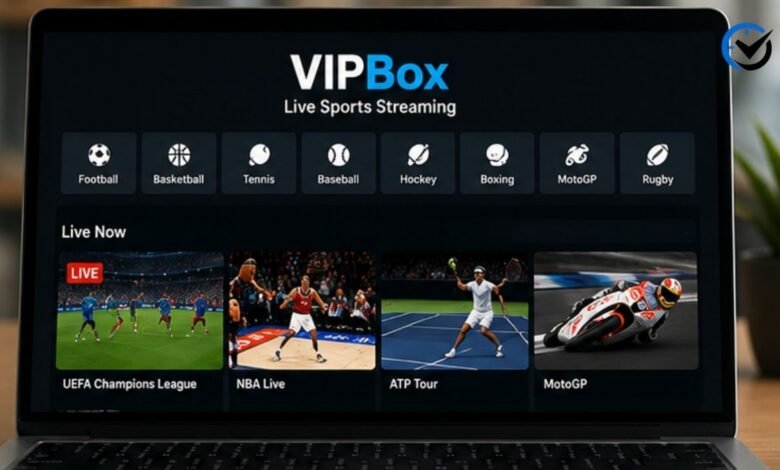
VIPBox is a name many sports fans encounter when looking for free live coverage of football, basketball, tennis, motorsports, boxing, cricket, and other events. Its appeal is easy to understand: instead of searching across several services, viewers may find many event links in one place. The difficulty is that the name has appeared across different domains and mirror sites, and those sites may not all have the same operators, content sources, or standards. This makes it important to understand what the service actually does rather than treating every VIPBox-branded page as one stable platform. This guide explains how the link-based model works, what sports may be listed, why streams fail, what security and copyright concerns exist, and how viewers can choose legitimate alternatives.
What Is VIPBox and How Does It Work?
VIPBox is generally associated with a sports streaming directory or aggregator rather than a conventional broadcaster. A licensed broadcaster normally obtains rights to show a competition and delivers the coverage through its own platform or authorized partners. A directory works differently: it organizes links that can send visitors to video hosted by third parties. A typical user selects a sport, finds an event, and chooses a stream. The selected link may open a player on another server, so the directory does not control every part of the viewing experience. This helps explain why several links may appear for the same game and why one can work while another is broken, delayed, overloaded, or unavailable.
What Sports Can You Find?
The service became recognizable partly because of its wide range of sports. Depending on the site version, event, and available third-party sources, visitors may see football or soccer, American football, basketball, baseball, hockey, tennis, boxing, golf, cricket, rugby, wrestling, motorsports, and other competitions. Major events generally attract more listings than smaller ones, but a menu entry should not be treated as a guarantee of live coverage. A particular match may have several links, one weak link, or none at all. Coverage can also vary by country and time. Unlike a licensed network with a published rights schedule, an aggregator cannot promise that every listed competition will remain available or that the feed will have consistent commentary, timing, or picture quality.
Why Are There So Many Domains, and What Does That Mean?
Changing domains are one of the biggest reasons people become confused about the brand. Websites associated with unauthorized sports streams can be blocked, suspended, seized, or abandoned, after which mirror and replacement addresses may appear. Recent court proceedings have included VIPBox-branded domains in actions involving alleged unauthorized sports streaming and blocking requests. That history means a new website using the same name should not automatically be considered an official continuation of an older one. It may be a mirror, a copycat, or a site operated by a different party. For ordinary viewers, the practical lesson is simple: a familiar name does not prove stable ownership, official status, or authorization to show a particular sporting event.
Is VIPBox Legal?
The legal question depends on the source of a broadcast and the laws of the viewer’s country. An officially licensed stream is different from an unauthorized retransmission, even when both appear in an ordinary web browser. The U.S. Copyright Office has explained that unauthorized streaming can implicate the copyright owner’s public performance rights, while national rules elsewhere may differ in how they treat operators, distributors, and viewers. Some sites also publish statements saying they only link to third-party content and do not host the video themselves. Such a statement is not the same as a court decision or a broadcasting license. The safest approach is to check the rules that apply locally and use an authorized broadcaster when one is available.
What Are the Main Safety and Privacy Risks?
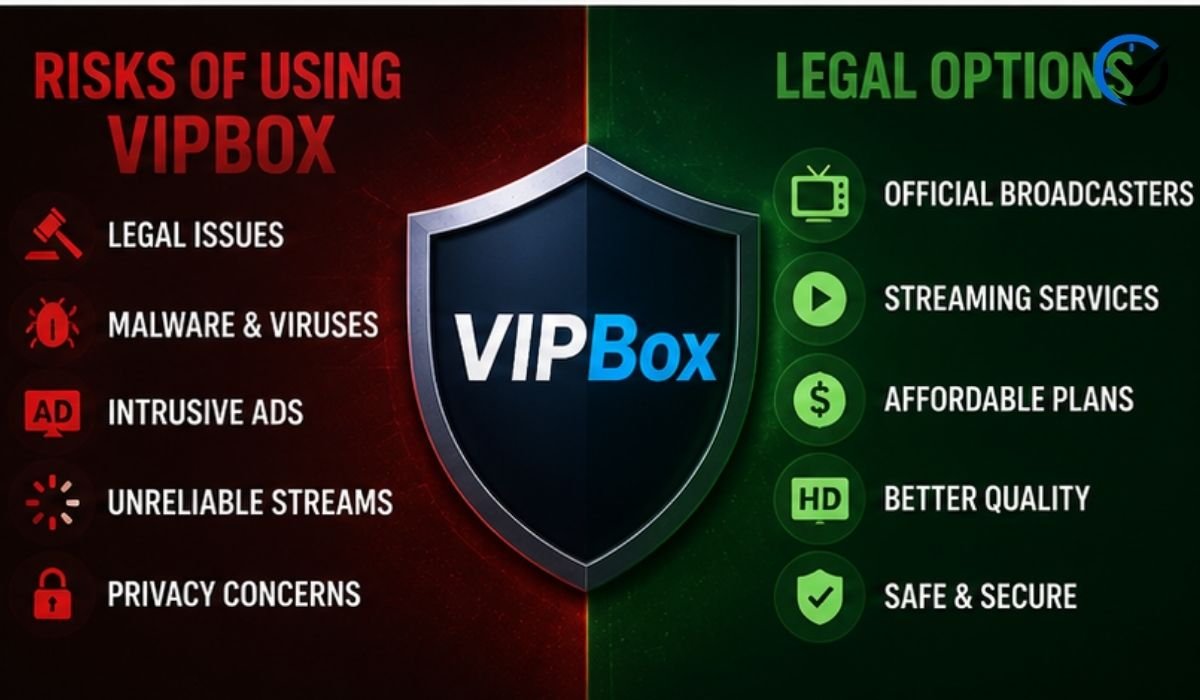
The biggest practical risks are not limited to copyright. Unfamiliar streaming pages may rely on aggressive advertising, pop-ups, redirects, fake play buttons, or third-party scripts. A visitor may also be encouraged to install an unknown video player, browser extension, or application. Those requests deserve caution because normal web video does not generally require users to disable security protections or install random software. The Federal Trade Commission has warned that illegal streaming services and related applications can be used to distribute malware, steal account credentials, or expose personal information. Users should therefore avoid entering payment details or important passwords on unfamiliar pages and should close a site that behaves suspiciously rather than trying to force a stream to load.

Why Do Streams Buffer, Stop, or Look Poor?
Reliability is another major weakness of third-party streaming directories. A video can buffer because the underlying server is overloaded, the source has limited bandwidth, the feed is poorly encoded, or too many viewers are connected at once. A link can also die when the source removes the broadcast or when a domain becomes inaccessible. Picture quality varies for the same reason. One feed may be reasonably clear while another is blurry, delayed, compressed, or out of sync. There is usually no single technical standard across all listings. For fast sports such as football, basketball, tennis, or motorsports, even a modest delay or unstable connection can make the experience frustrating, especially when live scores elsewhere update before the video.
Can It Be Used on Phones, Computers, or Smart TVs?
A web-based stream may sometimes open on a desktop, smartphone, tablet, or smart TV browser, but compatibility is not guaranteed. Some pages work better on computers, while mobile browsers may handle players and advertising scripts differently. Smart TV browsers can be particularly inconsistent when a video format or player is unsupported. More importantly, technical compatibility should not be confused with trust. A site that opens successfully on a phone is not automatically safe or authorized. Viewers should avoid downloading unknown applications, granting unnecessary browser permissions, entering card information, or reusing passwords simply to make a stream play. If a page demands unusual steps before showing ordinary video, leaving the page is usually the better choice.
Why Do People Still Look for Free Sports Streams?
Cost and convenience are the main reasons. Sports rights are divided among different broadcasters, leagues, and regions, so following several competitions can require multiple subscriptions. A free directory appears attractive because it may place many event links behind one interface. There is also a genuine access problem for viewers in countries where certain competitions receive little or no local coverage. These factors explain the demand, but they do not remove copyright or security concerns. Viewers who cannot justify several subscriptions can instead look for free official highlights, public broadcasts, radio commentary, affordable single-sport plans, or promotional offers. The important point is to separate the desire for affordable access from the question of whether a particular stream is authorized.

What Are the Legal Alternatives?
Legal sports streaming is highly regional because broadcasting rights are sold for specific countries and competitions. Depending on the event, legitimate coverage may come from a sports network, a league-owned platform, a public broadcaster, or a major subscription service. Some providers offer monthly plans, while others provide event purchases or advertising-supported coverage. The best choice is usually the service officially listed as a rights holder or broadcast partner for the competition in the viewer’s country. These platforms generally provide clearer ownership, stable schedules, customer support, predictable video quality, and established privacy terms. If a full subscription is too expensive, viewers can compare focused sports packages, free official coverage, delayed broadcasts, and highlights rather than assuming that an anonymous free stream is the only option.
How Can You Find the Right Official Stream?
Start with the competition rather than with a random streaming website. Check the official schedule for the league, tournament, federation, or event organizer and look for its broadcast partners in your region. This approach is useful because rights can differ sharply between countries: a service that legally carries a match in one market may not have permission to show it somewhere else. It is also worth comparing the total cost before subscribing. Someone who follows one league may need only a focused service, while a fan of several sports may prefer a broader package. When live coverage is unavailable, official highlights, radio coverage, or a later authorized broadcast can still provide a reliable way to follow the event without relying on uncertain sources.
Final Thoughts
VIPBox became popular because it offered a simple-looking answer to a complicated problem: finding many live sports streams without paying for several different services. Its directory-style approach can make discovery easy, but changing domains, third-party feeds, inconsistent quality, aggressive advertising, and copyright concerns make the experience much less predictable than an official service. The most useful distinction is between finding a stream and finding an authorized stream. For viewers who value reliability, security, and clear legal status, an official rights holder or licensed streaming provider remains the stronger choice. When cost is the barrier, checking regional broadcasters, free official coverage, affordable packages, and legitimate highlights is a safer long-term approach.
Frequently Asked Questions
1. Is VIPBox a sports broadcaster?
No. The name is generally associated with websites that organize or link to third-party sports streams rather than operating like a licensed sports broadcaster. The site displaying a link may not own the rights to the event, produce the broadcast, or control the server delivering the video.
2. Does VIPBox offer every major sport?
No. Sites using the name can list many sports, but coverage changes by event, region, and available third-party source. A sport appearing on a menu does not guarantee that a particular match will have a working feed. Major competitions usually attract more listings than smaller events.
3. Why are there different VIPBox websites?
Different domains can appear because sites associated with unauthorized streaming may be blocked, suspended, seized, abandoned, or replaced. Mirrors and copycat sites can then use a familiar name. There is no reliable reason to assume that every website carrying the same label has the same operator or legal status.
4. Is watching an unauthorized sports stream legal everywhere?
No. Copyright law and enforcement practices differ between countries. Unauthorized retransmission can raise copyright issues, and the legal position of a viewer may not be identical to that of the website operator. The safest general approach is to use a service authorized to show the event in your region.
5. Can VIPBox streams contain malware?
Unfamiliar streaming sites can expose users to malicious advertising, redirects, deceptive downloads, or unsafe software. The Federal Trade Commission has warned about malware risks associated with illegal streaming services and applications. Users should avoid unknown downloads, suspicious pop-ups, and requests to disable browser protections.
6. Why does a stream keep buffering?
Buffering can come from an overloaded server, limited bandwidth, poor encoding, an unstable connection, or too many viewers using the same feed. Third-party directories have little control over the technical condition of every source they list. A stream can also stop when the original source is removed.
7. Is VIPBox really free?
Sites using the VIPBox name have generally promoted free access to stream listings, but free access does not guarantee that the underlying broadcast is authorized or safe. A service can also generate revenue through advertising without charging viewers directly. Users should consider copyright, privacy, security, and reliability separately from price.
8. Can I watch sports on a smartphone?
A web-based stream may work on a smartphone, but compatibility depends on the page, player, browser, and source. Some streams work on one device and fail on another. Users should not install unknown applications or grant unnecessary permissions simply because a page claims they are required.
9. What is the safest way to watch live sports?
The safest general choice is an official broadcaster or licensed streaming service that holds rights to the event in your region. These providers offer clearer information about ownership, schedules, privacy, customer support, and supported devices. Official league or tournament websites can help identify authorized broadcasters.
10. What should I do if I cannot find a legal stream?
Check the official website of the league, tournament, federation, or event organizer for broadcasting information in your country. Rights can differ by competition and region, so an authorized option may exist elsewhere. If no live option is available, official highlights, audio coverage, or an authorized delayed broadcast can still be reliable alternatives.
Recommended: What Is Mebalovo? Exploring Its Meaning, Origins, Uses, and Online Claims





One Comment