
Milwaukee Brewers vs St. Louis Cardinals Match Player Stats: Key Player Performance Analysis

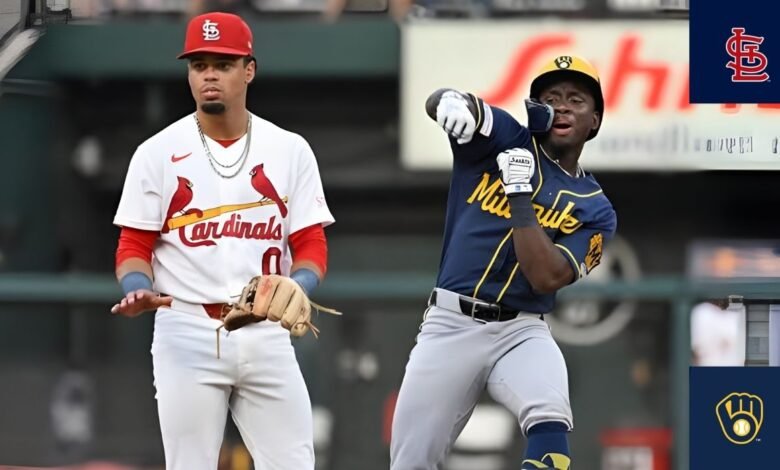
Milwaukee’s 6–4 victory over St. Louis on September 27, 2026, offered more than a close final score. The Brewers controlled the early innings, received a strong start from Jacob Misiorowski, and then needed reliable relief pitching after the Cardinals threatened a comeback. This analysis covers that regular-season finale at American Family Field. Jackson Chourio supplied consistent contact, Gary Sánchez added power, and Leo Bernal made the closing innings competitive. Looking at when those contributions occurred explains the result better than simply counting hits or identifying the winning pitcher.
Final Score and How the Game Developed
The Brewers scored three runs in the first inning, two in the third, and one in the fourth. St. Louis remained scoreless through seven innings before producing all four of its runs in the eighth. Milwaukee finished with 10 hits, compared with four for the Cardinals, but the timing of those hits was just as important. The early scoring gave Milwaukee room to withstand the late rally without surrendering the lead. The victory completed a three-game sweep and brought the Brewers’ regular-season record to 103–59. St. Louis finished 77–85, with this game showing both its offensive difficulties and its ability to capitalize on a brief opening.
Jacob Misiorowski Set the Pitching Standard
Misiorowski delivered 5⅓ scoreless innings, allowing two hits and two walks while striking out five. He threw 68 pitches, including 44 strikes, and left with Milwaukee ahead 6–0. Those numbers describe an efficient outing rather than a performance built solely around strikeouts. St. Louis put some balls in play, but it could not turn its limited opportunities into runs against him. His final batter was Jordan Walker, whom he struck out in the sixth inning. The victory moved Misiorowski to 16–5, while his season ended with a 1.80 earned run average and 252 strikeouts. Those season totals provide context; the scoreless innings were his direct contribution to this particular win.
Jackson Chourio Connected Milwaukee’s Scoring Innings
Chourio finished 3-for-4 with two runs scored and two runs batted in, making him Milwaukee’s leading hitter by hit total. His first-inning single brought Garrett Mitchell home and helped establish the early advantage. He singled again to begin the third inning, then scored on Sánchez’s home run. In the fourth, his two-out single drove in David Hamilton for Milwaukee’s final run. All three hits were singles, showing how repeated contact can influence a game without an extra-base hit. Chourio supplied 30% of the Brewers’ hits and contributed to scoring in three separate innings. His performance combined creating opportunities, finishing rallies, and reaching base ahead of a power hitter.
Gary Sánchez Added the Important Power Hit
Sánchez went 1-for-4, but his third-inning home run carried more weight than that hit total alone suggests. With Chourio aboard, the two-run shot increased Milwaukee’s lead from 3–0 to 5–0. It was Sánchez’s 12th home run of the season, and he finished the game with two RBIs and one run scored. His four total bases exceeded Chourio’s three, even though Chourio had two more hits. That comparison illustrates why hit totals and hitting impact should be considered separately. Sánchez converted an existing baserunner into a second run while scoring himself, giving the Brewers a larger cushion before the Cardinals finally found their offense.
Brice Turang and Christian Yelich Sustained the Opening Rally
Turang and Yelich each finished 1-for-4 with one RBI, and both contributions arrived during Milwaukee’s three-run first inning. Turang’s infield single scored Jake Bauers and gave him his 100th RBI of the season. Yelich then singled to bring Chourio home. Mitchell and Bauers had started the inning with consecutive singles, creating opportunities for the hitters behind them. Milwaukee collected six singles in that opening frame, although a double play limited the damage. The sequence shows why a productive inning often depends on several players rather than one standout swing. Reaching base and advancing runners made the individual RBI opportunities possible.
Andre Pallante’s Line Explains the Early Deficit
Pallante allowed six runs, all earned, on 10 hits over five innings. He walked one batter and struck out four, so excessive walks were not the main problem. Milwaukee repeatedly found hits against him, particularly during the opening inning, and later added a home run. The contrast with Misiorowski was substantial: Pallante allowed five times as many hits while recording one fewer out. However, St. Louis received effective work afterward. Justin Bruihl pitched two scoreless innings, and Hancel Rincon followed with another scoreless inning and two strikeouts. Neither allowed a hit or walk. Their combined three innings stopped Milwaukee’s scoring and kept the deficit from growing before the Cardinals rallied.
Leo Bernal and César Prieto Sparked the Cardinals’ Response
Bernal provided St. Louis’ biggest offensive moment with a three-run home run in the eighth inning. He finished 1-for-2 with two walks, three RBIs, and one run scored, reaching base three times despite recording only one hit. César Prieto opened the rally with a triple and scored on Walker’s fielder’s choice. A walk to Iván Herrera then placed another runner aboard before Bernal homered, reducing Milwaukee’s advantage to 6–4. Bernal drove in 75% of the Cardinals’ runs, but the preceding baserunners made that impact possible. The rally also demonstrates how an offense can produce several runs from relatively few hits when walks and extra-base contact occur together.
Milwaukee’s Relievers Had Very Different Results
DL Hall preserved the shutout after Misiorowski departed, working 1⅔ innings without allowing a hit and giving up one walk. Chad Patrick then struggled in the eighth, allowing two hits, two walks, and four earned runs while recording one out. That brief appearance accounted for every St. Louis run. Shane Drohan entered with the lead reduced to two and retired all five batters he faced, including two by strikeout. He recorded the final five outs for his second save. Calling Milwaukee’s bullpen simply good or bad would hide these differences. Hall maintained the advantage, Patrick allowed the comeback opportunity, and Drohan ended it before the Cardinals could draw level.
Supporting Hitters and Defense Add Necessary Context
Pedro Pagés contributed a single and two walks for St. Louis, while Thomas Saggese supplied its other single. Nolan Gorman went 0-for-4 with three strikeouts, and Nathan Church and José Fermín also finished hitless in four at-bats. Those gaps helped explain the Cardinals’ limited scoring outside the eighth. Milwaukee’s supporting contributions included Hamilton’s hit and run scored, plus Cooper Pratt’s first-inning single. Pratt also committed the game’s only recorded error, allowing Walker to advance during the late rally. Still, Patrick’s four runs were all classified as earned. The presence of an error does not automatically make every run in that inning unearned; the scoring decision depends on how the inning is reconstructed.
Final Thoughts
The Brewers won through early offensive production, a scoreless start, and a clean finish after St. Louis applied late pressure. The most revealing comparisons involve both volume and timing: Chourio repeatedly helped build rallies, Sánchez expanded the lead, and Bernal made the final innings meaningful. Pitching also needs an individual reading, because the relievers’ results varied sharply within the same team. Evaluating the complete sequence avoids overstating a home run, overlooking a walk, or crediting the winning pitcher alone. For this matchup, the box score and scoring order together explain the outcome.
Frequently Asked Questions
1. Which Brewers–Cardinals game does this analysis cover?
This article covers the September 27, 2026, regular-season finale in Milwaukee. Identifying the date matters because these division opponents meet repeatedly, and their lineups and individual performances change between games. The statistics here belong to this single 6–4 Brewers victory. They should not be combined with another box score or treated as totals for the entire season series.
2. Who was Milwaukee’s most productive hitter?
Chourio led Milwaukee with three hits and contributed through both scoring runs and driving them in. Sánchez matched his two RBIs while producing the team’s only home run. The answer therefore depends on the measure: Chourio offered the strongest combination of repeated contact and involvement across innings, while Sánchez delivered the most valuable single power swing for the Brewers.
3. Why did Bernal have only two at-bats despite batting four times?
Bernal had four plate appearances: two official at-bats and two walks. Walks count as plate appearances but are excluded from at-bats when calculating batting average. His 1-for-2 line therefore does not mean he appeared at the plate only twice. Including the walks shows that he reached base in three of four opportunities, a more complete account of his afternoon.
4. What does 5.1 innings pitched mean?
In baseball notation, 5.1 means five complete innings plus one out, or 5⅓ innings. It is not a decimal measurement of 5.1 full innings. Each inning contains three outs, so .1 represents one additional out and .2 represents two. Misiorowski’s line records 16 outs, while Drohan’s 1.2 innings records five. This convention prevents mistakes when comparing pitching workloads.
5. Why did Walker receive an RBI without a hit?
Walker drove in Prieto with a fielder’s choice in the eighth inning. The defense recorded an out against another runner, so Walker was not credited with a hit, but the play still brought a run home. His 0-for-4 batting line consequently includes one RBI. This distinction shows why a hitless performance can still contain a useful offensive contribution.
6. Did the Cardinals have the better bullpen?
Their relievers had the stronger combined run-prevention line in this game: three innings without a hit, walk, or run. Milwaukee’s relievers allowed four runs over 3⅔ innings, although all four were charged to Patrick. That supports a limited comparison of this afternoon’s results. It does not establish which club had the better bullpen across the season or in every matchup.
7. Did each team rely equally on home runs?
Both teams hit one home run, but those swings accounted for different shares of their scoring. Sánchez’s two-run homer produced one-third of Milwaukee’s six runs. Bernal’s three-run shot produced three-quarters of St. Louis’ four. Milwaukee therefore received more of its scoring from other plays, while the Cardinals’ comeback depended heavily on one swing with two runners aboard.
8. Why did Milwaukee win despite drawing fewer walks?
St. Louis drew five walks, compared with Milwaukee’s one, but walks alone did not determine the outcome. The Brewers generated more hits and built several scoring opportunities before the Cardinals broke through. A walk creates a baserunner; subsequent plays determine whether that runner scores. Comparing walks with hits, outs, and inning-by-inning scoring explains why the team with fewer walks still won.
9. Are the ERA and batting average columns single-game figures?
Usually, the familiar ERA and batting average displayed alongside a completed game’s player lines are updated season figures. They should not be mistaken for that afternoon’s results. Misiorowski’s 1.80 ERA describes his season, whereas his zero earned runs describe this outing. Likewise, Chourio’s three hits in four at-bats are his game performance, separate from the season average printed beside them.
10. Can this game predict the next meeting between these teams?
It can identify what worked in this matchup, but one game is a weak basis for a prediction. Different starting pitchers, available relievers, injuries, and batting orders can change the next contest substantially. The useful takeaway is how contact, baserunners, power, and relief pitching shaped this result. A broader forecast requires several games and current information about the players expected to appear.
Recommended: Kansas City Chiefs vs Philadelphia Eagles Match Player Stats: Special Teams Performance Review



One Comment