
Viltnemnda Guide: Hunting Quotas, Wildlife Habitats, and Municipal Decision Making

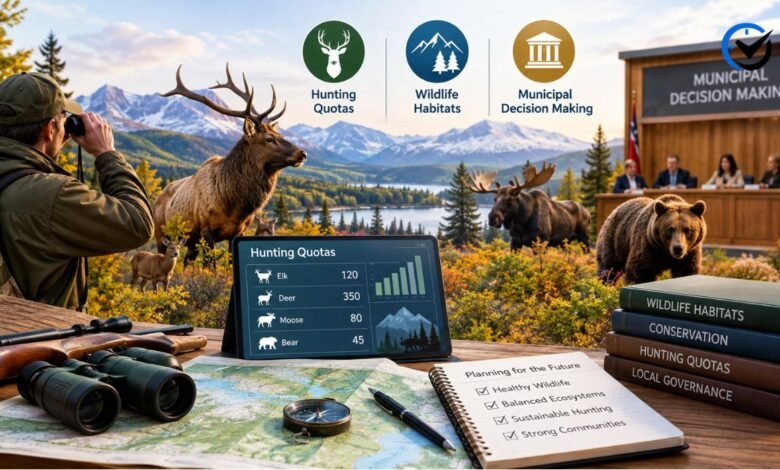
Norway’s wildlife management becomes easier to understand when you know who makes local decisions and why. Viltnemnda means “the wildlife committee,” a term associated with municipal responsibility for wild animals and their habitats. Its work can connect hunting allocations, deer populations, crop damage, and road safety. However, the name does not describe one national organization or an identical committee in every municipality. Local arrangements differ, and decisions must stay within the authority assigned to the responsible body. This guide explains how the system works, what hunting quotas represent, why habitat matters, and how residents, landowners, and hunters can take part in decisions affecting their local area.
What Viltnemnda Means in Local Government
The Norwegian word viltnemnd refers to a wildlife committee; viltnemnda is its definite form, meaning “the wildlife committee.” Historically, state wildlife boards operated in Norwegian municipalities from 1952 through 1992. Local wildlife management responsibility transferred to municipalities on January 1, 1993, leading to different administrative and political arrangements. Today, a municipality may use a dedicated committee, another elected body, or municipal staff to handle particular duties. This distinction matters when seeking permission, reporting damage, or checking a decision. A familiar committee name does not establish its current powers. The municipality’s organizational rules and delegation documents explain who can decide a case and who provides professional advice.
Who Makes Wildlife Decisions?
Municipalities play a central role in managing moose, red deer, and roe deer, including population objectives, approved hunting areas, and harvest allocations. These responsibilities sit within a wider system involving national and regional authorities, landowners, and hunters. Wild reindeer have a separate management structure involving wild reindeer boards, so deer management cannot be treated as one uniform municipal process. Committee membership also varies locally. Some arrangements include elected politicians and landowner representatives, supported by administrative staff. The useful question is therefore which office or committee has authority over the species and issue involved. Responsibility for a hunting allocation may differ from responsibility for disease control or predator management.
The Current Legal Framework
Norway’s Wildlife Resources Act, known as viltressursloven, took effect on July 1, 2026, replacing the earlier Wildlife Act. Much of the existing framework continued, but the change makes older explanations and section numbers worth checking carefully. Municipal decisions also depend on relevant regulations, local rules, and other legislation governing nature conservation and land use. A committee cannot simply create unrestricted hunting rights because an animal causes inconvenience. Nor does a local allocation replace requirements concerning hunting seasons, hunting methods, or permission from the hunting rights holder. Before acting, identify the current rule, the responsible authority, and any conditions in the written decision. These checks prevent confusion between municipal discretion and national requirements.
How Hunting Quotas Work
A hunting quota sets the permitted harvest under the relevant allocation; it does not predict how many animals hunters will actually take. For moose, red deer, and roe deer, an important municipal tool is minsteareal, the minimum qualifying area used when approving hunting areas and calculating allocations. As a simplified example, 5,000 hectares of qualifying habitat divided by a minimum area of 500 hectares gives a starting calculation of ten animals. Actual permits depend on the applicable rules, approved plans, and local decisions. Reducing the area requirement generally allows a higher allocation, while increasing it generally lowers one. Managers must connect any change to population objectives and local conditions rather than treating the calculation as an ecological answer.
Hunting Areas and Population Plans
A vald is an approved hunting area for the relevant species, which may bring together properties belonging to several landowners. A jaktfelt is a smaller hunting unit within that area. These terms matter because an individual property, a hunting team, and an approved allocation area are not automatically the same thing. A bestandsplan, or population management plan, connects planned harvests with longer term population goals. Cooperation can help landowners manage animals that move between properties, rather than treating each boundary as a separate population. A useful plan explains the intended direction of change and how harvest composition supports it. Municipal approval should connect the plan to public objectives, with reporting used to assess whether implementation matches those objectives.
Reading Wildlife Data Without Overstating It
The national Hjorteviltregisteret database brings together hunting records and information on selected animals found injured or dead outside ordinary hunting. Its statistics include allocated and harvested animals, age patterns, carcass weights, and population indicators. These records help managers ask better questions, but figures require context. A lower harvest could reflect fewer animals, less hunting effort, poor weather, or a change in access. Similarly, more sightings do not automatically prove population growth if observation effort increased. Comparisons should use consistent measures and examine several indicators together. When records disagree, a sensible response is to investigate the cause and acknowledge uncertainty before making a large change to harvest policy.
Why Wildlife Habitats Matter Beyond Hunting
Population management cannot succeed through quotas alone when animals lose access to feeding grounds, shelter, or movement routes. Habitat assessment should consider seasonal use, not just the total amount of undeveloped land. A forest used during winter may serve a different purpose from summer grazing areas, while development between them can interrupt movement. Wildlife committees may provide input on planning matters, but their ability to comment does not mean they approve every road or building proposal. Cooperation with planning departments and neighboring municipalities is therefore important. A practical assessment asks where animals travel, which habitats are difficult to replace, and whether a proposed change could concentrate animals near farms, settlements, or busy roads.
Managing Crop Damage and Wildlife Collisions
Wildlife conflicts need responses suited to the actual cause. Repeated crop damage should be documented with dates, locations, photographs, and information about the affected crop. Concentrated seasonal damage may call for different measures from a wider population problem. Road collisions require immediate reporting through the proper local channel rather than waiting for a committee meeting. In Norway, municipal guidance commonly directs drivers to contact the police on 02800, who can arrange the appropriate wildlife response. Prioritize personal safety and provide an accurate location and the animal’s direction of travel if known. Authorized tracking teams handle follow up work. Decisions about longer term prevention should consider traffic, habitat access, and animal movement alongside population size.
Public Participation and Municipal Decision Making
Residents and landowners can contribute more effectively by responding to a specific proposal with relevant local evidence. Consultation notices, management objectives, meeting papers, and written decisions help explain what is being considered. For example, a request to change hunting pressure is stronger when it identifies an affected area and documents a pattern of damage or collisions. A proposal to conserve habitat is clearer when it shows seasonal use or a connecting route. Public consultation and an appeal against an individual decision are different processes, with different requirements. Anyone directly affected should check the decision’s instructions and applicable deadlines. Clear reasoning also helps distinguish disagreement over evidence from disagreement over the balance between competing interests.
Final Thoughts
Viltnemnda is best understood through the municipality’s actual responsibilities, the species involved, and the decision being made. Effective management connects hunting allocations with habitat conditions, reliable records, animal welfare, and public interests. It also recognizes that an animal’s range can cross property and municipal boundaries. For hunters, the practical priority is confirming the approved area, allocation, and conditions before hunting. For residents and landowners, useful participation starts with accurate reporting and evidence tied to a particular location or proposal. For anyone assessing a decision, the central questions are whether its purpose is clear, its authority is valid, and its expected results can be checked against later observations.
Frequently Asked Questions
1. Is Viltnemnda a national wildlife agency?
No. The term refers to a wildlife committee associated with local municipal management. There is no single nationwide committee carrying out every wildlife task under that name. When you need an official decision or help with a specific case, identify the municipality concerned and ask which body currently handles the matter.
2. Does every Norwegian municipality have the same committee?
No. Municipalities organize wildlife responsibilities in different ways, so the name, membership, and division of work can vary. A dedicated committee may exist in one place while staff or another elected body handles similar matters elsewhere. Confirm the current arrangement instead of assuming a neighboring municipality’s structure applies to your area.
3. Can a municipal quota give me permission to hunt anywhere?
No. An allocation does not replace the hunting rights holder’s permission or allow hunting outside the approved area. Hunters must also meet applicable requirements for registration, fees, competence, equipment, and hunting seasons. Treat the allocation as one part of the permission framework, and clarify any uncertainty before entering land to hunt.
4. What is the difference between a quota and actual harvest?
The quota is the permitted allocation, while the actual harvest is the number of animals taken. These figures can differ because of animal availability, hunter effort, access, or other conditions. A gap should prompt questions about its cause; it does not, by itself, prove the population is too small or the allocation was unreasonable.
5. Why might neighboring areas receive different allocations?
Habitat quality, qualifying area, population objectives, species distribution, and damage levels can differ across relatively short distances. Minimum area requirements may also differ between parts of a municipality. Comparing allocations therefore requires more than comparing the size of two properties. Ask which land qualifies, which species is involved, and which management goal the allocation supports.
6. Can landowners ask for minimum area requirements to change?
Yes. Hunting rights holders, farmers, hunters, and others with a legal interest can submit proposals to the municipality. Current national guidance gives January 15 as the proposal deadline and March 15 for a resulting regulation change. A useful submission explains the requested adjustment and supports it with population, habitat, damage, or collision information.
7. Should I chase an injured deer after a collision?
Do not pursue the animal yourself. Keep a safe distance, report the incident promptly, and tell responders where the collision occurred and where the animal went. If safe, mark the collision point as directed. Accurate location details help authorized tracking personnel begin their work without adding avoidable disturbance or exposing people to danger.
8. Does the municipality remove every dead wild animal?
Not necessarily. Responsibility depends on the species, location, circumstances, and relevant rules. An animal on a public road may involve the road authority, while a carcass on private land may require a different response. Describe the situation to the municipality or appropriate reporting service rather than assuming all carcass removal belongs to the wildlife committee.
9. How can residents assess whether management is working?
Start with the stated objective and look for measures that match it. A collision reduction goal needs collision records, while a habitat goal needs information about habitat condition or access. Harvest totals alone cannot demonstrate success across every objective. Comparing consistent records over several years usually provides a stronger assessment than reacting to one unusual season.
10. Can an affected person challenge a wildlife decision?
Some individual municipal wildlife decisions can be appealed by parties with the required standing. The written decision should explain the applicable appeal route, deadline, and submission process. Identify the decision you challenge, explain the problem, and state the change requested. Do not assume that objecting during consultation automatically counts as an appeal against a later decision.
Recommended: Smiles 2 Ledgewood: What Official Records Say About the Alleged $12 Million Scheme




One Comment