
JournalWord Com: From School Reform and Business Finance to Everyday Wellness

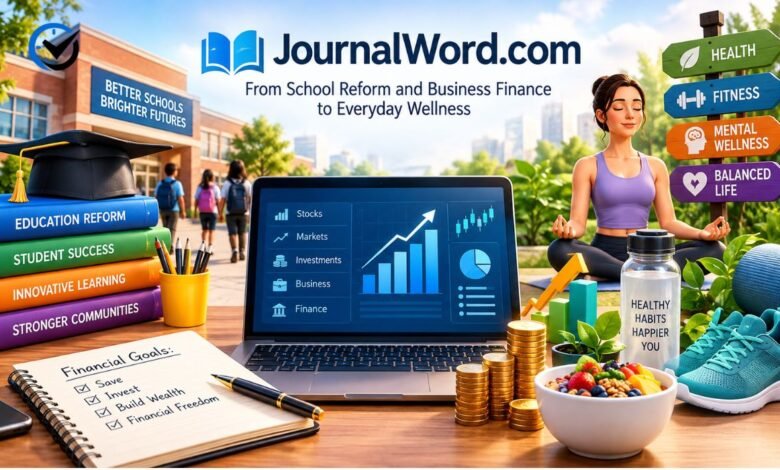
JournalWord Com brings together subjects that people often encounter in separate places: school schedules, career decisions, business borrowing, digital services, and everyday health. Its published articles show a broad general-interest focus rather than a single specialty. A visitor might arrive through a discussion of a four-day school week, then find an explanation of online colleges or a profile of another content website. That range makes the publication worth understanding on its own terms. The useful question is what each article offers, how clearly it explains the subject, and what further information a reader needs before making a decision.
The name can create confusion because a similarly named UK website emphasizes journaling, productivity, and mental clarity. Those themes should not automatically be assigned to the publication discussed here. Its education, business, and health archives present a different mix of material, alongside many articles describing other online platforms. This guide examines that actual publishing pattern, including its coverage of school reform, business finance, wellness, and financial education. It also explains how to interpret author names, publication dates, and promotional language without assuming that every page has the same depth or purpose.
What Kind of Publication Is It?
The website’s About Us page describes an ambition to share accessible information about technology, business, lifestyle, and related subjects. Its archives give that description more substance. Education posts address learning choices and career development; business posts discuss financial services and company operations; health posts cover daily habits and physical well-being. The broader blog category includes profiles of websites such as HaruWatch, Lekulent, and Zvodeps. This structure resembles a mixed-topic online publication. A category label helps organize browsing, but it does not establish specialist expertise. Readers still need to assess whether a particular page explains a subject carefully, supports its claims, and recognizes important limits.
School Reform, College Choices, and Career Breaks
School reform appears most clearly in an article examining the advantages and disadvantages of a four-day school week. The discussion includes longer school days, potential operating savings, teacher satisfaction, childcare difficulties, and concerns about learning. These are different outcomes, and they should not be treated as interchangeable. A schedule that helps staff recruitment might create extra costs for working parents. Likewise, closing buildings for one weekday does not, by itself, reveal the effect on students’ progress. The article gives readers an introduction to the debate, but its broad statements leave practical questions open. A local discussion would need actual teaching hours, budget figures, and evidence about the students affected.
The education archive also moves beyond school calendars. It contains discussions of professional gap years, online colleges, studying medicine in Bangladesh, and distance MBA options in Lucknow. These examples show why location and personal circumstances matter. Someone considering an online degree needs to understand course scheduling, total fees, recognition, and available support. Someone planning a career break faces a different set of questions about income, useful experience, and returning to work. The gap-year article encourages purposeful planning, while the online-college article discusses cost, flexibility, accreditation, and student support. Their value lies in introducing those considerations, rather than proving that one educational route is best for every reader.
Business Finance and Digital Services
Business finance coverage includes an article about digital tools and artificial intelligence in applications for loans backed by the U.S. Small Business Administration, commonly called the SBA. It discusses online submissions, automated assessments, preliminary eligibility checks, and financial documents. For a newcomer, the piece introduces how technology can feature in a borrowing process. However, its positive language about speed and clarity should be distinguished from evidence about a particular lender’s results. The article does not establish that an applicant will qualify, receive a specific interest rate, or obtain approval within a fixed period. Its most practical use is to help readers identify the process details they need to ask about.
Other business articles explore peer-to-peer cryptocurrency exchanges, payment processing, hiring content management system developers, and quality audits. This is a wider subject mix than traditional company news. The cryptocurrency piece discusses transaction costs, trust, security, and finding trading partners, while also repeatedly highlighting a named service. That combination calls for attention to how a general explanation shifts into praise of a provider. A reader should distinguish descriptions of a business model from claims about a company’s performance. The same distinction applies to payment services and website development: understanding what a service does is an early step, while comparing fees, support, contract terms, and suitability requires more specific information.
Everyday Wellness and the Limits of Broad Health Content
The health archive includes articles on sleep hygiene, joint-friendly exercise, muscle building, and yoga. Its sleep article discusses regular schedules, bedtime routines, bedroom conditions, and stimulants. The exercise article covers activities such as swimming, cycling, and tai chi. These subjects fit the site’s broader interest in daily life, but individual needs vary considerably. The sleep article itself acknowledges that habits alone do not cure persistent sleep disorders. That boundary matters when reading wellness content: a general explanation can introduce a topic without establishing the cause of someone’s symptoms. The exercise article similarly mentions seeking professional input for personal needs and limitations, rather than treating every activity as suitable for everyone.
The Apothorax articles show a more specific difficulty with consistency. One describes the term as a conceptual region connected with breathing and body mechanics, and explicitly says it is not formal anatomical terminology. Another presents it as a historical anatomical term that has become a wellness and blogging identity. Those are different explanations, and the pages do not clearly reconcile them. Readers should avoid treating the combined discussion as proof of an established medical concept. The useful distinction is between the publication’s interpretation of a name and independently established knowledge about the body. Confident wording about research or clinical value needs supporting evidence before it can carry that authority.
Website Profiles and Financial Education Reviews
Profiles of other websites form a noticeable part of JournalWord Com. Articles describe SoSoActive, HaruWatch, Lekulent, Zvodeps, and other platforms, often explaining their proposed subjects and intended readers. The SoSoActive profile, for example, discusses business, finance, entrepreneurship, marketing, e-commerce, and information technology. Such a profile can orient a visitor, but a description of another website’s ambitions is different from demonstrated content quality. Financial education coverage raises a related issue. The SurgeU article focuses on favorable student accounts about instruction, faith, and additional coursework. These accounts describe reported experiences; they do not establish typical investment outcomes, course value for every participant, or the experiences of students whose views were not selected.
Authors, Dates, and Reading With Context
Visible bylines include Shivi Hyde and Devin Haney, and their author pages collect articles published under those names. Those pages help readers follow contributions, although the pages reviewed do not provide detailed professional biographies establishing expertise across every covered subject. Dates also need careful interpretation. Several older posts display two dates, including April 16, 2026 alongside an earlier date. That display alone does not explain which passages changed or whether the underlying information was rechecked. Start with the site’s categories or search function, then examine the individual page. The author’s name, the article’s scope, and the evidence behind its claims are more informative together than any single label.
Final Thoughts
JournalWord Com is best understood through the breadth of its actual articles. Its school reform discussions, education guides, business explainers, health posts, and website profiles serve different reading needs. The strongest use of the publication is to become familiar with a subject and identify useful follow-up questions. Its limitations become clearer when an article makes broad claims, praises a service, or uses terminology inconsistently. Readers can make more considered judgments by matching the depth of each page to the decision in front of them. Casual exploration needs less detail than choosing a degree, evaluating a financial course, or acting on health information.
Frequently Asked Questions
1. What is JournalWord Com?
It is a general-interest website publishing articles across education, business, health, technology, and lifestyle-related subjects. Its archives also contain profiles of other websites and discussions of financial education programs. The publication’s broad subject range means visitors should evaluate individual articles rather than assume that every section follows one specialist editorial approach or level of detail.
2. Is it a journaling app or personal diary service?
The pages reviewed present a collection of published articles, rather than a service for storing private journal entries. A similarly named UK website promotes journaling methods, mindful habits, and productivity. The names can therefore cause confusion. Check the site’s actual homepage and features before expecting diary tools, personal accounts, or private note storage.
3. Who is the website most useful for?
General readers seeking an introduction to unfamiliar subjects are its clearest audience. Students, parents, working adults, and small business owners may find relevant topics, although their information needs differ. It is most useful when an article helps clarify a question. A reader needing detailed technical analysis should assess whether that particular page supplies enough evidence.
4. Does the site mainly publish breaking news?
The reviewed homepage and archives contain many explainers, guides, and website profiles, rather than only reports of immediate events. Topics such as college choices, sleep habits, and payment processing can remain relevant over time. However, a lasting topic does not make every detail current. Check dates and changing conditions when reading older material.
5. Do its articles apply to readers in every country?
Not automatically. Some subjects are broad, but specific posts discuss U.S. business lending, medical study in Bangladesh, or MBA options in Lucknow. These examples involve different institutions and requirements. Identify the place discussed before drawing conclusions about your own situation, especially when a page concerns admission, qualification recognition, business services, or financial rules.
6. Can students use its guides to choose a college?
The guides can help students identify questions about costs, flexibility, recognition, and support. They should not serve as the complete basis for enrollment. A meaningful comparison requires current information from the institution and relevant recognition bodies. Also consider how a course fits your intended career, available time, and preferred way of learning.
7. Can its wellness articles replace personal medical advice?
No. They discuss general topics and do not assess a reader’s medical history, symptoms, or individual needs. Even the site’s sleep article distinguishes everyday habits from treatment for ongoing disorders. Use wellness material to understand a subject and prepare questions, while getting appropriate professional guidance for concerns that require personal assessment or treatment.
8. How should readers interpret the SurgeU review article?
Read it as an account built around selected student comments. Experiences with instructors or classroom atmosphere can be useful, but they do not show the full range of student outcomes. Before considering paid training, investigate the complete costs, course content, cancellation terms, and a wider range of feedback, including criticism and unresolved concerns.
9. What makes the Apothorax coverage confusing?
The two articles give different explanations of the term’s status: one frames it as a conceptual model, while another describes historical anatomy and modern wellness branding. That difference is not clearly resolved. Readers should keep those claims separate and seek authoritative clarification before using the term as a medical explanation or interpreting related health claims.
10. Does a recent date guarantee that an article is accurate?
No. A date tells you when a page was presented as published or updated, but it does not demonstrate what was checked. Look for specific evidence, clear boundaries, and information relevant to the decision you are making. Where two dates appear without an explanation, avoid assuming that every statement received a complete review.
Recommended: FundFireInsight.com: Exploring Private Credit, AI Financing, and Institutional Capital




One Comment