
Summer temperatures don’t wait for convenient timing. When your cooling system fails, or your home has never had proper climate control, the difference between comfort and misery often comes down to one decision: who handles the installation. Many homeowners underestimate how much expertise this process actually requires, assuming any technician with a toolbox can get the job done.
That assumption costs people money, comfort, and sometimes their warranty coverage. A cooling system is only as good as the hands that install it. Poor installation leads to uneven cooling, inflated energy bills, and premature breakdowns that could have been avoided entirely.
Guardian Services LLC Air and Heat has built a reputation on getting this process right the first time. Rather than cutting corners to finish faster, the team focuses on precision at every stage, from sizing calculations to final system testing. This blog post breaks down what separates a quality installation from a rushed one, and why homeowners who invest in the right process end up saving money for years to come.
Why Does Proper Sizing Make or Break Your Cooling System?
Bigger isn’t always better when it comes to air conditioning. An oversized unit cools a room too quickly without properly removing humidity, leaving the air feeling clammy and uncomfortable. An undersized unit runs constantly, struggling to keep up with demand and wearing itself out long before its time.
The right size depends on several factors: square footage, ceiling height, window placement, insulation quality, and even the number of people typically occupying the space. Technicians use load calculations, often called Manual J calculations, to determine the exact capacity a home needs. Skipping this step is one of the most common mistakes in the industry, and it’s also one of the most expensive to fix later.
Guardian Services LLC Air and Heat takes the time to assess each home individually rather than relying on rough estimates. This attention to detail means homeowners get a system matched to their actual needs, not a generic solution that technically fits but never performs well.
What Happens When Ductwork Gets Overlooked?
Even the best cooling unit can’t perform well if the ductwork pushing air through the house is damaged, poorly sealed, or incorrectly sized. Leaky ducts can waste a significant portion of conditioned air before it ever reaches a living space, forcing the system to work harder and driving up utility costs.
Many homes, especially older ones, have ductwork that was never designed for modern cooling demands. Gaps, disconnected sections, and crushed or kinked ducts all restrict airflow and create hot spots throughout the house. A thorough inspection during installation catches these issues before they become invisible problems hiding behind walls and ceilings.
Addressing ductwork alongside the new system ensures that cool air actually reaches every room it’s meant to reach. Skipping this step is like buying a sports car and never changing a worn-out set of tires. The engine might be powerful, but the performance never shows up where it matters.
How Does Refrigerant Charging Affect Long-Term Performance?
Refrigerant is the lifeblood of any air conditioning system, and getting the charge level exactly right requires technical precision. Too little refrigerant means the system can’t absorb enough heat from indoor air, leading to weak cooling and higher energy consumption. Too much refrigerant puts excess strain on the compressor, often shortening the lifespan of the entire unit.
This isn’t a step that benefits from guesswork or shortcuts. Manufacturers specify exact refrigerant levels for each system model, and proper measurement tools are required to hit that target accurately. A technician who rushes this part of the process, or skips verification altogether, sets homeowners up for problems that might not surface until months later when the system starts underperforming or failing outright.
Careful refrigerant charging during setup protects the compressor, supports consistent cooling, and helps the system reach its expected lifespan. It’s one of those behind-the-scenes details that homeowners rarely think about, but it has an outsized impact on how well a system performs for years to come.
Why Should Homeownership Decisions Include Energy Efficiency?
Energy costs have climbed steadily in recent years, and cooling a home typically represents one of the largest portions of a summer utility bill. Choosing a system with a high SEER2 rating, the current efficiency standard for residential units, can meaningfully reduce monthly costs over the system’s lifetime.
But efficiency ratings only translate into savings when installation is done correctly. A high-efficiency unit installed poorly performs no better than a basic model, and sometimes worse. Thermostat placement, insulation around ductwork, and even the orientation of outdoor condenser units all play a role in how efficiently a system actually operates once it’s running.
Homeowners thinking long-term should view installation quality as directly tied to their energy bills, not just their comfort. A slightly higher upfront investment in professional installation often pays for itself through lower monthly costs and fewer repair calls down the road.
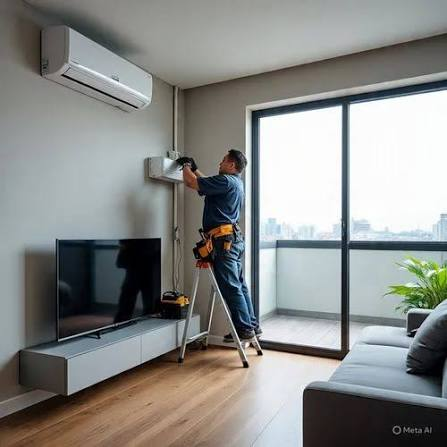
Start enjoying reliable comfort with expert AC Installation from a team that treats every home like it’s their own
Guardian Services LLC Air and Heat approaches every project with the understanding that a home’s cooling system affects daily comfort, family health, and monthly budgets all at once. The team doesn’t believe in shortcuts, generic sizing, or rushed timelines when something this important is on the line.
From the initial assessment through final testing, every step is handled with care and technical precision. Homeowners who choose Guardian Services LLC Air and Heat get more than a working system. They get a partner who stands behind the work and treats every AC installation as a long-term investment in comfort, not just a quick transaction.
Summer heat isn’t getting any milder, and waiting until the last minute to address cooling needs often means settling for whatever’s available rather than what’s actually best for the home. Scheduling an assessment now means entering the hottest months with confidence instead of crossed fingers.
Frequently Asked Questions
How long does a typical AC installation take?
Most residential installations take between four and eight hours, depending on the complexity of the system and whether existing ductwork needs modifications. Homes with straightforward layouts and compatible ductwork often finish on the shorter end of that range.
Is it worth replacing an old system even if it still works?
Systems older than 10-15 years often run far less efficiently than current models, even if they technically still function. The combination of rising repair costs and declining performance usually makes replacement the more economical choice for aging units.
Can a new system be installed without replacing the ductwork?
In many cases, yes, especially if the existing ductwork is properly sized and in good condition. However, a thorough inspection is necessary to confirm there are no leaks, damage, or sizing mismatches that would undermine the new system’s performance.
What size cooling system does a typical home need?
System size depends on square footage, insulation, ceiling height, and other home-specific factors rather than a one-size-fits-all number. A proper load calculation is the only reliable way to determine the right capacity for a specific space.