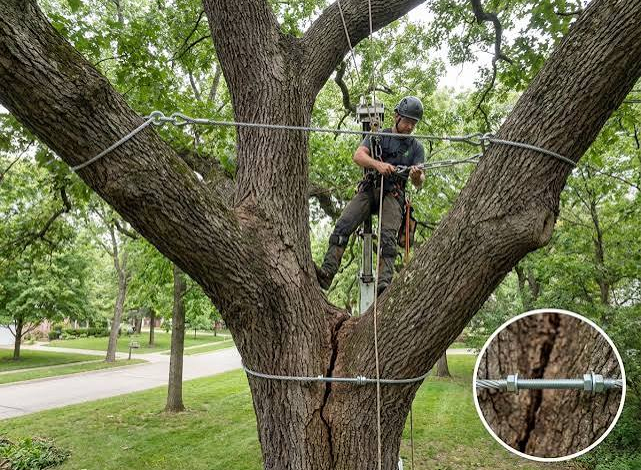
Austin’s weather doesn’t do things halfway. One week you’re basking in sunshine, and the next, a summer thunderstorm is ripping through the city with gusts strong enough to snap limbs and topple weakened trees. If you’ve got a mature oak, pecan, or elm on your property that you’d hate to lose, there’s a good chance it could use some extra support before the next big storm rolls in.
That’s where tree bracing comes in. It’s one of those services that doesn’t get talked about enough, yet it can be the difference between a tree that survives decades more and one that splits apart in a single bad afternoon. At Austin Tree Specialists, we see the aftermath of unsupported trees every storm season, and most of it is preventable.
This post breaks down what tree bracing actually is, why it matters for Austin properties specifically, and how to know if your trees might need it.
What Is Tree Bracing, Exactly?
Tree bracing is a supportive technique arborists use to reinforce weak or damaged branches and trunks. It typically involves installing steel rods, cables, or braces at strategic points in the tree’s structure to redistribute weight and reduce stress on vulnerable areas.
Think of it like a cast for a tree. If a large limb has a crack, a co-dominant stem is pulling apart from the trunk, or a tree has already suffered storm damage, bracing holds those weak points together so the tree can continue to grow and heal rather than fail.
There are a few common methods:
- Cabling: Flexible steel cables are installed higher in the canopy to limit how far branches can sway or spread during wind events.
- Rod bracing: Rigid steel rods are drilled through the trunk or major limbs to provide direct, solid support at a specific stress point.
- Combination systems: Many trees benefit from both cabling and rodding together, depending on the type and severity of the structural issue.
None of these methods are a quick fix you can slap on and forget. They require a trained eye to identify where the real risk is and the technical skill to install the support correctly without causing additional harm to the tree.
Why Austin Trees Are Especially Prone to Structural Issues
Central Texas throws a unique combination of challenges at local trees. The region’s clay soil doesn’t drain particularly well, which can affect root stability. Add in the occasional drought followed by sudden, heavy rainfall, and you’ve got conditions that stress a tree’s root system and trunk integrity over time.
Then there’s the wind. Spring and summer storms in Austin can bring gusts well over 50 miles per hour, and trees with poor branch structure, included bark, or previous storm damage are far more likely to fail under that kind of pressure. Live oaks, in particular, are known for developing multiple trunks or heavy horizontal limbs that look beautiful but can become liability risks as they mature.
Older trees that have been through years of unaddressed stress are often the ones that show up to emergency calls after a storm, split right down the middle or with a major limb on someone’s roof. In most of those cases, a bracing system installed years earlier could have prevented the damage entirely.
Signs Your Tree Might Need Bracing
You don’t need to be an arborist to notice some of the warning signs. Here’s what to keep an eye out for:
- Visible cracks in the trunk or at the base of large limbs
- V-shaped branch unions where two major limbs grow closely together, creating a weak point
- Leaning trees that have shifted position, especially after heavy rain
- Heavy, overextended limbs that sag noticeably, particularly over structures, driveways, or power lines
- Previous storm damage that was never professionally assessed or repaired
If any of this sounds familiar, it’s worth getting a professional opinion before the next storm system moves through. Catching a structural issue early almost always costs less, in both money and tree health, than dealing with a failure after the fact.
What Happens During a Professional Bracing Assessment
When our team comes out to evaluate a tree, we’re not just glancing up and guessing. A proper bracing assessment involves checking the tree’s overall health, examining root flare and soil conditions, identifying weak unions or cracks, and determining whether the tree is a good long-term candidate for support.
Not every tree is worth saving with bracing. Sometimes a tree has too much internal decay or structural failure for cabling or rodding to make sense, and in those cases, we’ll tell you honestly. But when a tree has strong potential with the right reinforcement, bracing can extend its life by decades while keeping your property safer in the process.
How Tree Bracing Protects Your Property and Peace of Mind
Professionally installed tree bracing gives homeowners real peace of mind during Austin’s unpredictable storm season, especially when a beloved shade tree has sentimental or significant monetary value attached to it. Replacing a 50-year-old oak isn’t something money can fully fix; that kind of canopy takes generations to grow back.
Beyond protecting the tree itself, bracing reduces the risk of limb failure onto roofs, vehicles, fences, or power lines. It’s a proactive investment rather than a reactive repair, and it’s almost always less expensive than the cleanup, tree removal, and property damage repair that follows a major limb failure.
At Austin Tree Specialists, our certified arborists assess each tree individually, recommend the right type of support system, and install it with precision so it does its job without harming the tree’s natural growth. We’ve worked with property owners across Austin who wanted to hold onto a tree that’s been part of their landscape for years, and bracing has given many of those trees a second chance.
Protect What You’ve Grown to Love
A healthy, well-supported tree does more than provide shade. It adds value to your property, supports local wildlife, and shapes the character of your yard in ways that take decades to replicate. If you’ve got a tree on your property that’s showing signs of stress, don’t wait until storm season puts it to the test.
Reach out to Austin Tree Specialists for a professional assessment. Our team can tell you honestly whether bracing is the right call, walk you through the process, and make sure your trees are ready to stand strong through whatever Texas weather brings next.