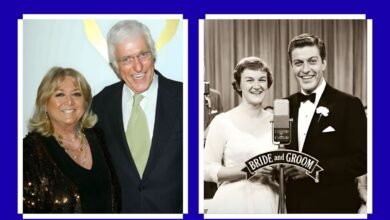


Mary Joan Schutz remains one of the least documented figures connected to Gene Wilder, yet her place in the actor’s personal history is important. While Wilder became internationally famous as Willy Wonka, Leo Bloom, and Dr. Frederick Frankenstein, Schutz lived largely away from Hollywood publicity. Their marriage began during a crucial turning point in his career, included the adoption of her daughter, and ended before Wilder’s greatest professional successes fully unfolded.
Unlike Gene Wilder, Mary Joan Schutz did not build a public career that generated extensive interviews, biographies, or archived press coverage. As a result, much of what is known about her comes from accounts of Wilder’s relationships and family life rather than from Schutz’s own public statements. This article separates documented information from later speculation while examining their relationship, family story, marriage, divorce, and lasting place in Gene Wilder’s life.
Quick Bio Table
| Detail | Information |
|---|---|
| Full name | Mary Joan Schutz |
| Best known for | Gene Wilder’s second wife |
| Connection to Wilder | Introduced through Wilder’s sister |
| Marriage year | 1967 |
| Marriage date often reported | October 27, 1967 |
| Marriage length | Approximately seven years |
| Divorce period | Separated in 1974; later divorced |
| Child | Katharine, Schutz’s daughter from an earlier marriage |
| Wilder’s role | Adoptive father to Katharine |
| Public profession | Not clearly documented in reliable public records |
| Media presence | Extremely private and limited |
| Historical significance | Part of Wilder’s early family and career years |
| Primary legacy | Remembered through her connection to Gene Wilder and Katharine |
How Mary Joan Schutz Met Gene Wilder
Mary Joan Schutz reportedly met Gene Wilder through his sister, making their introduction more personal than professional. That detail matters because Wilder was not yet the fully established comedy icon audiences would later know. Their relationship developed during a period when he was still balancing theater, auditions, and the uncertainty of building a screen career.
Three elements shaped the beginning of their romance: a connection through family, a shared transition into adulthood, and the appeal of a private relationship outside the film industry. Schutz was not presented as a publicity-seeking partner, and Wilder’s early relationship with her appears to have grown away from the intense media attention that later followed him.
The timing was significant. In 1967, Wilder’s film career was beginning to accelerate through projects such as Bonnie and Clyde and The Producers. The couple’s courtship therefore unfolded while he was moving from respected stage performer toward a recognizable Hollywood actor.
A Marriage During Gene Wilder’s Breakthrough Years
Mary Joan Schutz and Gene Wilder married in 1967, the same year Wilder appeared in The Producers, the film that earned him his first Academy Award nomination. The marriage placed Schutz beside him at the beginning of a remarkable professional climb, even though she did not become a regular presence on red carpets or entertainment programs.
Their relationship can be understood through three overlapping pressures. First, Wilder’s work required long hours, travel, rehearsals, and emotional concentration. Second, Schutz was helping establish a household and family structure. Third, public expectations surrounding a rising actor were beginning to change rapidly.
Wilder’s fame expanded after Willy Wonka & the Chocolate Factory in 1971, but celebrity marriages rarely experience success in a simple way. A performer’s growing visibility can create financial opportunities and social attention while also reducing privacy. For someone like Schutz, whose identity was not built around public performance, that shift may have been particularly difficult.
Mary Joan Schutz and Katharine’s Family Story
One of the most important facts associated with Mary Joan Schutz is that she had a daughter, Katharine, from a previous marriage. When Katharine began referring to Wilder as “Dad,” Wilder chose to adopt her, according to biographical accounts. The adoption reportedly took place in 1967, the same year he married Schutz.
This family development reveals more than a legal change. It involved emotional acceptance, everyday responsibility, and Wilder’s willingness to assume a parental role while his career was still developing. Adoption connected the couple through a shared family commitment rather than romance alone.
The story also helps explain why Mary Joan Schutz cannot be reduced to the label “Gene Wilder’s ex-wife.” She was a mother, a partner, and the person through whom Wilder became a father. Even though later accounts say Wilder and Katharine became estranged, the adoption remained a meaningful part of his personal history.
The Meaning of Adoption in Their Relationship
Adoption is often described briefly in celebrity biographies, but in this case it was central to the relationship. Wilder did not simply marry Schutz; he entered an existing family and accepted a lasting responsibility toward her daughter. That decision suggests that the marriage was intended to be a complete family union.
Three dimensions stand out. The first is emotional: a child’s use of the word “Dad” helped shape Wilder’s decision. The second is practical: adoption created legal responsibilities and a formal family bond. The third is symbolic: Wilder’s public identity as a beloved actor was accompanied by a private identity as Katharine’s adoptive father.
Reliable public information about Schutz’s parenting style, household routines, or personal ambitions is scarce. It would be misleading to invent those details. Still, the adoption itself provides a documented window into the seriousness of the family life she and Wilder attempted to build.
Gene Wilder’s Career Was Changing Quickly
Wilder’s professional story during the marriage was extraordinary. He earned recognition for The Producers, played Willy Wonka in 1971, and later collaborated with Mel Brooks on Blazing Saddles and Young Frankenstein. The Television Academy identifies these films as major parts of his legacy and notes his Academy Award nominations for acting and screenwriting.
For the marriage, that career growth meant three things: increased public exposure, an unpredictable schedule, and pressure to maintain a stable home life while working in a demanding industry. Wilder’s characters were energetic and eccentric, but producing those performances required discipline and time.
Young Frankenstein became especially important because Wilder co-wrote and starred in it with Brooks. The Academy records that the film received Oscar nominations for adapted screenplay and sound. Its success also became linked to later accounts of tension in Wilder’s marriage, although the precise private circumstances remain difficult to verify.
Rumors Surrounding the Separation
Most published accounts say Mary Joan Schutz and Gene Wilder separated in 1974. Some later reports claim Schutz suspected Wilder of having an affair with Young Frankenstein co-star Madeline Kahn. That allegation should be treated as reported speculation, not established fact, because no detailed public statement from Schutz confirms it.
The distinction between fact and rumor is essential. The documented points are that the couple married in 1967, had a family connection through Katharine, and separated after several years. The reasons for the breakdown are less certain, and repeating a dramatic allegation as proven history would undermine a trustworthy biography.
Their separation also occurred as Wilder’s career was reaching a major creative peak. That overlap naturally encouraged journalists and later writers to connect professional events with personal ones, but chronology alone cannot prove causation.
Why Mary Joan Schutz Stayed Out of the Spotlight
Mary Joan Schutz’s privacy is itself part of her story. Unlike actors’ spouses who pursue interviews, public appearances, or business ventures, Schutz left very little accessible material behind. That absence has created curiosity, but it should not be mistaken for evidence of a hidden scandal.
Her public profile can be summarized through three characteristics: limited media exposure, no widely documented entertainment career, and a life known primarily through family connections. Those features make her different from Gene Wilder’s later wife, Gilda Radner, whose career and illness were extensively documented.
Privacy may also have been a conscious choice. A person connected to a famous actor can protect family boundaries by avoiding interviews and publicity. In Schutz’s case, the lack of public commentary means readers should respect what remains unknown rather than fill gaps with invented details.
The Marriage’s End and Later Distance
Accounts generally describe the marriage as ending after about seven years. The Guardian’s obituary for Wilder identifies Mary Joan Schutz as one of his former wives before his later marriage to Gilda Radner. The exact legal timeline is reported differently across secondary sources, so it is safest to describe 1974 as the separation period rather than insist on one unverified divorce date.
The end of the marriage involved more than two adults going separate ways. It affected Katharine, whose relationship with Wilder later became distant according to biographical accounts. That outcome adds emotional complexity to a story often summarized in only a few sentences.
Divorce can leave several kinds of residue: altered family roles, unresolved feelings, and changed relationships with children. Because Schutz did not publish a memoir or give a detailed interview, the private emotional consequences remain largely undocumented.
Mary Joan Schutz’s Place in Gene Wilder’s Biography
A strong biography should show how personal relationships intersect with public achievement without claiming that one person caused another’s success. Mary Joan Schutz was not responsible for every stage of Wilder’s career, but she was present during an important period of professional and family transformation.
Her significance rests on three contributions to the historical record. She was Wilder’s second wife, the mother of his adopted daughter, and a partner during the years when his screen identity was taking shape. Those facts establish her relevance without turning her into a behind-the-scenes producer or manager, roles for which there is no reliable evidence.
Gene Wilder’s career is often remembered through films, awards, and friendships. Mary Joan Schutz’s connection to him offers a different perspective: the private responsibilities and intimate relationships that existed behind the performances.
Comparing Schutz With Wilder’s Later Relationships
After his marriage to Schutz ended, Wilder eventually married Gilda Radner in 1984. Their relationship became widely known because both were performers and because Radner’s battle with ovarian cancer deeply influenced Wilder’s later advocacy. TIME describes their romance, marriage, and the cancer-awareness work that followed Radner’s death.
The contrast between Schutz and Radner is revealing. Radner had her own major public career, while Schutz remained largely outside public life. Radner and Wilder were also documented through memoirs, interviews, films, and charity work, giving historians far more material.
That comparison should not rank one relationship above another. It simply explains why Mary Joan Schutz’s marriage is less visible. Public documentation often follows fame, illness, activism, and published testimony; Schutz’s life followed a quieter path.
What Can Be Learned From Their Love Story
The story of Mary Joan Schutz and Gene Wilder resists a neat Hollywood ending. It includes affection, family formation, career pressure, adoption, separation, and unanswered questions. That complexity makes it more believable than a polished celebrity romance designed entirely for publicity.
Three lessons emerge. Love can begin through ordinary family connections rather than glamorous introductions. A marriage can involve genuine commitment and still fail under changing circumstances. Finally, public success does not reveal the complete emotional life of a performer.
Readers should also remember that the surviving record is uneven. Wilder’s career has been studied extensively, while Schutz’s life has not. A responsible article therefore acknowledges uncertainty and avoids presenting online repetition as independent confirmation.
Mary Joan Schutz and the Importance of Privacy
Celebrity culture often treats proximity to fame as permission to investigate every detail. Mary Joan Schutz’s story suggests a different approach. Her limited public record may reflect a deliberate boundary, and that boundary deserves recognition.
Her privacy has three effects on modern coverage: it limits confirmed biographical details, increases the temptation to speculate, and makes careful sourcing especially important. Writers should distinguish dates supported by multiple accounts from claims repeated without primary documentation.
The result is a more humane portrait. Mary Joan Schutz does not need a dramatic career, a public feud, or a sensational confession to be historically interesting. Her role in a major actor’s family life is enough.
Final Thoughts
Mary Joan Schutz’s life cannot be reconstructed with the same detail as Gene Wilder’s because she chose—or circumstances allowed—far less public exposure. What can be responsibly established is still meaningful: she met Wilder through his family, married him in 1967, brought a daughter into the family, and shared his early rise toward stardom.
Their marriage ended, and later accounts describe distance within the family, but that ending does not erase the commitment represented by marriage and adoption. The untold love story of Mary Joan Schutz and Gene Wilder is ultimately a reminder that famous lives are built around private relationships that audiences may never fully see.
Mary Joan Schutz remains part of Gene Wilder’s biography not because she sought the spotlight, but because she shared a formative chapter with one of America’s most memorable performers. Her story is best remembered with empathy, restraint, and respect for the details that remain private.
Frequently Asked Questions (FAQs)
1. Who was Mary Joan Schutz?
Mary Joan Schutz was an American woman best known publicly as Gene Wilder’s second wife. She was also the mother of Katharine, whom Wilder adopted during their marriage.
2. When did Mary Joan Schutz marry Gene Wilder?
Most biographical accounts state that Mary Joan Schutz and Gene Wilder married on October 27, 1967. Their wedding came as Wilder’s acting career was beginning to gain major attention.
3. How did Mary Joan Schutz meet Gene Wilder?
Reports say Schutz met Wilder through his sister, who was a friend of Schutz. Their relationship developed privately before Wilder became one of Hollywood’s most recognizable comedy stars.
4. Did Gene Wilder adopt Mary Joan Schutz’s daughter?
Yes. Gene Wilder adopted Schutz’s daughter, Katharine, after marrying her mother. The adoption reportedly occurred in 1967 and made Katharine Wilder his only adopted child.
5. How long were Mary Joan Schutz and Gene Wilder married?
They were married for approximately seven years before separating in 1974. Secondary sources differ about the exact legal divorce date, so the separation year is the clearest commonly reported milestone.
6. Why did Mary Joan Schutz and Gene Wilder separate?
Some accounts claim Schutz suspected Wilder of an affair with Madeline Kahn, his Young Frankenstein co-star. However, this remains a reported allegation rather than a fully documented explanation confirmed by Schutz.
7. Was Mary Joan Schutz an actress?
There is no strong, reliable public evidence establishing Mary Joan Schutz as a professional actress. Most available references discuss her through her marriage to Wilder and her role as Katharine’s mother.
8. Did Mary Joan Schutz and Gene Wilder have biological children?
Public biographies generally identify Katharine as Wilder’s only child and describe her as Schutz’s daughter from an earlier relationship. Wilder adopted her rather than having a biological child with Schutz.
9. What movies did Gene Wilder make during their marriage?
During their marriage, Wilder appeared in or became associated with projects including The Producers, Willy Wonka & the Chocolate Factory, and Everything You Always Wanted to Know About Sex. His largest career breakthroughs continued after the marriage ended.
10. Was Mary Joan Schutz Gene Wilder’s first wife?
No. Gene Wilder’s first wife was Mary Mercier. Mary Joan Schutz was his second wife, followed later by Gilda Radner and Karen Webb.
11. Did Mary Joan Schutz stay in Hollywood after the divorce?
Her later life is not well documented in authoritative public sources. Unlike Wilder and Radner, Schutz did not maintain a prominent public career or regularly participate in entertainment media.
12. Why is Mary Joan Schutz still searched online?
People search for Mary Joan Schutz because of her connection to Gene Wilder, her role in Katharine Wilder’s family history, and the mystery created by her private life. Interest in Wilder’s films continues to bring new attention to the people who shared his earlier years.
Recommended: Meet Alina Golovkina, the Woman Behind Boxing Star Gennady Golovkin