

Florida tap water carries a reputation problem, and it’s not undeserved. Between aging municipal pipes, high mineral content, and the occasional “boil water” notice, many Cigar City residents have stopped trusting what comes out of their faucets. Bottled water fills the gap for some, but it’s expensive, wasteful, and honestly, not always better than what’s in your pipes.
That’s where Cigar City Water Pros comes in. We’ve spent years helping Tampa Bay homeowners understand their water quality and install systems that actually solve the problem at the source. Of all the filtration technologies we install, one consistently delivers the cleanest, best-tasting results: reverse osmosis.
This post walks through what reverse osmosis does, why it outperforms other filtration methods, and how our team makes the switch simple for your household.
What Does a Reverse Osmosis System Actually Remove?
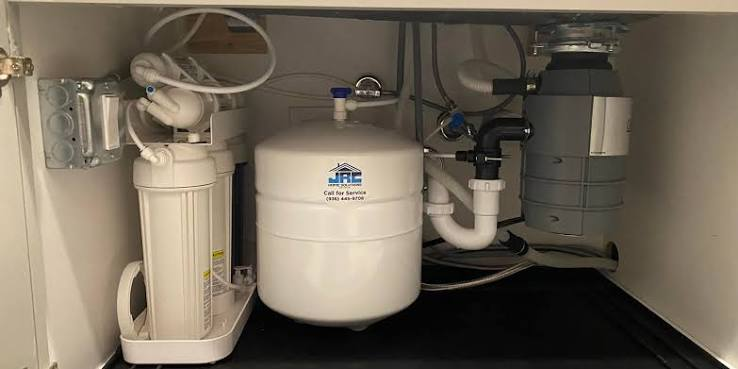
Reverse osmosis works by forcing water through a semi-permeable membrane with pores so small that contaminants can’t pass through. Think of it as a microscopic bouncer, letting water molecules in while turning away everything else.
The list of what gets filtered out is longer than most homeowners expect:
- Lead and heavy metals
- Chlorine and chloramines
- Fluoride
- Nitrates and sulfates
- Dissolved solids that cause cloudy or metallic-tasting water
- Certain bacteria and parasites that slip past standard filters
Most carbon filters and pitcher systems only address taste and odor. They don’t touch dissolved solids or heavy metals the way a reverse osmosis membrane does. If you’ve ever noticed white residue on your glassware or a slightly off taste in your tap water, that’s a sign your current filtration isn’t catching everything it should.
How Does Reverse Osmosis Compare to Other Filtration Options?
Homeowners often ask whether a simple pitcher filter or a whole-house sediment filter is “good enough.” The honest answer depends on what’s actually in your water.
Carbon filters are effective for chlorine taste and odor, and they’re affordable. But they struggle with dissolved minerals and won’t reduce fluoride or nitrates in any meaningful way. Sediment filters catch visible particles like rust and dirt but do nothing for what’s dissolved at a molecular level.
Reverse osmosis sits in a different category entirely. It’s the only common residential technology that reliably reduces total dissolved solids (TDS) alongside the broader contaminant list above. For households with well water, older plumbing, or known issues with hard water, this distinction matters.
When Should You Choose Reverse Osmosis Over a Standard Filter?
Choose reverse osmosis if your water tastes metallic, your dishes show mineral spots after washing, or a water test has flagged elevated TDS, lead, or nitrates. A standard carbon filter may be sufficient if your only concern is chlorine taste and your municipal water report shows low contaminant levels. When in doubt, a professional water test settles the question quickly.
What Should Tampa Homeowners Know Before Installing a System?
Not every reverse osmosis system is built the same, and installation quality matters just as much as the equipment itself. A poorly installed system can waste water, reduce pressure, or fail to filter effectively.
Here’s what separates a system that performs well for years from one that causes headaches:
Membrane quality. Higher-grade membranes last longer and filter more consistently. Cheaper units often need replacement far sooner than advertised.
Storage tank size. Under-sink tanks vary in capacity. A tank that’s too small means slower refill times and less water on demand, especially for larger households.
Pre- and post-filtration stages. Many systems pair the reverse osmosis membrane with carbon pre-filters and post-filters to improve taste and extend membrane life. Skipping these stages shortens the lifespan of the whole unit.
Proper drain line installation. Reverse osmosis systems produce some wastewater during filtration. A correctly installed drain line and air gap prevent backflow issues and keep the system running efficiently.
How Does Cigar City Water Pros Make the Process Easy?
Switching your home’s water supply shouldn’t feel overwhelming, and with the right team, it doesn’t have to. Clean, great-tasting water that’s ready whenever your family needs it is exactly what Reverse Osmosis delivers, and our technicians make getting there a straightforward process from start to finish.
Our approach starts with an in-home water test, not a sales pitch. We look at what’s actually in your water before recommending a system, which means you’re never paying for filtration capacity you don’t need. From there, our licensed technicians handle the full installation, including the drain line, air gap, and dedicated faucet, so everything works correctly from day one.
We also stand behind our work. Every system we install comes with a maintenance plan and clear guidance on filter replacement schedules, so you’re never left guessing when it’s time for service. Tampa Bay families have relied on us for years because we treat every installation like it’s going into our own home.
Ready for Water You Can Actually Trust?
Clean water shouldn’t be a luxury or a guessing game. If your household has been relying on bottled water, pitcher filters, or simply hoping for the best, it’s worth finding out exactly what’s in your tap water and what a proper filtration system could do about it.
Cigar City Water Pros offers free in-home water testing for Tampa Bay homeowners, with no obligation to buy anything. Reach out today to schedule your consultation and take the first step toward water that tastes as good as it should.