

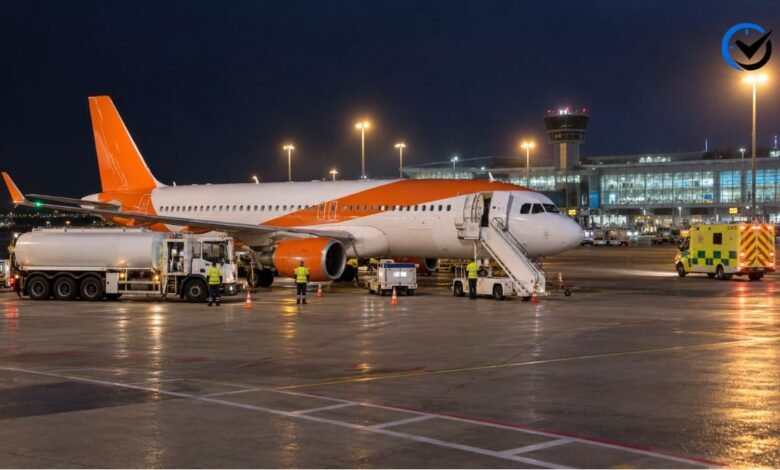
The EasyJet Flight U2238 Emergency Landing Newcastle story attracted attention because an unexpected diversion can sound alarming without context. The event involved an easyJet service traveling from Copenhagen to Manchester on October 27, 2025. During the journey, the crew diverted to Newcastle International Airport after a passenger required urgent attention. The aircraft landed safely shortly before 11:00 p.m., allowing emergency personnel to respond. Available reports did not identify a mechanical fault, fire, or security threat. Importantly, the reported service was U22238, sometimes displayed as EZY2238, rather than U2238. The central fact is simple: this was a safety-led response to a passenger welfare issue, not a reported failure of the airplane.
What Happened During the Copenhagen to Manchester Flight?
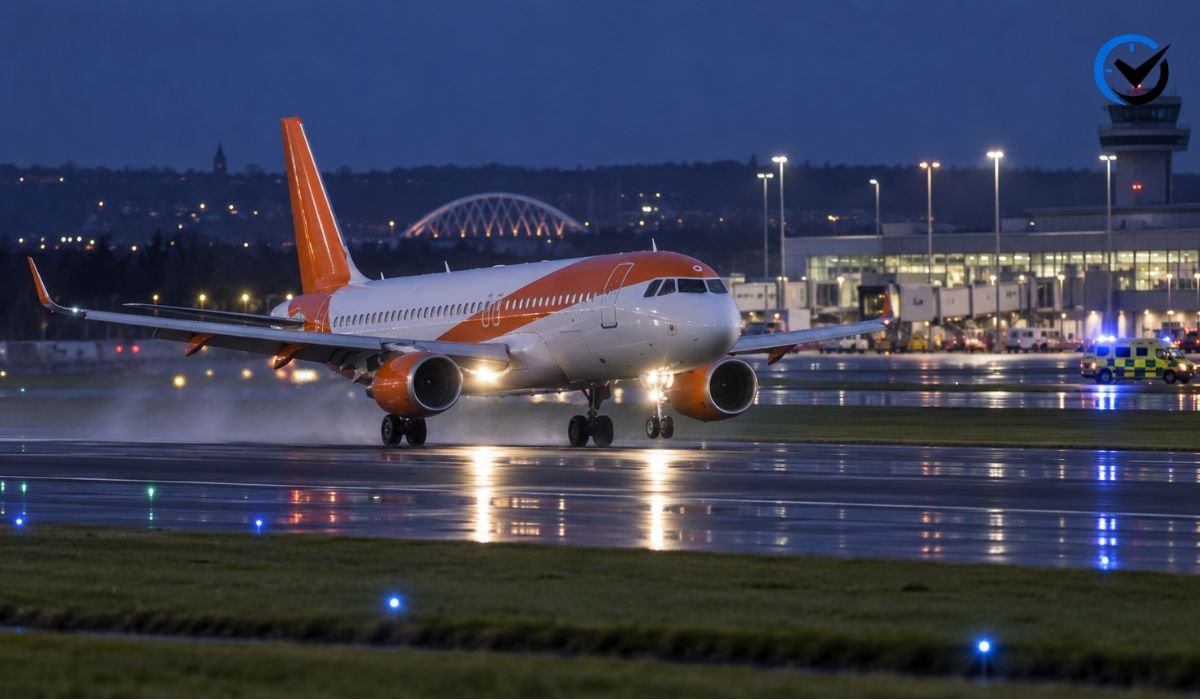
The flight departed Copenhagen at approximately 10:22 p.m. Central European Time, reportedly more than 30 minutes behind schedule. While it was heading toward Manchester, a passenger’s condition required action. The pilots changed course and landed at Newcastle instead of continuing to the planned destination. Emergency services met the airplane after it arrived. Another flight was briefly placed in a holding pattern while the runway was made available, a normal measure that gives priority to an aircraft needing prompt assistance. The response involved the crew, controllers, airport staff, and medical teams.
EasyJet’s passenger information reportedly described the reason as a “passenger welfare issue” and treated the diversion as beyond the airline’s control. That wording protects the traveler’s privacy while explaining why the journey changed. Public accounts did not provide a diagnosis, identify the person, or confirm the medical outcome. Those gaps should not be filled with guesses. The landing was completed safely, medical help was available, and the airline planned to refuel before continuing to Manchester. The disruption showed established safety procedures in use.
Why Newcastle Was a Practical Diversion Airport
Pilots do not automatically choose the closest runway. They work with airline operations and controllers to select an airport based on urgency, weather, runway availability, medical support, fuel, and route. Newcastle was practical because it is a major airport in northeast England and within a manageable distance of Manchester by air. It could accept the aircraft and provide access for emergency responders. The airport could also support refueling and preparations for the onward flight.
Why a Medical Diversion May Be Called an Emergency Landing
The phrase “emergency landing” covers very different situations. It does not always mean the aircraft is damaged or in danger of crashing. A medical diversion may receive priority because every minute can matter for an ill passenger, even when the airplane operates normally. Controllers may clear a direct route, reserve a runway, or ask other aircraft to wait. Emergency vehicles may be visible as a precaution. This is an organized way to shorten the time between illness and professional care.
How Cabin Crews Handle a Passenger Welfare Issue
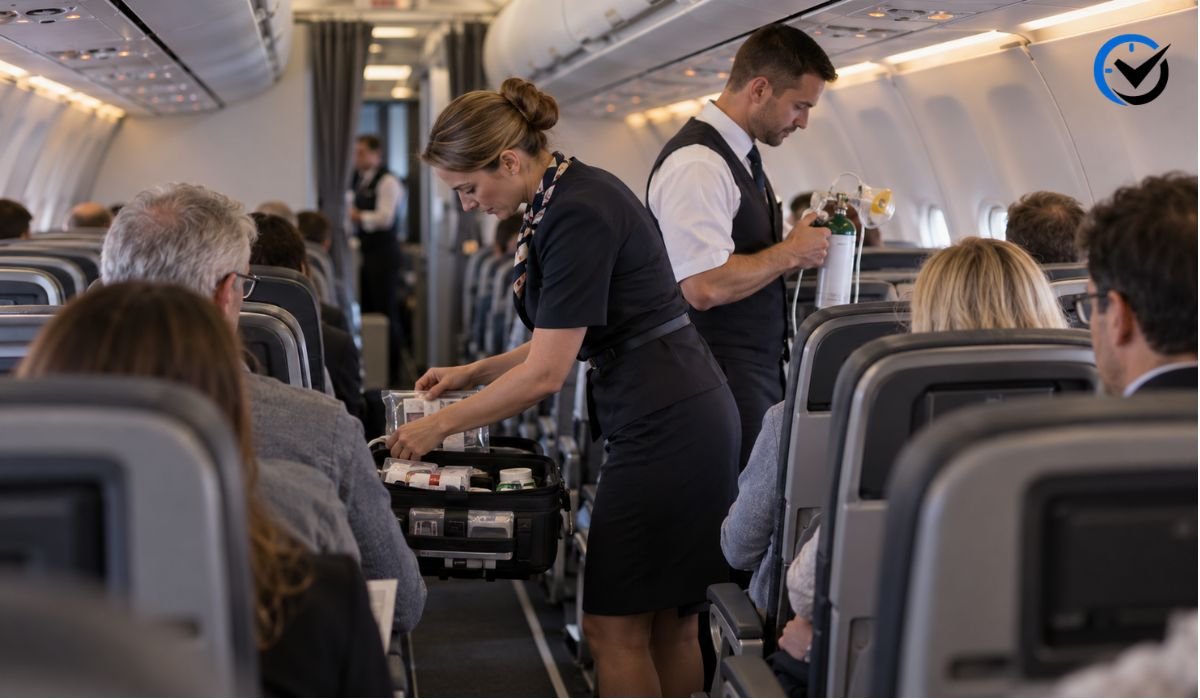
Cabin crews are trained to assess risks, provide first aid, use medical equipment, and communicate with pilots. They may ask whether a qualified medical professional is traveling, but responsibility remains with the captain. Crews can provide oxygen, retrieve a defibrillator, move nearby passengers, and contact medical advisers on the ground. Pilots consider that guidance alongside the aircraft’s position and airport choices. Passengers help by staying seated, keeping aisles clear, following instructions, and respecting privacy.
What Passengers Usually Experience After a Diversion
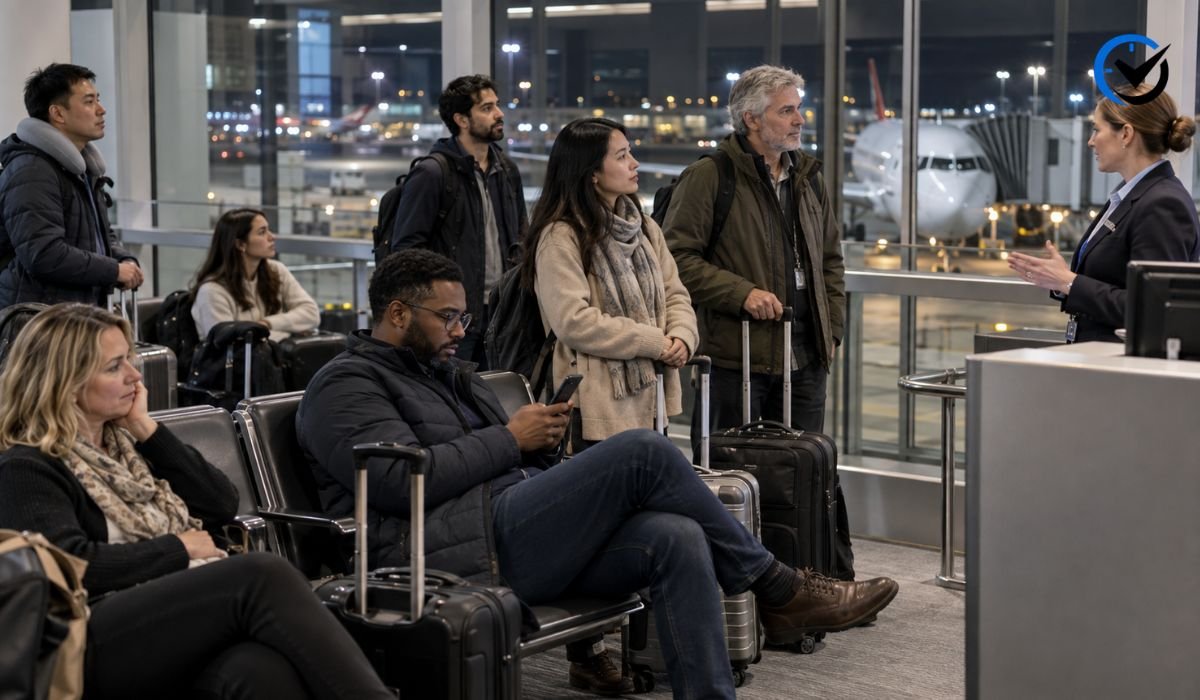
After landing, travelers may remain seated while paramedics board or the affected passenger leaves. Ground teams then determine whether the airplane can continue and how quickly. Even without a technical problem, it may need fuel, updated paperwork, a departure slot, or crew-hours checks. Information can arrive slowly because the airline cannot estimate the next step until medical and operational work is complete. Airline messages and crew announcements are more reliable than cabin rumors.
Safety Procedures Behind the Decision to Divert
The captain has final authority over the safe operation of the flight. With a serious health concern, the crew weighs the benefit of landing sooner against the time and demands of diverting. Continuing to Manchester might appear simpler, but the choice depends on distance, traffic, airport readiness, and the passenger’s condition. Crews act conservatively when waiting could have severe consequences. The Newcastle landing was a precautionary decision to obtain care, not proof of an aviation accident.
Delay, Care, and Passenger Rights
A traveler’s rights depend on the law, disruption length, and airline response. Because this journey departed from Copenhagen and was operated by a European airline group, UK and European passenger protections may be relevant. During a sufficiently long delay, an airline can have a duty to provide refreshments and, when necessary, accommodation and transport. Cash compensation is separate. A passenger medical emergency is commonly treated as an extraordinary circumstance outside the carrier’s control, so fixed compensation may not be payable even when care obligations apply. Each claim depends on its facts.
Practical Steps for Travelers Affected by a Diversion
Passengers should save their boarding pass, booking confirmation, airline messages, and reasonable-expense receipts. They should note arrival time at the final destination, not merely at the diversion airport. If the airline does not provide required food, lodging, or transportation, travelers should ask staff for help and avoid luxury spending. A written timeline can support a later request. Claims should go directly to the operating airline before a paid claims company. Travel insurance may cover additional losses, but terms and exclusions vary.
What This Event Shows About Modern Air Travel
Medical events occur throughout public transportation, but an aircraft cannot stop beside the road. Airlines plan for first aid, diversion choices, and airport coordination. The response may inconvenience hundreds of people to protect one person, reflecting the priority placed on life and safety. It can affect gates, crews, connections, and other runway traffic. This diversion shows how a serious but contained event can be managed without evidence of a broader threat. Calm cooperation gives trained teams space to work.
Final Thoughts
The EasyJet Flight U2238 Emergency Landing Newcastle account is best understood with two corrections: the reported flight was U22238, and the reason given was a passenger welfare emergency rather than an airplane malfunction. The Copenhagen-to-Manchester service diverted safely to Newcastle on October 27, 2025, where responders could assist and ground teams could prepare the flight for its next step. For affected travelers, the sensible response is to preserve booking records, monitor official updates, keep reasonable receipts, and separate care rights from fixed compensation. For everyone else, the event is a useful reminder that a diversion is a protective decision. Clear procedures, trained crews, airport coordination, and patient cooperation help turn an unexpected medical situation into a controlled landing.
Frequently Asked Questions (FAQs)
1. What was the correct flight number involved in the Newcastle diversion?
The service was identified as easyJet flight U22238, with EZY2238 used as its operational code. The shorter U2238 wording can point readers toward the wrong record. Anyone checking a booking or historical tracker should use U22238 together with the date, October 27, 2025, and the Copenhagen-to-Manchester route. Flight numbers can be reused, so the number alone is not enough to verify a particular journey.
2. Why did the easyJet flight land at Newcastle?
The aircraft diverted because of a passenger welfare issue that was reported as a medical emergency. Landing at Newcastle allowed emergency responders to reach the passenger sooner than they could have if the flight had continued under its original plan. No reliable public report connected the diversion to an aircraft defect, dangerous weather, or a security incident. The crew’s choice was therefore centered on obtaining timely care while keeping the flight under safe operational control.
3. Was the airplane itself in danger?
Available accounts do not suggest that the airplane had a mechanical problem or was at risk of crashing. The priority landing was linked to a person onboard who needed assistance. Emergency vehicles and runway priority are common precautions during medical diversions and should not be taken as proof of aircraft damage. Unless an airline, airport, or aviation authority confirms a technical fault, it is more accurate to describe this event as a medical diversion that resulted in a safe landing.
4. Did the flight reach Manchester afterward?
The airline’s stated plan was to refuel the aircraft in Newcastle and continue to Manchester. Operational plans can change because of timing, crew limits, or the condition of the cabin, so individual passengers should rely on the final record attached to their booking. The important distinction is that Newcastle was an unscheduled stop rather than the intended destination. Travelers researching a claim should use their personal arrival notification or baggage record to establish when they ultimately reached Manchester.
5. Why was another aircraft placed in a holding pattern?
Air traffic controllers may temporarily delay another landing to keep a runway clear for an aircraft receiving priority. Reports said an Air France service was briefly held while the easyJet airplane landed. Holding does not necessarily signal extreme danger; it is one of the tools controllers use to create safe spacing and give urgent traffic an uncomplicated approach. Once the priority aircraft clears the runway and airport staff confirm conditions are suitable, normal arrival sequencing can resume.
6. Are passengers entitled to compensation after a medical diversion?
Fixed compensation is not automatic. A passenger medical emergency is generally considered outside the airline’s reasonable control, which can remove the right to standard delay compensation. However, the carrier’s duty to provide care during a qualifying delay may still exist. Food, communication, accommodation, or transport can depend on the waiting time and circumstances. Passengers should keep documents, request the airline’s written reason for the disruption, and submit a direct claim if they believe assistance or reimbursement is due.
7. Can passengers claim back food or hotel expenses?
Reasonable expenses may be reimbursable when an airline should provide care but cannot offer it directly. Travelers should ask staff or customer support first, keep itemized receipts, and choose modest options that meet genuine needs. Alcohol, luxury lodging, and unrelated purchases are unlikely to be accepted. A receipt alone does not guarantee repayment because eligibility depends on the delay and applicable rules. Travel insurance may provide another route for certain costs, particularly missed reservations or connections not covered by the airline.
8. What should a passenger do during an onboard medical event?
Remain calm, follow crew instructions, and keep aisles and emergency equipment clear. Do not gather around the ill person, film the event, or share identifying details online. If the crew asks for medical professionals and you are appropriately qualified, identify yourself and follow their direction. Otherwise, the most useful action is often to stay seated and allow space. Travelers who feel unwell themselves should tell a crew member early, since prompt information can help the crew assess the problem before it becomes more serious.
9. How can someone verify details about a diverted flight?
Start with the operating airline’s messages and the flight information attached to the booking. Match the full flight number, departure date, origin, and destination, since similar numbers can refer to different services. Airport arrival records and reputable historical trackers can provide useful timing, but they may use an operational code rather than the passenger-facing code. News summaries should be compared carefully, and unverified social media posts should not be treated as evidence of the cause or a passenger’s condition.
10. Does an emergency landing mean flying is unsafe?
No. A diversion shows that the aviation system has options when continuing as planned is no longer the best choice. Commercial crews train for medical problems and many other unexpected events, while airports coordinate responders and runway access. The word “emergency” can sound frightening, but priority handling is designed to reduce risk. In this case, the reported outcome was a safe landing at a suitable airport so a passenger could receive attention, not an aircraft accident.
Recommended: Washington Commanders vs Philadelphia Eagles Match Stats: Top Performers and Records




One Comment