
Woeken Meaning Explained: Is It a Real Word, Typo, or Internet Term?
 Admin
Send an email
August 23, 2026
Admin
Send an email
August 23, 2026
If you have recently come across Woeken, you may have wondered whether it is a genuine English word, a spelling mistake, a newly created internet expression, or the name of something specific. The confusion is understandable because the term looks familiar while lacking a clear, widely accepted definition. Current online discussions give several explanations, including a possible typo for “woken,” a creative digital term, a brand or username, and an informal expression connected with focused work. However, these explanations are not equally well supported, and some websites present guesses as established facts. The safest way to understand the term is to examine its context rather than assume that one definition applies everywhere.
What Does Woeken Mean?
At present, Woeken does not have one fixed meaning in standard English. Unlike familiar words that have an established definition and grammatical role, this unusual spelling appears to exist mainly in scattered online contexts. Some recent articles describe it as an emerging expression associated with concentration, creativity, or productivity, while others treat it simply as an ambiguous term that may have resulted from typing or naming practices. Because these explanations differ considerably, it would be misleading to claim that the word has a single official definition. Its meaning depends heavily on where and how a reader encounters it.
Is Woeken a Real English Word?
The strongest conclusion available today is that it should not be treated as a standard English vocabulary word. There is no reliable evidence showing that it has an established place in ordinary English grammar or that English speakers generally use it with one agreed meaning. That does not mean the spelling cannot exist. Names, usernames, invented terms, project titles, and brand names do not need to appear in a dictionary to be valid names. The important distinction is between an established vocabulary word and a word-like expression created or used for a particular purpose. Current discussions consistently describe this term as non-standard or ambiguous rather than as ordinary English vocabulary.
Could It Be a Typo for Woken?
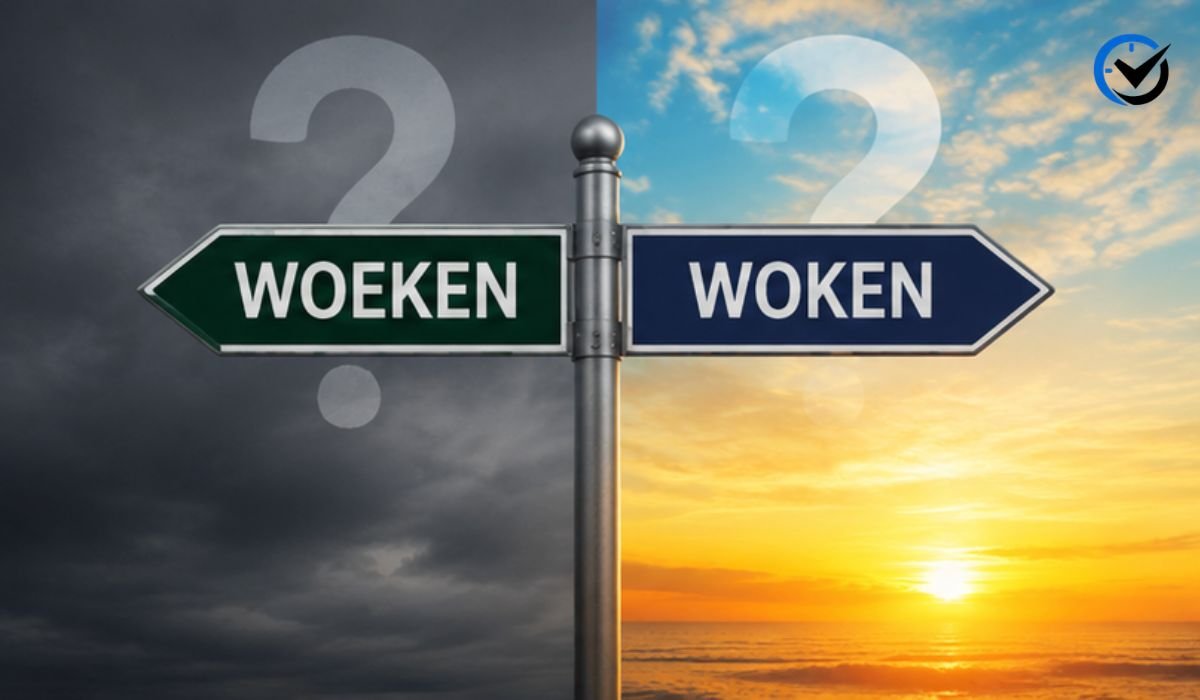
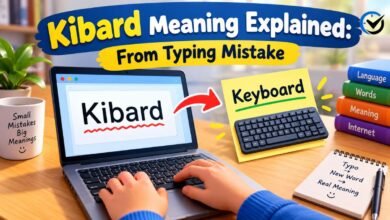
One of the most practical explanations is that Woeken may be a misspelling of “woken.” The word “woken” is the past participle of “wake,” as in, “She had woken before sunrise.” When someone types quickly, uses an unfamiliar keyboard, or relies on imperfect autocorrection, an extra letter can appear. This explanation becomes especially likely when the surrounding sentence clearly requires a form of “wake.” However, it is important not to assume every occurrence is a mistake. If the spelling appears as the name of an account, product, website, project, or creative concept, changing it to “woken” could remove the intended meaning.
Why Does Woken Look So Similar?
The confusion becomes clearer when the two spellings are placed side by side. “Woken” is a familiar English word, while “Woeken” looks almost like a modified version of it. Both begin with “wo,” and both have a similar overall rhythm when pronounced. That visual similarity can make an unfamiliar term appear legitimate even when readers have never encountered it before. Online content can strengthen this effect. Once an unusual spelling appears on several webpages, a person may assume it must have an established meaning. Repetition, however, does not automatically turn an unfamiliar spelling into standard vocabulary.
Could It Be an Internet Term?
It is possible to describe Woeken as an emerging internet term, but that description needs caution. Several recent websites use the word this way, particularly when discussing creativity, focused work, digital culture, or online identity. Yet there is not enough consistent evidence to show that a large, established online community uses it with one shared definition. Genuine internet slang normally develops through repeated use among identifiable groups. People use the expression naturally in conversations, posts, videos, jokes, and comments before writers begin explaining it. The available evidence here is much less settled.
The Productivity Meaning of Woeken
One interpretation that appears repeatedly online connects the term with deep focus and concentrated work. Under this interpretation, someone might use it to describe a period when they deliberately ignore distractions and concentrate on an important task. The concept resembles familiar ideas such as deep work, focused practice, or a flow state. Some recent articles present this interpretation as one of the central meanings of the word. Still, readers should understand that this is an emerging interpretation rather than a proven dictionary definition. It is better described as an online association than an established meaning of the English language.
Woeken as a Creative or Digital Name
Another reasonable use is as a creative name. Unusual spellings can be attractive when someone wants a distinctive username, project title, product name, or online identity. A made-up word has an advantage in this setting because it can be given a meaning by the person or organization using it. Several current discussions mention Woeken in connection with usernames, brands, digital projects, and online identities. In such cases, asking what the word means in a dictionary may miss the point. The intended meaning comes from the specific owner or community using the name.
Does Woeken Have a Confirmed Origin?
There is no clearly documented origin story that establishes who first created the term or when it entered common online use. Some websites speculate about connections with words such as “woken,” “working,” “weeks,” or European-looking spellings, but similarity alone does not prove a linguistic relationship. A trustworthy explanation should separate evidence from speculation. Until a documented creator, publication, community, or historical source establishes where the spelling came from, its exact origin should remain classified as unknown.
Why Does the Word Look European?
Part of the curiosity comes from the spelling itself. The combination of letters in Woeken can look unusual to English speakers while seeming vaguely familiar to people who have encountered Dutch or German words. That visual impression has led some online writers to suggest possible European-language connections. However, a word looking similar to another language does not prove that it belongs to that language. Sound patterns and letter combinations can occur independently across languages. Current discussions also caution against treating the appearance of the spelling as evidence of a confirmed Dutch or German origin.
Is Woeken Connected to the Dutch Word “Weken”?
The similarity to Dutch vocabulary is another source of confusion. Some online pages mention weken, which can have legitimate meanings in Dutch depending on context, including references to weeks and soaking. That does not establish that “Woeken” is a Dutch word or that the two spellings are linguistically connected. A single changed vowel or additional letter can produce a completely different form. Without reliable linguistic evidence, it is better to treat the resemblance as a curiosity rather than an established origin. Readers who encounter the spelling in a Dutch sentence should consider the surrounding language before assigning it an English meaning.
Why Are So Many Websites Discussing Woeken?
The sudden appearance of many explanatory pages is itself part of the mystery. Several articles about the term were published during 2026 and offer competing descriptions, ranging from productivity and creativity to simple misspelling or digital identity. This creates a feedback loop: someone sees an unfamiliar word, searches for an explanation, finds articles about it, and then the word becomes more visible online. Greater visibility can make the term appear more established than it really is. That is why readers should evaluate the quality and consistency of the information instead of counting how many pages repeat the same claim.
How Context Changes Its Meaning
The best way to interpret the spelling is to look at the sentence, platform, and purpose where it appears. If someone writes that they “had woeken early,” the intended word may simply be “woken.” If the term appears in a username, it may have no dictionary meaning at all. If it appears in a productivity discussion, the writer may be using the emerging focus-related interpretation. If it appears in a company or project name, it may be a deliberately invented label. Context provides information that the spelling alone cannot provide.
Should You Use Woeken in Formal Writing?
For normal English writing, it is generally safer not to use Woeken as an ordinary word unless you are specifically discussing the term itself. In schoolwork, professional documents, journalism, business correspondence, or general articles, established vocabulary will communicate your meaning more clearly. If you intended “woken,” use “woken.” If you are referring to a particular brand, username, title, or project called Woeken, preserve its official spelling. This approach avoids confusion while respecting intentional names. The distinction is simple: correct a typo, but do not “correct” a proper name that intentionally uses an unusual spelling.
Could Woeken Become a Real Word?
It could, but that would require much broader and more consistent usage. Language changes when communities repeatedly adopt new expressions and give them recognizable meanings. Some invented words eventually become common vocabulary, while others disappear after a short period. For this term to become established, people would need to use it naturally across different settings and understand it in roughly the same way. Dictionaries generally document language after substantial usage has developed rather than simply because a word appears on websites. For now, the evidence points to an uncertain online expression rather than a settled English word.
What Makes the Term Interesting?
The real interest in Woeken may have less to do with the word itself and more to do with how modern language develops online. The internet allows a spelling mistake, username, joke, product name, or creative invention to spread internationally within a short time. Search engines then preserve and amplify those appearances. A term can become familiar before its meaning is settled. That creates a modern language puzzle in which visibility and legitimacy are not necessarily the same thing. This example shows why digital readers need to distinguish between something that is widely documented and something that is simply widely repeated.
Final Thoughts
Woeken is best understood as an ambiguous, non-standard term rather than a clearly established English word. Current online material connects it with several possibilities, including a misspelling of “woken,” a productivity-related expression, a creative invention, and a digital name, but none of these explanations provides a universally accepted definition. The most reliable approach is therefore to examine the context in which the spelling appears. If it refers to waking, “woken” is likely correct; if it is a name or brand, the unusual spelling may be intentional; and if it appears as an emerging internet expression, its meaning may still be developing. For now, the uncertainty surrounding the term is not a weakness in the explanation—it is the most accurate part of the story.
Frequently Asked Questions
1. Is Woeken an official English word?
No established evidence currently supports treating Woeken as a standard English word. It is better understood as an ambiguous online expression, possible misspelling, or intentional name. Several recent sources reach a similar conclusion while disagreeing about its possible uses.
2. What is the most likely meaning of Woeken?
There is no single confirmed meaning. In some online contexts, it is associated with focused work or creativity, while in others it appears to be a typo, username, or invented name. The surrounding context is therefore essential.
3. Is Woeken a typo for Woken?
It can be. “Woken” is a normal English word, while “Woeken” is non-standard. If the sentence is about waking or having awakened, “woken” is almost certainly the intended spelling.
4. Is Woeken related to productivity?
Some recent online sources use it to describe concentrated, distraction-free work or creative focus. However, this is an emerging interpretation rather than a universally recognized definition.
5. Is Woeken a Dutch word?
There is no reliable basis for treating the exact spelling “Woeken” as a standard Dutch word. Its appearance may remind readers of Dutch vocabulary, but visual similarity is not enough to establish a linguistic connection.
6. Can Woeken be a brand name?
Yes. An unusual invented spelling can function perfectly well as a brand, username, project name, or digital identity. In that situation, its meaning comes from the owner or organization using it rather than from a dictionary.
7. Why do I keep seeing Woeken online?
The term has attracted a cluster of recent explanatory articles, which increases its visibility in search results. Some pages also give it different meanings, creating additional curiosity and searches.
8. Is Woeken slang?
It may be described as emerging internet slang by some websites, but there is not enough consistent evidence to say that it has become established slang with one shared meaning. Its slang status remains uncertain.
9. Should I replace Woeken with Woken?
If you accidentally typed Woeken while referring to the verb “wake,” then yes, “woken” is the appropriate correction. If Woeken is being used intentionally as a name, username, or title, it should remain unchanged.
10. Will Woeken eventually become a recognized word?
That is possible but impossible to predict. If people adopt the term consistently and give it a stable meaning over time, it could develop into recognized vocabulary. If usage fades, it may remain a temporary internet curiosity.
Recommended: How Is Bảce Used? Meaning, Digital Culture, Branding, and Common Contexts
Admin
Send an email
August 23, 2026



One Comment