

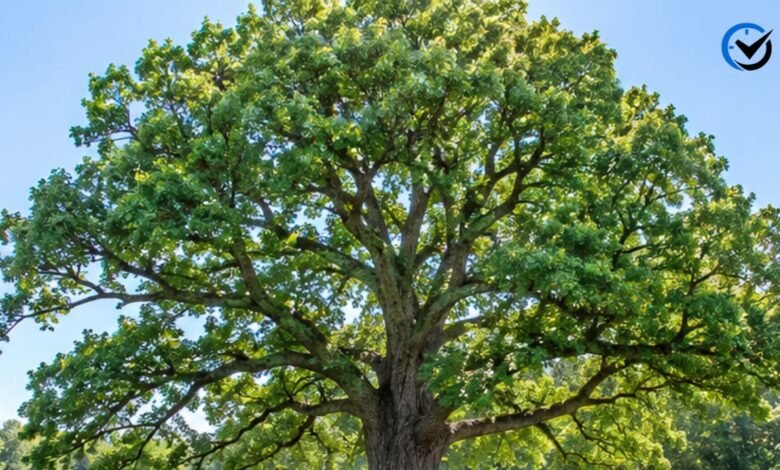
Lewis Center, Ohio, sits in a part of central Ohio where suburban development meets mature woodland, waterways, preserved land, and long-established trees. Among the most interesting natural features in the area are exceptionally large specimens, especially native hardwoods such as white oak, sycamore, cottonwood, and black walnut. The phrase Ohio Champion Trees Lewis Center Ohio is often used to describe these remarkable trees, but there is an important distinction between a genuinely recognized champion and a simply impressive local tree. Understanding that difference makes the subject much more interesting and helps readers separate documented records from claims repeated online.
One tree that deserves particular attention is the massive white oak, Quercus alba, associated with the Lewis Center area. White oak is one of Ohio’s best-known native hardwoods and is capable of living for centuries under favorable conditions. Its broad crown, thick trunk, strong branches, and distinctive leaves make a mature specimen easy to recognize. Whether a particular Lewis Center white oak holds an official state title at a given time depends on formal measurements and current records, but its size and character can still make it a meaningful local landmark.
What Is a Champion Tree?
A champion tree is not simply the oldest, tallest, or most attractive tree in an area. Champion-tree programs compare trees of the same species using standardized measurements. In the Ohio big-tree tradition, the main measurements include trunk circumference, overall height, and average crown spread. These figures are combined into a score so that unusually large specimens can be compared more consistently.
This approach matters because trees have different growth patterns. A cottonwood may become extremely tall and massive near water, while a white oak may develop a much wider trunk and crown over a much longer period. Looking at only height would therefore give an incomplete picture. A measurement-based system provides a more balanced way to identify exceptional examples.
Why the White Oak Is So Remarkable
The white oak, Quercus alba, has a special place in the forests of eastern North America. It is a long-lived deciduous tree that can develop a broad, spreading crown and a substantial trunk when it has enough room. Mature specimens often look very different from younger oaks because their branches become large and irregular, creating a canopy that can dominate the surrounding landscape.
A massive white oak in Lewis Center is notable partly because of the amount of time required to reach such dimensions. Unlike some fast-growing trees, white oak generally builds its size gradually. A large specimen therefore represents many decades of growth and, in some cases, potentially several centuries. Its physical appearance can offer a visible connection to an older landscape that existed before much of the area’s modern development.
How White Oaks Grow in Central Ohio
Central Ohio provides conditions that can support impressive hardwood growth. Deep soils, seasonal rainfall, sunlight, and access to moisture all influence how successfully a tree develops. A tree that grows in open space can also expand its crown more freely than one competing closely with surrounding forest trees.
White oak benefits from these conditions when its roots have adequate room and the surrounding soil remains relatively undisturbed. Its ability to withstand changing seasons also contributes to its long life. Over many years, gradual trunk growth and repeated expansion of the crown can produce the enormous proportions that attract the attention of tree enthusiasts.
Lewis Center and Its Changing Landscape
Lewis Center has changed considerably as the communities of southern Delaware County have expanded. Roads, homes, businesses, schools, and other development have transformed parts of the landscape. Yet mature trees remain in parks, wooded corridors, older properties, stream areas, and preserved natural spaces.
This mixture of development and established vegetation makes large trees particularly interesting. A huge oak standing among newer surroundings may have existed long before nearby streets and buildings. It can therefore tell part of the area’s environmental story simply through its survival. Protecting such trees becomes more complicated as land uses change, because the tree itself may be old while everything around it is relatively new.
The Difference Between a Notable Tree and an Official Champion
This distinction is essential when discussing champion trees around Lewis Center. A tree can be enormous, old, healthy, and locally famous without being the officially recognized champion for its species. Formal champion status depends on documented measurements and comparison with other trees in the relevant registry.
Online articles sometimes use the word “champion” loosely to describe any exceptionally large tree. That can create confusion when readers assume that every remarkable white oak near Lewis Center is officially listed as an Ohio champion. A more careful description is “champion-sized,” “notable,” or “exceptionally large” unless current official records confirm the title.
What Makes a White Oak Stand Out?
Several physical characteristics can make a mature white oak especially impressive. Its trunk may become extremely broad, while its major limbs spread outward rather than growing only upward. The crown can eventually cover a substantial area, creating deep shade underneath during summer.
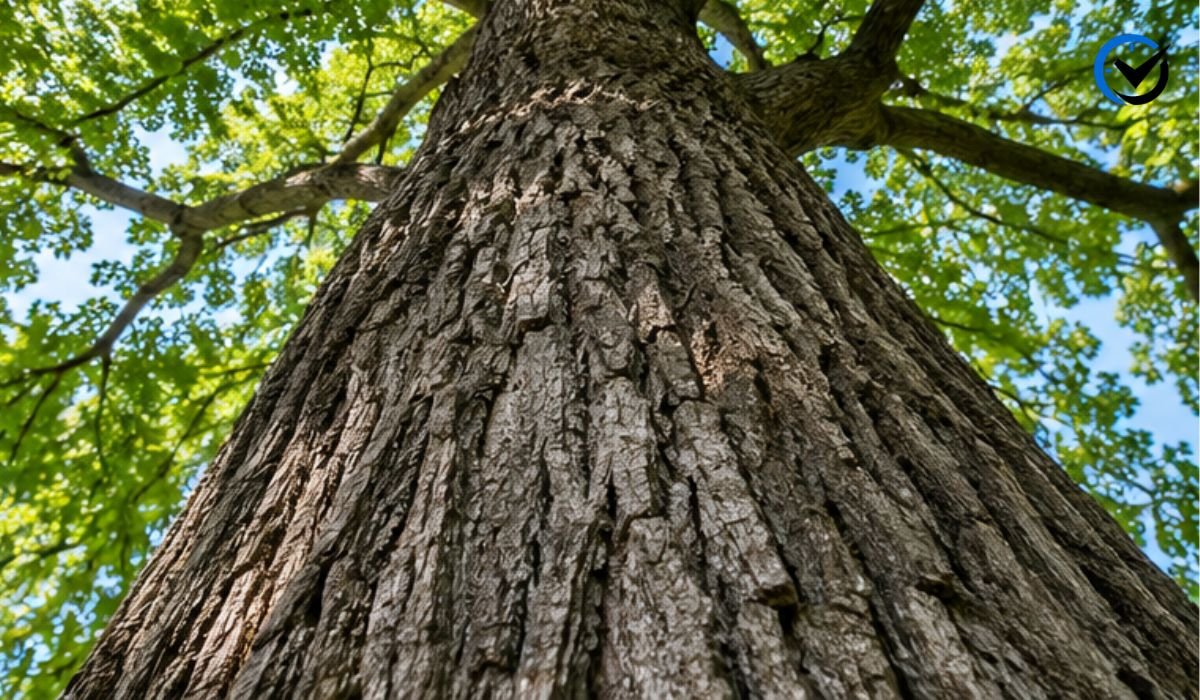
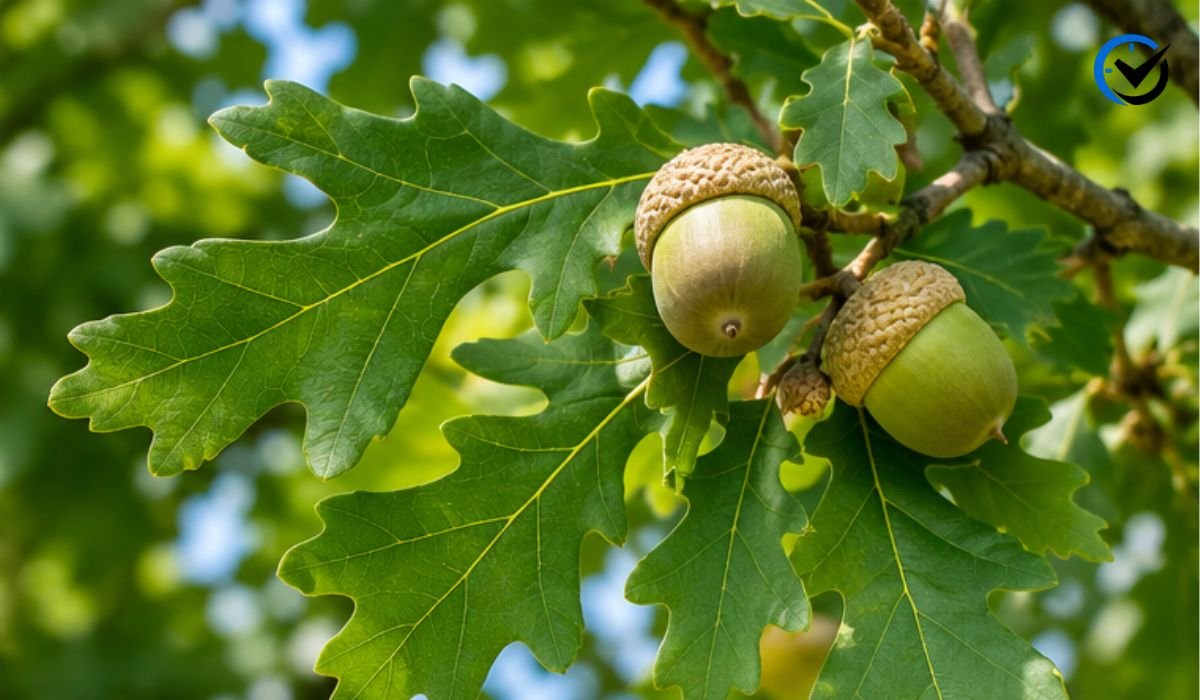
The bark also changes with age. Mature white oaks typically develop a light gray appearance with ridges and irregular texture. Their leaves have rounded lobes, and their acorns provide an important food source for wildlife. These features combine to give an old white oak a distinctive appearance that remains recognizable even from a distance.
The Ecological Value of a Mature Oak
A very large oak is more than a large piece of wood. Mature trees provide habitat, nesting opportunities, shade, and food for many organisms. White oak acorns are particularly important to wildlife, including squirrels, deer, wild turkeys, and various birds and mammals.
The tree also contributes to the surrounding environment by storing carbon, intercepting rainfall, helping moderate local temperatures, and supporting organisms that use bark, branches, leaves, and decaying wood. As a tree ages, cavities and dead branches may develop naturally, creating additional habitat. These features can look imperfect from a landscaping perspective but are valuable components of a functioning ecosystem.
Other Large Trees Around Lewis Center
The white oak is only one part of the area’s larger tree story. Delaware County and the surrounding central Ohio landscape also support large eastern cottonwoods, American sycamores, black walnuts, maples, and other native species.
Eastern cottonwoods are especially capable of reaching enormous dimensions when growing near water. American sycamores are also famous for their massive trunks and attractive mottled bark. Black walnut can become both tall and broad, while maples can develop large crowns in favorable locations. Each species demonstrates a different version of what a champion-sized tree can look like.
The Historic Connection to Alum Creek
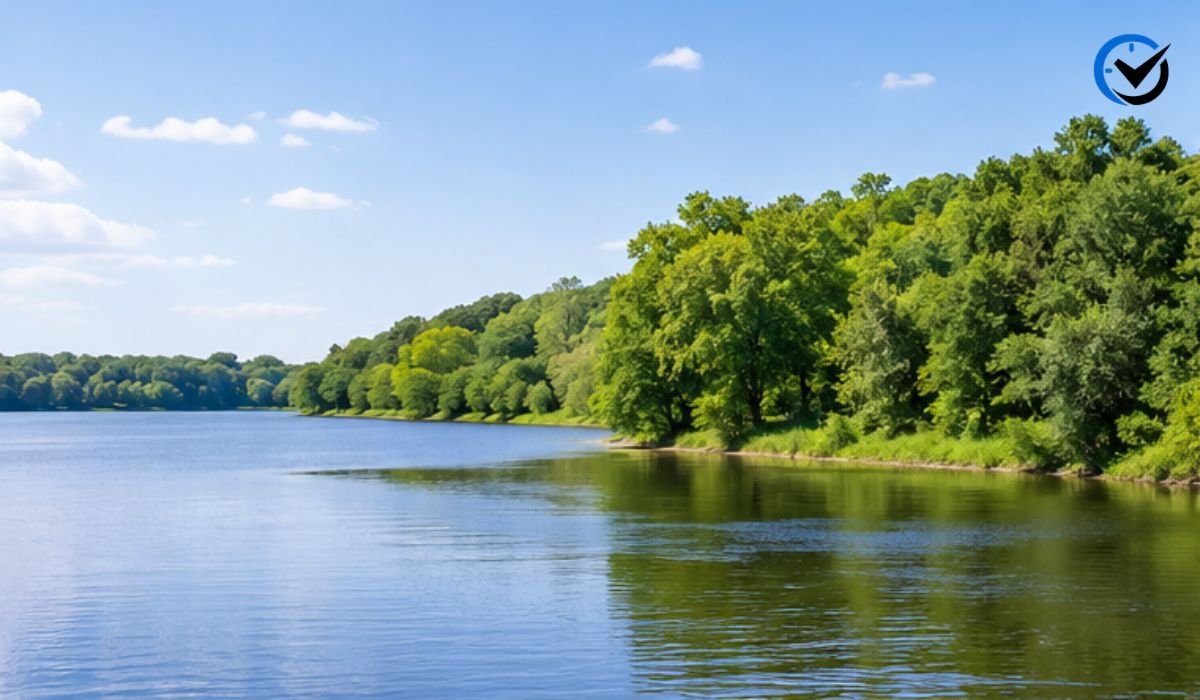
Alum Creek is an important part of the natural landscape surrounding Lewis Center and Delaware County. Its waterways and associated soils create conditions that can support vigorous tree growth. The wider Alum Creek area has also been associated with historically documented exceptionally large trees, including a remarkable eastern cottonwood.
Historical big-tree records have identified a very large cottonwood at Alum Creek State Park, demonstrating that Delaware County has supported trees of extraordinary size. This record is useful context, but it should not automatically be presented as proof that every large tree near Lewis Center is a current state or national champion. Tree rankings can change as trees grow, decline, are remeasured, or are surpassed by another specimen.
Why Tree Measurements Matter
Measuring a large tree may sound simple, but accurate results require care. Trunk circumference is generally taken at a standardized height above the ground. Height must also be measured consistently, while crown spread requires attention to the tree’s widest and narrowest canopy dimensions.
These details matter because even small differences can affect a tree’s final score. A casual estimate made by looking at a trunk or canopy cannot substitute for a documented measurement. For that reason, official champion-tree programs use standardized procedures when evaluating potential record holders.
Age Is Not the Same as Champion Status
People naturally associate enormous trees with great age, but age alone does not determine champion status. A tree can be relatively young for its species yet grow rapidly under ideal conditions and become exceptionally large. Another tree may be extremely old but grow in a crowded forest where competition limits its height and crown spread.
White oak complicates the issue because it is both long-lived and capable of becoming large. An ancient oak may therefore be remarkable for several reasons at once, but its age should not be presented as an exact fact unless the tree has been scientifically dated or reliably documented.
Why Old Trees Survive Development
The survival of a large tree through decades of land-use change often depends on location and circumstance. Trees along waterways, in difficult-to-farm areas, or on land that remained wooded may have escaped removal. Later conservation efforts can provide additional protection.
Some mature trees also survive because property owners value them. A large oak can become part of a home’s identity, a neighborhood’s landscape, or a community’s sense of place. Once residents recognize its ecological and historical value, preserving it can become a shared priority.
Visiting Large Trees Responsibly
Anyone interested in remarkable trees around Lewis Center should remember that not every large specimen is located on public land. Some may stand on private property, school grounds, or restricted natural areas. A tree’s popularity does not give visitors permission to enter private land or leave designated trails.
Responsible tree watching is simple: observe from permitted areas, respect barriers and signs, avoid climbing or damaging trees, and do not compact the soil around their roots unnecessarily. For particularly old trees, protecting the surrounding ground can be just as important as protecting the trunk itself.
How a Tree Can Become a Champion
A potential champion normally begins as a discovery. Someone notices an unusually large tree and identifies its species. The tree is then measured using accepted methods, and the measurements are submitted through the appropriate program.
Verification is important because a champion designation represents a comparison with other trees. If a candidate has a larger combined score than the existing record holder, its status can change. This process means champion-tree records are not permanent monuments carved in stone. They reflect the best documented measurements available at a particular point in time.
Why Lewis Center’s Trees Deserve Attention
The value of these trees extends beyond whether one specimen appears at the top of an official list. Large trees provide a way to understand the landscape before modern development. A mature white oak can remain standing while roads, houses, businesses, and neighborhoods appear around it.
That continuity gives old trees a cultural as well as ecological role. They can become natural landmarks and reminders that today’s communities occupy landscapes with much longer histories. In a rapidly changing suburb, that connection can be especially meaningful.
How to Recognize a White Oak
For readers exploring Ohio’s forests, learning to identify Quercus alba can make the experience more rewarding. White oak leaves typically have rounded lobes rather than sharp points. The bark of mature trees is commonly light gray and develops a rugged texture. Acorns are another useful identifying feature.
The overall shape is also helpful. Mature white oaks often have strong horizontal limbs and broad crowns. When growing in an open setting, they may look dramatically wider than nearby trees. These characteristics make a mature white oak relatively easy to distinguish once the basic features become familiar.
Protecting Large Trees for the Future
Large trees need protection long before they become record holders. Construction activity can damage roots, alter drainage, compact soil, and remove the space a mature crown needs. Even when the trunk remains untouched, changes around the tree can gradually affect its health.
Good preservation practices focus on the whole growing environment rather than the visible trunk alone. Keeping construction away from major root zones, maintaining suitable soil conditions, protecting the canopy, and monitoring signs of disease or structural problems can all improve the chances that an old tree will remain healthy.
What the Champion-Tree Idea Teaches Us
Champion-tree programs do more than create lists of large trees. They encourage people to look more carefully at ordinary landscapes and recognize the biological achievements hidden within them. A tree that seems like part of the scenery can turn out to be hundreds of years old or unusually large for its species.
The idea also teaches an important lesson about measurement. Size is impressive, but documented size provides a stronger basis for comparison. Combining careful observation with reliable records allows communities to celebrate exceptional trees without exaggerating their status.
Final Thoughts
The story of Ohio Champion Trees Lewis Center Ohio is ultimately about more than a single record. It is about the remarkable trees that remain within and around a growing central Ohio community. The massive white oak, Quercus alba, is especially compelling because it represents the strength, longevity, and ecological importance associated with one of Ohio’s signature hardwoods.
At the same time, champion status should be used carefully. A remarkable local tree and an officially verified state champion are not necessarily the same thing. Current records, formal measurements, and location details matter. That distinction makes the story more accurate rather than less interesting.
Whether a particular white oak holds an official title or simply stands as an extraordinary local specimen, its value is easy to understand. It provides habitat, shade, beauty, and a living connection to the past. Preserving trees of this scale ensures that future residents of Lewis Center can experience something that cannot be recreated quickly: a living landmark shaped by generations of growth.
Frequently Asked Questions
1. What is an Ohio champion tree?
An Ohio champion tree is an exceptionally large example of its species recognized through a formal big-tree program. Measurements such as trunk circumference, height, and crown spread are used to compare specimens.
2. Is the large white oak in Lewis Center officially a state champion?
Its remarkable size can be discussed as a notable local feature, but official champion status should only be claimed when supported by a current verified state record. Large trees and officially listed champions are not always the same thing.
3. What is the scientific name of the Lewis Center white oak?
The white oak is scientifically known as Quercus alba. It is a native North American hardwood that occurs naturally across much of the eastern United States.
4. How old can a white oak become?
White oaks can live for several centuries when growing in favorable conditions. However, the age of an individual tree should not be stated precisely unless reliable evidence supports the estimate.
5. Why are white oaks important to wildlife?
White oaks produce acorns that provide food for many animals, including squirrels, deer, turkeys, and numerous birds. Their mature trunks and branches can also provide shelter and nesting habitat.
6. Are all very large trees champion trees?
No. A tree can be exceptionally large without holding an official champion title. Champion status depends on documented measurements and comparison with other specimens of the same species.
7. What other large trees can be found near Lewis Center?
The broader area supports large eastern cottonwoods, American sycamores, black walnuts, maples, and other mature hardwoods. Waterways and preserved wooded areas can provide particularly favorable growing conditions.
8. Can someone nominate a large tree for champion consideration?
Potentially, yes. Big-tree programs generally allow members of the public to identify and nominate unusually large trees. Accurate species identification, measurements, photographs, and location information are important parts of the process.
9. Can visitors inspect large trees on private property?
Not without permission. A tree’s status as a notable or potential champion does not provide public access to private land. Visitors should stay on public property or designated trails unless the owner has given permission.
10. Why should large trees in Lewis Center be protected?
Large mature trees provide habitat, shade, carbon storage, stormwater benefits, and visual character. They also preserve a connection to the region’s earlier landscape and can remain important natural landmarks for generations.
Recommended: Freeoners: Understanding the Idea, Meaning, and Online Context





One Comment