
Tumbons Travel Guide: Thai Addresses, Village Communities, and Local OTOP Products

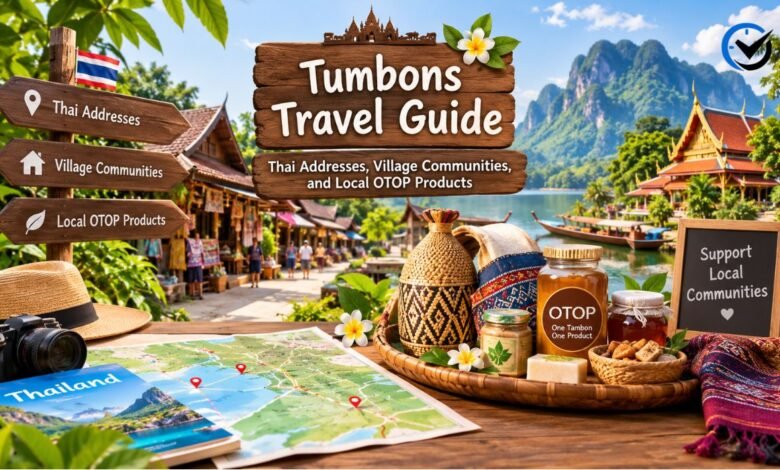
Traveling beyond Thailand’s best-known attractions becomes easier when you understand the place names in a hotel address, workshop listing, or village invitation. If you have encountered “Tumbons,” the relevant Thai term is usually tambons, meaning subdistricts. These areas help identify where communities are located, but they are not destinations with a standard set of visitor facilities. Learning how they fit into an address can prevent a wrong turn, improve communication with a driver, and help you find local producers. This guide explains that geography alongside village visits and Thailand’s OTOP products.
What “Tumbons” Means in a Thai Travel Context
A tambon is an administrative subdistrict within an amphoe, or district, which sits within a province, known as a changwat. In rural areas, subdistricts contain administrative villages, commonly called muban. The spelling “tumbons” appears in some English-language material, but tambon is the form to recognize in official addresses. A subdistrict can include several settlements, so its name alone does not identify a particular home, market, or meeting point. It also should not be confused with a local government office or a tourism organization. For a visitor, its immediate value is geographic: it narrows down the area you need to reach.
How to Read a Thai Address
A typical provincial address moves from the specific property toward broader locations. It may include a house number, building or village details, a road or lane, the subdistrict, district, province, and postal code. Thanon means road, while soi identifies a lane or side street. Thailand uses five-digit postal codes, but a postal code does not pinpoint an individual property. When arranging a pickup, copy the full address supplied by the host rather than rebuilding it from a map label. Keep the Thai version as well as the English version. That gives a driver or local contact another way to recognize the destination if the English spelling is unfamiliar.
Why House Numbers and Moo Need Careful Reading
In a rural address, moo followed by a number identifies an administrative village area within the subdistrict. It does not necessarily describe a single compact settlement. In a hypothetical address beginning “25 Moo 4,” 25 is the property number and Moo 4 is the village designation. A house number containing a slash should also be preserved exactly; the slash is part of the address, not a fraction to simplify. Do not assume neighboring numbers reveal walking distance or that the village number identifies a road. For navigation, combine these details with the host’s directions, a recognizable landmark, and an exact entrance location.
Understanding Bangkok’s Different Address Terms
Bangkok uses khet for a district and khwaeng for a subdistrict, rather than the provincial labels amphoe and tambon. This matters when a booking form asks you to choose the correct administrative area. A familiar neighborhood name may describe the surrounding area without matching the required district or subdistrict field. Use the address given by the property, including its building, floor, or unit details where relevant. Also distinguish Bangkok itself from neighboring provinces that are part of the wider metropolitan area. A place described as “near Bangkok” may have a provincial address, so replacing its province with Bangkok can create confusion.
Turning an Address Into a Reliable Travel Route
A subdistrict name helps establish the right area, while an exact location helps establish the final stop. Compare the province and district before accepting a map result, especially when several entries have similar names. Then ask whether the marker indicates the visitor entrance, workshop, homestay, or community office. These may be different places. Save the address and route before leaving, and keep a contact number available. Plan the return journey, including the pickup point and agreed fare where applicable. A destination’s apparent proximity to a main town does not tell you whether convenient transport will be available when you finish.
Choosing a Village Experience That Matches Your Interests
Choose a community visit around something you want to learn, such as pottery, weaving, cooking, farming, or river life. A village name on a tourism page does not mean every household accepts visitors or every activity runs daily. Contact the organizer to confirm what is available, how long it takes, and whether advance booking is required. Explain your group size, language needs, and any mobility requirements. Ask what the fee includes, particularly meals, materials, guiding, and transport. A short workshop can fit a day trip, while a homestay requires clearer expectations about sleeping arrangements and shared facilities. Match the experience to your comfort and interests before committing.
Visiting Communities With Respect and Realistic Expectations
Community tourism can bring visitors into places where residents are working, worshipping, and caring for their families. Follow the host’s guidance about clothing, photography, and access to homes or religious spaces. Ask before photographing people, especially children, and accept a refusal without discussion. During a demonstration, allow the maker to control the pace rather than interrupting for staged photographs. A paid workshop recognizes teaching time as well as materials, so it is reasonable for observation and participation to have different prices. Favor visits that clearly explain who organizes the activity and how local people participate. Participation and consent matter more than an itinerary’s promise of an “authentic” encounter.
What OTOP Means for Local Products
OTOP stands for One Tambon One Product, Thailand’s program for developing and promoting goods connected with local knowledge and communities. It covers five broad categories: food, beverages, textiles and clothing, household goods and decorative items or souvenirs, and nonfood herbal products. Participating producers can include community groups, individual community makers, and small or medium enterprises. The name does not mean you should expect only one item in a subdistrict’s shops. Nor does the label establish a single production method for every product. For travelers, it provides a useful starting point for finding regional goods and asking about their origins. Look beyond the name to the producer, materials, workmanship, and intended use.
Buying Souvenirs With Clear Origins and Useful Details
Local markets, producer workshops, community shops, and organized product fairs can offer different buying experiences. A workshop may make it easier to discuss the production process, while a shop may offer a broader selection. Ask where an item was made and whether the seller represents the producer directly. For textiles, check the fiber, stitching, and washing instructions. For ceramics, inspect the finish and ask whether the piece is intended for food use or decoration. Food purchases need readable ingredient and storage information. Compare like with like before judging price, because size, materials, and finishing can differ. Request a receipt for valuable purchases and discuss protective packing before paying for anything fragile.
Don Kai Dee Shows How Crafts and Place Names Connect
Don Kai Dee, also written Don Kai Di, is a ceramics community in Krathum Baen District, Samut Sakhon Province, known for decorated Benjarong ware. Its location illustrates why a village name, subdistrict, district, and province each help identify a destination. Tourism descriptions have highlighted opportunities to watch artisans decorate ceramics and try painting a piece. Confirm which workshop currently welcomes visitors and whether participation is available on your dates. If your own painted item requires firing, ask about collection or delivery before starting. Watching the work can also help you understand differences between pieces, making a purchase more informed than choosing solely by color or price.
Final Thoughts
Understanding Thai subdistricts makes addresses easier to interpret and village visits easier to arrange. Keep the full location details, establish the exact meeting point, and choose activities with clear terms and willing hosts. OTOP products add another way to explore a place through its makers and materials. A successful visit depends less on collecting many stops than on allowing enough time to learn, communicate, and buy thoughtfully. These choices help visitors learn while respecting the communities receiving them.
Frequently Asked Questions (FAQs)
1. Are Tumbons and tambons the same thing?
In the Thai geographic context, “tumbons” is a spelling variation used for tambons. Tambon is the form to look for in official English-language addresses. Check the context, because unrelated online pages may attach other meanings to the spelling. For arranging a visit, use the place name and wording supplied by your host.
2. Is a tambon the same as a village?
No. A tambon is a subdistrict, while a rural administrative village is a smaller division within it. Several villages can belong to the same subdistrict. Knowing only the tambon may therefore leave you some distance from your destination. Obtain the village name or designation and the property’s exact location when arranging transport.
3. Why does my accommodation address use a different name from its advertising?
Advertising may emphasize a recognizable beach, neighborhood, or nearby town, while the address identifies the administrative area containing the property. That difference does not automatically indicate an error. Compare the complete address with the map location and ask the accommodation to explain the relationship, particularly before booking a transfer or selecting a district in a form.
4. Can I find a property using only its postal code?
A postal code helps identify a delivery area, but it is insufficient for locating a particular house or workshop. Use the property name, address, and confirmed map position together. When receiving a parcel, provide the recipient’s name and any necessary building or unit information. Ask the host to check the details before dispatch.
5. Do I need a guide for a community visit?
It depends on the activity, location, and arrangements made by the community. A guide may help explain a craft process, communicate with hosts, or coordinate several stops. A straightforward workshop may provide its own instructor. Ask the organizer what support is included and whether independent arrival is practical before paying for separate guiding services.
6. Can I stay overnight in any village?
An ordinary village is not automatically a place offering tourist accommodation. Some communities organize homestays, while others welcome day visitors only. Where an overnight stay is offered, confirm the room setup, bathroom access, meals, arrival arrangements, and house rules. Explain your needs in advance rather than assuming facilities will match those of a hotel.
7. Does an OTOP label mean a product is entirely handmade?
The program includes different kinds of producers and does not describe one uniform manufacturing process. An item may involve handwork alongside other production methods. Ask which stages the maker performs and what materials are used if those details influence your purchase. Clear answers are more useful than assuming every product follows the same craft tradition.
8. Can I buy local goods without booking a village tour?
Yes. Buying a product and joining a community activity are separate decisions. A shop or market can offer goods without providing access to a workshop or homestay. If meeting the maker matters to you, arrange that visit specifically. Confirm whether a demonstration has a fee or requires an appointment rather than treating it as part of any purchase.
9. What should I check before taking souvenirs home?
Consider weight, fragility, storage needs, and the rules applying to your journey and destination. Food, plant materials, and some other goods may require particular checks before travel. Consult the relevant official requirements before buying an item you are unsure about. Ask the seller for accurate contents and material details, and arrange suitable packing for delicate pieces.
10. What can I do if several spellings appear for the same place?
Compare the Thai name, district, province, and location rather than relying on the English spelling alone. Romanized names can vary between signs, listings, and maps. Ask your host to confirm the correct entry and send the name in Thai script. Save that confirmation so you can show it directly if a driver has difficulty recognizing the destination.
Recommended: Letflix Review: Third-Party Streams, Privacy Questions, and Licensed Movie Alternatives





One Comment