Table of Contents
- The Rise of Sustainable Promotional Merchandise
- Understanding Cotton Bags: The Versatile Classic
- Exploring Jute Bags: The Durable Powerhouse
- Comparative Analysis: Durability and Longevity
- Print Quality and Branding Potential
- Environmental Impact and Lifecycle Assessment
- Cost Effectiveness for Bulk Campaigns
- Making the Strategic Choice for Your Brand
The Rise of Sustainable Promotional Merchandise
The modern marketing landscape has undergone a significant transformation over the past decade. Consumers are no longer satisfied with mere utility; they demand ethical responsibility from the brands they support. This shift has placed promotional bags at the forefront of corporate gifting and event marketing. Unlike single use plastics, reusable bags offer a functional benefit while serving as a mobile billboard for your company.
Choosing between materials is not just a matter of aesthetics. It is a strategic decision that reflects your brand values and impacts the longevity of your marketing reach. When planning a large scale giveaway, many businesses turn to Totally Branded to source high quality materials that ensure their logo remains visible for years rather than weeks. The choice between cotton and jute often comes down to the specific goals of the campaign, the target demographic, and the intended use case for the end user.
Understanding Cotton Bags: The Versatile Classic
Material Composition and Feel
Cotton is a natural fiber derived from the seeds of the cotton plant. It is celebrated for its soft texture and flexibility. In the world of promotional products, cotton bags are typically categorized by their weight, measured in ounces. A standard promotional tote might range from 4 to 6 ounces, while a premium canvas bag can exceed 10 or 12 ounces. The lighter weight makes them easy to fold and store, which is a significant advantage for trade show attendees who are already carrying multiple items.
Versatility in Design
One of the primary reasons cotton remains a favorite is its smooth surface. The tight weave of cotton fabric allows for intricate designs, fine lines, and a wide spectrum of colors. Whether you are using screen printing, digital transfer, or embroidery, cotton acts as a perfect canvas. This versatility ensures that complex corporate identities are represented accurately without the distortion that can occur on coarser fabrics.
Consumer Perception
Cotton carries a domestic and approachable feel. It is often associated with fashion, grocery shopping, and daily errands. Because it is machine washable, a cotton bag is perceived as a long term companion. When a brand chooses cotton, they are often aiming for a lifestyle integration where the bag becomes a part of the user’s weekly routine.
Exploring Jute Bags: The Durable Powerhouse
The Golden Fiber
Jute, often referred to as the golden fiber, is a long, soft, shiny vegetable fiber that can be spun into coarse, strong threads. It is one of the most affordable natural fibers and is second only to cotton in terms of production volume. Unlike cotton, jute has a distinct, rustic texture that immediately signals eco friendliness and rugged durability.
Structural Integrity
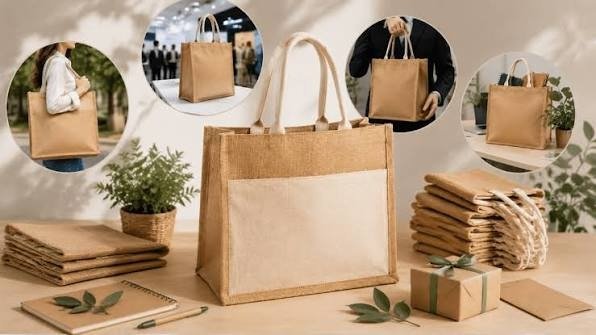
The primary advantage of jute is its strength. Jute bags are typically structured with a gusset, allowing them to stand upright even when empty. This makes them ideal for carrying heavy items like glass bottles, books, or bulky groceries. The natural UV protection and insulating properties of the fiber also add a layer of functionality that cotton lacks. Many jute bags come with a laminated lining, which makes them wipe clean and water resistant, further extending their utility in various environments.
Aesthetic Appeal
Jute offers a very specific aesthetic that works exceptionally well for organic brands, farm to table initiatives, and high end retail. The earthy tones and chunky weave provide a tactile experience that stands out in a sea of synthetic materials. It feels substantial in the hand, which can subconsciously elevate the perceived value of the gift or purchase.
Comparative Analysis: Durability and Longevity
- Tensile Strength: Jute wins in terms of raw weight bearing capacity. The fibers are thicker and less prone to stretching under heavy loads compared to standard lightweight cotton.
- Abrasion Resistance: Jute is highly resistant to wear and tear. It does not pill or thin out as quickly as light cotton when subjected to friction.
- Maintenance: Cotton is the clear winner for cleanliness. It can be tossed in a washing machine, whereas jute can be difficult to clean if it becomes heavily soiled, as the fibers may weaken if soaked for too long.
- Longevity of Message: A bag that lasts longer provides more impressions. While a heavy canvas cotton bag can last years, a jute bag often maintains its shape and structure better over time, keeping the brand message prominent and undistorted.
Print Quality and Branding Potential
When considering Cotton vs Jute Bags: Which Is Best for Your Promotional Campaign? it is vital to analyze how your logo will look on each surface. At Totally Branded, experts often advise clients to look at the complexity of their artwork before committing to a material.
Printing on Cotton
Because cotton has a flat and consistent surface, it supports high resolution printing. If your logo contains small text, gradients, or thin lines, cotton is the superior choice. The ink sits evenly on the fabric, resulting in vibrant colors and sharp edges. This is particularly important for brands with strict style guides that require exact color matching.
Printing on Jute
Jute presents more of a challenge for detailed printing due to its large, uneven weave. Fine details can sometimes get lost in the texture. However, bold, minimalist designs look spectacular on jute. The slightly muted colors that result from printing on a natural brown base can give a vintage or artisanal look that is currently very trendy. For best results on jute, designers usually recommend bold typography and solid blocks of color.
Environmental Impact and Lifecycle Assessment
Both materials are biodegradable and compostable, which gives them a significant edge over plastic. However, their environmental footprints differ in the cultivation stage.
- Water Usage: Jute is primarily rain fed and requires very little irrigation, making it a highly sustainable crop. Cotton, conversely, is a thirsty crop that often requires significant water resources unless it is sourced as organic cotton.
- Pesticide Use: Jute requires minimal chemical intervention to grow successfully. Cotton production historically uses more pesticides, though the industry is shifting toward more sustainable practices.
- Carbon Sequestration: Jute plants actually absorb high levels of carbon dioxide and release oxygen at a rate much higher than most trees.
- Recyclability: Both materials can be recycled into new textiles or insulation materials at the end of their lives, reducing landfill waste.
Cost Effectiveness for Bulk Campaigns
Budget is always a factor in promotional marketing. Generally, lightweight cotton bags are the most budget friendly option for mass distribution. They are cheap to produce and, because they are light, they are also cheaper to ship and store.
Jute bags tend to have a higher unit price because the material is heavier and the construction is often more complex, involving padded handles or internal linings. However, the higher cost is often justified by the higher perceived value. If you are distributing bags at a high end corporate retreat, a sturdy jute bag from Totally Branded might be more appropriate than a thin cotton tote. The return on investment should be measured not just by the cost per unit, but by how long the recipient keeps and uses the item. A bag that is discarded after one use is a wasted investment, whereas a durable bag provides years of free advertising.
Making the Strategic Choice for Your Brand
To decide which material suits your needs, you must define the primary goal of your campaign. If your objective is maximum reach at a low cost, such as at a large university fair or a public festival, cotton is likely your best bet. Its foldability means people will tuck it into their pockets and keep it for later.
If your goal is to convey a sense of premium quality, durability, and a rugged commitment to the environment, jute is the superior selection. It is the bag that people reach for when they are going to the farmers market or the beach, placing your brand in high visibility, leisure oriented environments.
For those who are still undecided, consulting with the team at Totally Branded can provide clarity. They can offer samples of different weights and weaves, allowing you to feel the difference between a 5 ounce cotton tote and a heavy duty laminated jute shopper.
Selecting Based on Audience
- The Corporate Executive: Prefers a heavy canvas cotton bag or a sophisticated, lined jute bag that can carry a laptop and documents.
- The Eco Conscious Shopper: Values the raw, natural look of jute and its minimal water footprint.
- The Event Attendee: Appreciates a lightweight cotton bag that does not add bulk to their day.
- The Luxury Retail Client: Responds well to the texture and structural presence of a high quality jute shopper.
Ultimately, both cotton and jute represent a significant step up from synthetic alternatives. By choosing a natural fiber, you are aligning your brand with the growing global movement toward sustainability. Whether you choose the soft versatility of cotton or the rustic strength of jute, your promotional campaign will benefit from a product that people actually want to use. The key is to match the material to your brand voice and the practical needs of your customers, ensuring that your message travels far and wide for years to come.