
CracksTube Explained: Its Article Archive, Paid Guest Posts, and Publishing Network

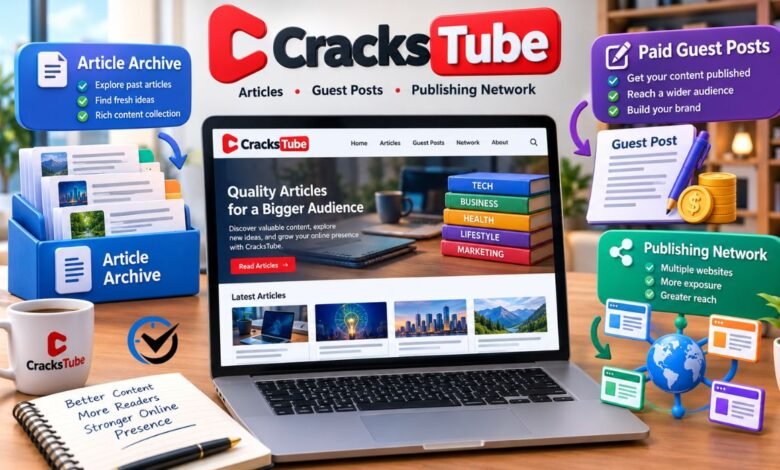
CracksTube brings together two activities that readers can easily confuse: publishing informational articles and selling opportunities to publish contributed content. Its archive covers subjects such as business, finance, education, technology, travel, and home improvement. Alongside those articles, the website promotes paid guest posts and a wider digital publishing network. Understanding how these parts connect gives a clearer picture of the platform than judging it by its name alone. For a casual reader, the main interest is what the articles explain. For a writer or business, the important questions concern publication requirements, costs, editorial control, and the audience a placement might reach.
The website deserves a practical assessment rather than an automatic endorsement. An article archive demonstrates what has been published, while contributor guidelines explain what the publisher says it accepts. Advertising for a publishing network describes a commercial service, but it does not independently establish readership or results. This guide examines those differences using specific examples from the indexed archive and the platform’s stated policies. It also explains where information needs checking before someone submits an article or purchases a placement. The aim is to help readers understand the publication and help contributors make decisions based on clear terms.
What It Publishes
The site presents itself as a digital publication with articles across several industries. Its public navigation and indexed pages include an article archive, category pages, contributor information, an editorial policy, and commercial publishing services. That structure is consistent with a general content website serving both readers and outside contributors. Some descriptions elsewhere associate similar names with streaming or software downloads, but those claims should not automatically be transferred to this publication. A shared name does not establish shared ownership, purpose, or operations. The useful starting point is the actual website being discussed, followed by its recent articles and current policies. This avoids merging unrelated services into one confusing account.
Business and Workplace Content
The archive’s business material includes restaurant branding on a small budget, with an emphasis on physical touchpoints rather than advertising alone. Menus, for example, are part of how guests form an impression of a restaurant before eating. Another indexed article discusses creating a work-from-home day using employee monitoring software and names Controlio. Together, these examples show that the business coverage moves between customer experience and workplace tools. They also reveal an important reading habit: notice whether an article explains a general principle, discusses a named product, or combines both. A useful guide should make its reasoning clear enough that readers can understand the idea without accepting every product-related statement at face value. For workplace tools, consider whether an article discusses usability, the information collected, and how employees are told about any monitoring.
Finance and Education
The finance archive includes articles about the Single Euro Payments Area, commonly called SEPA, XRP, and what visitors can learn on a Wall Street tour. These topics range from payment infrastructure to cryptocurrency and financial history. Education coverage includes online bachelor’s degrees and whether a culinary degree offers a worthwhile foundation. That variety matters because the publication is not limited to one specialist audience. A reader researching European payments has different needs from someone comparing study options. The subjects provide a starting point for learning, but each article still needs to be judged on its explanations, evidence, and date. For education guides, look for discussion of course recognition, teaching formats, practical training, and the total cost of completing study. Broad coverage alone cannot establish equal expertise across all the fields represented.
Home, Technology, and Travel
Practical consumer topics add another dimension to the collection. One article covers six smart home technology innovations intended to help keep pets safe, including smart pet cameras. Home improvement coverage also includes shower flow and identifying faucet parts. Travel-related material discusses luxury car rentals in Dubai and planning group tickets for the World Cup. These examples explain why the archive resembles a general-interest publication rather than a focused technical journal. They also give readers concrete entry points instead of vague category descriptions. Before acting on a guide, check the details that can change: a device’s features, the parts compatible with a fixture, rental conditions, or ticket availability. The relevant article date should guide that assessment.
Paid Guest Posting
CracksTube explicitly describes a paid guest-posting model in its public publishing information. In this arrangement, an outside contributor seeks publication of an article, with payment connected to the placement service. That commercial activity helps explain why the website addresses writers, businesses, and marketers alongside general readers. A paid contribution can introduce expertise or describe a business problem, but payment does not itself establish the quality of its claims. Contributors should therefore separate the article’s purpose from the publishing transaction. The piece needs to help its intended audience, while the agreement needs to define what the provider will deliver. Establish whether the proposed placement is on the main publication or another website offered through the network before agreeing to anything.
Submission Requirements
The guest-post guidelines specify a minimum length of 500 words and recommend 1,000–1,500 words, while allowing longer submissions. They also require original material that has not appeared elsewhere and describe editorial scrutiny of link placement. These are useful starting requirements, but meeting a word count does not make a draft ready. A strong submission should answer a clear question, explain unfamiliar ideas, and support claims that a reader could reasonably challenge. Material added only to increase length weakens the piece. Contributors should also clarify how revisions will be handled and whether they can review substantial changes before publication. Those practical details prevent disagreements over meaning, attribution, and the final presentation of an article.
The Publishing Network
The media page advertises a network of more than 1,200 editorial sites. That figure is a claim made by the provider, not an independently audited total established in this overview. It should also be understood separately from the article archive: a network offer concerns access to publishing placements, whereas the archive concerns content appearing on the main website. The advertised number does not prove common ownership, equal editorial standards, or a shared audience across every participating publication. For a contributor, the specific destination matters more than the overall count. Ask which publisher would carry the article, whether it regularly covers the subject, and what a recent placement looks like. A large selection only becomes useful when it contains a suitable outlet.
Costs and Expected Results
Pricing should be confirmed for the particular placement being considered rather than inferred from an unrelated listing. A quote needs to explain whether it includes writing, editing, publication, images, or any later revisions. Contributors should also ask about the expected publication date, how long the article is meant to remain available, and what happens if the publisher declines it. The platform’s public terms state that rankings and traffic results are not guaranteed. That limitation is important when evaluating promotional promises: publishing a page and attracting an audience are separate outcomes. Agree on measurable deliverables the provider controls, such as the named destination and approved content, rather than treating predicted visibility as an assured result. Keep a copy of the agreed terms and final draft.
Editorial Standards
The editorial policy says sponsored content should provide meaningful value and align with the publication. Its disclaimer also places responsibility for guest-post opinions with their authors. These statements describe the publisher’s position; readers still need to examine how individual articles support their conclusions. An editorial policy is most useful when it is reflected in the published work. Look for identifiable authors, clear explanations, specific evidence, and a distinction between product promotion and independent discussion. One useful test is whether the article answers the reader’s main question before introducing a product or asking for a purchase decision. For contributors, the same assessment helps determine whether the environment suits their work. Read recent articles in the intended category and consider whether their depth, tone, and presentation match the audience you want to reach. A relevant publication offers more value than an impressive description without a clear readership fit.
Final Thoughts
CracksTube is best understood through its actual content and stated publishing services. The archive offers a broad mix of informational articles, while paid guest posting creates a separate commercial relationship with contributors. The wider network adds another service layer, with its scale presented as a provider claim. Readers can use the archive to explore topics, provided they assess individual articles carefully. Writers and businesses should focus on the proposed outlet, the quality of their submission, and written publication terms. The most useful decision comes from matching a specific article to a suitable audience and knowing exactly what has been agreed. That approach gives the platform’s content and commercial offers a clear, practical context.
Frequently Asked Questions
1. What is CracksTube?
It publishes informational articles across several subjects and advertises opportunities for paid guest contributions. Readers use the archive to explore topics, while contributors approach the publishing services to place articles. The main publication and its broader network offer should be evaluated separately because they can involve different destinations and terms.
2. What does the archive cover?
Indexed examples include restaurant branding, employee monitoring software, SEPA payments, XRP, online degrees, culinary education, smart pet technology, shower maintenance, and travel planning. This spread shows a broad editorial scope. It also means readers should assess the depth and reliability of each article individually rather than assuming every subject receives identical treatment.
3. Is guest posting free?
The platform states that it operates a paid guest-posting model. That does not establish one fixed fee for every placement or service. Ask for a current quote covering the intended destination and scope of work, then confirm which deliverables are included before making a payment.
4. How long should submissions be?
The published guidelines set a 500-word minimum and recommend 1,000–1,500 words, with longer articles permitted. Choose a length that allows a complete, clear explanation of the subject. Check the current requirements for the particular destination, especially if the article will appear through a network placement.
5. Can previously published articles qualify?
The stated guidelines require original material that has not been published elsewhere. Contributors should prepare a new article and clarify any intended reuse with the publisher. Rewriting the opening of an existing piece does not necessarily resolve questions about duplication, publication rights, or compliance with the submission requirements.
6. Is the network size verified?
It describes the scale the provider advertises for its publishing network. It does not independently verify that total or establish that every destination suits a particular article. Ask for a specific outlet, inspect its recent content, and confirm availability rather than making a decision based only on the headline number.
7. Are publication results guaranteed?
No. The public terms state that rankings and traffic outcomes are not guaranteed. Publication provides an opportunity for people to encounter an article, but actual attention depends on many factors. Assess the service by the agreed publishing deliverables and measure audience response separately after the piece appears.
8. How should readers assess sponsored content?
Examine whether it explains the subject clearly, supports factual claims, identifies relevant interests, and discusses limitations. A sponsored article may contain useful information, but a paid placement should not be treated as independent approval of a product. Compare important product details with the manufacturer’s current information before relying on them.
9. Are similarly named websites connected?
Similar branding does not establish a business relationship. Different websites can use names that look or sound alike while serving different purposes. Confirm the exact destination and look for an explicit, verifiable connection before assuming that a policy, service, or reputation applies across several properties.
10. What should contributors confirm before paying?
Confirm the publisher, total charge, included services, approval process, publication timing, and conditions for rejection or removal. Ask how substantial edits and any included links will be handled. A clear agreement reduces uncertainty and lets both sides judge whether the completed placement matches what was promised.
Recommended: Voddler.co.uk Sports Guides: Streameast, Sportsurge, and Live Match Viewing





One Comment