


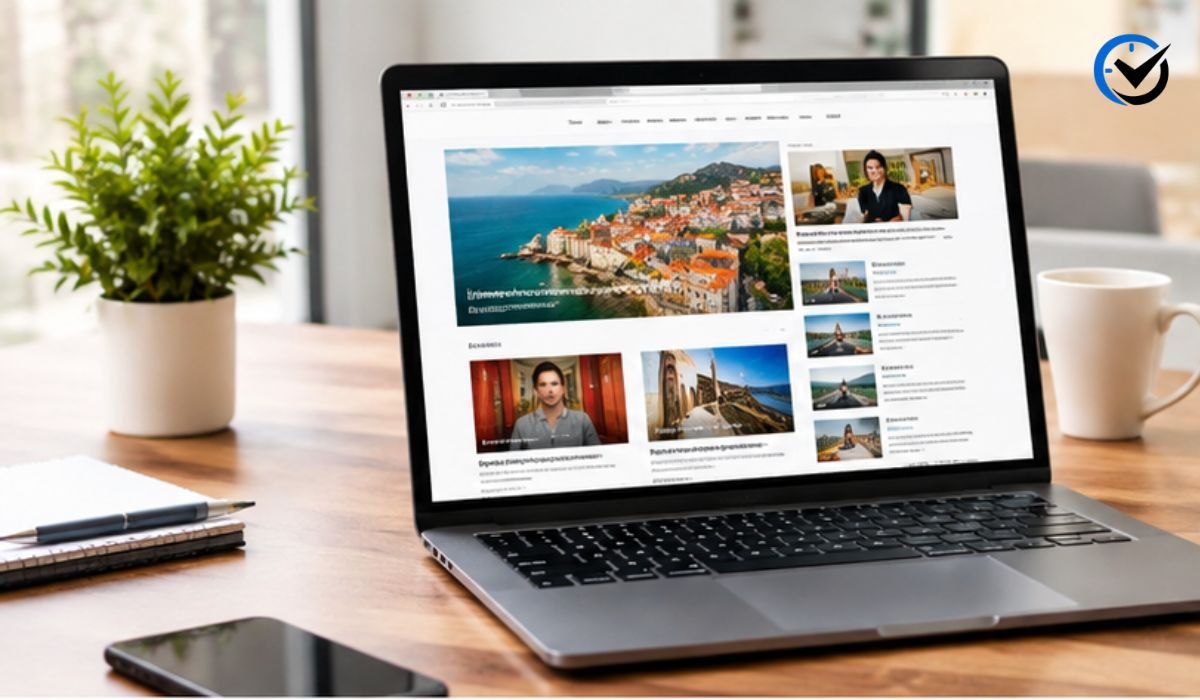
The name Adstotally.com may lead first-time visitors to expect an advertising network, campaign manager, or specialized marketing tool. However, it is better understood as a general blog that publishes informational content across several topics, including digital marketing and online business. The website functions mainly as a reading platform where visitors can explore articles, explanations, practical tips, and general-interest guides. Understanding this distinction helps readers approach the site with realistic expectations and use its content more effectively.
Multi-niche blogs have become a familiar part of the online publishing world because people often prefer finding information about different subjects in one place. Instead of concentrating on a single narrow field, these websites may discuss technology, business, lifestyle, education, finance, marketing, and other everyday interests. This broad publishing model can introduce readers to useful ideas they might not have searched for directly. At the same time, visitors should consider the depth, date, and reliability of each article separately because content quality can vary across categories.
What Adstotally.com Actually Is
Adstotally.com is a multi-niche digital publication rather than a working advertising service. Its main purpose is to publish written content for people seeking accessible information about marketing, business, online activity, and broader general-interest subjects. Visitors should expect a collection of blog posts instead of tools for creating campaigns, purchasing advertisements, tracking impressions, or managing publisher earnings. This simple definition prevents the website’s advertising-related name from creating confusion about what it actually offers.
A general blog usually organizes information through individual articles, category pages, and recent-post sections. Readers visit these platforms to understand a subject, discover helpful suggestions, or gain basic knowledge before conducting deeper research. The format is especially convenient for beginners because it can make unfamiliar ideas feel less complicated. Rather than providing professional services directly, the platform acts as a starting point from which users can learn, compare ideas, and decide what information deserves further investigation.
Why the Domain Name Can Cause Confusion
The word “ads” in the domain naturally suggests paid promotion, ad placement, or campaign management. Someone discovering the name without context might therefore assume that the site connects advertisers with publishers or sells digital advertising services. That assumption should not be treated as fact. A domain name can reflect an earlier idea, a branding decision, or only one part of a publication’s broader subject range without describing every current function.
This difference matters because an informational article cannot perform the same job as specialized software. A real advertising platform would normally include features such as user accounts, campaign creation, budget controls, audience selection, performance reports, billing, and publisher tools. A general publication instead presents material that readers consume for knowledge. People should judge the website by the functions they can actually see rather than assigning capabilities to it based only on its name.
The Multi-Niche Publishing Model
A multi-niche publication covers several fields instead of building its entire identity around one subject. This approach gives editors room to publish timely articles for audiences with different interests. A visitor might arrive for a digital marketing guide and later discover content about technology, personal development, business planning, or another practical topic. That variety can make browsing more interesting and can help the website serve a wider group of readers.
However, wide coverage does not automatically mean equal authority in every field. Producing a useful beginner’s guide about social media is different from offering professional legal, financial, medical, or cybersecurity advice. The knowledge required changes considerably from one category to another. Readers should therefore assess every article according to its subject, supporting detail, publication date, and level of risk rather than assuming that the publication’s general identity guarantees expertise everywhere.
Digital Marketing Information on the Platform
Digital marketing appears to be an important part of the platform’s subject mix. Articles in this area may help readers understand concepts connected with branding, content creation, online communication, audience engagement, social media, and business visibility. This type of material can be useful for small business owners, independent creators, students, and beginners who want plain-language explanations. It can also introduce essential ideas before readers move on to advanced training or official documentation.
The strongest educational marketing content explains both opportunities and limitations. For example, a strategy that benefits one company might produce different results for another because audiences, budgets, products, locations, and competitors are not identical. Helpful articles should avoid presenting a general tactic as a guaranteed route to success. Readers can get more value by treating marketing guidance as a source of ideas, testing suitable methods carefully, and measuring actual results in their own circumstances.
Other Subjects Readers May Encounter
Because the website follows a general publishing model, its usefulness is not limited to marketing. Visitors may encounter articles related to business, technology, finance, education, lifestyle, travel, health, property, fashion, or similar topics. This range allows the publication to address common questions from many parts of daily and professional life. It also makes the site more suitable for casual discovery than a narrowly focused resource designed only for industry specialists.
Broad coverage can be convenient, but it places greater responsibility on the reader. A low-risk article about workplace organization can be applied more casually than a post involving investments, personal health, legal rights, or online security. In sensitive areas, even well-written general information may leave out important exceptions. Readers should use such material for background understanding and seek qualified guidance when a decision could affect their health, money, rights, safety, or business operations.

Who May Find the Website Useful
The platform may appeal most strongly to readers who value straightforward introductions rather than dense academic or technical explanations. Students can use general articles to become familiar with a new topic, while entrepreneurs may discover ideas for communication and business development. Freelancers, content creators, and small business owners may also benefit from accessible discussions of branding and digital activity. Casual readers can explore the wider categories simply to expand their knowledge.
Experienced professionals may still find useful ideas, but they are likely to need more specialized resources for detailed work. A general blog rarely replaces advanced courses, original research, official policies, or professional advice. Its main strength lies in helping people identify basic concepts and understand why a subject matters. Once a reader knows the relevant terminology and major questions, finding deeper and more authoritative information becomes easier.
How to Navigate the Content Efficiently
Readers can begin by identifying the question they actually want answered instead of opening articles only because their titles sound interesting. A specific goal makes it easier to judge whether a post provides practical value. After choosing an article, scan its headings to see whether it addresses the main issue, offers relevant context, and explains possible limitations. This quick review can save time when the website contains many categories or several posts covering related themes.
Publication dates deserve attention, especially in areas that change rapidly. Advice about software, social platforms, advertising systems, privacy rules, and digital tools can become outdated when companies update their products or policies. Older material may still explain a lasting principle correctly, but current instructions should be checked before they are followed. The more time-sensitive the subject is, the more important it becomes to confirm details through an official or recently updated source.
How to Evaluate Article Quality
A strong informational article normally has a clear purpose, logical structure, and enough detail to answer the question promised by its title. It should separate established information from opinion and avoid dramatic claims that lack explanation. Practical examples can improve understanding, while balanced language shows that the writer recognizes real-world differences. Clear writing is valuable, but clarity alone does not prove that every statement is complete or accurate.
Readers should also notice whether an article identifies meaningful risks, exceptions, or disadvantages. Content that promises guaranteed traffic, effortless income, instant growth, or universal results deserves extra caution. Useful guidance usually explains that outcomes depend on factors such as experience, resources, market conditions, and execution. When a claim could influence an important decision, confirming it through independent and authoritative material is a sensible step.
Privacy and Safe Browsing Considerations
Visitors should apply the same basic safety habits they use on any unfamiliar website. Reading a public article generally requires less trust than creating an account, downloading a file, entering payment information, or sharing personal details. Before taking those additional actions, users should understand why the information is requested and how it will be handled. They should also avoid clicking unrelated pop-ups or promotional messages that appear suspicious.
A secure browser connection is useful, but it does not independently confirm the accuracy of published content or the reliability of every external offer. Readers should remain cautious if a page directs them toward unfamiliar financial products, downloads, subscription forms, or third-party services. Keeping devices updated and using unique passwords also reduces common online risks. Safe browsing depends on both the website’s practices and the visitor’s own choices.

Using General Blog Advice in Real Situations
The best way to use a general guide is to turn broad information into a small, controlled action. A business owner reading about content planning might test a simple publishing schedule rather than changing an entire marketing system immediately. A student could use an introductory article to identify key concepts before consulting textbooks or institutional resources. This approach makes the material practical while limiting the consequences of incomplete advice.
Readers should record what they try and compare the result with their original goal. In marketing, for instance, a popular suggestion is not automatically valuable unless it improves a relevant outcome for the specific organization. Testing, observation, and adjustment are more dependable than copying a tactic without context. Adstotally.com can provide initial direction, but responsible application still requires judgment from the person using the information.
The Value and Limits of a General Information Platform
A broad publication offers convenience, accessibility, and exposure to many subjects. It can translate unfamiliar concepts into everyday language and help visitors decide which areas they want to explore further. The format is particularly helpful when someone needs a basic overview without reading highly technical material. It may also connect related ideas across business, technology, communication, and modern digital life.
Its main limitation is the difficulty of providing specialist depth across every category. Articles written for a worldwide general audience may simplify regional differences, professional standards, or complicated technical details. Readers should not expect every post to answer every possible situation. The platform is most useful when treated as one layer in a wider learning process rather than the final authority on high-stakes matters.
Final Thoughts
Adstotally.com is best understood as a multi-niche general blog with an interest in digital marketing, not as a functional advertising network or campaign-management tool. Its broad content can help beginners, creators, students, and business owners develop a basic understanding of useful subjects. Readers will gain the most value by checking dates, judging each article individually, and confirming important claims elsewhere. Used thoughtfully, the platform can serve as a convenient starting point for learning while remaining one part of a wider and more careful information process.
Frequently Asked Questions
1. What is Adstotally.com?
Adstotally.com is a general information blog that publishes articles across multiple subjects, with digital marketing forming part of its content range. It is intended primarily for reading and learning rather than running advertising campaigns. Visitors can use it to explore accessible guides, explanations, and practical ideas. Its broad structure makes it more accurately described as a multi-topic publication than a specialized software service.
2. Is Adstotally.com an advertising network?
It should not be assumed to be an advertising network merely because the domain contains the word “ads.” An advertising network normally connects advertisers and publishers while providing campaign, targeting, payment, and reporting features. A publication mainly provides articles for readers. Unless clearly verified operational tools are available, visitors should understand this website as an information source rather than an advertisement-management system.
3. What kind of content does the website publish?
The platform focuses on general informational material, including content connected with marketing, business, online communication, and other everyday interests. As a multi-niche blog, it may cover categories beyond its advertising-related name. The exact mix can change as new posts are published. Readers should use the category, title, and date of each article to determine whether it matches their needs.
4. Is the platform suitable for beginners?
Yes, a general blog format can be helpful for beginners because it usually explains subjects in clear and approachable language. New readers can learn common terms, understand basic ideas, and identify questions for further research. However, beginner-friendly writing may simplify complicated issues. Important decisions should therefore be supported with official information or advice from a qualified professional.
5. Can business owners use its marketing guidance?
Business owners may find useful starting points in articles about branding, content, communication, and online growth. Any suggested method should be adapted to the company’s audience, budget, location, and goals. A tactic described in a general article cannot guarantee a particular result. Testing ideas on a limited scale and monitoring relevant outcomes is safer than making major changes based on one post.
6. Does the website provide professional advice?
General blog content should usually be viewed as educational information, not personalized professional advice. An article cannot know every detail of a reader’s health, finances, legal position, technical system, or business. This distinction becomes especially important when mistakes may have serious consequences. Readers facing high-stakes choices should consult an appropriate specialist who can examine their individual circumstances.
7. How can readers tell whether an article is current?
Readers should look for a publication or update date and consider how quickly the subject changes. Basic principles may remain useful for years, while instructions involving software, platforms, policies, or regulations can age rapidly. Current claims should be compared with recent official information. An undated or older article can provide background, but it should not automatically guide a time-sensitive decision.
8. Is all multi-niche content equally reliable?
Not necessarily. Reliability can differ between articles because broad publications cover subjects requiring very different levels of expertise. A simple lifestyle guide and a detailed financial explanation should not be judged by identical standards. Readers should consider the evidence, balance, specificity, and potential consequences of each post. Greater risk calls for stronger verification and more authoritative support.
9. How can visitors get the most value from the platform?
Visitors should begin with a clear question, choose the most relevant category, and scan article headings before reading the entire post. They can note useful concepts, separate general suggestions from factual claims, and verify important details independently. Applying low-risk ideas gradually makes the learning more practical. This method turns casual browsing into a focused and responsible research process.
10. Is Adstotally.com useful for advanced readers?
Advanced readers may use the platform to discover topics, compare general viewpoints, or find simple explanations they can share with beginners. However, specialists will usually require more detailed resources, original data, official documentation, or professional publications. A multi-topic blog is designed mainly for accessibility and breadth. Its value for experts therefore lies more in orientation and idea discovery than advanced instruction.
Recommended: Lucy Davis Career Timeline: British Comedy, Hollywood, and Beyond





One Comment