
Baltimore Ravens vs Bengals Match Player Stats: Final Score and Individual Results

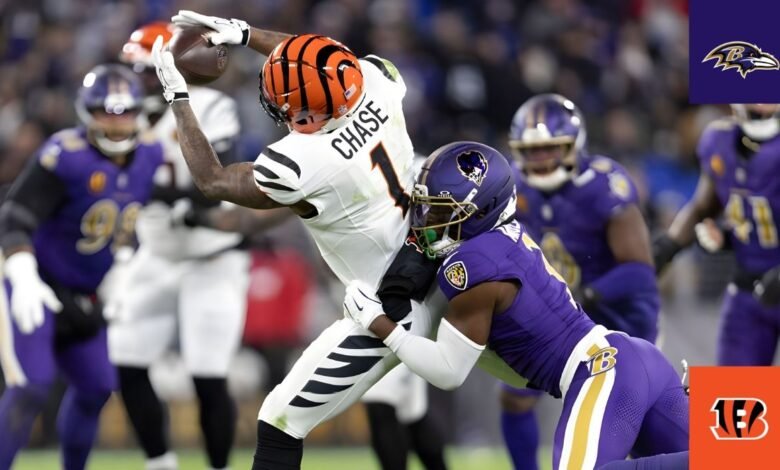
The latest completed meeting between Baltimore and Cincinnati took place on December 14, 2025, at Paycor Stadium. The Ravens won 24–0, shutting out the Bengals in a Week 15 AFC North game. This recap covers that completed matchup; it does not describe the teams’ later meetings or predict a future result. The score alone does not tell the whole story: Baltimore’s defense turned away Cincinnati’s drives, while Lamar Jackson and Derrick Henry led an efficient Ravens offense.
Final Score and Game Setting
Baltimore scored 24 points, while Cincinnati finished with none. The Ravens improved to 7–7, and the Bengals fell to 4–10. The game was played in unusually cold conditions, with the temperature reported at 10 degrees Fahrenheit at kickoff. Those conditions formed part of the setting, but the decisive factors were Baltimore’s two interceptions, its ability to run effectively, and Cincinnati’s failure to convert promising drives into points.
Score by Quarter
The teams were scoreless through the first quarter. Baltimore broke through in the second, with touchdown passes from Jackson to Rasheen Ali and Zay Flowers. Tyler Loop added a 27-yard field goal in the third quarter. In the fourth, a Cincinnati interception became an 84-yard return for a Ravens touchdown, completing the 24–0 score. The quarter-by-quarter pattern shows how Baltimore built its lead and then added a defensive score.
How the First Half Unfolded
Cincinnati’s defense made several early plays, including a first-half interception, and sacked Jackson four times in total. That pressure helped keep the game close before Baltimore’s first touchdown. The Ravens then scored twice in the second quarter, both on drives ending with Jackson completions. The two late-quarter scores gave Baltimore a 14-point advantage at halftime, even though the offense did not need a high volume of passes to produce them.
Lamar Jackson’s Passing Line
Jackson completed 8 of 12 passes for 150 yards, two touchdowns, and one interception. His 66.7% completion rate and 114.6 passer rating reflect an efficient outing, though the interception and four sacks show that the Ravens quarterback faced pressure. The two scoring passes were especially valuable: they accounted for Baltimore’s first 14 points. Jackson also ran twice for 26 yards, adding a modest but useful contribution on the ground.
Joe Burrow’s Passing Line
Burrow completed 25 of 39 attempts for 225 yards, with no touchdown passes and two interceptions. He was able to move the ball through the air, but the Bengals did not turn those yards into points. Baltimore’s coverage and pressure disrupted Cincinnati in key moments, including two interceptions that came while the Bengals were threatening. Burrow’s final passing total was higher than Jackson’s, but the two turnovers and lack of touchdowns shaped the result more than raw yardage did.
Derrick Henry’s Rushing Performance
Henry led Baltimore with 100 rushing yards on 11 carries, an average of 9.1 yards per attempt. His long run went for 29 yards, and he did not score a rushing touchdown. That production helped the Ravens stay balanced without asking Jackson to throw often. Henry’s yardage was also significant in a game where Baltimore had only 20 minutes and 41 seconds of possession, according to the official recap’s team-stat summary.
Keaton Mitchell Adds a Second Running Threat
Mitchell carried eight times for 66 yards, averaging 8.2 yards per attempt. He did not score, but his contribution gave Baltimore another productive runner and helped the team gain 189 net rushing yards. A strong rushing total can reduce the need for long passing drives and help an offense maintain control when its passing attempts are limited. In this game, Mitchell’s work complemented Henry’s production and helped Baltimore keep Cincinnati’s defense occupied.
Chase Brown Leads Cincinnati on the Ground
Brown was Cincinnati’s leading rusher, finishing with 53 yards on 13 carries, or 4.1 yards per attempt. He also caught seven passes for 37 yards, giving him 90 yards from scrimmage. His receiving work offered Burrow a short option, but it did not produce a touchdown or change the scoreboard. Brown’s combined output was useful for the Bengals, although Baltimore’s defense prevented the offense from turning its yardage into a scoring drive.
Ja’Marr Chase’s Receiving Production
Chase caught 10 of his targets for 132 yards, averaging 13.2 yards per reception. He was Cincinnati’s top receiver and the leading pass catcher in the game. His 10 catches gave Burrow a dependable outlet, but the production did not include a touchdown. The Bengals’ result illustrates an important distinction in a box score: a receiver can post a large yardage total while the offense still struggles to finish drives or score.
Zay Flowers and Baltimore’s Passing Game
Flowers caught three passes for 68 yards and a touchdown on five targets. His 28-yard touchdown catch, just before halftime, extended Baltimore’s lead to 14–0. Flowers averaged 22.7 yards per reception, making his limited number of catches highly productive. The Ravens did not rely on frequent completions; they made a few passing plays count, using Jackson’s touchdown throws to Ali and Flowers to build a lead.
Rasheen Ali’s First Touchdown
Ali caught two passes for 32 yards, including a 30-yard touchdown reception. The play opened the scoring in the second quarter and gave Baltimore a lead after a scoreless first period. Ali’s touchdown also showed how the Ravens spread their scoring opportunities across different players. Henry and Mitchell supplied the ground game, while Jackson connected with two different receivers for touchdowns. The official game summary lists Ali’s catch as the first scoring play of the afternoon.
Other Ravens Receiving Contributions
Baltimore’s passing game did not require many catches beyond its main scoring plays. Mark Andrews caught two passes for 18 yards, while the receiving summary also recorded contributions from running backs and other targets. The Ravens finished with 128 net passing yards, but their two touchdown completions made those yards count. The modest passing total alongside the two scores is a useful reminder that total passing yardage alone does not measure how effectively a team used its opportunities.
Cincinnati’s Other Pass Catchers
Chase’s 132 yards accounted for a large share of Cincinnati’s passing production. The Bengals’ other receivers and tight ends helped move the ball, but none recorded a touchdown catch. Cincinnati finished with 225 passing yards before sack adjustments, yet the offense could not complete a scoring drive. Against a defense that intercepted Burrow twice, moving the ball between the 20-yard lines was not enough to keep the game competitive.
The Ravens’ Defensive Score
The play that made the final margin 24 points began with a Burrow pass that was intercepted by Kyle Van Noy. Van Noy returned the ball, and Alohi Gilman completed the 84-yard return for a touchdown. The sequence turned a potential Cincinnati possession into Baltimore’s final score. It was a major swing because it added seven points and ended the Bengals’ chance to make a late comeback.
Turnovers and Red-Zone Stops
Baltimore intercepted Burrow twice, while Cincinnati intercepted Jackson once. The Ravens also forced Cincinnati to turn the ball over on downs on two occasions, according to the official Bengals game release. Those stops mattered because the Bengals reached the Ravens’ side of the field several times but came away without points. The key issue was not simply how often Cincinnati moved the ball; it was whether the team could finish a drive before Baltimore forced a mistake or turnover on downs.
Team Statistics and Possession
Cincinnati held the ball for 39 minutes and 19 seconds, compared with Baltimore’s 20:41. The Bengals also had 18 first downs to the Ravens’ 15. Yet Baltimore gained 317 total yards to Cincinnati’s 298, and the Ravens went 2-for-7 on third down while the Bengals went 3-for-15. The contrast is striking: Cincinnati had the ball longer, but Baltimore was more effective at creating decisive plays and preventing scores.
Why the Rushing Numbers Mattered
Baltimore gained 189 net rushing yards, while Cincinnati finished with 100. Henry and Mitchell combined for 166 yards on 19 carries, giving the Ravens a strong average and allowing them to keep the offense productive with few pass attempts. Cincinnati’s rushing total was more modest, and the Bengals had to rely more heavily on Burrow’s passing. That did not automatically decide the game, but Baltimore’s ground output helped create a steadier offensive foundation.
What the Box Score Does Not Show
The numbers show that Cincinnati had more possession and more first downs, but they do not fully capture the pressure of individual situations. A long drive that ends without points can look productive in total yards while failing to change the game. Likewise, Baltimore’s 150 passing yards may appear modest, but two touchdown passes and an effective running game gave the Ravens enough offense. The most useful reading of this box score combines volume stats with turnovers, scoring plays, and third-down results.
Final Thoughts
The latest completed Ravens–Bengals matchup ended with Baltimore winning 24–0 on December 14, 2025. Jackson threw two touchdown passes, Henry and Mitchell powered the run game, and the Ravens defense intercepted Burrow twice before finishing the game with a defensive touchdown. Chase stood out for Cincinnati with 132 receiving yards, but the Bengals could not turn their possession time and first downs into points. Together, the individual results explain how Baltimore secured the shutout.
Frequently Asked Questions
1. What was the final score of the Ravens vs. Bengals game?
The Ravens defeated the Bengals 24–0 on December 14, 2025, at Paycor Stadium. Baltimore scored twice in the second quarter, added a field goal in the third, and scored a defensive touchdown in the fourth.
2. Who was Baltimore’s leading passer?
Lamar Jackson led Baltimore with 150 passing yards. He completed 8 of 12 attempts, threw two touchdown passes and one interception, and finished with a 114.6 passer rating.
3. Who led Cincinnati in passing?
Joe Burrow threw for 225 yards, completing 25 of 39 passes. He did not throw a touchdown and was intercepted twice, including on the play that led to Baltimore’s defensive score.
4. Who led the Ravens in rushing?
Derrick Henry led Baltimore with 100 yards on 11 carries. His average was 9.1 yards per attempt, and his longest run covered 29 yards.
5. Who was Cincinnati’s leading receiver?
Ja’Marr Chase led the Bengals with 10 catches for 132 yards. He averaged 13.2 yards per catch, but did not score a touchdown in the game.
6. Which Ravens players caught touchdown passes?
Rasheen Ali and Zay Flowers each caught a touchdown pass from Jackson. Ali scored on a 30-yard reception, and Flowers caught a 28-yard pass late in the second quarter.
7. How many interceptions did the Ravens record?
Baltimore intercepted Burrow twice. One of those interceptions became an 84-yard defensive touchdown, with Kyle Van Noy making the interception and Alohi Gilman completing the return.
8. Did Cincinnati have more possession time?
Yes. The Bengals held the ball for 39:19, while Baltimore had possession for 20:41. Cincinnati’s longer possession did not lead to points, as the Ravens defense stopped multiple drives.
9. How many rushing yards did Baltimore gain?
The Ravens recorded 189 net rushing yards. Henry gained 100 and Mitchell added 66, giving Baltimore a productive ground attack that helped balance its passing game.
10. Which game does this statistical recap cover?
This recap covers the most recent completed meeting in the 2025 regular season, played on December 14. Baltimore won 24–0. The date matters because the teams meet more than once in many seasons, and each game has a different box score.
Recommended: Pittsburgh Steelers vs Jacksonville Jaguars Match Player Stats: Complete Game Analysis





One Comment