
Jacksonville Jaguars vs Chicago Bears Match Player Stats: Passing, Rushing, and Receiving

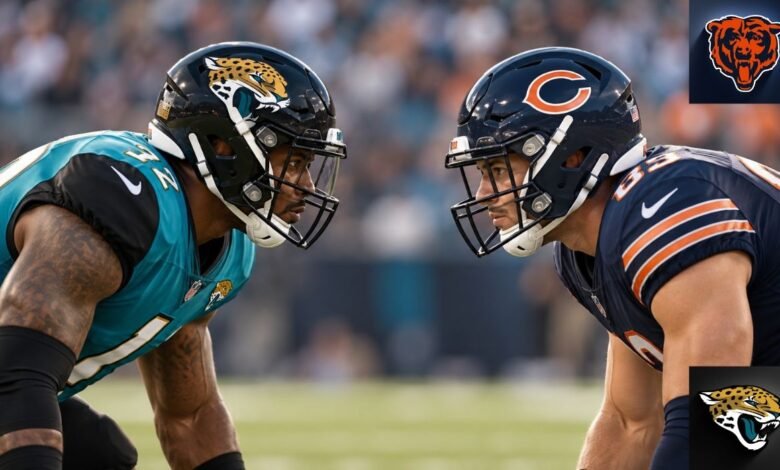
The Jacksonville Jaguars and Chicago Bears met at Tottenham Hotspur Stadium in London on October 13, 2024. Chicago won 35–16, turning a close first quarter into a two-touchdown halftime lead and extending it in the second half. The box score shows how the Bears combined efficient passing with a productive ground game, while Jacksonville relied heavily on its passing attack. This recap covers the main passing, rushing, and receiving numbers, along with the team statistics that help explain the result.
Game Overview and Final Score
Jacksonville opened the scoring with a field goal, but Chicago answered with two second-quarter touchdowns and led 14–3 at halftime. Both teams scored in the third quarter, leaving the Bears ahead 21–10. Chicago then scored twice early in the fourth to stretch the margin to 25 points. Jacksonville added a late touchdown, but its two-point conversion attempt failed. The final score was 35–16, with the Bears scoring five touchdowns and the Jaguars scoring two touchdowns and a field goal.
Caleb Williams’ Passing Performance
Bears quarterback Caleb Williams completed 23 of 29 passes for 226 yards, four touchdowns, and one interception. His completion rate was about 79%, and he produced a touchdown on four separate scoring drives. Williams spread the ball among several targets, helping Chicago avoid dependence on one receiver. His numbers were especially effective because the Bears also gained consistent yardage on the ground, making it harder for Jacksonville to focus only on stopping the pass.
Trevor Lawrence’s Passing Numbers
Trevor Lawrence completed 23 of 35 passes for 234 yards, two touchdowns, and one interception. He completed a lower share of his attempts than Williams but finished with eight more passing yards. Lawrence’s two touchdown passes both went to Gabe Davis, including a five-yard score late in the fourth quarter. Jacksonville’s passing total was useful, but the offense struggled to turn enough drives into points and lost a fumble during a promising second-half possession.
Mac Jones’ Brief Appearance
Jacksonville used Mac Jones at quarterback late in the game. He completed his only pass attempt for six yards and did not throw a touchdown or interception. His brief appearance came after Chicago had built a large lead, so his line had little effect on the game’s outcome. When reading a team box score, it is useful to distinguish a late relief appearance from the work of the starting quarterback, who handled most of the game’s passing.
D’Andre Swift Leads the Bears’ Ground Game
Running back D’Andre Swift led Chicago with 17 carries for 91 yards and one touchdown. His longest run covered 19 yards, and he averaged about 5.4 yards per carry. Swift’s one-yard touchdown in the fourth quarter capped a short drive that began after a Jacksonville interception. He also caught four passes for 28 yards, giving him 119 yards from scrimmage. That combination of rushing and receiving made him one of Chicago’s most productive offensive players.
Caleb Williams Adds Rushing Production
Williams contributed 56 rushing yards on four carries, including a long run of 23 yards. His scrambling helped Chicago extend plays and gain ground when Jacksonville’s coverage limited the first passing option. Those yards mattered alongside his 226 passing yards, giving him 282 total yards of offense before accounting for sacks. Williams did not score a rushing touchdown, but his mobility helped the Bears maintain pressure on the Jaguars’ defense and keep the offense balanced.
Jacksonville’s Rushing Leaders
D’Ernest Johnson was Jacksonville’s leading rusher, gaining 28 yards on six carries. Tank Bigsby added 24 yards on seven attempts, while Lawrence gained 17 yards on four runs. Travis Etienne finished with three carries for minus one yard. The Jaguars’ four listed rushers combined for 68 yards on 20 attempts, an average of 3.4 yards per carry. That output gave Jacksonville less support on the ground than Chicago received from its running backs and quarterback.
Chicago’s Rushing Advantage
Chicago recorded 152 net rushing yards on 29 attempts, averaging 5.2 yards per carry. Swift supplied the largest share, while Williams’ 56 yards added a major second threat. Roschon Johnson rushed five times for eight yards, and backup quarterback Tyson Bagent had three kneel-downs for minus three yards. The team total demonstrates why the Bears’ offense was difficult to defend: Chicago could gain yards through the air, but it also had the ability to move the ball on the ground.
Evan Engram’s Receiving Impact
Tight end Evan Engram led all players with 10 receptions for 102 yards. His 24-yard catch was his longest of the day, and he gave Lawrence a reliable option across the middle and on short-to-intermediate routes. Engram’s reception total was notable, especially after he had missed Jacksonville’s previous four games with a hamstring injury. However, he did not score, and his second-half fumble was recovered by Chicago, ending a Jaguars possession that had begun with a long pass to him.
Gabe Davis Scores Twice
Wide receiver Gabe Davis caught five passes for 45 yards and two touchdowns. His first score was a 21-yard reception in the third quarter, which cut Chicago’s lead to 21–10. His second came on a five-yard pass in the fourth quarter. Davis produced Jacksonville’s only receiving touchdowns, but his scoring plays were not enough to erase the deficit. His line shows how touchdown totals can be more decisive than receiving yardage alone in a game where one team controlled more drives.
Chicago’s Receiving Touchdowns
Cole Kmet and Keenan Allen each caught two touchdown passes from Williams. Kmet finished with five receptions for 70 yards, including a 31-yard touchdown that gave Chicago the lead in the second quarter. His other score came from two yards out just before halftime. Allen caught five passes for 41 yards, with touchdowns of nine and three yards. Their four receiving touchdowns accounted for most of the difference between the teams’ passing performances.
Rome Odunze and Other Bears Receivers
Rookie receiver Rome Odunze caught two passes for 40 yards, with a long reception of 28 yards. D.J. Moore had four catches for 20 yards, while Swift added four receptions for 28 yards. Roschon Johnson caught two passes for 25 yards, and Marcedes Lewis had one catch for two yards. This spread of contributions gave Williams several options, even though no Chicago receiver reached 100 yards. Kmet led the group in receiving yardage and shared the touchdown lead with Allen.
Jacksonville’s Other Receiving Contributions
After Engram and Davis, Christian Kirk was Jacksonville’s next most productive receiver, catching three passes for 39 yards. Rookie Brian Thomas Jr. also caught three passes, gaining 27 yards. Johnson had two receptions for 16 yards, and tight end Brenton Strange caught one pass for 11 yards. Thomas and Kirk both had opportunities to contribute, but neither scored. The receiving totals show that Jacksonville distributed the ball, although Engram was the clear leader in catches and yardage.
Comparing the Quarterbacks’ Efficiency
Williams threw one fewer interception than Lawrence and produced twice as many touchdown passes. Lawrence gained slightly more passing yardage, but Williams completed 79% of his attempts compared with Lawrence’s 66%. Those figures should be read alongside the full game context: Chicago’s early lead gave the Bears more control over the pace, while Jacksonville had to keep passing as it tried to catch up. Williams’ four scoring passes turned Chicago’s passing efficiency into a clear advantage on the scoreboard.
Team Yardage and Offensive Balance
Chicago finished with 373 total net yards, compared with Jacksonville’s 278. The Bears gained 152 net rushing yards and 221 net passing yards, while the Jaguars recorded 68 net rushing yards and 210 net passing yards. Both teams ran roughly the same number of offensive plays, with Chicago at 61 and Jacksonville at 60. The yardage difference therefore came from stronger average gains by the Bears, who averaged 6.1 yards per play compared with Jacksonville’s 4.6.
Turnovers and Their Effect on the Game
Each team threw one interception, but Jacksonville also lost one fumble. Engram’s fumble early in the third quarter was recovered by Bears safety Elijah Hicks, who returned it 19 yards. Chicago then continued its scoring drive and added a touchdown to extend the lead. Jacksonville’s turnover came at a critical point: Engram had just caught a 24-yard pass, and the Jaguars were in position to build momentum. The Bears protected their lead by converting the takeaway into a scoring opportunity.
Third-Down and Red-Zone Results
Jacksonville converted seven of 15 third downs, while Chicago converted five of 11. The Jaguars were slightly better by percentage, but that edge did not translate into more points. Chicago was more effective in the red zone, scoring touchdowns on all four of its trips inside the 20-yard line. Jacksonville scored on two of three red-zone visits. The contrast helps explain the final margin: the Bears made their best scoring chances count, while the Jaguars left points behind.
Penalties and Time of Possession
The Jaguars were penalized eight times for 43 yards, compared with two penalties for 10 yards by Chicago. The Bears also held the ball for 30 minutes and 40 seconds, just over a minute longer than Jacksonville. The possession difference was modest, but Chicago’s cleaner play and stronger red-zone finishing helped its drives produce more points. Penalty totals alone do not decide a game, yet Jacksonville’s extra flags added setbacks to an offense that was already trying to recover from a growing deficit.
What the Player Stats Reveal
The player statistics show a game shaped by Chicago’s balance and scoring efficiency. Williams combined four passing touchdowns with useful rushing yardage, while Swift led the ground attack and added receiving production. Kmet and Allen finished the Bears’ passing drives with two touchdowns apiece. For Jacksonville, Engram delivered the highest receiving total and Davis supplied both touchdowns, but the rushing game was less productive and the fumble disrupted a key possession.
Final Thoughts on the Matchup
The October 13, 2024, matchup ended with Chicago defeating Jacksonville 35–16 in London. Williams’ four touchdown passes, Swift’s 91 rushing yards, and the Bears’ 152 net rushing yards were central to the win. Lawrence passed for 234 yards, Engram gained 102 receiving yards, and Davis scored twice, but Jacksonville could not match Chicago’s scoring efficiency. Together, the passing, rushing, and receiving numbers explain how the Bears built a lead and held it through the final quarter.
Frequently Asked Questions
1. Who won the Jaguars vs. Bears game?
The Chicago Bears defeated the Jacksonville Jaguars 35–16 on October 13, 2024, at Tottenham Hotspur Stadium in London.
2. How many passing yards did Caleb Williams record?
Williams completed 23 of 29 passes for 226 yards, four touchdowns, and one interception.
3. How many passing yards did Trevor Lawrence have?
Lawrence completed 23 of 35 passes for 234 yards, two touchdowns, and one interception.
4. Who led the game in rushing yards?
Chicago running back D’Andre Swift led all players with 91 rushing yards on 17 carries. He also scored a rushing touchdown.
5. Who led the game in receiving yards?
Jacksonville tight end Evan Engram led the game with 102 receiving yards on 10 catches. His longest reception covered 24 yards.
6. Which Jaguars player scored the team’s touchdowns?
Gabe Davis caught both of Jacksonville’s touchdowns, one for 21 yards and one for five yards.
7. How many touchdowns did Cole Kmet score?
Kmet caught two touchdown passes from Williams and finished with five receptions for 70 yards.
8. Did Caleb Williams score a rushing touchdown?
No. Williams ran four times for 56 yards but did not score on the ground. His four touchdowns came through the air.
9. How many turnovers did each team have?
Jacksonville had two turnovers: one interception and one lost fumble. Chicago had one interception and did not lose a fumble.
10. Where was the game played?
The game was played at Tottenham Hotspur Stadium in London, United Kingdom, as part of the NFL’s international games.
Recommended: New England Patriots vs Washington Commanders Match Player Stats and Game Recap

One Comment