
Pittsburgh Steelers vs Jacksonville Jaguars Match Player Stats: Complete Game Analysis

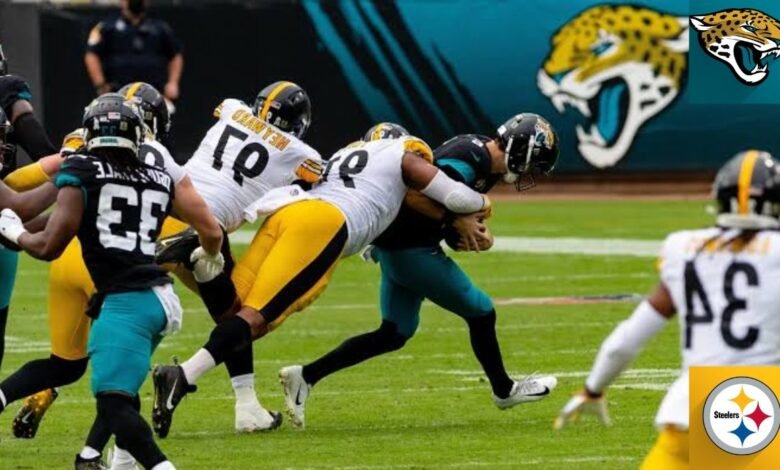
The Pittsburgh Steelers and Jacksonville Jaguars last met on August 9, 2025, in a preseason game at EverBank Stadium. Pittsburgh won 31–25 after both teams traded scores in the second half. This analysis covers that specific game, which was a preseason opener rather than a regular-season matchup. That distinction matters because many starters played only briefly, while backup quarterbacks and players competing for roster spots handled most of the game.
The final score tells only part of the story. The teams finished with nearly identical total yardage, but Pittsburgh converted third downs more often and made better use of its passing opportunities. Jacksonville kept the game close with a 70-yard field goal and a late rushing touchdown. The player stats show how the Steelers built their lead and how the Jaguars mounted their comeback.
Game Result and Scoring Summary
Pittsburgh led 7–3 after the first quarter and extended the advantage to 14–9 by halftime. Jacksonville’s Cam Little made a 70-yard field goal on the final play of the second quarter, a remarkable preseason kick that would have set a regular-season NFL record at the time. The Jaguars narrowed the gap again in the third quarter, but Pittsburgh entered the final period ahead 21–15.
Both teams scored 10 points in the fourth quarter. Ben Sauls added a 36-yard field goal for Pittsburgh, and Jacksonville answered with a Bhayshul Tuten rushing touchdown. Skylar Thompson then connected with Ke’Shawn Williams for a 26-yard score, restoring a nine-point Steelers lead. Little’s 52-yard field goal made it 31–25, but Jacksonville did not get the ball back with enough time to take the lead.
Passing Stats: Pittsburgh Steelers
Skylar Thompson produced the game’s biggest passing line for Pittsburgh. He completed 20 of 28 attempts for 233 yards and three touchdowns without throwing an interception. His 71.4% completion rate and ability to find three different touchdown targets made him the central figure in the Steelers’ second-half offense.
Mason Rudolph started and completed nine of 10 passes for 84 yards and one touchdown. His scoring pass went to tight end Darnell Washington for 19 yards. Rudolph’s short appearance was efficient, but the Steelers’ staff used the game to assess several quarterbacks and younger players rather than rely on one starter for a full game.
Pittsburgh’s passers combined for 317 gross passing yards and four touchdowns. The team gave up two sacks for 16 yards, leaving 301 net passing yards. The distinction between gross and net passing matters when comparing the box score with team totals: quarterback passing figures do not subtract sack yardage, while net passing yards do.
Passing Stats: Jacksonville Jaguars
Jacksonville used four quarterbacks. Nick Mullens completed 11 of 18 passes for 89 yards and one touchdown. He threw the scoring pass to Tim Irwin, who caught it for an 11-yard touchdown in the third quarter. Mullens did not throw an interception, and his pass efficiency rating for the game was 92.1.
Seth Henigan completed 11 of 14 attempts for 78 yards, while John Wolford went three for five for 63 yards. Trevor Lawrence played only the opening series, completing six of seven passes for 43 yards. The Jaguars’ brief use of Lawrence reflected a common preseason approach: give key starters a small number of live snaps, then evaluate other players over the remaining quarters.
Jacksonville’s quarterbacks combined for 31 completions on 44 attempts, 273 yards, one touchdown, and no interceptions. That completion volume kept the offense moving, but the passing attack did not produce as many scoring plays as Pittsburgh’s. The Jaguars also finished with no sacks allowed, an advantage that helped them maintain a similar total yardage figure.
Rushing Stats and Ground Game
Both teams gained 66 rushing yards, though Pittsburgh needed eight more attempts to reach that total. The Steelers carried the ball 25 times for an average of 2.6 yards per attempt. Lew Nichols led Pittsburgh with 31 yards on six carries, while Kaleb Johnson had 20 yards on eight attempts.
Jacksonville gained its 66 yards on 17 carries, averaging 3.9 yards per attempt. Travis Etienne had six yards on two carries, and Tank Bigsby added 24 yards on six attempts. Tuten also rushed six times for 24 yards, including the eight-yard touchdown that brought Jacksonville within two points in the fourth quarter.
The rushing figures show why the teams’ similar total yardage did not mean their offenses played identically. Pittsburgh used a larger share of its plays on the ground and made its biggest gains through the air. Jacksonville was more efficient per carry, but its rushing attack produced only one touchdown and did not create enough late possessions to overcome the deficit.
Steelers Receiving Leaders
Ke’Shawn Williams led Pittsburgh in receiving yards, catching two passes for 55 yards and a touchdown. His 26-yard scoring catch from Thompson gave the Steelers important breathing room late in the game. The production came on a small number of targets, so the yards-per-catch figure was high, but the touchdown was the most consequential part of his line.
Scotty Miller caught four passes for 47 yards, the most receptions by a Steelers player. Robert Taylor added two catches for 38 yards, while Max Hurleman caught two passes for 29 yards and a touchdown. Hurleman’s three-yard scoring reception earlier in the game helped Pittsburgh build its lead before the Jaguars’ 70-yard kick.
Trey Sermon contributed as a receiver as well as a runner. He caught all four of his targets for 28 yards and a touchdown, but gained seven yards on three rushing attempts. Darnell Washington’s lone reception was a 19-yard touchdown from Rudolph. Taken together, the receiving stats show Pittsburgh spread its touchdowns across several players instead of depending on one target.
Jaguars Receiving Leaders
Tim Irwin paced Jacksonville’s receivers with four catches for 48 yards and a touchdown. His third-quarter score was the Jaguars’ only passing touchdown. Dennis Singer caught three passes for 40 yards, and Quintin Morris had four receptions for 39 yards, giving the offense several reliable short and intermediate options.
Travis Hunter caught two passes for nine yards in his professional debut. The Jaguars also used him on defense, so his offensive line reflects limited participation rather than a full workload at receiver. Parker Washington caught three passes for five yards, while Brian Thomas Jr. had one reception for eight yards. These modest totals should be read in light of the brief playing time given to the starting offense.
Tuten’s receiving line added two catches for 16 yards to his rushing touchdown. Jacksonville’s running backs and tight ends helped move the ball, but the team did not have a receiver reach 50 yards. In comparison, Pittsburgh had two players—Williams and Miller—finish above 45 receiving yards, along with several additional contributors.
Team Stats and Efficiency
Pittsburgh finished with 367 total yards on 65 plays, while Jacksonville recorded 339 yards on 61 plays. Both teams averaged 5.6 yards per play. The yardage gap was only 28, so the Steelers’ six-point win was not the result of a major difference in overall offensive production.
The clearest statistical separation came on third down. Pittsburgh converted eight of 13 attempts, a 61.5% rate. Jacksonville converted three of 10, or 30%. Sustaining drives gave the Steelers more opportunities to reach the red zone and helped them control the ball for 30 minutes and 44 seconds, compared with Jacksonville’s 29 minutes and 16 seconds.
Pittsburgh recorded 25 first downs to Jacksonville’s 21 and went three for four in the red zone. The Jaguars scored on two of their three red-zone trips. Jacksonville did convert its only fourth-down attempt, while Pittsburgh failed on its lone fourth-down try. Both sides avoided turnovers, so possession changes did not decide the contest.
Defensive and Special Teams Contributions
The defensive box score is less dramatic than the offensive one. Neither team intercepted a pass, and the Steelers did not record a sack. Jacksonville’s defense registered two sacks, including one by Dawuane Smoot and one by Danny Striggow. Those plays created pressure, but Pittsburgh still managed four passing touchdowns.
Special teams supplied one of the game’s most memorable moments. Little’s 70-yard field goal came at the end of the first half and brought Jacksonville within five points. He later made a 52-yard kick in the fourth quarter. Because the 70-yard attempt occurred in a preseason game, it did not change the official regular-season record.
Pittsburgh’s kicking helped protect its lead. Sauls made a 36-yard field goal and converted the Steelers’ four touchdowns. The teams also had contrasting penalty totals: Pittsburgh was flagged six times for 60 yards, while Jacksonville committed eight penalties for 49 yards. The penalty count affected drive situations, especially for a Jaguars offense that already struggled to convert third downs.
What the Stats Say About the Game
The numbers point to a contest shaped by passing touchdowns and third-down execution. Pittsburgh did not dominate yardage, rushing efficiency, or possession time. Instead, the Steelers converted more often on third down and turned their passing production into four touchdowns. That combination allowed them to keep Jacksonville behind even when the Jaguars found ways to score.
For Jacksonville, the most encouraging signs were its 273 passing yards, its 3.9 yards per rushing attempt, and the absence of turnovers. The team remained within reach throughout the game and finished with 25 points. The main limitation was converting drives into sustained scoring opportunities: three third-down conversions made it harder to keep its offense on the field.
These preseason stats should not be treated as a direct forecast of regular-season performance. The starting Jaguars offense played one series, and several established Steelers players did not appear. The value of this game lies more in the individual auditions, quarterback efficiency, and situational execution than in predicting how either team would perform with its full regular-season lineup.
Final Thoughts
The Pittsburgh Steelers vs Jacksonville Jaguars Match Player Stats from August 9, 2025, show a close preseason game decided by Pittsburgh’s passing production and stronger third-down results. Thompson’s 233 yards and three touchdowns led the way, while Williams, Sermon, and Hurleman supplied key scoring catches. Jacksonville answered with balanced yardage, Irwin’s touchdown reception, Tuten’s rushing score, and Little’s long kicks.
The final 31–25 result reflects a competitive game, but the preseason setting is essential context. Many starters had limited roles, and the teams used the night to evaluate backups and younger players. Readers comparing these numbers with a regular-season meeting should keep the game date and preseason status in view.
Frequently Asked Questions
1. When did the Steelers and Jaguars play this game?
The game took place on August 9, 2025, at EverBank Stadium in Jacksonville. It was the first preseason game for both teams that year, not a regular-season contest.
2. What was the final score?
Pittsburgh defeated Jacksonville 31–25. The Steelers scored in every quarter, while the Jaguars stayed close with a late field goal but could not complete a comeback.
3. Who led the Steelers in passing?
Skylar Thompson led Pittsburgh with 233 passing yards and three touchdowns. He completed 20 of 28 attempts and did not throw an interception.
4. How did Mason Rudolph perform?
Rudolph completed nine of 10 passes for 84 yards and one touchdown. His scoring pass was a 19-yard completion to Darnell Washington.
5. Who was Jacksonville’s leading passer?
Nick Mullens had the most passing yards for Jacksonville, completing 11 of 18 throws for 89 yards and one touchdown. Trevor Lawrence played only one series.
6. Who led Pittsburgh in receiving yards?
Ke’Shawn Williams led the Steelers with 55 receiving yards on two catches. He also caught a 26-yard touchdown pass in the fourth quarter.
7. Who scored Jacksonville’s touchdowns?
Tim Irwin caught an 11-yard touchdown pass from Mullens, and Bhayshul Tuten scored on an eight-yard run. Cam Little added field goals, including a 70-yard kick before halftime.
8. How many total yards did each team gain?
Pittsburgh recorded 367 total yards, and Jacksonville finished with 339. Both teams averaged 5.6 yards per play, making third-down efficiency a more telling difference.
9. Did either team commit a turnover?
Neither team recorded a turnover. Both quarterbacks groups avoided interceptions, and the game’s outcome came down to scoring and drive efficiency rather than giveaways.
10. Was the 70-yard field goal an NFL record?
No. Little’s 70-yard kick happened during a preseason game. It was an extraordinary attempt, but preseason kicks do not count toward the NFL’s official regular-season record.
Recommended: Los Angeles Rams vs Cleveland Browns Match Player Stats: Full Box Score


One Comment