
Kansas City Chiefs vs Philadelphia Eagles Match Player Stats: Special Teams Performance Review

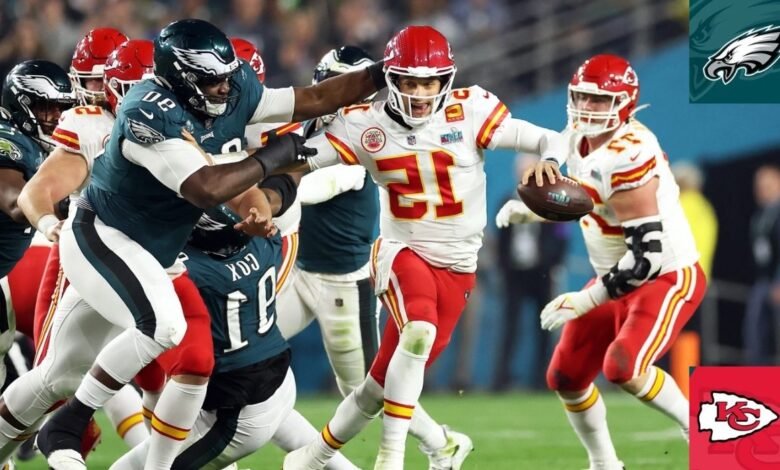
The Kansas City Chiefs vs Philadelphia Eagles Match Player Stats from September 14, 2025, show how kicking and field position influenced a close game. Philadelphia won 20–17 at GEHA Field at Arrowhead Stadium, with Jake Elliott converting both field goals and Kansas City receiving strong work from punter Matt Araiza. Neither team scored a return touchdown, but special teams still affected scoring opportunities and the final possession. This review focuses on that Week 2 rematch, rather than combining its numbers with either Super Bowl meeting. Looking at kickers, punters, returners, and coverage together gives a clearer picture than judging either unit by one highlight or the final score alone.
Game Context and the Three-Point Margin
Both teams scored two touchdowns and made both extra points, leaving field goals as the difference in their scoring totals. Philadelphia added six points through Elliott, while Harrison Butker supplied three for Kansas City. The Chiefs nevertheless gained 294 offensive yards against the Eagles’ 216, showing why total yardage does not automatically identify the winner. Drives still need to finish with points, and long kicks can rescue possessions that stall outside the usual scoring area. The result also depended on defensive stops and an interception. The kicking difference matched the winning margin, but that arithmetic should not be mistaken for proof that special teams alone decided the game.
Jake Elliott’s Long-Range Field Goals
Elliott finished with two field goals from two attempts, converting from 58 and 51 yards while also making two extra points. His eight points represented 40% of Philadelphia’s final total. The 58-yard attempt tied the score at 10–10 as the first half expired, answering Kansas City’s late touchdown without leaving time for another offensive possession. His second field goal put Philadelphia ahead 13–10 early in the third quarter. That kick followed a defensive fourth-down stop, after which the Eagles gained only two yards on their possession. Elliott therefore turned a favorable starting position into points even when the offense made little progress. His contribution was especially valuable because both attempts required substantial range.
Harrison Butker’s Make and Miss
Butker made a 56-yard field goal and both extra points, finishing with five points. His other field-goal attempt, from 58 yards in the first quarter, missed wide right. Philadelphia took over at its own 48-yard line and subsequently drove for the opening touchdown. That sequence illustrates the risk attached to a long attempt: a miss can leave the opponent with useful field position as well as deny the kicking team points. Butker’s successful 56-yarder later reduced Philadelphia’s lead to 7–3. A balanced assessment recognizes that difficult conversion alongside the miss. Two attempts are too few to establish a wider accuracy trend, and the lost opportunity does not justify blaming the entire defeat on the kicker.
Braden Mann’s Distance and Net Results
Braden Mann punted five times for 274 yards, producing a gross average of 54.8 yards. His longest punt traveled 70 yards, and he finished with one punt inside the opponent’s 20-yard line and one touchback. His net average was 42.4 yards, which accounts for the field position surrendered through returns and the touchback. The difference between those averages matters when evaluating his afternoon. Mann supplied substantial distance, but Kansas City recovered part of that distance through its return game. His performance shows why a long punt and a strong net result are separate achievements. Distance gives coverage players a chance to protect territory; it does not guarantee where the opposing offense will begin its drive.
Matt Araiza’s Advantage in Net Punting
Araiza punted three times for 178 yards, averaging 59.3 yards gross and 54.7 yards net. Two punts finished inside Philadelphia’s 20-yard line, none became touchbacks, and his longest traveled 69 yards. His gross average exceeded Mann’s by 4.5 yards, while the net difference was 12.3 yards per punt. Those figures favor Kansas City in this part of the comparison, although the punters worked from different field positions and had different numbers of attempts. Araiza’s kicks helped push Philadelphia back when Kansas City’s offense stalled. The smaller gap between his gross and net averages also indicates that little of his punting distance was lost to returns. That was a useful contribution despite the Chiefs’ defeat.
Punt Returns and the Longest-Punt Trap
Nikko Remigio returned two punts for 42 yards, averaging 21.0 yards, with a longest return of 25. Jahan Dotson returned one for 14 yards and made two fair catches. Remigio’s 25-yard return came after Mann’s 70-yard punt, carrying the ball from Kansas City’s six-yard line to its 31. That specific play explains why highlighting only the punt’s distance would leave an incomplete impression. Philadelphia moved the ball a long way, but Kansas City still obtained a workable starting position. Dotson’s return also had value: after Araiza’s 69-yard punt reached Philadelphia’s two-yard line, he advanced to the 16. Returns can ease pressure on an offense without producing a touchdown or a dramatic highlight.
Kickoff Returns and Starting Position
John Metchie III handled Philadelphia’s three kickoff returns, gaining 69 yards for a 23.0-yard average and a longest return of 26. Kansas City divided its four returns between Brashard Smith and Remigio. Smith gained 52 yards on two returns, while Remigio added 43 on two, giving the Chiefs 95 yards overall and a rounded average of 23.8. None resulted in a touchdown. The totals should be read alongside opportunity: Kansas City returned one more kickoff. A return average also does not tell readers the exact starting field position because the catch location matters. A return beginning near the goal line can cover useful distance while still leaving the offense short of its own 30-yard line.
Coverage, Protection, and the Supporting Players
Neither team had a punt, field goal, or extra point blocked. That outcome reflects successful execution of those plays, although a box score cannot measure every block or individual assignment. Long snappers Charley Hughlett and James Winchester worked with holders Mann and Araiza, respectively, to support the kickers. Coverage also involved players whose contributions rarely appear in offensive summaries. Philadelphia’s Kelee Ringo and Kylen Granson, for example, shared a tackle on a kickoff return. These responsibilities require coordinated timing and positioning. A returner needs blocking lanes, a kicker needs a clean operation, and a coverage unit needs controlled pursuit. Individual specialist statistics make more sense when considered alongside those supporting roles.
A.J. Brown’s Late Onside-Kick Recovery
Kansas City reduced its deficit to 20–17 when Patrick Mahomes connected with Tyquan Thornton for a 49-yard touchdown with three minutes remaining. After Butker added the extra point, the Chiefs attempted an onside kick to regain possession. A.J. Brown secured the ball for Philadelphia, giving the Eagles possession in Kansas City territory. The recovery prevented the Chiefs from immediately bringing their offense back onto the field with a chance to tie or take the lead. Philadelphia still needed to manage the remaining clock, which it did. Brown’s role demonstrates that an established offensive player can make a significant special-teams contribution without recording a conventional kickoff return or adding to his receiving total.
Final Thoughts
Philadelphia’s strongest special-teams contributions were Elliott’s long field goals and the secure late recovery, while Kansas City held the advantage in net punting and punt-return production. Those findings support a more balanced reading than simply declaring every aspect of the winning team’s performance superior. The Eagles obtained valuable scoring from possessions that did not reach the end zone, and the Chiefs repeatedly benefited from Araiza’s distance and Remigio’s returns. Together, the numbers show how different parts of special teams can pull in opposite directions within the same game. The final result rewards the complete team performance; the individual statistics help explain the opportunities each unit created or protected.
Frequently Asked Questions
1. Which Chiefs–Eagles game does this review cover?
It covers the September 14, 2025, regular-season game in Kansas City, which Philadelphia won 20–17. It does not describe Super Bowl LIX, where the Eagles won 40–22, or Super Bowl LVII, which Kansas City won 38–35. Keeping the games separate prevents different players’ performances and scoring totals from being mixed together.
2. How many points did the kickers score?
Jake Elliott scored eight points through two field goals and two extra points. Harrison Butker scored five through one field goal and two extra points. The three-point difference matched Philadelphia’s winning margin. However, those kicks depended on opportunities created by the rest of each team, so they should be evaluated within the full game.
3. Why was Elliott’s third-quarter field goal important?
It converted a defensive fourth-down stop into a 13–10 lead even though Philadelphia gained only two offensive yards afterward. The kick shows how scoring range can make a short possession productive. Without needing another first down, the Eagles were able to obtain points from a drive that had otherwise stalled.
4. Did the longest punt produce the best field position?
No. Mann’s 70-yard punt was the game’s longest, but Remigio returned it 25 yards, allowing Kansas City to start at its own 31. Punt distance describes only part of the play. The return, any penalty, and the final ball location are needed to understand the actual benefit to the kicking team.
5. What is the difference between gross and net punting average?
Gross average measures punt distance before accounting for returns and touchbacks. Net average subtracts return yardage and the standard 20-yard allowance for each punt touchback before dividing by attempts. It is a more complete measure of retained distance, although it still reflects the combined work of the punter and coverage unit.
6. Who gained the most punt-return yards?
Nikko Remigio led with 42 yards on two returns. Jahan Dotson gained 14 yards on his only return and also made two fair catches. A fair catch produces no return yardage but secures possession without exposing the receiver to a tackle, so the absence of a return is not automatically a poor result.
7. Are kickoff-return yards the same as starting field position?
No. Return yardage measures movement from where the ball was caught, while starting field position identifies where the offense takes over. For example, Metchie returned one kickoff 22 yards from Philadelphia’s one-yard line to its 23. Both numbers are useful, but they answer different questions about the receiving team’s position.
8. What do the long snapper and holder contribute?
The long snapper delivers the ball, and the holder controls and positions it for the kicker. Protection around them must also prevent opponents from reaching the attempt. These roles help explain why successful field goals are a coordinated operation. Kicker accuracy alone cannot describe the quality of every part of the play.
9. Was Andrew Mukuba’s interception return a special-teams play?
No. Mukuba’s interception and 41-yard return belonged to Philadelphia’s defensive performance. Some statistical summaries group different types of returns together, which can create confusion. Punt returns and kickoff returns are special-teams categories, while an interception return follows a defensive takeaway and should remain separate when assessing the specialists.
10. Does this game prove which team had the better special-teams unit?
It identifies strengths and weaknesses from one matchup, rather than establishing a season-long ranking. Philadelphia had the stronger field-goal outcome, while Kansas City recorded the higher net punting average. Evaluating either unit more broadly requires additional games and attention to distances, starting positions, coverage, penalties, and the situations in which each specialist worked.
Recommended: Buffalo Bills vs Atlanta Falcons Match Player Stats: How Atlanta Won 24–14





One Comment