
Cockalier From Puppy to Adult: Size, Temperament, Exercise, Health, and Daily Care

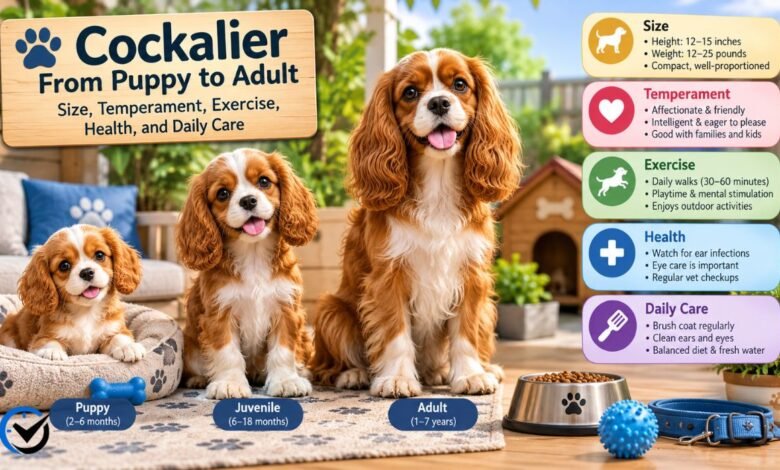
Choosing a Cockalier means looking beyond a puppy’s soft ears and friendly expression. This Cavalier King Charles Spaniel and Cocker Spaniel mix can become an affectionate companion, but its adult size, energy, and coat are not completely predictable. Raising one well requires attention to the individual dog rather than assumptions about designer crosses. Puppyhood brings toilet training, careful socialization, and frequent rest. Adulthood brings different feeding and exercise needs, while later years may require closer health monitoring. Understanding those changes helps owners build a realistic routine. The aim is a confident, comfortable dog supported by people who can provide companionship and consistent care throughout its life.
Understanding the Cavalier and Cocker Spaniel Mix
The parent breeds share spaniel ancestry but have different backgrounds. Cavaliers developed as companion dogs, while Cocker Spaniels have a working history of finding and retrieving game. The Cocker parent may be an English or American Cocker Spaniel, which can influence appearance and size. A first-generation puppy has one parent from each breed, but later crosses may involve two mixed dogs or a return to one parent breed. These pairings help explain why dogs carrying the same name can look and behave differently. Silky coats and feathered ears are common, but no puppy is guaranteed to inherit an exact balance of parental traits. This is a crossbreed rather than a standardized pedigree breed.
Adult Size and How Puppies Grow
Broad guide estimates place many adults around 12–15 inches, or 30–38 centimeters, at the shoulder and 10–26 pounds, or 4.5–12 kilograms. Those figures are approximate, and larger individuals are possible. The parents’ actual measurements offer a more useful starting point than a puppy photograph or claims about unusually small size. Small and medium dogs generally approach physical maturity around 10–12 months, although growth varies. Emotional maturity and reliable behavior follow their own timetable. Track weight during puppyhood and discuss the trend at veterinary visits instead of trying to reach a particular number quickly. Extra food does not create healthier growth. A steadily growing puppy with an appropriate body condition is preferable to one becoming overweight while its skeleton develops.
Temperament and Family Compatibility
Many of these dogs enjoy close contact, games, and participation in household activities. Their Cavalier background may contribute a companionable nature, while Cocker ancestry can bring enthusiasm for exploring and following scents. However, ancestry does not replace an assessment of the individual dog’s confidence, handling tolerance, and previous experiences. Children should learn to leave a sleeping or eating dog alone, avoid pulling ears, and allow the animal to move away. Adults must supervise interactions rather than expect a patient temperament to prevent every accident. Introductions to other dogs and cats should be gradual and controlled. Birds and small pets need particular care because hunting instincts can persist. A quiet retreat helps prevent constant attention from becoming overwhelming.
Choosing a Puppy and Preparing Your Home
When buying a puppy, meet its mother and observe the environment where the litter is raised. Ask for identifiable parental health reports, vaccination records, and information about early handling rather than accepting a broad promise that the parents are healthy. Puppies should normally remain with their mother and littermates until at least eight weeks old. A reputable rescue can also help match an adult dog to your circumstances. Before arrival, secure cables, medicines, cleaning products, and garden escape routes. Prepare washable bedding, suitable chew toys, feeding bowls, and a comfortable sleeping area. Arrange an early veterinary appointment and confirm which food the puppy already eats. Budget for ongoing grooming and veterinary care, since the purchase or adoption fee is only the beginning.
The First Weeks and Early Socialization
Keep the first days calm and predictable, with regular meals, toilet opportunities, and uninterrupted sleep. Take the puppy to its toilet area after waking, eating, and active play, then reward success immediately. Accidents call for better supervision and cleaning rather than punishment. The first three months are an important socialization period, so introduce household sounds, different people, gentle handling, and suitable environments through short, pleasant experiences. Ask your veterinarian how to balance early exposure with local infection risks before vaccinations are complete. Safe socialization does not require visits to busy dog parks or forced greetings. Allow the puppy to observe from a comfortable distance and retreat when worried. Gradually teaching acceptance of brushing, ear checks, and paw handling also makes later care easier.
Exercise From Puppyhood to Adulthood
A healthy adult may need around an hour or more of daily activity, but parental lines, fitness, weather, and medical conditions can change that requirement. Spread movement across walks, sniffing opportunities, play, and brief training sessions rather than relying on one exhausting outing. Puppies need shorter activities with rest between them, and prolonged running or repeated high jumps are poor choices for developing joints. The familiar five-minutes-per-month exercise rule is not a scientifically established limit for every puppy. Watch your dog’s movement and recovery instead of following a timer alone. Slow down if it lags behind, becomes uncomfortable, or struggles to recover. Older dogs often benefit from shorter, regular walks and gentle enrichment rather than an abrupt end to activity.
Training and Learning to Spend Time Alone
Reward-based training gives this spaniel mix clear information about which behaviors work. Start with name recognition, toilet habits, loose-leash walking, recall, and settling on a bed. Practice in quiet places before adding distractions, and use a secure area or long line while recall is developing. Brief sessions fit more easily into daily life than occasional lengthy lessons. Consistency matters during adolescence, when excitement can make previously learned skills less reliable. Teach independence gradually by practicing very short separations while the dog remains relaxed, then increasing time carefully. A camera can help reveal distress that disappears before you return. Persistent howling, escape attempts, or panic require veterinary or qualified behavior support. Toys alone cannot resolve serious separation anxiety, and punishment can worsen the problem.
Coat, Ear, Dental, and Nail Care
The coat may be straight or wavy, with longer hair around the ears, chest, legs, and tail. Brush and comb regularly, often daily for heavier coats, checking that the comb reaches through the hair rather than passing over hidden tangles. A groomer can recommend a practical trim and maintenance schedule for your dog’s coat. Bathe when needed with a dog-safe shampoo and dry thoroughly. Check ears for redness, odor, discharge, or discomfort, and seek veterinary advice when these appear rather than repeatedly treating them at home. Clean only as instructed and never push cotton swabs into the canal. Introduce daily toothbrushing with dog toothpaste, maintain comfortable nail length, and inspect paws after walks for seeds, debris, or injuries.
Feeding and Maintaining a Healthy Weight
Choose a complete, balanced food appropriate for growth during puppyhood, then move to an adult diet when development is sufficiently advanced. Young puppies need several meals daily; many adults do well with two. Use the feeding label as a starting point and adjust portions with your veterinarian according to weight, body condition, and activity. Measuring food by weight helps keep servings consistent. Treats, table scraps, and training rewards should together provide no more than about 10% of daily calories. Count these extras instead of adding them unnoticed to the normal ration. You should generally be able to feel the ribs without a thick fat covering and see a waist beneath the coat. Provide fresh water and avoid unnecessary vitamin or mineral supplements.
Inherited Health Risks and Ongoing Veterinary Care
Crossbreeding does not guarantee freedom from inherited disease. Cavalier ancestry makes attention to mitral valve disease, which affects a heart valve, and syringomyelia, a potentially painful spinal cord condition, relevant. Cocker ancestry brings its own concerns, including certain inherited eye disorders, familial kidney disease, and hip problems. Risk depends on the parental lines and the condition involved; these possibilities do not mean every mixed dog will develop them. Ask which clinical examinations and DNA tests are appropriate for the actual parents, since a DNA panel cannot replace every physical screening test. Maintain routine examinations, vaccination, and parasite prevention suited to your location. As the dog ages, discuss more frequent appointments, often every six months. Changes in stamina, movement, appetite, or behavior deserve attention rather than being dismissed as ordinary aging.
Final Thoughts
A Cockalier can suit people who enjoy an affectionate dog and can make room for exercise, grooming, training, and veterinary care. Understand both parent breeds while judging the particular dog in front of you. Choose a puppy through transparent breeding practices or consider an adult whose needs are already clearer. Build habits gradually, review feeding and activity as the dog develops, and adjust care when health or circumstances change. Ownership becomes easier when the household agrees on responsibilities and notices small changes before they become lasting problems.
Frequently Asked Questions
1. Is a Cockalier the same as a Cockapoo?
No. A Cockapoo combines Cocker Spaniel and Poodle ancestry, whereas this mix combines Cocker Spaniel and Cavalier King Charles Spaniel ancestry. Their coat characteristics and care needs can differ, so the names should not be used interchangeably.
2. How long does this spaniel mix usually live?
Published guide estimates differ, broadly suggesting around 10–15 years. They are not a firm prediction for an individual dog. Inherited disease, weight, and access to appropriate care can influence lifespan, so planning for long-term ownership is more useful than expecting an exact age.
3. Do these dogs shed or trigger allergies?
They generally shed and should not be marketed as reliably hypoallergenic. Allergic reactions involve proteins associated with dander, saliva, and other material, not simply loose hair. Anyone with dog allergies should seek medical advice before committing to ownership.
4. Can this mix live comfortably in an apartment?
Yes, provided its exercise, toilet, companionship, and rest needs are met. A garden does not replace walks or engagement. Consider noise, stairs, nearby walking areas, and how you will arrange daytime care before deciding whether your home is suitable.
5. Why does my puppy bite hands during play?
Mouthing is common during puppy play and teething, and it does not automatically indicate aggression. Redirect biting toward an appropriate toy, pause rough play, and provide rest. Seek professional help if biting becomes intense, fearful, or associated with pain.
6. How much should I budget for ownership?
Costs vary by country and local services. Obtain realistic estimates for food, grooming, preventive treatment, training, and routine veterinary visits. Include a plan for unexpected illness or injury, and compare ongoing costs rather than choosing solely by the initial puppy price.
7. Can I leave this dog alone during a full workday?
Do not assume it can comfortably manage an entire workday without support. Puppies need frequent toilet opportunities, and adults vary in their tolerance of solitude. Arrange suitable daytime help and build independence gradually instead of testing the dog with a sudden prolonged absence.
8. What should I ask about the parents’ health tests?
Request actual reports showing the dog’s identity, examination date, and result. Ask how findings from both parents informed the mating. Distinguish DNA results from heart, eye, and joint examinations, and have a veterinarian explain any unclear or incomplete records.
9. When should puppy food be replaced with adult food?
For many small and medium dogs, the change happens around the end of the first year, but development matters more than a birthday alone. Confirm timing with your veterinarian and introduce the new food gradually while monitoring appetite and stools.
10. How should daily care change for an older dog?
Keep activity regular but adapt its duration and difficulty to comfort and stamina. Provide secure footing and comfortable bedding, monitor weight and muscle condition, and report changes promptly. Increasing rest should not mean overlooking pain or withdrawing all opportunities for enjoyable movement.
Recommended: Tumbons Travel Guide: Thai Addresses, Village Communities, and Local OTOP Products





One Comment