
Sovapp Review: Features, Benefits, Limitations, Security, and What Users Should Know


Sovapp is a technology name that has started appearing in online discussions, but researching it reveals an important point: the name is not used consistently. Some recent descriptions present it as an all-in-one productivity platform for tasks, communication, files, planning, and automation. Other sources use the same name for mobile personalization or sleep-related applications. Because of this confusion, a useful review needs to separate commonly reported features from information that is difficult to verify. This guide focuses mainly on the productivity-focused interpretation while explaining what potential users should check before trusting any particular description.
What Is Sovapp?
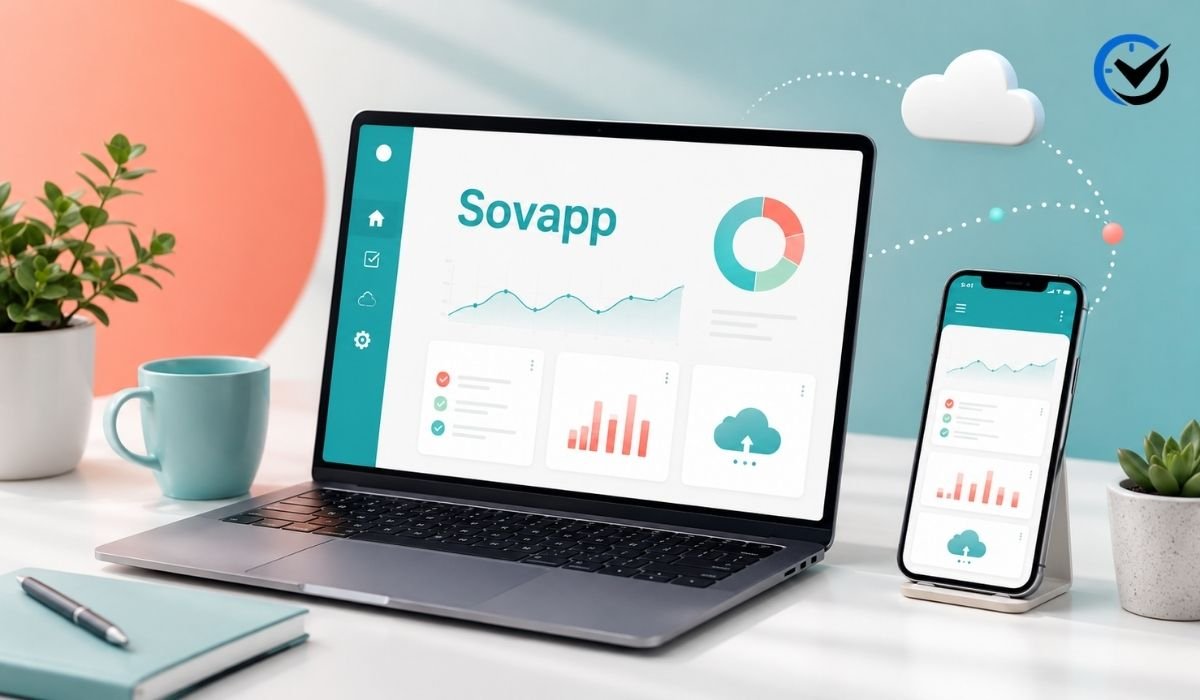
In its productivity-focused form, Sovapp is described as a digital workspace designed to bring several everyday activities into one environment. Instead of using separate applications for tasks, conversations, documents, calendars, reminders, and project updates, the idea is to connect those functions through a central dashboard. Some descriptions also associate the platform with artificial intelligence and personalized recommendations. However, there is no single widely recognized source that clearly confirms every feature attributed to the name. That means readers should treat broad online feature lists carefully and verify the exact product before making important decisions.
How the Platform Is Intended to Work
The main appeal is simple: reduce the amount of switching between disconnected tools. A modern user might keep messages in one service, files in another, deadlines on a calendar, and project tasks somewhere else. Moving between those systems can waste time and make information harder to track. A unified workspace attempts to connect these activities. A task could be associated with its related conversation, document, deadline, and project rather than existing as an isolated entry. For freelancers, students, remote workers, and small teams, that kind of connected workflow can be useful when it is implemented reliably.
Main Features and Productivity Tools
Recent descriptions commonly associate the productivity version with task and project management, shared workspaces, reminders, file organization, communication, and scheduling. Users may be able to create tasks, assign work, set deadlines, monitor progress, and organize activities by project. The important point is not simply the number of functions but how well they work together. A connected system can make it easier to move from planning to execution without opening several applications. Still, individual features should be checked in the current version because online descriptions may combine existing capabilities with proposed or conceptual functions.
Communication, Files, and Collaboration
Communication and document management are also frequently mentioned. A centralized workspace can potentially keep project discussions, files, notes, and assignments close together. This may help prevent important decisions from becoming buried in unrelated message threads. Shared files can also be easier to locate when they are connected directly to a project or task. For teams, useful collaboration depends on more than messaging. Permission controls, file versions, activity history, clear task ownership, and dependable synchronization are equally important. A platform becomes genuinely helpful when it keeps work organized without creating another complicated system to maintain.
Scheduling, Reminders, and Automation
Planning tools can add another layer of convenience. Calendar events, deadlines, recurring activities, and reminders allow users to see upcoming responsibilities from one place. Some descriptions go further by suggesting intelligent reminders and automated workflows based on user activity. In theory, this could reduce repetitive work, such as creating routine reminders or moving information between related tasks. However, automation should remain under the user’s control. Incorrect reminders, unnecessary notifications, or poorly timed automated actions can create more distraction than they remove. Good software should allow users to adjust, disable, and review automated behavior easily.
Artificial Intelligence and Smart Features
AI is one of the more ambitious capabilities associated with the productivity concept. Recent descriptions mention predictive suggestions, summaries, automated actions, and systems that can identify useful tasks from conversations or user patterns. These features reflect a broader change in productivity software, where applications increasingly try to assist rather than simply store information. An AI assistant could potentially summarize a discussion or suggest the next step in a project. However, a claim appearing in an online article does not necessarily mean the feature is available in every version. Users should verify which AI functions are actually supported before relying on them for important work.
User Experience and Ease of Use
An all-in-one application has to balance convenience with simplicity. Combining many tools can reduce app switching, but it can also produce a crowded interface. A well-designed workspace should make important tasks easy to find while keeping less frequently used functions out of the way. Reports about Sovapp often emphasize a clean and user-friendly experience. In practical terms, users should look for straightforward navigation, quick loading, understandable settings, useful search, sensible notifications, and an easy way to recover from mistakes. A long feature list has little value if basic actions are difficult or confusing.
Benefits for Individual Users
For individual users, the strongest potential benefit is consolidation. A student could potentially keep assignments, deadlines, notes, and reminders together. A freelancer might connect client conversations with project tasks and files. Someone managing personal projects could avoid maintaining several separate productivity systems. The real advantage is not having the greatest number of tools; it is knowing where information belongs and finding it quickly. If a unified workspace genuinely reduces daily friction, it can become valuable. If it simply adds another dashboard to check, the benefit may be much smaller than expected.
Benefits for Teams and Small Businesses
Teams can potentially gain more from connected workspaces because collaboration often creates large amounts of scattered information. Keeping conversations, assignments, files, and deadlines together may make handoffs clearer and reduce duplicated updates. Small businesses may also appreciate having fewer systems to administer. However, switching platforms can involve training, data migration, workflow changes, and temporary disruption. A business should therefore compare the proposed benefits with the cost of changing its existing setup. A new application is worthwhile when it solves a genuine organizational problem, not simply because it offers more features than the tools already in use.

Limitations and Current Uncertainty
The biggest concern surrounding Sovapp is uncertainty about its exact identity and maturity. Current online material describes several different products and concepts under the same or similar name. As a result, it can be difficult to establish universal facts about pricing, availability, device support, feature completeness, and long-term reliability. Another limitation is the possibility of feature overload. An application attempting to replace communication, project management, storage, calendars, and automation may become difficult to navigate. Users should therefore prioritize dependable core functions instead of choosing a service based only on the length of its advertised feature list.
Security, Privacy, and Data Protection
Security is especially important when one platform is expected to hold tasks, conversations, documents, and personal information. Some online descriptions make claims about encryption, authentication, privacy controls, and secure processing, but those statements should be verified through the actual product’s documentation. Before uploading sensitive material, users should understand what information is collected, how it is stored, how long it is retained, and whether it is shared with third parties. Strong passwords and multi-factor authentication should also be used whenever available. If a service does not clearly explain its privacy practices, keeping sensitive information elsewhere is the safer choice.
Data Ownership and Account Control
Data portability is another issue that should not be overlooked. Users should know whether they can export their information, download important files, recover an account, and permanently delete their data. These questions become especially important for businesses that may need records after an employee leaves or a subscription changes. A convenient platform can create unwanted dependency if information cannot easily be moved elsewhere. Before making any application the main home for important work, users should test its export and recovery options. Keeping separate backups of critical files is also sensible, regardless of which productivity platform is selected.
Compatibility and Availability
Compatibility requires particular attention because the Sovapp name appears in different contexts. Some descriptions portray it as a mobile application, while others describe a broader workspace available across several devices. Users should never assume that two articles discussing the same name are referring to the same product. Before installing an application, check its developer identity, supported operating system, current version, update history, permissions, and store information. These details can quickly reveal whether the product matches what you were actually searching for. They also help reduce the risk of installing an unrelated application with a similar name.
Who Should Consider Using It?
The productivity-focused concept may appeal most to people who feel overwhelmed by disconnected tools. Freelancers, students, creators, remote workers, and small teams may appreciate having related information in one place. It can also suit users who prefer a single dashboard instead of maintaining multiple services. However, people who already have an efficient workflow may have little reason to switch. A new platform should solve a real problem rather than become another application demanding attention. The best test is whether it saves meaningful time after the initial setup and learning period.

How to Evaluate Sovapp Before Using It
A sensible evaluation should begin with identity and trust. Confirm exactly which application or service you are considering, who operates it, what devices it supports, and what information it collects. Then test the functions that matter most to you rather than trying every advertised feature. Create a few tasks, attach a document, set a reminder, search for information, and see how easily you can change or remove something. If collaboration matters, test user permissions. If privacy matters, read the data policy. A short practical trial can reveal far more about usefulness than promotional descriptions.
Sovapp Compared With Separate Specialized Apps
The main advantage of a unified workspace is convenience, while separate applications often provide greater depth. A dedicated project manager may offer more advanced planning features, a specialist storage service may provide stronger file controls, and a dedicated communication platform may work better for large organizations. An all-in-one system trades some specialization for integration. Neither approach is automatically better. Users should compare how much time they currently lose switching between tools with what they might sacrifice by consolidating them. For straightforward workflows, integration may be the better choice. Complex professional environments may still benefit from specialized applications.
Final Thoughts
Sovapp is an interesting but unusually ambiguous technology term. The productivity-focused version described online has a useful central idea: bring tasks, communication, files, planning, and automation closer together so users spend less time switching between disconnected tools. At the same time, inconsistent information about the name means users should verify the exact product before trusting claims about features, AI, security, pricing, or availability. A careful trial, review of privacy practices, and check of data-export options can help determine whether it is genuinely useful. For most users, the best decision is not based on how many features an application promises, but on whether it makes everyday work simpler, safer, and easier to manage.
Frequently Asked Questions
1. What is Sovapp?
Sovapp is a name currently used online for more than one app-related concept. In productivity-focused descriptions, it refers to a workspace intended to combine tasks, communication, files, planning, and related functions. Other sources associate the name with different mobile applications. Identifying the exact developer and product is therefore essential before relying on any specific description.
2. Is Sovapp a productivity application?
Some recent descriptions present it as an all-in-one productivity platform. Its reported purpose is to help users organize projects, tasks, conversations, files, and schedules from one environment. Because the name is not consistently associated with one verified product, users should confirm the current application and available functions before assuming that every reported feature is included.
3. Does Sovapp use artificial intelligence?
AI features are frequently mentioned in recent descriptions, including recommendations, summaries, automation, and task assistance. However, these claims vary between sources and should not automatically be treated as confirmed features. Users should check the current product information to determine which AI tools are actually available.
4. Is Sovapp secure?
Security depends on the exact application being discussed. Some descriptions claim advanced encryption and privacy measures, but users should verify those statements through the product’s own privacy and security information. Sensitive documents should not be uploaded until data handling, account protection, and retention practices are understood.
5. Is Sovapp available on Android and iPhone?
There is no simple universal answer because the name appears in descriptions of different mobile products as well as broader productivity concepts. Check the specific app listing, developer name, operating system requirements, and recent update information before downloading it.
6. Can Sovapp replace other productivity applications?
It may be able to replace some tools if the version being used provides the required task, communication, file, and scheduling functions. However, specialized applications can still be better for advanced workflows. The right choice depends on whether convenience or specialized capability matters more for the user’s needs.
7. Is Sovapp free?
Pricing cannot be treated as universal because different products appear under the same name. Users should check the current pricing information for the exact application they intend to use. Do not assume that an app is free simply because an online article describes it as such.
8. Should businesses store sensitive information in Sovapp?
Businesses should first examine its privacy policy, security controls, access permissions, backup options, data retention rules, and export capabilities. Convenience alone is not enough when handling confidential customer, financial, employee, or business information.
9. What should I check before installing Sovapp?
Check the developer, app permissions, supported devices, update history, privacy practices, and current user feedback. Most importantly, make sure the application matches the product you intended to find. If its identity or data practices are unclear, avoid giving it sensitive information.
10. Is Sovapp worth trying?
It may be worth testing for users who want to combine several everyday productivity activities into one workspace. The best approach is to start with a limited trial and judge it on reliability, ease of use, privacy, and whether it actually reduces the need for other tools. Those practical results are more meaningful than broad promotional claims.
Recommended: Faibloh: Understanding Its Meaning, Evolution, Applications, Digital Impact, and Future





One Comment