

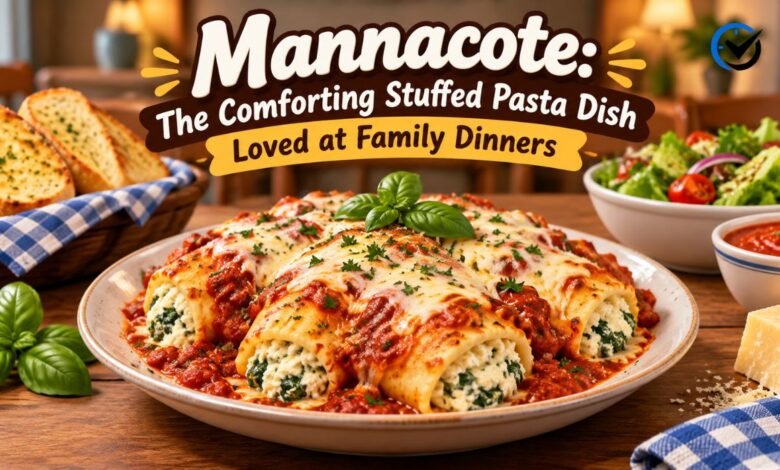
A pan of stuffed pasta coming out of the oven is an inviting centerpiece for a family meal. Large pasta tubes, creamy filling, tomato sauce, and melted cheese make a satisfying combination that can be prepared ahead and shared at the table. The name Mannacote is sometimes used for this kind of dish, though manicotti is the more widely recognized Italian-American name. In either case, the idea is familiar: fill pasta with a savory mixture, cover it with sauce, and bake until hot and tender. This guide explains the dish, its ingredients, cooking methods, variations, and practical serving tips.
What Is Mannacote?
Mannacote generally refers to a stuffed, baked pasta dish made with large tubes filled with cheese, vegetables, meat, or a combination of ingredients. The filled pasta is arranged in a baking dish, covered with sauce, and cooked in the oven. As it bakes, the pasta softens, the filling warms through, and the sauce helps keep the tubes moist. Melted cheese on top adds a browned, savory finish. The name is less standardized than manicotti, so recipes and menus may use different spellings for a similar preparation. When searching for instructions or ingredients, looking up manicotti recipes can also be useful.
The Name and Its Connection to Manicotti
Manicotti is the familiar Italian-American name for large stuffed pasta tubes, and Mannacote appears to be an uncommon spelling associated with the same dish. It should not be presented as a separate, universally recognized pasta shape with a fixed definition. The term may reflect how a family pronounces or writes the name, or how it has been recorded in a particular recipe. In Italian, manicotto means a sleeve, a fitting image for a tubular pasta that can hold filling. Because food names change as recipes pass between languages and generations, a reader may encounter several spellings for similar baked pasta.
Pasta Shapes and Fillings
The pasta used for this dish needs to be wide enough to hold a generous amount of filling without tearing during cooking. In the United States, manicotti shells are often sold as large, ridged tubes. Some cooks use dried pasta, while others use thin pasta sheets or homemade crepes rolled around the filling. Ricotta is a common base because it is mild, soft, and easy to mix. It may be combined with mozzarella, Parmesan, egg, herbs, or cooked vegetables. Spinach is a popular addition, but chopped mushrooms, roasted squash, or finely cooked meat can also work. A filling should be moist enough to stay creamy but firm enough to remain inside the pasta.
Choosing a Sauce and Cheese
Tomato sauce is a classic choice because its acidity balances the richness of cheese filling. A simple marinara lets the filling remain the main flavor, while a meat sauce makes the meal more substantial. A light cream sauce can be used, though a very heavy sauce may overwhelm the pasta. Spread sauce across the bottom of the baking dish before adding the filled tubes; this helps prevent sticking and gives the pasta moisture as it cooks. Spoon more sauce over the top, especially over exposed pasta. Mozzarella melts into a soft, stretchy layer, while Parmesan adds a sharper, saltier taste. Use enough sauce to cover the pasta lightly, without flooding the dish.
Preparing a Balanced Filling
A reliable filling begins with ingredients that are drained and prepared before mixing. If using frozen spinach, thaw it and squeeze out excess water; otherwise, the filling can become watery and loosen the sauce. Ricotta can also contain extra moisture, so draining it briefly in a fine strainer may help. Mix the cheese with a beaten egg if a firmer filling is desired, then add herbs, seasoning, and any cooked vegetables or meat. Taste the mixture before filling the pasta, keeping in mind that Parmesan and other cheeses already contribute salt. Avoid adding large, hard pieces that could make the tubes difficult to fill or cause the pasta to split.
How to Fill and Assemble the Pasta
Cook dried pasta according to the package directions, stopping when it is just flexible but still firm. Overcooked shells are more likely to split when handled and may turn soft in the oven. After draining, let them cool enough to touch. A small spoon works for filling, while a piping bag or a sturdy food-storage bag with one corner snipped off can make the task faster and neater. Fill each tube from both ends so the center is not left empty. Arrange the pasta in a single layer over sauce, leaving a little space between pieces. Cover with sauce and cheese, then cover the dish with foil if the top browns before the pasta is tender.
Baking, Doneness, and Make-Ahead Preparation
Baking time depends on whether the pasta was fully cooked first, how much sauce is in the dish, and whether the casserole is chilled. The goal is hot filling and tender pasta, not a dry or broken surface. If baking from room temperature, follow the recipe’s temperature and timing, then check one tube near the center of the pan. When the dish has been refrigerated, allow extra time in the oven and make sure the center is heated through. Preparing the casserole in advance can make dinner easier: assemble it, cover it, and refrigerate it until baking. Add a little extra sauce before it goes into the oven if the pasta has absorbed moisture.
Popular Variations
The dish is flexible enough to suit different diets and tastes. A spinach-and-ricotta filling is a familiar meatless option, while cooked ground beef, sausage, or shredded chicken can add protein. For a vegetable-forward version, try finely chopped mushrooms, zucchini, or roasted peppers, making sure watery vegetables are cooked and drained first. A blend of ricotta, mozzarella, and Parmesan gives a soft center with a stronger cheese flavor. Some cooks use béchamel or a mix of tomato and cream sauce instead of marinara. These are variations rather than strict rules: the best combination depends on the texture of the filling, the amount of sauce, and the flavors the people at the table enjoy.
Serving, Storing, and Reheating
Serve the baked pasta after it rests for several minutes. This short pause helps the filling settle and makes the tubes easier to lift without spilling. A green salad, roasted vegetables, or simply prepared green beans can balance the richness of the meal. Bread is useful for soaking up extra sauce, though the pasta itself is filling. Refrigerate leftovers promptly in a covered container and use them within a few days. To reheat, place a portion in an oven-safe dish with a spoonful of sauce, cover it, and warm until heated through. A microwave also works for a single serving; covering the dish helps retain moisture. Reheat only the amount you plan to eat.
Final Thoughts
Mannacote is best understood as an uncommon name associated with a familiar style of stuffed, baked pasta, more widely known as manicotti in Italian-American cooking. Its appeal comes from a simple combination: pasta tubes, a flavorful filling, sauce, and cheese baked together into a shareable meal. The recipe can be adjusted for vegetarian diners, meat lovers, and cooks working with different ingredients. Attention to moisture, pasta texture, and sauce coverage makes the result more dependable. Whether the name comes from a family recipe or a menu, the dish offers a practical way to prepare a comforting dinner that can be assembled ahead and served warm.
Frequently Asked Questions
1. Is Mannacote the same as manicotti?
Mannacote is generally used online or in some settings as a less common spelling for the stuffed baked pasta more widely called manicotti. It is not a separate pasta shape with a single standardized definition. Recipes may differ, so check the ingredients and method rather than relying on the spelling alone.
2. What is Mannacote pasta made from?
The dish is usually made with large pasta tubes or rolled pasta sheets, a filling, sauce, and cheese. Ricotta is a common filling base, often combined with mozzarella, Parmesan, spinach, herbs, or cooked meat. Specific ingredients vary between recipes.
3. Can I use cannelloni instead of manicotti shells?
Yes, cannelloni tubes can often be used in a similar baked dish. The shapes and names are used differently across regions and recipes, and pasta products may vary in size and texture. Follow the package instructions and adjust the amount of filling and baking time as needed.
4. What is a traditional filling for this dish?
A ricotta-based filling with Parmesan, herbs, and sometimes spinach is a widely used Italian-American option. Some versions include mozzarella or egg to help bind the mixture. Meat fillings are also common, but there is no single recipe that every household follows.
5. Do I need to boil the pasta before filling it?
That depends on the pasta product and the recipe. Many dried manicotti shells are boiled until flexible before filling, while some oven-ready products are designed to go straight into the dish with extra sauce. Check the package directions so the pasta has enough moisture and time to become tender.
6. How do I fill pasta tubes without breaking them?
Cook the shells only until flexible, then drain and cool them before handling. A piping bag or a food-storage bag with a small corner cut off can make filling easier. Work gently and avoid forcing in more filling than the tube can hold.
7. Can I make Mannacote ahead of time?
Yes. Assemble the dish, cover it, and refrigerate it until you are ready to bake. Since chilled pasta takes longer to heat, allow extra oven time and check that the center is hot. Add sauce if the pasta looks dry before baking.
8. How can I keep the pasta from drying out in the oven?
Spread sauce beneath and over the filled pasta, covering exposed surfaces. If the top starts browning too quickly, cover the dish loosely with foil. Avoid baking longer than needed once the pasta is tender and the filling is hot.
9. What can I serve with this baked pasta?
A green salad or a side of roasted or steamed vegetables pairs well with the rich filling and sauce. Bread can be served alongside to pick up extra sauce. Since the pasta is filling, simple sides usually work better than several heavy dishes.
10. How should I store leftover stuffed pasta?
Let leftovers cool, then refrigerate them in a covered container and eat them within a few days. Reheat a portion with a little extra sauce, covered, until hot throughout. Refrigerate promptly rather than leaving the casserole at room temperature for an extended period.
Recommended: Peitner Name Origins: How Geography and Spelling Shaped Its Story