

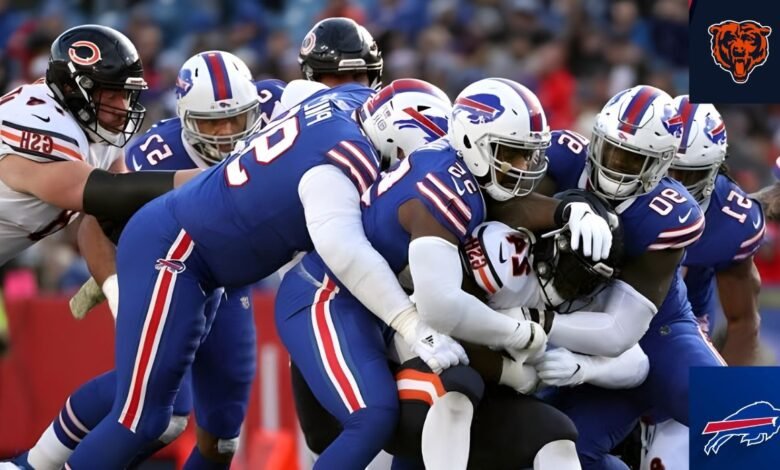
The most recent completed matchup between the Chicago Bears and Buffalo Bills was a preseason game at Soldier Field on August 17, 2025. Chicago won 38–0, with a productive first-team start followed by strong play from its backups. This article reviews that game’s box score, leading player performances, and team statistics. Because it was a preseason contest, the numbers reflect limited appearances for several starters and extended opportunities for reserve players.
Which Bears–Bills Game Do These Stats Cover?
The teams have met in more than one preseason game, so the date matters when comparing player numbers. This breakdown covers Buffalo’s visit to Chicago in the second week of the 2025 preseason. It does not describe the teams’ 2024 preseason meeting, which ended with a different score and different player performances. The 2025 game took place at Soldier Field, with Chicago listed as the home team.
Chicago Bears vs Buffalo Bills Box Score
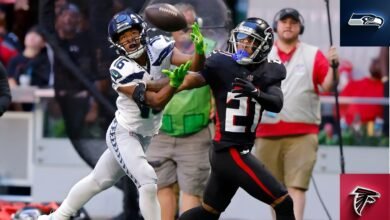
The Bears won 38–0 at Soldier Field on August 17, 2025. Chicago scored in every quarter, while Buffalo was held scoreless. static.www.nfl.com
Score by Quarter
| Team | 1st | 2nd | 3rd | 4th | Final |
|---|---|---|---|---|---|
| Buffalo Bills | 0 | 0 | 0 | 0 | 0 |
| Chicago Bears | 7 | 21 | 3 | 7 | 38 |
Passing Leaders
| Team | Player | Completions/Attempts | Passing Yards | TD | INT |
|---|---|---|---|---|---|
| Bears | Caleb Williams | 6/10 | 107 | 1 | 0 |
| Bears | Tyson Bagent | 13/22 | 196 | 1 | 0 |
| Bears | Austin Reed | 6/7 | 66 | 0 | 0 |
| Bills | Mitchell Trubisky | 7/13 | 55 | 0 | 0 |
| Bills | Mike White | 4/11 | 54 | 0 | 0 |
| Bills | Shane Buechele | 1/4 | 11 | 0 | 0 |
Rushing Leaders
| Team | Player | Carries | Rushing Yards | TD |
|---|---|---|---|---|
| Bears | Ian Wheeler | 19 | 80 | 2 |
| Bears | Brittain Brown | 16 | 73 | 1 |
| Bills | Frank Gore Jr. | 8 | 51 | 0 |
Receiving Leaders
| Team | Player | Receptions | Receiving Yards | TD |
|---|---|---|---|---|
| Bears | Tyler Scott | 3 | 54 | 1 |
| Bears | Luther Burden III | 3 | 49 | 0 |
| Bears | Sam Toure | 3 | 48 | 0 |
| Bears | Olamide Zaccheaus | 1 | 36 | 1 |
| Bills | Javon Wilson | 4 | 41 | 0 |
| Bills | Tyrell Shavers | 2 | 29 | 0 |
Team Statistics
| Statistic | Bills | Bears |
|---|---|---|
| Total net yards | 180 | 528 |
| First downs | 12 | 31 |
| Rushing yards | 77 | 171 |
| Net passing yards | 103 | 357 |
| Third-down conversions | 0/8 | 9/16 |
| Time of possession | 20:48 | 39:12 |
Final Score and Scoring Summary
Chicago scored in every quarter and built a 28–0 lead by halftime. Caleb Williams connected with Olamide Zaccheaus for a 36-yard touchdown in the first quarter. In the second, Brittain Brown ran for a one-yard score, Tyson Bagent threw an 11-yard touchdown to Tyler Scott, and Ian Wheeler added a one-yard rushing touchdown. Cairo Santos kicked a 40-yard field goal in the third quarter, and Wheeler scored again on a 10-yard run in the fourth.
How Chicago Took Control
The Bears’ opening scoring drive covered 92 yards in seven plays and ended with Williams’ touchdown pass to Zaccheaus. Chicago then kept extending its lead with sustained drives and efficient red-zone execution. The Bills, by contrast, did not score on any of their possessions. The final result was a shutout, but the score alone does not show how much of the game was played by starters, backups, and players competing for roster spots.
Team Statistics at a Glance
Chicago finished with 528 total net yards, compared with Buffalo’s 180. The Bears gained 171 yards rushing and 357 net yards passing; Buffalo recorded 77 rushing yards and 103 net passing yards. Chicago also had 31 first downs to Buffalo’s 12 and held the ball for 39:12, nearly twice Buffalo’s 20:48. Those figures show how thoroughly the Bears controlled the game’s pace and field position.
Caleb Williams’ Passing Performance
Williams completed 6 of 10 passes for 107 yards and one touchdown, with no interceptions. His 36-yard scoring pass to Zaccheaus was Chicago’s longest touchdown play of the night. Williams played only a small portion of the game, so his line is best read as a brief preseason appearance rather than a full-game performance. Still, he made the most of his limited time by guiding the opening scoring drive and finishing with a 130.0 passer rating.
Tyson Bagent and Austin Reed
Bagent took over after Williams and completed 13 of 22 passes for 196 yards, one touchdown, and no interceptions. His scoring pass to Scott put Chicago ahead 21–0. Austin Reed later completed 6 of 7 attempts for 66 yards without a touchdown or interception. Together, the Bears’ three quarterbacks completed 25 of 39 passes for 369 yards and two touchdowns. Their combined production helped sustain the offense after the starters left the field.
Buffalo’s Quarterback Numbers
Buffalo used three quarterbacks. Mitchell Trubisky completed 7 of 13 passes for 55 yards, while Mike White went 4 of 11 for 54 yards. Shane Buechele completed 1 of 4 passes for 11 yards. None threw a touchdown or an interception. The group combined for 12 completions on 28 attempts and 120 gross passing yards. Chicago’s pressure and coverage limited Buffalo’s ability to turn short gains into scoring drives.
Chicago’s Leading Rushers
Wheeler led the Bears with 80 rushing yards on 19 carries and scored twice. Brown added 73 yards on 16 attempts, including his one-yard touchdown. Their combined 153 yards made them the main contributors to Chicago’s ground game. The Bears ran the ball 43 times for 171 yards overall, giving their quarterbacks a useful balance between passing and rushing. Wheeler’s two touchdowns came in different stages of the game, including the final score.
Buffalo’s Rushing Leaders
Frank Gore Jr. was Buffalo’s leading rusher, finishing with 51 yards on eight carries. Kahlil Hamler added 15 yards on one attempt, and Dawson Cain gained six yards on one carry. Buffalo’s rushing group totaled 77 yards on 13 attempts. Gore’s average of 6.4 yards per carry was a bright individual figure, but the Bills did not get enough sustained rushing production to offset their passing struggles or keep pace with Chicago’s offense.
Chicago’s Top Receivers
Scott led the Bears with three receptions for 54 yards and a touchdown. Luther Burden III also caught all three of his targets, gaining 49 yards, while Sam Toure had three catches for 48 yards. Zaccheaus finished with one reception for 36 yards, which went for the opening touchdown. Cole Kmet caught one pass for 29 yards, and Colston Loveland added two catches for 26 yards. The receiving numbers were spread across several players.
Buffalo’s Receiving Leaders
Javon Wilson paced Buffalo with four catches for 41 yards. Tyrell Shavers caught two passes for 29 yards, and K. Wilkerson added one reception for 25 yards. Buffalo’s team total was 12 catches for 120 yards, with no receiving touchdowns. The leading receiver’s 41 yards were useful, but the Bills did not produce the explosive plays or scoring connections needed to change the game’s direction.
Defensive Impact and the Shutout
Chicago’s defense kept Buffalo out of the end zone and limited the Bills to 180 total yards. Buffalo completed 12 passes, averaged 4.2 yards per offensive play, and failed to convert any of its eight third-down attempts. Those numbers point to a defense that repeatedly forced difficult situations. A preseason shutout is not a forecast of regular-season results, but it does show that Chicago’s defenders controlled this particular matchup.
Turnovers and Ball Security
Neither team threw an interception, so the game’s passing statistics show no quarterback giveaways. Buffalo did lose a fumble, while Chicago recovered its own fumbles and did not lose one. That difference mattered in a game where the Bears already held a major advantage in possession and field position. Ball security is especially important in preseason games, when players are trying to show coaches that they can handle assignments reliably.
Third-Down and Red-Zone Efficiency
Chicago converted 9 of 16 third downs, or 56.3 percent. Buffalo went 0 for 8. The Bears also scored touchdowns on several red-zone opportunities and converted all five extra-point attempts. Buffalo did not reach the end zone and missed its only field-goal attempt. The contrast helps explain why Chicago’s lead kept growing: the Bears extended drives and finished them, while the Bills struggled to sustain possessions.
Special Teams Contributions
Santos made all five extra points and connected on a 40-yard field goal. Punter Tory Taylor averaged 57.5 yards on two punts, while Buffalo’s Brad Robbins averaged 48.8 yards on six attempts. Chicago’s special teams did not need to carry the offense, but consistent kicking added points and helped the team maintain control. Buffalo’s punting workload reflected how often its drives ended without a score.
What the Preseason Setting Changes
Preseason box scores need context. Coaches use these games to evaluate players, test schemes, and manage workloads before the regular season. Some starters may play only a few series, while reserves receive most of the snaps. That means a player’s game total can reflect opportunity as much as role or expected regular-season production. The 38–0 result is a clear account of this game, but it should not be treated as a direct measure of either team’s full-season strength.
Reading the Player Stats Carefully
Passing completions and yards describe a quarterback’s output, but they do not explain every detail of a performance. Playing time, opponent personnel, pressure, dropped passes, and down-and-distance situations all affect the numbers. The same applies to rushing and receiving totals. Wheeler’s 80 yards and two touchdowns show his production in this game; they do not, by themselves, establish how many regular-season carries he would receive.
The Matchup’s Main Statistical Story
The clearest story in the box score is Chicago’s advantage across multiple areas rather than one isolated performance. The Bears outgained Buffalo by 348 yards, collected 19 more first downs, and dominated third-down conversion. Williams and Bagent both threw touchdown passes, while Wheeler and Brown led the rushing attack. Buffalo’s strongest individual rushing effort came from Gore, but the team could not turn its scattered gains into points.
Final Thoughts
The Bears’ 38–0 preseason win over the Bills on August 17, 2025, featured efficient quarterback play, a productive rushing attack, and a defense that prevented Buffalo from scoring. Williams delivered a touchdown pass in limited action, Bagent added another, and Wheeler scored twice. Buffalo’s box score was led by Gore on the ground and Wilson through the air, but the team’s low yardage and third-down results kept it from mounting a challenge. These figures describe one preseason game, not a regular-season meeting.
Frequently Asked Questions
1. What was the final score of the Bears vs. Bills game?
Chicago defeated Buffalo 38–0 in the preseason game played on August 17, 2025, at Soldier Field. The Bears scored in all four quarters and led 28–0 at halftime.
2. Which quarterback had the most passing yards?
Tyson Bagent led all quarterbacks with 196 passing yards for Chicago. He completed 13 of 22 passes and threw one touchdown without an interception.
3. How did Caleb Williams perform?
Williams completed 6 of 10 passes for 107 yards and one touchdown. He threw the opening score, a 36-yard pass to Olamide Zaccheaus, and did not throw an interception.
4. Who led Chicago in rushing?
Ian Wheeler led the Bears with 80 rushing yards on 19 carries. He also scored two touchdowns, including Chicago’s final touchdown of the game.
5. Who was Buffalo’s leading rusher?
Frank Gore Jr. led the Bills with 51 rushing yards on eight carries. He averaged 6.4 yards per attempt but did not score.
6. Who led the Bears in receiving yards?
Tyler Scott led Chicago with 54 receiving yards on three catches. He also caught an 11-yard touchdown pass from Bagent.
7. Who led Buffalo in receiving?
Javon Wilson led the Bills with four receptions for 41 yards. Buffalo did not record a receiving touchdown in the game.
8. How many total yards did each team gain?
Chicago gained 528 total net yards, while Buffalo gained 180. The Bears also held a large advantage in rushing yards, passing yards, first downs, and time of possession.
9. Was this a regular-season game?
No. It was a preseason game, so teams used a mix of starters and reserve players. Preseason statistics should be understood in the context of limited playing time and roster evaluation.
10. Did either team throw an interception?
No. Neither team threw an interception. Buffalo lost one fumble, while Chicago did not lose a fumble.
Recommended: Onnilaina Explained: The History of Finland’s Short-Term Loan Service

One Comment