

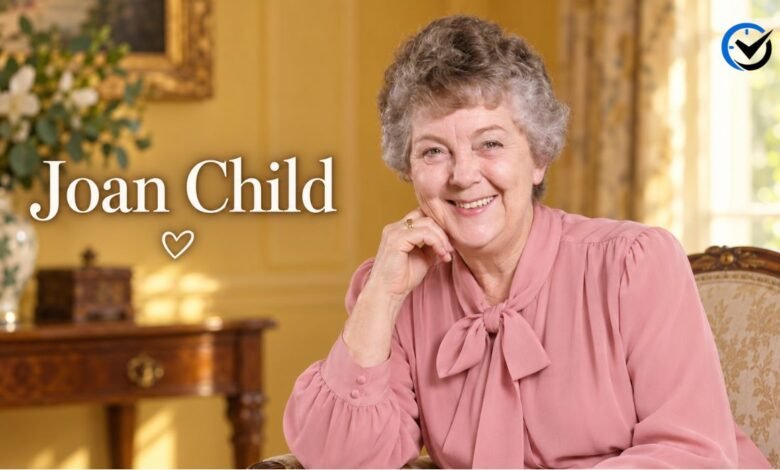
Joan Child was a remarkable Australian public figure whose journey from a modest childhood to the highest procedural office in the House of Representatives reflected major changes in Australian political life. Born Gloria Joan Liles Olle in 1921, she entered politics after years of work, family responsibilities, community involvement, and personal hardship. Her public career became particularly significant in 1974, when she became the first woman elected to the House of Representatives for the Australian Labor Party (ALP), and again in 1986, when she became the first woman to serve as Speaker of the House.
What makes Joan Child’s story especially interesting is the contrast between her early circumstances and her later responsibilities. She was not someone who entered federal politics directly from an elite political background. Instead, her path included education supported by a scholarship, marriage, motherhood, widowhood, paid employment, community activism, and years of political work before she reached federal office. Her story therefore provides a useful way to understand not only one woman but also the changing role of women in Australian public life.
Quick Bio Table
| Detail | Information |
|---|---|
| Full name | Gloria Joan Liles Child |
| Commonly known as | Joan Child |
| Born | August 3, 1921 |
| Birthplace | Victoria, Australia |
| Died | February 23, 2013 |
| Age at death | 91 |
| Education | Camberwell Girls Grammar School |
| Political party | Australian Labor Party |
| Federal electorate | Henty, Victoria |
| First elected | 1974 |
| Returned to Parliament | 1980 |
| Speaker | 1986–1989 |
| Major distinction | First woman Speaker of Australia’s House of Representatives |
| Major honor | Officer of the Order of Australia |
Early Life and Family Background
Joan Child was born in Victoria in 1921 and spent parts of her childhood in Yackandandah, Beechworth, and Melbourne. Her early family environment exposed her to different political viewpoints, while her education was shaped by circumstances that were far removed from the privilege associated with many established political careers. She won a scholarship to Camberwell Girls Grammar School, an achievement that helped expand her educational opportunities. According to parliamentary biographical material, Child was conscious of class differences during her school years, an experience that became part of the broader social perspective she carried into adulthood.
Education, Work, and the Making of Joan Child
Child’s working life developed long before her rise in federal politics. After leaving school, she worked in several occupations and gained practical experience outside traditional political institutions. Her later life would include employment in factories, shops, cleaning, cooking, and administrative roles, giving her firsthand familiarity with the pressures facing working families. This background is important because her political identity was not formed solely through parliamentary debate; it was also shaped by ordinary employment, economic responsibility, and the experiences of people trying to support families on limited resources.
Marriage, Motherhood, and Personal Responsibility
Joan Child married Harold “Hal” Child in 1942, and the couple eventually had five sons. Her personal circumstances changed dramatically when she was widowed while the children were still young. She was then responsible for raising five boys, with the family needing financial support at a time when opportunities for women were considerably narrower than they are today. Rather than separating her family life from her public identity, this period became part of the experience that informed her later understanding of working women, economic pressure, and family responsibilities.
The Experience That Shaped Her Political Outlook
The years after her husband’s death were demanding, but they also brought Child closer to the concerns of working people. She took different jobs to support her household and became involved in organizations concerned with women’s rights and social issues. Her work with the Union of Australian Women, including involvement in campaigns connected with equal pay, helped develop the political experience that later translated into formal party activity. These experiences mattered because Child entered national politics with a background rooted in employment, family responsibility, and community activism rather than a conventional political career.
Joan Child and the Australian Labor Party
Child became active in the Australian Labor Party in the 1960s and increasingly involved herself in political organization and campaigning. She became associated with Jim Cairns, who later served as Deputy Prime Minister, initially through campaign work and subsequently through a professional political role. This period gave her exposure to policy, electoral organization, constituency concerns, and the practical workings of political offices. By the early 1970s, she was ready to move from political support work into electoral politics herself.
Her First Attempt to Enter Federal Parliament
Before winning office, Child contested the federal seat of Henty in 1972. She was unsuccessful, but the campaign became an important stage in her political development. Rather than ending her political ambitions, the experience was followed by further work in public and political organizations, including employment connected with the Victorian State Colleges’ Staff Association and parliamentary offices. Her persistence eventually led to another opportunity in Henty during the 1974 federal election.
The 1974 Election and a Historic Achievement
In 1974, Joan Child won Henty and became the first woman elected to the Australian House of Representatives for the Labor Party. She was also only the fourth woman elected to the House overall at that time, making her victory significant beyond her individual electorate. Her first parliamentary term was relatively short because Labor suffered a major defeat in the 1975 election, and Child lost Henty. Nevertheless, her initial election established an important precedent for women’s representation within the federal Labor movement and the House of Representatives.
The Difficult Road Back to Parliament
Child attempted to return to Parliament in 1977 but was unsuccessful. She continued working in political and organizational roles, however, and did not abandon public life. Her persistence paid off in 1980 when she won Henty again and returned to the House of Representatives. She subsequently retained the seat through the 1983 election and remained in Parliament until her retirement in 1990. Her return demonstrated that her first parliamentary victory was not an isolated event but part of a longer political career.
From Member of Parliament to Deputy Speaker
Child’s parliamentary responsibilities expanded after her return. Following the 1983 election, she became Chair of Committees and Deputy Speaker, positions that provided direct experience in managing parliamentary proceedings. This experience prepared her for an even more historically significant role. Parliamentary records note that she had already acted as Speaker on an earlier occasion, giving her practical exposure to the demands of presiding over the House before she was formally elected to the office.
Joan Child Becomes the First Female Speaker
On February 11, 1986, Joan Child became the first woman elected Speaker of Australia’s House of Representatives. The Parliamentary Education Office records the event as a major milestone in Australian parliamentary history. As Speaker, her responsibilities included presiding over meetings, applying the rules of debate, maintaining parliamentary order, and representing the House in its dealings with other authorities. Her election placed a woman at the center of one of the country’s most important parliamentary offices for the first time.
Her Approach to the Speaker’s Role
Child entered the Speaker’s office at a time when parliamentary debates could be particularly confrontational. The National Archives notes that she faced the challenge of maintaining authority during aggressive Question Time and ensuring that members received the opportunities guaranteed by parliamentary rules. Her stated approach emphasized integrity and impartiality, while the Museum of Australian Democracy records that members from both sides of the chamber held her in high personal regard. These accounts show that her role involved balancing formal authority with the practical relationships necessary to keep parliamentary proceedings functioning.
Joan Child and Australia’s New Parliament House
One distinctive part of Joan Child’s career was her connection to Australia’s transition from the old Parliament House to the new Parliament House in Canberra. She was the last Speaker to serve in the old building and the first Speaker to occupy the new permanent Parliament House when it opened in 1988. This gave her a unique place in parliamentary history because her Speakership spanned a major physical transition in Australia’s federal political institutions.
Why the Speaker’s Chair Became Significant
Child’s relationship with the Speaker’s Chair also became part of her historical story. The National Archives explains that the ornate chair at Old Parliament House had connections with Westminster and included historic timber, while Child wanted it to remain in its original location. Her preference reflected more than furniture or ceremony; the chair represented the institutional history of Australia’s parliamentary system and the traditions surrounding the Speaker’s office. Her years in the position therefore connected Australia’s older parliamentary traditions with the country’s modern political development.
Retirement, Honors, and Later Life
Joan Child resigned as Speaker in August 1989 and decided not to contest the 1990 election. She was appointed an Officer of the Order of Australia in 1990 in recognition of her contribution to parliamentary service, and her achievements were later recognized through the Centenary Medal in 2001. After leaving federal Parliament, she remained involved in community and public activities, including work connected with the Epilepsy Foundation of Victoria. Her retirement was therefore not a complete withdrawal from public life but a transition into other forms of community involvement.
Joan Child’s Legacy in Australian Political History
Joan Child died in Melbourne on February 23, 2013, aged 91. Her death prompted recognition from political leaders and former colleagues, and she was honored with a state funeral in Melbourne. Her historical importance rests on several connected achievements: she became the first Labor woman elected to the House of Representatives, the first woman to serve as Speaker, and one of the figures who helped demonstrate that women could occupy senior positions within Australia’s federal parliamentary system.
What Joan Child’s Journey Can Tell Us Today
The story of Joan Child is useful because it shows how political careers can develop through experiences outside formal institutions. Her path involved education, employment, motherhood, widowhood, community activism, electoral defeat, political persistence, parliamentary service, and eventually historic office. Looking at these stages together provides a fuller understanding of Joan Child than focusing only on her years as Speaker. Her life also illustrates how individual parliamentary milestones can occur alongside broader changes in women’s participation in Australian public life.
Conclusion
Joan Child’s remarkable life cannot be reduced to a single parliamentary achievement. Her journey began with an ordinary upbringing and education supported by a scholarship, continued through employment and family responsibilities, and eventually led to national political office. Her experiences as a working woman and mother formed an important part of the perspective she brought into public life, while her persistence through electoral defeat helped define her long political career.
Her election in 1974 as the first Labor woman in the House of Representatives and her appointment in 1986 as Australia’s first female Speaker marked two major points in that journey. Her years as Speaker also connected two eras of Australian parliamentary history because she presided over the House during its move from Old Parliament House to the new building in Canberra.
Ultimately, Joan Child’s story is one of public service shaped by personal experience. Her career remains documented in Australia’s parliamentary, archival, and biographical records, making her life an important subject for anyone interested in Joan Child, Australian political history, women’s representation, and the development of the modern federal Parliament.
Frequently Asked Questions (FAQs)
1. Who was Joan Child?
Joan Child was an Australian Labor Party politician who represented Henty in Victoria. She became the first woman elected Speaker of the Australian House of Representatives in 1986.
2. When was Joan Child born?
Joan Child was born on August 3, 1921, in Victoria, Australia. Biographical records identify her birth name as Gloria Joan Liles Olle.
3. What was Joan Child famous for?
She is best known for becoming the first woman to serve as Speaker of Australia’s House of Representatives. She also made history in 1974 as the first woman elected to the House for the Australian Labor Party.
4. When did Joan Child become Speaker?
Joan Child was elected Speaker on February 11, 1986. She remained in the role until August 1989.
5. Which political party did Joan Child represent?
Joan Child represented the Australian Labor Party. She was elected for the federal electorate of Henty in Victoria and served in Parliament during two separate periods.
6. Did Joan Child have children?
Yes. Joan Child had five sons. She was widowed while they were still young and worked in several occupations while raising her family.
7. What electorate did Joan Child represent?
Joan Child represented Henty, an electorate in Victoria. She first won the seat in 1974, lost it in 1975, and returned to Parliament representing Henty in 1980.
8. When did Joan Child leave Parliament?
She left federal Parliament in 1990 after deciding not to contest the election. Henty was subsequently abolished as part of electoral redistribution.
9. What awards did Joan Child receive?
Joan Child was appointed an Officer of the Order of Australia in 1990. She also received the Centenary Medal in 2001 for her contribution to Australian public life.
10. Was Joan Child Australia’s first female Speaker?
Yes. She became the first woman elected Speaker of the House of Representatives on February 11, 1986. She remained the only woman to hold the lower-house Speakership until Anna Burke became Speaker in 2012.
11. How old was Joan Child when she died?
Joan Child died on February 23, 2013, at the age of 91. She died in Melbourne and was later honored at a state funeral.
12. Why is Joan Child still remembered?
Joan Child remains an important figure in Australian parliamentary history because she broke significant gender barriers in federal politics. Her journey from working life and family responsibility to the Speaker’s Chair provides a distinctive perspective on women’s changing participation in Australian public life.
Recommended: Anouska Santos Relationship Inside Her Love Story, Family, and Life





One Comment