
Washington Commanders vs Bengals Match Player Stats: Game Highlights and Standouts

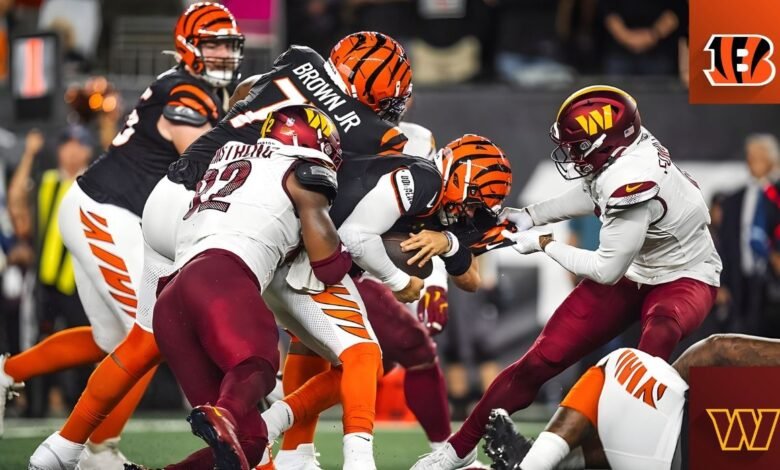
The most recent completed matchup between the Washington Commanders and Cincinnati Bengals took place on September 23, 2024, at Paycor Stadium. Washington won 38–33 in a fast-paced game featuring strong quarterback play, explosive receiving touchdowns, and sustained scoring drives. This recap explains the key player numbers and how they shaped the result. Jayden Daniels led the Commanders with efficient passing and a rushing touchdown, while Joe Burrow and Ja’Marr Chase kept Cincinnati within reach. The final score alone does not tell the full story: the Bengals gained more total yards, but Washington finished more drives in the end zone and controlled the ball for longer.
Game Result and Scoring Summary
Washington led 7–7 after the first quarter, then moved ahead 21–13 by halftime. The Commanders scored 17 points in the third quarter and held a 28–20 advantage going into the final period. Cincinnati made the finish tense with two fourth-quarter touchdowns, but Washington answered with a field goal and a long touchdown drive of its own. The Bengals scored 13 points in the fourth quarter, yet Washington’s 10 were enough to preserve the five-point win. Both teams scored often, and neither quarterback threw an interception. The margin came down to Washington’s ability to turn key possessions into touchdowns, especially when the Bengals were trying to close the gap.
Jayden Daniels’ Passing Performance
Daniels completed 21 of 23 passes for 254 yards, two passing touchdowns, and no interceptions. His completion rate was about 91 percent, an unusually high mark for a quarterback asked to handle both passing and rushing responsibilities. He spread the ball around and avoided risky throws, helping Washington sustain drives without giving Cincinnati an extra possession. His 254 yards came on 23 attempts, so the passing total reflected accuracy and efficiency rather than a very high volume of throws. The stat line also needs to be read alongside his running contribution: Daniels was not simply a pocket passer in this game. He influenced the defense with his mobility, which helped open space for Washington’s other playmakers.
Daniels’ Rushing and Overall Impact
Daniels ran 12 times for 39 yards and scored once on a four-yard carry. That rushing touchdown gave Washington a second-quarter lead and showed how the rookie quarterback could finish a drive himself when the defense had to account for his passing options. His average was 3.3 yards per carry, but raw average does not capture the value of his short scoring run or the attention his movement demanded. Daniels accounted for three touchdowns in total: two through the air and one on the ground. He also kept the offense on schedule by avoiding sacks for most of the evening. The combination of accurate throws and useful runs made his performance the central factor in Washington’s win.
Joe Burrow’s Numbers for Cincinnati
Burrow completed 29 of 38 passes for 324 yards and three touchdowns, with no interceptions. He posted a higher passing-yard total than Daniels and consistently moved the Bengals downfield. Cincinnati’s quarterback connected with multiple receivers and produced two scoring throws to Chase and one to Andrei Iosivas. Burrow’s completion rate was about 76 percent, a strong figure in a game where Cincinnati needed to keep scoring. His performance was productive, though it did not translate into a win. The Bengals’ offense gained yards and reached the end zone, but Washington scored on all three of its red-zone trips, while Cincinnati converted two of four. That difference mattered more than the passing-yard gap.
Ja’Marr Chase Leads the Bengals’ Receivers
Chase caught six passes for 118 yards and two touchdowns. His 41-yard touchdown catch opened the scoring, and a 31-yard reception in the fourth quarter brought Cincinnati within five points. The two plays showed his ability to make a major impact downfield, while his six catches made him Burrow’s most productive target by yardage. Chase averaged nearly 20 yards per reception, a clear sign that the Bengals found explosive gains through the air. Cincinnati’s passing game also used other options, but Chase supplied the largest plays and both of its receiving touchdowns. His performance was one of the strongest individual efforts in the game, even though Washington responded after his late score.
Terry McLaurin’s Big Game for Washington
McLaurin finished with four catches for 100 yards and a touchdown. His 27-yard scoring reception in the fourth quarter gave Washington a 38–26 lead after Cincinnati had moved close. He averaged 25 yards per catch, turning a modest number of receptions into a major part of the Commanders’ passing production. His longest reception went for 55 yards, helping explain how he reached the century mark on only four catches. McLaurin’s touchdown was especially important because it came after Cincinnati had scored to make the game competitive. Washington needed a response, and Daniels found his veteran receiver for a play that restored a two-score cushion.
Washington’s Rushing Leaders
The Commanders had three rushing touchdowns, with Brian Robinson Jr., Austin Ekeler, and Daniels each scoring once. Robinson carried the ball 16 times for 33 yards, while Ekeler gained 35 yards on three attempts, including a 24-yard touchdown run. Daniels added 39 yards on 12 carries. As a team, Washington rushed 32 times for 108 yards, averaging 3.4 yards per attempt. That average was lower than Cincinnati’s, but the Commanders used the ground game in useful situations, particularly near the goal line. The rushing attack also helped Washington control possession for 33 minutes and six seconds, more than six minutes longer than Cincinnati. The yardage was steady rather than spectacular, but its scoring value was substantial.
Cincinnati’s Running Game and Zack Moss
The Bengals produced 124 rushing yards on 20 carries, averaging 6.2 yards per attempt. Chase Brown led the team with 62 yards on seven carries, while Zack Moss added 58 yards on 12 attempts and scored from one yard out in the fourth quarter. Burrow recorded four rushing yards on one carry. Cincinnati’s ground game was efficient, especially when Brown found room to gain chunks of yardage. Moss’s touchdown made the final score 38–33, but it came with only 1:30 left, leaving the Bengals little time to recover the ball and attempt another scoring drive. The rushing numbers demonstrate that Cincinnati was not one-dimensional; it moved the ball effectively on the ground as well as through the air.
Supporting Receivers and Secondary Contributors
Washington’s passing production extended beyond McLaurin. Zach Ertz caught five passes for 38 yards, Luke McCaffrey had three catches for 44, and Noah Brown added three for 29. Trent Scott, an offensive tackle, caught a one-yard touchdown pass from Daniels in the third quarter. That unusual score came on a designed play near the goal line and gave Washington a seven-point lead. For Cincinnati, Iosivas caught five passes for 52 yards and a touchdown, while Mike Gesicki had four receptions for 47 yards. Tee Higgins added three catches for 39 yards. Those contributions kept the offenses balanced and prevented either defense from focusing on a single receiver throughout the game.
Team Statistics That Explain the Final Score
Cincinnati finished with 436 total yards, compared with Washington’s 356, and collected 30 first downs to Washington’s 22. The Bengals also gained more yards per play, 7.3 to 6.2. Those figures make the result look surprising at first, but total yardage does not show how well each team finished its possessions. Washington converted all three of its red-zone opportunities into touchdowns. Cincinnati scored touchdowns on two of four red-zone trips and settled for field goals on two other drives. Washington also held the ball for 33:06, while the Bengals had possession for 26:54. The Commanders made fewer trips into the red zone count for more points.
Third Downs, Fourth Downs, and Field Position
Both offenses converted third downs at a high rate: Washington went 5-for-9 and Cincinnati went 6-for-10. Each team also converted its only fourth-down attempt. The Bengals’ greater first-down and total-yardage numbers show how consistently they moved the ball, but Washington’s ability to keep drives alive and finish them efficiently proved decisive. The Commanders had three penalties for 28 yards, while the Bengals had five for 16 yards. Neither side punted, which is rare in an NFL game and reflects how often both offenses reached scoring range or sustained possession. Washington also avoided an interception and recovered its own fumble, so neither team lost the ball on a turnover.
Fourth-Quarter Highlights and the Decisive Drive
Washington opened the fourth quarter with a 42-yard field goal to extend its lead to 31–20. Burrow answered by finding Chase for a 31-yard touchdown, but Cincinnati failed to convert the extra point, leaving the score at 31–26. Washington then put together a 12-play, 70-yard drive that took 7:32 off the clock and ended with McLaurin’s touchdown catch. That possession was crucial: it produced points, reduced the time available for Cincinnati, and forced the Bengals to score twice to take the lead. Moss’s short touchdown run made the final score close, but Washington recovered the ensuing onside-kick attempt and ran out the remaining time.
What the Player Stats Reveal About the Matchup
The box score shows two productive offenses with different paths to scoring. Cincinnati relied on Burrow’s 324 passing yards, Chase’s explosive catches, and an efficient running average. Washington paired Daniels’ accurate passing with designed quarterback runs, short-yardage rushing touchdowns, and a carefully managed final drive. The Bengals gained 80 more total yards, yet Washington scored five more points. That gap came largely from red-zone execution and the timing of the Commanders’ last touchdown. The statistics also show why the matchup was close: both teams moved the ball well, neither threw an interception, and both had multiple players contribute. Washington’s edge was not overwhelming yardage; it was better scoring efficiency and control late in the game.
Final Thoughts
The Commanders’ 38–33 win over the Bengals was built on Daniels’ efficient three-touchdown performance, McLaurin’s 100-yard receiving game, and Washington’s ability to convert every red-zone trip into a touchdown. Burrow and Chase produced excellent numbers and helped Cincinnati outgain Washington, but the Bengals could not match the Commanders’ finishing efficiency. For readers reviewing the Washington Commanders vs Bengals Match Player Stats, the most useful takeaway is that the game was decided by how teams used their opportunities, not by which offense accumulated the most yards. Daniels’ balanced performance and Washington’s fourth-quarter response made the difference.
Frequently Asked Questions
1. Who won the Commanders vs. Bengals game in September 2024?
The Washington Commanders defeated the Cincinnati Bengals 38–33 on September 23, 2024, at Paycor Stadium in Cincinnati. Washington led at halftime and held off a late Bengals rally to secure the road win.
2. How many passing yards did Jayden Daniels record?
Daniels threw for 254 yards, completing 21 of 23 passes. He had two passing touchdowns and no interceptions, then added a rushing touchdown to finish with three total touchdowns.
3. What were Joe Burrow’s passing stats in the game?
Burrow completed 29 of 38 passes for 324 yards and three touchdowns. He did not throw an interception. His passing total exceeded Daniels’ yardage, but Cincinnati finished with fewer points.
4. How many receiving yards did Ja’Marr Chase have?
Chase caught six passes for 118 yards and two touchdowns. His scores came on receptions of 41 and 31 yards, with the second bringing Cincinnati within five points in the fourth quarter.
5. How did Terry McLaurin perform?
McLaurin caught four passes for 100 yards and a touchdown. His 27-yard score in the fourth quarter gave Washington a two-score lead after the Bengals had narrowed the margin.
6. Who led Washington in rushing yards?
Jayden Daniels led Washington with 39 rushing yards on 12 attempts. Austin Ekeler gained 35 yards on three carries, while Brian Robinson Jr. had 33 yards on 16 carries.
7. Which Bengals player led the team in rushing?
Chase Brown led Cincinnati with 62 rushing yards on seven carries. Zack Moss added 58 yards on 12 carries and scored a one-yard touchdown late in the game.
8. Why did Washington win despite gaining fewer total yards?
Washington gained 356 yards, while Cincinnati gained 436. The Commanders made better use of scoring chances, converting all three red-zone trips into touchdowns and holding the ball for more than six extra minutes.
9. Did either team throw an interception?
No. Daniels and Burrow both finished without an interception. Washington had one fumble but recovered it, so neither team lost possession through a turnover.
10. What was the final score by quarter?
Washington and Cincinnati were tied 7–7 after the first quarter. Washington led 21–13 at halftime, 28–20 after three quarters, and finished with a 38–33 victory.
Recommended: Las Vegas Raiders vs Bengals Match Player Stats: Who Led Each Team?


One Comment