
Colorado Rockies vs Mets Match Player Stats: Full Box Score and Key Performances

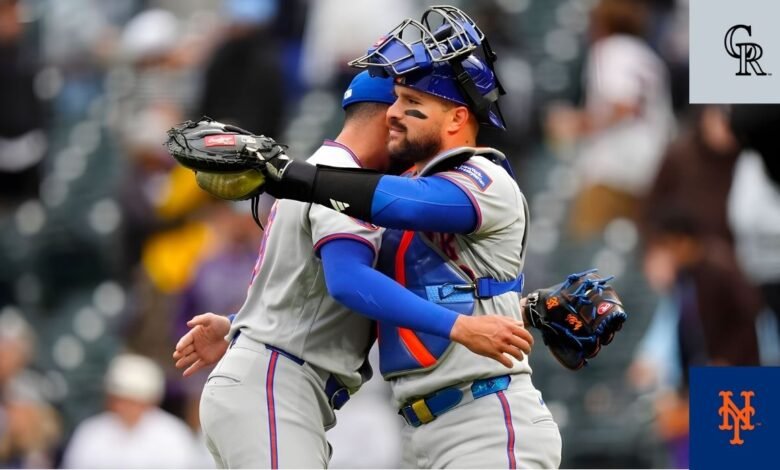
The Colorado Rockies vs Mets Match Player Stats for May 7, 2026, show how a close game became a 6–2 Colorado victory at Coors Field in Denver. Jake McCarthy supplied the decisive grand slam, supported by patient hitting, useful substitutions, and scoreless relief pitching. This breakdown covers both batting lineups, every pitcher used, and the scoring sequence from that regular-season meeting. The date matters because these teams play repeatedly, and figures from separate games should never be combined.
Final Score and Inning-by-Inning Results
New York scored twice in the second inning and led until Colorado tied the game in the sixth. The Rockies scored four times in the eighth, creating the final margin. Colorado finished with seven hits to New York’s six; neither team committed an error. The narrow hit difference makes the timing of those hits especially important. Colorado’s ninth-inning “X” means the home team did not need to bat after recording the final out.
| Team | 1 | 2 | 3 | 4 | 5 | 6 | 7 | 8 | 9 | Runs | Hits | Errors |
|---|---|---|---|---|---|---|---|---|---|---|---|---|
| Mets | 0 | 2 | 0 | 0 | 0 | 0 | 0 | 0 | 0 | 2 | 6 | 0 |
| Rockies | 0 | 0 | 0 | 1 | 0 | 1 | 0 | 4 | X | 6 | 7 | 0 |
New York Mets Batting Box Score
Austin Slater led New York with two hits and scored its first run. Marcus Semien drew two walks and scored the other, showing how a hitless player can contribute. Andy Ibáñez and Tyrone Taylor supplied one RBI each. Juan Soto tripled; Carson Benge and Francisco Alvarez singled. The table includes substitutes alongside starters. AB means at-bats, R runs, H hits, HR home runs, RBI runs batted in, BB walks, and K strikeouts.
| Player | Position | AB | R | H | HR | RBI | BB | K |
|---|---|---|---|---|---|---|---|---|
| Juan Soto | DH | 4 | 0 | 1 | 0 | 0 | 0 | 0 |
| Bo Bichette | 3B | 3 | 0 | 0 | 0 | 0 | 1 | 0 |
| Mark Vientos | 1B | 4 | 0 | 0 | 0 | 0 | 0 | 0 |
| Austin Slater | RF | 3 | 1 | 2 | 0 | 0 | 0 | 1 |
| Brett Baty | PH/RF | 1 | 0 | 0 | 0 | 0 | 0 | 0 |
| Marcus Semien | 2B | 2 | 1 | 0 | 0 | 0 | 2 | 0 |
| Andy Ibáñez | LF | 1 | 0 | 0 | 0 | 1 | 0 | 0 |
| Carson Benge | LF | 2 | 0 | 1 | 0 | 0 | 0 | 1 |
| Francisco Alvarez | C | 3 | 0 | 1 | 0 | 0 | 1 | 2 |
| Tyrone Taylor | CF | 2 | 0 | 1 | 0 | 1 | 0 | 1 |
| MJ Melendez | PH | 1 | 0 | 0 | 0 | 0 | 0 | 1 |
| Vidal Bruján | SS | 3 | 0 | 0 | 0 | 0 | 1 | 0 |
| Total | — | 29 | 2 | 6 | 0 | 2 | 5 | 6 |
Colorado Rockies Batting Box Score
McCarthy finished with a double, a home run, and five RBIs. Willi Castro delivered Colorado’s other RBI and reached base three times through a single and two walks. Kyle Karros doubled; Tyler Freeman, TJ Rumfield, and Troy Johnston singled. Brenton Doyle and Ezequiel Tovar scored as pinch runners despite having no plate appearances, explaining how players can score without an at-bat or hit. Colorado drew seven walks, two more than New York.
| Player | Position | AB | R | H | HR | RBI | BB | K |
|---|---|---|---|---|---|---|---|---|
| Edouard Julien | 2B/1B | 4 | 0 | 0 | 0 | 0 | 1 | 1 |
| Mickey Moniak | LF | 3 | 0 | 0 | 0 | 0 | 1 | 1 |
| Tyler Freeman | DH | 4 | 1 | 1 | 0 | 0 | 0 | 0 |
| TJ Rumfield | 1B | 3 | 1 | 1 | 0 | 0 | 1 | 0 |
| Brenton Doyle | PR/CF | 0 | 1 | 0 | 0 | 0 | 0 | 0 |
| Troy Johnston | RF | 3 | 0 | 1 | 0 | 0 | 1 | 1 |
| Ezequiel Tovar | PR/SS | 0 | 1 | 0 | 0 | 0 | 0 | 0 |
| Willi Castro | SS/2B | 2 | 1 | 1 | 0 | 1 | 2 | 0 |
| Jake McCarthy | CF/RF | 4 | 1 | 2 | 1 | 5 | 0 | 2 |
| Kyle Karros | 3B | 3 | 0 | 1 | 0 | 0 | 1 | 2 |
| Brett Sullivan | C | 4 | 0 | 0 | 0 | 0 | 0 | 3 |
| Total | — | 30 | 6 | 7 | 1 | 6 | 7 | 10 |
Complete Pitching Lines for Both Teams
Both clubs used four pitchers. Colorado’s pitchers covered nine innings; New York’s covered eight because the Rockies did not bat in the ninth. IP means innings pitched, ER earned runs, and P pitches thrown. Baseball’s innings notation counts outs: 4.2 means four innings and two outs. All eight runs were earned. Antonio Senzatela received the win, Craig Kimbrel took the loss, and neither team recorded a save.
| Pitcher | Team | IP | H | R | ER | BB | K | P |
|—|—|—|—|—|—|—|—|—|—|
| Christian Scott | Mets | 4.2 | 3 | 1 | 1 | 2 | 6 | 82 |
| Huascar Brazobán | Mets | 1.0 | 1 | 1 | 1 | 2 | 1 | 25 |
| Austin Warren | Mets | 1.1 | 0 | 0 | 0 | 2 | 1 | 21 |
| Craig Kimbrel | Mets | 1.0 | 3 | 4 | 4 | 1 | 2 | 29 |
| Total | Mets | 8.0 | 7 | 6 | 6 | 7 | 10 | 157 |
| Jose Quintana | Rockies | 5.2 | 5 | 2 | 2 | 2 | 2 | 74 |
| Juan Mejia | Rockies | 1.0 | 0 | 0 | 0 | 2 | 2 | 21 |
| Brennan Bernardino | Rockies | 0.1 | 0 | 0 | 0 | 0 | 0 | 4 |
| Antonio Senzatela | Rockies | 2.0 | 1 | 0 | 0 | 1 | 2 | 23 |
| Total | Rockies | 9.0 | 6 | 2 | 2 | 5 | 6 | 122 |
Why Jake McCarthy Was the Standout
McCarthy’s hits produced six total bases: two from his double and four from his home run. His five RBIs accounted for approximately 83.3% of Colorado’s runs. That describes his credited run production, although teammates had to reach base to create those opportunities. His two strikeouts also belong in a balanced assessment. His standout performance reflected the value of his successful swings in crucial situations, rather than consistent success in every appearance.
How the Scoring Developed
Ibáñez’s sacrifice fly scored Slater in the second, and Taylor’s two-out single brought home Semien. Taylor was then thrown out trying to reach second, ending the inning. Colorado answered in the fourth when Castro singled home Freeman, who had reached on a bunt single. McCarthy’s sixth-inning double scored Rumfield to make it 2–2. In the eighth, singles by Rumfield and Johnston followed by Castro’s walk loaded the bases. McCarthy’s home run then scored Doyle, Tovar, Castro, and himself, turning a tied game into a four-run lead.
Comparing the Starting Pitchers
Christian Scott struck out six of 19 batters faced and allowed one run over 4⅔ innings. Jose Quintana struck out two but worked 5⅔ innings, allowing two runs. Scott threw 82 pitches to Quintana’s 74 despite recording three fewer outs. Strikeouts reduce reliance on fielders, while manageable contact can help pitchers work deeper with fewer pitches. Neither starter received a decision; Colorado established its winning lead after both had left.
The Bullpen Difference
Colorado’s relievers combined for 3⅓ scoreless innings, permitting one hit and three walks while striking out four. Senzatela handled the final two innings on 23 pitches. New York’s bullpen allowed five runs in 3⅓ innings, with the damage unevenly distributed. Warren allowed no hits or runs, Brazobán conceded the tying run, and Kimbrel surrendered four runs. Their separate lines show how differently the relievers performed, despite contributing to the same bullpen total.
What the Numbers Explain—and What They Do Not
The Mets struck out fewer times than Colorado, six versus ten, yet scored four fewer runs. Both teams stranded seven runners. Those figures show why strikeouts, hits, or stranded runners cannot explain a result alone. Colorado combined more walks with timely extra-base damage. Neither side made an error, but their defensive contributions still differed. The scoring sequence and individual plays are needed alongside the box score to explain how similar hit totals produced different outcomes.
Final Thoughts
Colorado’s 6–2 win rested on McCarthy’s production, Castro’s ability to reach base, and scoreless relief pitching. Slater contributed offensively for New York, and Scott kept the early innings competitive, but the Mets never scored after the second. The player lines add context to the final score: the teams were tied after seven innings before Colorado’s decisive rally. These figures describe May 7 specifically and should remain separate from season totals or other meetings.
Frequently Asked Questions
1. Which game does this player-stat breakdown cover?
It covers the regular-season meeting played at Coors Field in Denver on May 7, 2026. Colorado won 6–2. The date identifies the exact box score being discussed; it is not a combined summary of the season series. Readers comparing another Rockies–Mets game should check that game’s date before matching names, scores, or pitching lines.
2. Why do at-bats differ from plate appearances?
A plate appearance counts a completed turn at the plate, while an official at-bat excludes certain outcomes, including walks and sacrifice plays. New York recorded 29 at-bats but 36 plate appearances. Its five walks, Ibáñez’s sacrifice fly, and Taylor’s sacrifice bunt account for the difference. Reading only the at-bat column therefore misses some offensive activity.
3. What is the difference between a run and an RBI?
A run belongs to the player who crosses home plate. An RBI usually credits the batter whose action brings a run home, subject to scoring rules. For example, Slater scored New York’s first run, while Ibáñez received the RBI for his sacrifice fly. They contributed to the same scoring play but received different statistical credits.
4. How did Doyle and Tovar score without batting?
Doyle replaced Rumfield as a pinch runner, and Tovar replaced Johnston in the same role during the eighth inning. Both were already on base when McCarthy hit his grand slam. They therefore received runs scored without recording plate appearances. The singles that created their baserunning opportunities remained credited to Rumfield and Johnston, the players who hit them.
5. Why did Senzatela get the win instead of Quintana?
Senzatela pitched the top of the eighth while the score was tied, then Colorado took the lead in the bottom half and kept it. Quintana had already left the game. Pitcher wins depend on when a team gains its lasting lead, together with eligibility rules; they do not automatically go to the starter or pitcher with the longest outing.
6. Why was Senzatela not credited with a save?
Senzatela was credited with the win, and a pitcher cannot receive both a win and a save in the same game. He entered before Colorado established its final lead and finished the remaining innings. His work was valuable regardless of the label. A save is a specific scoring category, rather than a general reward for recording the final out.
7. Did the home-run review change the score?
No. McCarthy’s eighth-inning drive was reviewed, and the home-run call was upheld. The four runs remained on the scoreboard. The review checked the ruling on that particular play; it did not remove the preceding singles or walk. The official outcome was a grand slam, with four RBIs credited to McCarthy for the swing.
8. Does having no errors mean the defense was perfect?
No. An error is a particular judgment made by the official scorer. Plays can affect a game without becoming errors, including accurate throws, catches, and decisions on where to send the ball. Moniak helped retire Taylor as he tried to advance after his RBI single. That defensive play mattered even though both clubs finished with zero errors.
9. Should individual left-on-base figures be added together?
Not to calculate the team’s stranded-runner total. Individual batting figures can count the same baserunner across different hitters’ unsuccessful opportunities within an inning. The team figure counts runners left when innings end. Both teams stranded seven runners in this game. Using the separate team total avoids overstating how many runners were actually left on base.
10. Can this box score predict the next meeting?
It can identify what happened in this game, but it cannot reliably predict another result by itself. Starting pitchers, available relievers, lineups, injuries, and venue can change. One afternoon also provides a small sample of each player’s ability. Longer performance records and confirmed game-day selections are needed before drawing broader conclusions about the next matchup.
Recommended: Pittsburgh Pirates vs Detroit Tigers Match Player Stats: Key Numbers Behind the Result




One Comment