

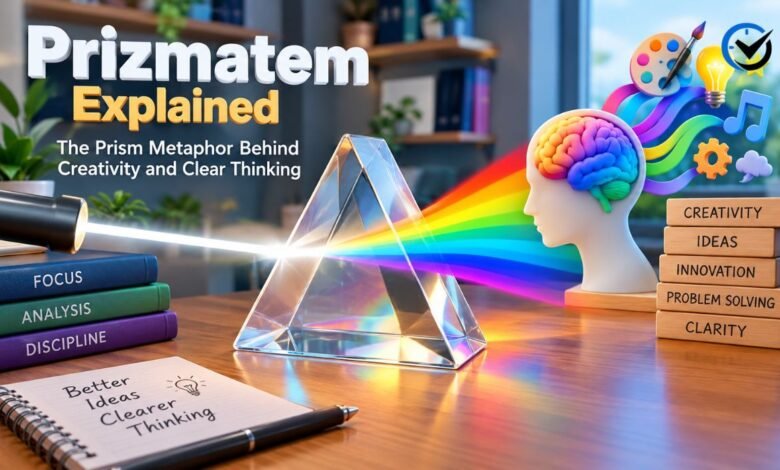
Prizmatem appears online as a website name and as a label for thinking about ideas from several perspectives. The connection between these uses is often a prism: something that reveals different colors within a single beam of light. Applied to everyday thinking, that image suggests examining the parts of a problem before deciding what to do. Understanding the term requires care because its language background, website branding, and proposed creative meaning are separate matters. This guide explains those distinctions and offers practical examples, while keeping the difference between a useful metaphor and evidence for a formal method clear.
Understanding the Meaning of Prizmatem
In Czech, prizmatem is an inflected form of prizma, a word associated with a prism and, figuratively, a viewpoint. Within a sentence, it can express looking at something through a particular lens, such as the conditions of an earlier period. That established language usage matters because some online explanations present the term entirely as a newly invented combination of English words. A Czech word form does exist, although that alone cannot establish why a particular publisher chose its name. For readers, the useful distinction is between a word’s documented linguistic meaning and the meanings people attach to it in another setting.
What a Prism Actually Does
White light contains a range of visible wavelengths. When it passes through a suitable glass prism, those wavelengths bend by different amounts, allowing colors to spread into a spectrum. The colors were already present in the incoming light; the prism makes their differences visible. This gives the thinking metaphor a useful starting point. A complicated question may contain several concerns that are difficult to distinguish when considered together. Separating them can reveal details worth examining. However, the physical behavior of light does not demonstrate that a particular creative method improves decisions. The scientific explanation and the practical analogy serve different purposes.
Why Online Explanations Differ
Websites using the name describe broad interests in creativity, personal development, technology, and everyday ideas. Other articles present it as a framework for organizing complex work into different perspectives. These descriptions show how publishers use the term, but they do not establish a single official definition or shared organization. Similar branding also cannot prove that different websites have the same owners. When reading about the subject, identify whether a page describes its own content, suggests a thinking exercise, or claims to offer a product. Each interpretation requires different supporting information, and combining them can create an impression of certainty that the material does not justify.
Looking at One Question From Several Angles
To apply the prism metaphor, begin with a specific decision rather than a broad ambition. A useful question might be, “How can we make this workshop easier for new participants to attend?” Consider timing, cost, travel, accessibility, and the clarity of the invitation. Each perspective reveals a different possible obstacle. A well-written invitation cannot solve an inconvenient schedule, while a lower fee may do little for someone who cannot reach the venue. Choose perspectives that can change the decision. Adding categories simply to make the exercise look thorough creates extra work without necessarily improving understanding or the final result.
Turning Creative Ideas Into Clear Choices
Creative exploration needs room for possibilities, while choosing an action requires criteria. Give those activities separate attention. First, imagine several ways to address the problem. Then compare the options against the same practical needs, such as available money, effort, timing, and usefulness to the people involved. For the workshop, possibilities might include an evening session, a different location, or an online introduction. An appealing idea becomes a workable choice when its requirements are clear. Write down why an option deserves a trial and what could make it fail. This turns an interesting perspective into something you can evaluate rather than merely admire.
A Practical Example: Planning a Community Event
Imagine volunteers planning a neighborhood repair event where people bring damaged household items. A publicity discussion might focus on posters, but another perspective could reveal that nobody knows which repairs the volunteers can handle. A third might identify limited table space or a need to keep electrical work within appropriate expertise. The organizers could respond by listing accepted items, offering appointment slots, and setting clear boundaries for the service. These are illustrative choices, not reported results. The example shows why examining the actual conditions matters: attracting more visitors helps only when the event can meet their needs and manage the work responsibly.
Using the Metaphor in Writing and Design
For a writer, different lenses might include the reader’s question, the strength of the explanation, the order of information, and the tone. A draft can sound polished while leaving its main point unclear. Reviewing those concerns separately helps identify the revision that matters most. In design, consider appearance alongside readability, navigation, and the task someone wants to complete. A colorful page may look distinctive yet make an important instruction difficult to find. Ask someone unfamiliar with the work to explain what they understand or attempt the intended task. Their response supplies a concrete observation that personal preference alone cannot provide.
Making Group Discussions More Useful
When several people contribute, ask each person to consider the question briefly before sharing ideas. This gives everyone something specific to bring into the discussion, including concerns that a fast conversation might overlook. Invite participants to explain their reasons and relevant experience rather than simply vote for a favorite. A person responsible for delivery may notice a scheduling problem that another participant misses. Record disagreements clearly and decide which ones need further information. Agreement should follow examination of the options. When a concern remains unresolved, assign someone to investigate it so the meeting produces a next step instead of another round of opinions.
Checking Facts, Assumptions, and Missing Information
Looking through several lenses helps only when the information within them deserves confidence. Keep observed facts separate from guesses and preferences. “Three participants asked for evening sessions” reports feedback; “everyone prefers evenings” goes beyond it. A useful follow-up would ask a wider group about suitable times and compare responses before changing the schedule. Also ask what evidence might challenge the favored explanation. Low attendance could reflect timing, unclear promotion, or limited interest in the topic. Testing one explanation against the others prevents a neat diagram from becoming a substitute for investigation. The quality of the reasoning depends on what supports it.
Where This Approach Has Limits
Separating a question into parts can also hide connections between those parts. Moving an event to a larger venue might improve capacity while increasing travel time and expense. After considering individual perspectives, return to the whole decision and examine these tradeoffs. Keep the exercise proportionate: a simple, easily reversed choice rarely needs a large planning document. More complex decisions may need specialist knowledge, careful measurements, or additional consultation. A metaphor can organize discussion, but it cannot supply missing expertise. Judge its usefulness by whether it exposes a relevant problem, guides a sensible trial, or makes the next action clearer.
Final Thoughts
Prizmatem is most useful to understand through context. It has a real Czech language connection, appears in website branding, and receives broader interpretations in online discussions of creativity and organized thinking. The prism metaphor offers a memorable way to examine several aspects of one question. Its practical value comes from asking better questions, checking information, and making deliberate choices. Start with a small decision, choose the perspectives that matter, and test an option against a clear goal. Keep what helps and revise what does not. Clear thinking grows from careful attention to the problem, supported by evidence and a willingness to reconsider.
Frequently Asked Questions (FAQs)
1. What does Prizmatem mean in simple terms?
Its meaning depends on the setting. In Czech, it is a grammatical form of the word for prism, also used figuratively when viewing something through a particular perspective. Online, the same spelling appears in website names and descriptions of creative thinking. Read the surrounding explanation to establish which meaning is intended rather than assuming every mention describes the same thing.
2. Is it a website, a concept, or an app?
The name appears on websites, while some articles describe a thinking concept. Those uses do not automatically identify a downloadable app. If a page claims to offer software, look for a named developer, a clear product description, and working documentation. Treat the product as a separate claim that needs checking, even when the branding sounds familiar.
3. Why is a prism used to explain creative thinking?
A prism provides a familiar image of one input revealing several visible components. As an analogy, it encourages examining a question through different perspectives. For example, the same project can involve audience needs, available resources, and practical limits. The comparison is helpful for explaining the exercise, but the properties of light do not prove claims about creativity.
4. Does the approach require a fixed number of perspectives?
The descriptions reviewed do not establish a rule requiring a particular number. Choose perspectives according to the decision. Planning a small gathering might require attention to timing, cost, and location, while redesigning a service could involve additional concerns. Add a perspective when it reveals something relevant, and combine categories when they ask essentially the same question.
5. How can beginners try the idea without special tools?
Write one decision at the top of a page, then describe a few concerns beneath it. Note what you know, what you assume, and what you still need to find out about each concern. Compare possible actions and choose a small trial. A notebook is enough; the important part is recording reasons that you can review afterward.
6. What is the difference between this exercise and brainstorming?
Brainstorming concentrates on generating possibilities. Examining several perspectives can also help define the problem, identify constraints, and evaluate those possibilities. The activities can work together: generate ideas first, then examine how each addresses the relevant concerns. Keeping those purposes clear helps prevent a long collection of suggestions from being mistaken for a decision or an action plan.
7. Can this way of thinking help with everyday decisions?
You can try it when a choice involves competing needs, such as planning a study schedule around work and family commitments. Consider available time, energy, deadlines, and the consequences of changing each arrangement. Aim for a workable adjustment you can review. For straightforward choices, a quick comparison may be sufficient without turning the exercise into a formal process.
8. How can someone tell whether the exercise was useful?
Choose an observable outcome before trying the change. For a workshop invitation, that might be fewer questions about the venue or clearer understanding of who should attend. Review feedback and compare it with the earlier situation. Remember that other changes can affect the result. Use the outcome to guide revision rather than claim that one exercise caused every improvement.
9. What should readers check when visiting a website using the name?
Look at the specific article’s author information, publication date, supporting material, and explanation of its purpose. Check whether the publisher provides meaningful contact details and separates opinion from factual claims. A professional appearance or familiar name cannot establish accuracy. For information that affects an important decision, verify the relevant facts independently before acting on the article’s advice.
10. Is Prizmatem a proven method for improving creativity?
The descriptions reviewed do not establish a standardized method with demonstrated performance. General practices such as comparing perspectives and checking assumptions can be useful, but evidence for those practices would not automatically validate this particular label. Treat it as an informal way to frame an exercise and assess whether the exercise helps with your specific task.
Recommended: MathPlayZone Review: Math Games, Subject Quizzes, Arcade Content, and Age Requirements





One Comment