


Decentralized organizations have always faced one stubborn problem: getting people to actually show up and vote. Even the most active communities struggle with low turnout, confusing proposals, and decisions that drag on for weeks. Quack AI Governance was built to change that pattern by putting artificial intelligence at the center of how decentralized groups make choices. Instead of relying purely on human attention and manual coordination, this system introduces AI agents that read proposals, weigh risks, and help move governance forward even when token holders are busy or inactive.
This article breaks down what Quack AI Governance actually does, how its AI agents work, and why this approach is gaining attention across the Web3 space. The goal is to explain the concept in plain language, without hype or unnecessary jargon, so anyone new to decentralized governance can follow along and understand what makes this model different from the voting systems that came before it.
What Is Quack AI Governance
At its core, Quack AI Governance is an infrastructure layer designed to support decision-making inside decentralized autonomous organizations, often called DAOs. Rather than building a single app or platform, it functions more like a toolkit that other projects can plug into. This means teams running a DAO do not need to design their own voting system from the ground up. They can instead adopt a ready-made framework that already includes proposal handling, automated analysis, and execution tools.
What sets this system apart is its heavy reliance on artificial intelligence throughout the entire process. Traditional governance tools mostly act as digital ballot boxes, recording votes and tallying results. Quack AI Governance goes several steps further by interpreting the content of proposals, flagging potential risks, and even acting on behalf of members who choose to delegate that responsibility. It treats governance as an ongoing, intelligent process rather than a static up-or-down vote.
Why Traditional DAO Voting Struggles
To understand why this approach matters, it helps to look at the problems it aims to solve. Many DAOs suffer from what people in the space call voter apathy. Token holders receive notifications about proposals, but the language is often technical, the stakes are unclear, and the time commitment to research each decision feels too high for casual participants. As a result, a small group of highly engaged members ends up making most of the actual decisions, even in organizations that claim to be fully decentralized.
Another challenge is speed. Manual governance processes can take days or even weeks to move from proposal to execution, especially when quorum requirements are not met on the first attempt. This slows down protocols that need to respond quickly to market conditions, security concerns, or partnership opportunities. Quack AI Governance addresses both of these pain points by introducing automation that keeps decisions moving without sacrificing transparency or accountability.

How AI Agents Fit Into the Governance Process
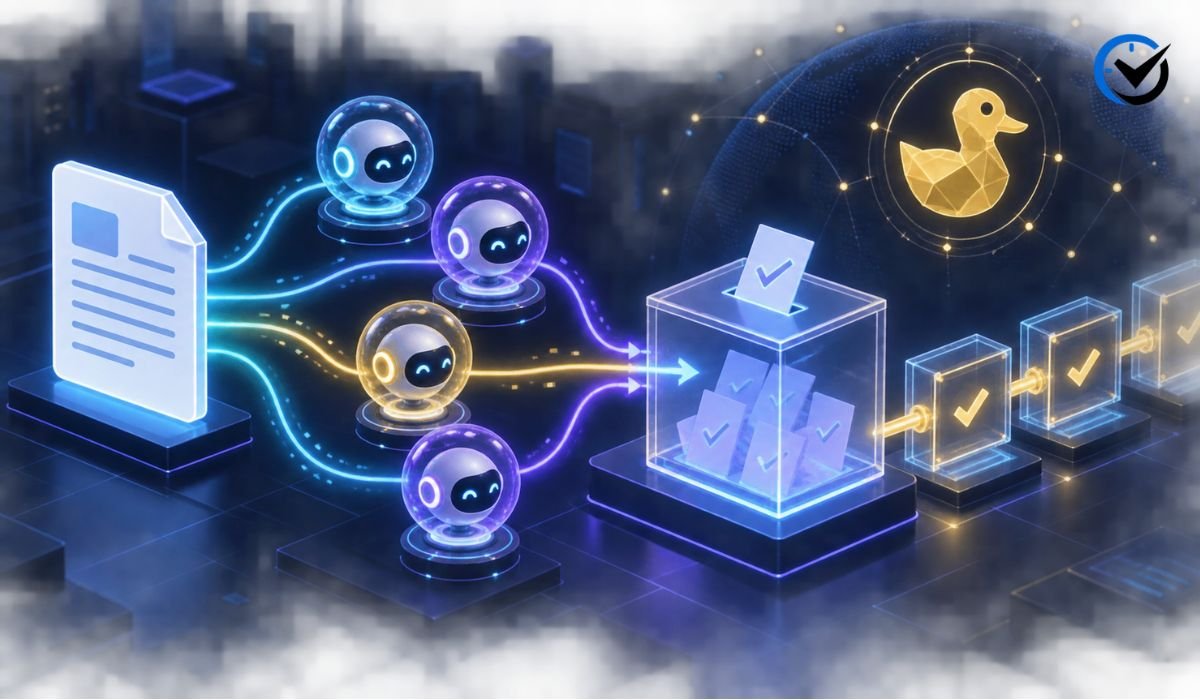
The centerpiece of this system is the use of programmable AI agents. These agents are not meant to replace human judgment entirely. Instead, they act as representatives for token holders who want a more active voice in governance without needing to review every single proposal themselves. A holder can configure an agent with certain preferences or guidelines, and that agent will then analyze incoming proposals based on those instructions.
When a new proposal enters the system, the AI agent reads through the details, which might include financial data, technical specifications, or policy changes. It then produces a risk assessment that helps flag anything unusual, such as a request for unusually broad permissions or a change that could affect treasury funds. This kind of automated first-pass review gives human voters a clearer starting point instead of forcing them to dig through raw documentation on their own.
Delegated Voting Through AI Agents
One of the more practical features of this model is delegated voting. Token holders who do not have time to participate in every governance cycle can assign their voting power to an AI agent that follows predefined rules. This does not mean the agent votes randomly or blindly. It follows logic set by the holder, which can include factors like risk tolerance, alignment with previous votes, or specific categories of proposals that require extra caution.
This setup keeps governance active even during periods when community engagement naturally dips, such as holidays or slow market cycles. Instead of proposals failing simply because not enough people logged in to vote, the delegated agents ensure that quorum can still be reached through informed, rule-based participation. It is a practical solution to a problem that has quietly limited the effectiveness of decentralized governance since it first emerged.
The Governance Passport and On-Chain Identity
Quack AI Governance also introduces something called a Governance Passport, which functions as an on-chain identity for participants. This passport is tied to the wallet address of a token holder and tracks their activity, reputation, and engagement history within the ecosystem. It plays an important role in verifying that governance participants are legitimate rather than automated bots trying to manipulate outcomes.
Because the passport uses non-transferable tokens, often referred to as soulbound tokens, it cannot be bought, sold, or passed between wallets. This design choice helps preserve the integrity of the voting process by ensuring that reputation and history stay attached to the original participant. Over time, active members build a track record that can unlock access to more advanced governance tools or priority participation in certain proposals.
Proposal Intelligence and Risk Scoring
A major part of what makes this governance model useful is the way it processes information before a vote even begins. Proposal intelligence refers to the system’s ability to take unstructured information, such as a written proposal or an attached financial report, and convert it into something structured and easy to evaluate. This includes pulling out key figures, identifying the requested action, and summarizing potential consequences.
Risk scoring builds on that foundation by assigning a rating to each proposal based on factors like financial exposure, technical complexity, and historical patterns from similar past decisions. This does not remove the need for human oversight, but it does give voters a much clearer picture before they commit their tokens to a decision. For newer or less experienced members of a DAO, this kind of guidance can make the difference between confident participation and simply skipping the vote altogether.
Cross-Chain Governance Capabilities
Many decentralized projects no longer operate on a single blockchain. They spread their operations across multiple networks to take advantage of lower fees, faster transactions, or specific technical features. This creates a real challenge for governance, since decisions made on one chain need to be reflected accurately across all the others. Quack AI Governance is built with this multi-chain reality in mind, supporting integrations across a wide range of networks.
This cross-chain compatibility means a single governance decision can be executed consistently, no matter which blockchain a particular asset or module happens to live on. For larger organizations managing treasury funds or protocol upgrades across several ecosystems, this kind of consistency removes a significant amount of manual coordination that would otherwise be required to keep everything aligned.
The Role of the Native Token
Like most governance systems in the decentralized space, this platform relies on a native token to power participation. Holding the token generally grants voting rights, either through direct votes or through delegation to an AI agent. Beyond voting, the token often unlocks access to more advanced features, such as premium proposal analysis tools or priority placement in governance queues.
Staking also plays a role, allowing holders to lock up tokens in exchange for rewards while simultaneously signaling their commitment to the long-term health of the ecosystem. This creates an incentive structure where active, engaged participants are rewarded, while passive holders can still contribute meaningfully by delegating their voting power to a configured agent rather than remaining completely uninvolved.
Compliance and Audit-Ready Records
For organizations that need to meet regulatory expectations, particularly those working with tokenized real-world assets, compliance features are becoming an essential part of governance infrastructure. Quack AI Governance incorporates checks that can align with standard requirements such as identity verification and anti-money laundering procedures, depending on how a given organization configures its governance settings.
Every proposal and vote is also logged and time-stamped, creating a clear audit trail that can be exported when needed. This matters for organizations that may eventually face scrutiny from regulators, auditors, or institutional partners who expect clear documentation of how decisions were made. Rather than treating compliance as an afterthought, this approach builds record-keeping directly into the governance process from the very beginning.
Supporting Tokenized Real-World Assets
As more financial products move on-chain, governance systems increasingly need to handle more than just protocol upgrades or treasury votes. Tokenized real-world assets, such as fractional ownership of property or investment funds, require ongoing oversight related to valuation, redemption requests, and reserve verification. Quack AI Governance includes tools designed specifically to monitor these kinds of details.
This means the system can track changes in asset value, keep an eye on redemption queues to prevent bottlenecks, and confirm that reported reserves remain accurate over time. For platforms issuing these kinds of assets, having this monitoring built into the governance layer reduces the operational burden of tracking everything manually across separate spreadsheets or internal tools.
Benefits of an AI-Driven Governance Model
The most obvious benefit of this approach is consistency. Human attention naturally fluctuates, but AI agents can review proposals around the clock without fatigue or distraction. This creates a governance environment where decisions do not stall simply because key members were unavailable at the moment a vote needed attention. It also lowers the barrier to entry for newer participants who might otherwise feel overwhelmed by technical proposals.
Efficiency is another clear advantage. Automated risk analysis and structured proposal summaries save time for everyone involved, from casual token holders to core contributors managing the day-to-day operations of a protocol. Instead of spending hours parsing dense documentation, participants can rely on a clear summary and risk score to guide their decision, while still retaining the ability to dig deeper into any proposal that raises concerns.
Challenges and Considerations Worth Understanding
No governance system is without its trade-offs, and it is worth being honest about the questions this model raises. Relying on AI agents for delegated voting means participants need to trust that the underlying logic reflects their actual preferences. If an agent is poorly configured, it could end up casting votes that do not align with what the holder would have chosen manually, which places real importance on setting clear and thoughtful rules from the start.
There is also the broader question of how much decision-making power should shift toward automated systems, even when human oversight remains part of the design. Communities adopting this kind of governance need to think carefully about which types of decisions are appropriate for AI-assisted delegation and which ones still deserve direct human deliberation, particularly when it comes to major changes that could affect the long-term direction of a project.
The Future of AI in Decentralized Governance
Looking ahead, tools like Quack AI Governance point toward a future where decentralized organizations become more responsive and easier to participate in, without losing the transparency that makes blockchain-based systems appealing in the first place. As proposal volume grows and organizations manage assets across more networks, some form of intelligent assistance seems less like an optional feature and more like a practical necessity for keeping governance functional at scale.
Future developments in this space may include more personalized AI configurations that better reflect individual decision-making styles, along with deeper integration into traditional financial systems as tokenized assets become more common. Whether or not every DAO adopts this exact model, the underlying idea of using structured intelligence to support human decision-making is likely to shape how decentralized governance evolves over the coming years.
Final Thoughts
Quack AI Governance represents a thoughtful response to a problem that has quietly limited decentralized organizations for years: getting enough informed participation to make governance meaningful. By combining AI agents, structured proposal analysis, cross-chain execution, and compliance-ready record keeping, it offers a practical path forward for communities that want their governance to be both active and trustworthy. As with any emerging technology, it is worth approaching with a balanced perspective, understanding both its strengths and the responsibilities that come with delegating decisions to automated systems.
Frequently Asked Questions
1. What is Quack AI Governance in simple terms?
It is a governance infrastructure that uses artificial intelligence to help decentralized organizations manage proposals, voting, and decision execution. Instead of relying only on manual votes, it adds AI agents that can analyze proposals and even vote on behalf of members who choose to delegate that task.
2. How do AI agents actually vote in this system?
AI agents follow rules and preferences set by the token holder who configured them. When a proposal appears, the agent reviews the details, checks them against the holder’s guidelines, and casts a vote that reflects those predefined instructions rather than making arbitrary decisions.
3. Is Quack AI Governance only for cryptocurrency projects?
While it originated in the decentralized finance and Web3 space, its tools are especially useful for any organization managing tokenized assets or multi-chain operations, including platforms dealing with tokenized real-world assets like property or investment funds.
4. Does using AI agents mean human voters lose control?
No. Delegation is optional, and token holders can still vote directly whenever they choose. AI agents exist to support participation, not to remove human choice, and holders can adjust or revoke delegation settings at any time.
5. What is the Governance Passport used for?
It functions as an on-chain identity that tracks a participant’s governance activity and reputation. Because it is non-transferable, it helps confirm that votes are coming from genuine, consistent participants rather than manipulated or duplicated accounts.
6. How does this system handle multiple blockchains?
It is built to work across several blockchain networks at once, allowing governance decisions to be executed consistently no matter which chain a particular asset or protocol operates on. This removes much of the manual coordination that cross-chain organizations would otherwise need.
7. What role does risk scoring play in proposals?
Risk scoring gives voters a quick, structured summary of how risky or significant a proposal might be, based on factors like financial exposure and technical complexity. It helps participants make faster, more informed decisions without reading every technical detail themselves.
8. Can this type of governance meet regulatory requirements?
It includes features that support compliance needs, such as identity verification checks and detailed audit trails for every proposal and vote. This makes it easier for organizations working with regulated or tokenized assets to demonstrate accountability when needed.
9. What happens if an AI agent is configured incorrectly?
If an agent’s rules do not accurately reflect a holder’s actual preferences, it could vote in ways the holder would not choose manually. This is why careful, thoughtful configuration matters, and why most systems allow holders to review or adjust agent behavior over time.
10. Is this kind of AI-driven governance likely to become more common?
As decentralized organizations grow more complex and manage assets across more networks, tools that combine automation with human oversight are becoming increasingly practical. Many in the space view this direction as a natural next step for keeping governance active and manageable at scale.
Recommended: UGE Schedule Source Setup: A Beginner’s Walkthrough





One Comment