

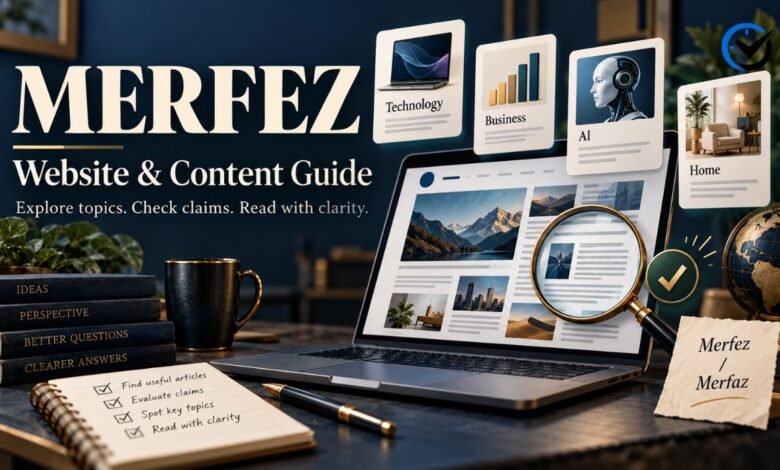
Merfez is a name used by an online publishing website that features articles across several subjects. Visitors can browse material about technology, business, artificial intelligence, digital tools, home improvement, and general topics. The clearest way to understand it is to look at what the website actually publishes and how that material is organized. A name alone does not reveal whether a site offers software, sells products, or simply explains ideas. Here, the visible article listings and category menus provide a practical starting point: readers encounter a collection of informational posts, rather than one clearly defined product or service.
Confusion arises because other websites attach different meanings to the same name. Some describe it through lifestyle ideas, while others connect it with productivity or digital systems. Those descriptions should not automatically be treated as parts of one established concept. This guide focuses on the publishing website, explains its main content areas, and shows what readers can reasonably expect when visiting. It also addresses the difference between a website’s own description and evidence of its capabilities. Understanding that distinction helps readers choose useful articles without assuming that every explanation attached to an unfamiliar name has been independently established.
Understanding the Website’s Main Purpose
The visible structure suggests a broad informational publication. Its homepage presents article titles, short previews, category labels, and publication dates, allowing visitors to move from an overview into individual posts. That arrangement is familiar to anyone who reads online magazines or general interest blogs. The purpose of such a layout is discovery: it brings several subjects into one place and gives readers different routes into the collection. However, describing a website as a digital platform can sound more technical than the experience warrants. Publishing articles does not, by itself, mean that the site operates an application, provides professional consulting, or supplies a working set of business tools.
Why the Name and Spelling Can Be Confusing
One notable detail is the appearance of both Merfez and Merfaz within the website’s presentation. The descriptive page uses one spelling in its explanation and another in its page title. This inconsistency can leave readers wondering whether the names refer to separate projects, alternate branding, or an editing issue. The available presentation does not clearly settle that question. It is therefore better to describe the visible variation without inventing a company history or a naming decision. For readers trying to identify the correct publication, the surrounding context matters more than spelling alone: compare the article collection, navigation, and page information before deciding that two mentions describe the same thing.
Main Categories and How They Organize Content
The navigation includes News, Technology, Business, Tools, AI, Home improvement, and Blog. These labels indicate a wide editorial range, although a category name cannot guarantee the depth or quality of every article beneath it. A broad Blog section can accommodate material that does not fit neatly elsewhere, while narrower categories help readers follow a particular interest. The important practical distinction is between organization and expertise. Grouping posts under Technology makes them easier to locate, but it does not establish technical review or firsthand testing. Readers should treat categories as a browsing aid and assess individual articles according to their explanations, supporting detail, and relevance to the question at hand.
Technology and Artificial Intelligence Coverage
Visible listings include posts about digital platforms, online identities, and artificial intelligence related brand analysis. These subjects can appeal to readers who want introductory explanations of unfamiliar names or changing online services. A useful technology article should clarify what a service does, who operates it, and which functions readers can actually access. For artificial intelligence topics, it should also explain what is automated and where human judgment remains necessary. When evaluating this content, look for concrete examples rather than broad statements about innovation. An article that names an interesting concept may provide orientation, but its practical value depends on whether the explanation resolves a specific uncertainty or helps the reader make a better decision.
Business Topics and Workplace Information
The business listings include workplace management and professional role explanations. This gives the publication a scope beyond consumer technology and suggests that some posts target readers interested in organizational processes. Such articles can be useful for learning terminology or understanding the broad responsibilities associated with a job. They should still be read in context. A role can differ between employers, industries, and countries, so one description may not apply everywhere. Readers exploring a career should compare the explanation with actual job descriptions and employer requirements. Business owners considering a change should ask whether the article accounts for company size, available resources, and the specific problem they need to solve.
Tools, Home Improvement, and General Reading
The presence of Tools and Home improvement sections shows that the website’s interests extend beyond digital industry commentary. These categories may attract readers with practical questions, but the menu alone does not confirm which products are tested or which projects are documented. For any tool guide, useful detail includes its intended task, limitations, setup requirements, and situations where an alternative makes more sense. For household advice, materials, measurements, and relevant precautions matter more than attractive descriptions. General articles can also provide enjoyable background reading. The best approach is to match the level of detail to the task: a casual overview may be enough for curiosity, while a purchase or repair requires firmer information.
How to Browse and Find Relevant Articles
Visitors can begin with the homepage, select a category, or use the visible search field to look for a particular topic. Recent post listings offer another route into the collection, while numbered pages allow readers to explore older entries. Before opening several articles, define the question you want answered. Someone researching an online service might need ownership details and a clear explanation of its functions; someone exploring a workplace role might need duties and qualifications. Reading with a specific question makes browsing more efficient. It also helps you recognize when a post only introduces a subject and when it supplies enough detail to support your next step.
What Readers Should Check Before Trusting a Claim
Assessing an article begins with the substance of its explanation. Does it identify the organization or product it discusses? Does it distinguish an observed feature from a possible use? Does it explain where important information comes from? A confident tone cannot substitute for answers to those questions. Publication dates are helpful, but a recent date does not show that every statement has been checked or updated. Similarly, an author name or reading time provides context without proving subject expertise. These are ordinary checks for any online publication. They help readers separate a useful introduction from an assertion that needs stronger support, especially when money, personal information, or professional decisions are involved.
Distinguishing Articles From Services and Product Reviews
A website can publish explanations of software without offering that software itself. It can also discuss business tools without demonstrating that it has developed, tested, or integrated them. This distinction matters when readers encounter broad descriptions of an all-in-one platform. A functioning service should provide a clear way to use it, alongside information about its operator, capabilities, and access conditions. A product review should explain the basis for its assessment, particularly whether it includes direct experience. Without those details, treat the material as descriptive reading. There is still value in an overview, provided it is not mistaken for a tested recommendation or evidence that a particular feature exists.
Final Thoughts
Merfez is most clearly understood here as a publishing website with a broad collection of informational articles. Its category structure can help visitors explore subjects, while the inconsistent spelling and competing descriptions elsewhere require careful interpretation. The sensible approach is to judge each post by what it actually explains, how specific it is, and whether it answers your question. Avoid extending a website’s description into claims about tools, expertise, or results that have not been demonstrated. For everyday reading, a clear overview can be useful. For decisions with practical consequences, use that overview as a starting point and check the underlying facts before taking action.
Frequently Asked Questions (FAQs)
1. What is Merfez?
It is a name used by an informational publishing website with multiple subject categories. In this context, readers encounter articles and topic guides. Other pages may use the name differently, so identify the particular website or source before assuming that every mention refers to the same project.
2. What subjects does the website cover?
Its visible navigation includes technology, business, artificial intelligence, tools, news, home improvement, and a general blog section. This range supports broad browsing rather than one narrow specialty. To understand the depth of coverage in a subject, examine the relevant articles instead of relying solely on the category label.
3. Are Merfez and Merfaz the same name?
Both spellings appear within the website’s presentation, but the reason for the variation is not clearly explained in the material reviewed. That does not establish a separate business or a documented name change. Use the surrounding page content to understand the reference, and avoid assigning an unsupported explanation.
4. Is it a software application?
The visible pages primarily show a publication organized around articles. That is not sufficient evidence of a standalone software application. If a description mentions software functions, look for a working interface, user instructions, and access details before concluding that visitors can actually use those functions through the website.
5. Who might find the articles useful?
Readers seeking introductory information about online platforms, business topics, or technology concepts may find relevant starting points. Usefulness depends on the individual article and your goal. Beginners may want a plain explanation, while professionals will often need more detailed evidence, documentation, or guidance tailored to their particular situation.
6. Does the website provide reliable product reviews?
Reliability must be assessed article by article. A review becomes more informative when it explains testing, practical experience, selection criteria, and limitations. If a page mainly summarizes product claims, read it as an overview rather than proof of performance. The presence of a review label alone cannot establish testing quality.
7. How can readers locate a specific topic?
Start with the closest category or enter the topic into the website’s search field. You can also explore recent posts and older listing pages. Once you find an article, check whether it answers your exact question; an appealing title may cover a broader or different issue than expected.
8. Does the name have a confirmed origin?
The website’s descriptive material says its origin is not widely documented. That leaves the naming history uncertain. Similarities to words in other languages do not prove a relationship. A firm explanation would require a documented naming account or credible linguistic evidence, rather than repeated speculation across unrelated articles.
9. Can its articles replace professional advice?
An online guide can introduce a subject and help you prepare better questions, but its suitability depends on the decision involved. Financial, legal, technical, or household problems may require qualified advice or authoritative instructions. Check whether the information addresses your circumstances before treating general content as a complete solution.
10. What should readers do when explanations conflict?
Identify exactly where the disagreement lies: the name, the website’s purpose, a claimed feature, or a historical explanation. Compare the evidence behind each account. Give more weight to direct documentation of the relevant fact, while remembering that a website’s own description may still contain promotional or unsupported statements.
Recommended: Techtrendery.com USA: Website Overview and Its Relevance to American Readers





One Comment