

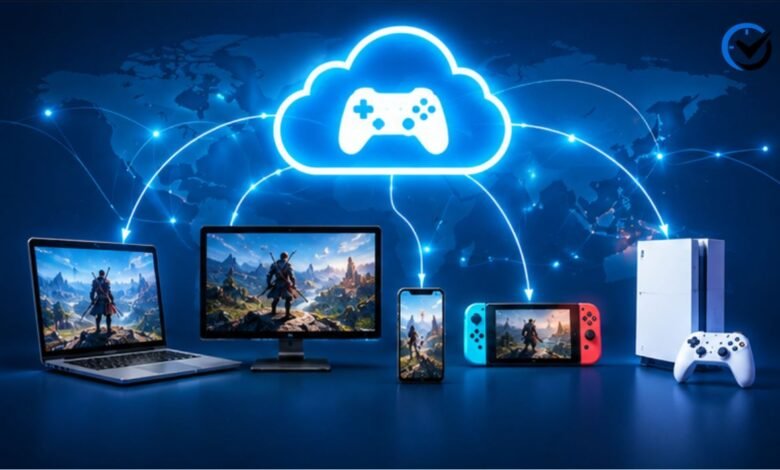
Gaming is no longer defined by consoles and graphics alone. It is a connected technology ecosystem shaped by processors, graphics hardware, storage, networks, game engines, artificial intelligence, cloud services, and immersive devices. Technology News TGArchiveGaming approaches this changing landscape by looking at how these parts developed and why they matter to the way games are made and played. Its published material presents gaming technology as a connected history, moving from early network systems and simpler graphics toward fast storage, advanced rendering, AI-assisted tools, cloud infrastructure, and immersive hardware.
Understanding the Focus
The central idea is to examine the technology underneath the gaming experience. That means considering hardware, software, networking, and development tools together. The platform describes an archive-style approach that connects older protocols and hardware developments with current systems. This perspective helps show why a new feature rarely appears alone. Faster storage can influence world design, stronger processors can support more complex simulation, and better networks can make online play feel more immediate.
From Local Networks to Online Play
Gaming’s biggest changes include the move from local multiplayer toward permanent online connectivity. Early multiplayer often required players to be in the same room or connect machines through a local network. As internet access improved, games could connect people across cities and countries. Server architecture also developed from player-hosted sessions toward dedicated servers, matchmaking services, and cloud-based infrastructure. This progression transformed gaming from an activity tied to a physical location into an experience that can connect players across regions.
The Graphics Revolution
Graphics technology shows how gradual improvements transform games. Earlier systems relied on simpler rendering methods, while later graphics processors gave developers more control over lighting, shadows, surfaces, and effects. Programmable shaders expanded that freedom, allowing developers to create visual techniques rather than depending only on fixed hardware behavior. Modern rendering adds detailed reflections, complex lighting, and other effects. Real-time ray tracing continues this progression by simulating aspects of how light behaves, making graphics technology a tool for atmosphere and visual storytelling as well as image quality.
Why the CPU Still Matters
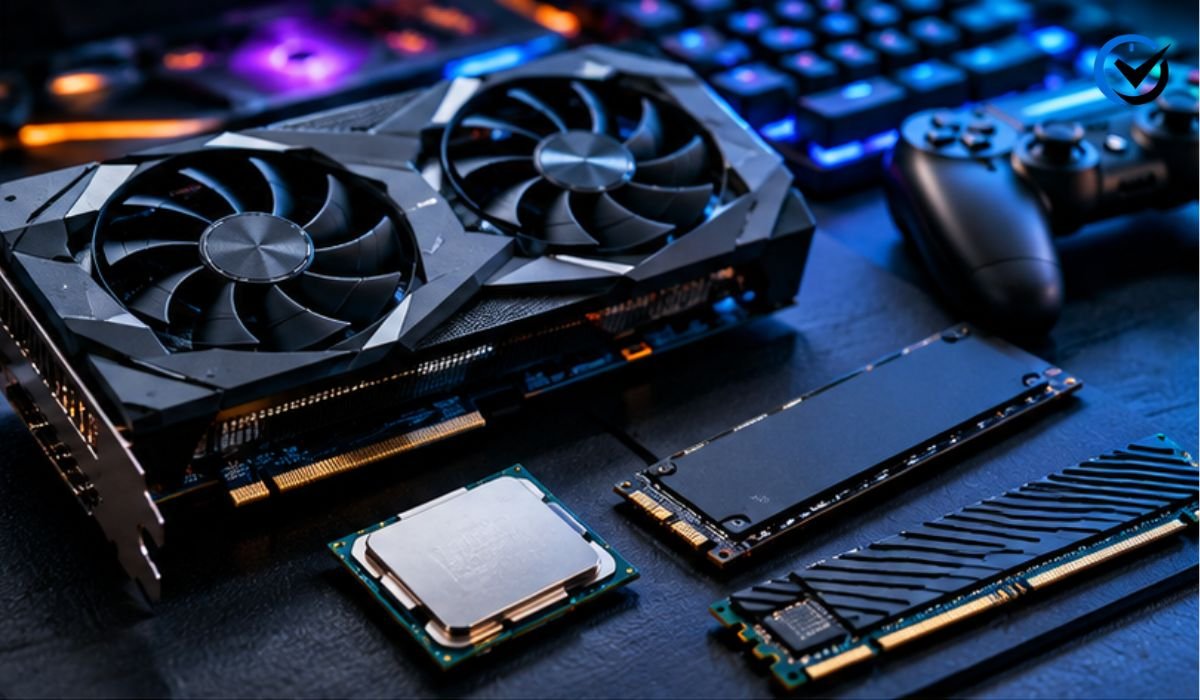
Gaming conversations often focus on the graphics processor, but the CPU remains essential. Modern games may manage AI, physics, animation, audio, world simulation, and background tasks at the same time. Multi-core processors have therefore expanded what developers can attempt. A large world with many active characters needs enough processing power to keep its simulation running smoothly. A game can also be limited by CPU workload, memory access, software design, or the way tasks are distributed. This explains why balanced system design is often more important than focusing on one component.
Storage Has Become Part of Design
Storage technology has changed more than loading times. Traditional hard drives were slower, so developers often designed around pauses and controlled transitions. Modern solid-state storage can move game data much faster, supporting more continuous streaming of assets as a player moves through an environment. That can reduce obvious loading screens and artificial barriers between areas. Faster data access can give developers more freedom when building large worlds, detailed environments, and rapid transitions.
Game Engines Connect the Pieces
Game engines connect hardware capabilities with the finished experience. They provide systems for rendering, physics, animation, audio, asset management, and other development tasks. As engines improve, they can make better use of modern processors, graphics hardware, and fast storage. Engine optimization is therefore important when following gaming technology. A powerful computer can still perform poorly with badly optimized software, while efficient software can make effective use of modest hardware.
Frame Rates and Frame-Time Stability
Modern performance discussions increasingly focus on consistency rather than headline frame-rate numbers. A high average frame rate can still feel uneven when individual frames arrive at very different times. Frame time measures how long the system takes to produce each frame, so large variations can cause visible stutter. Smooth gameplay depends on balancing CPU work, GPU rendering, asset streaming, background tasks, and display synchronization.
Artificial Intelligence in Gaming
Artificial intelligence is becoming part of game development and play. Machine-learning methods can assist with testing, animation, content creation, image processing, and production workflows. AI can also influence character behavior and procedural systems. However, its role should be discussed carefully. Generated content does not automatically improve a game, and human direction remains important for pacing, storytelling, balance, art, and quality control. Tracking AI is most useful when coverage explains a specific application and its practical effect rather than treating AI as a solution to every gaming problem.
Cloud Gaming Changes Where Games Run
Cloud gaming moves game processing from local hardware to remote servers. The player’s device receives a video stream while input is sent back to the service. This creates requirements for server capacity, network quality, video encoding, decoding, and low input latency. Better regional infrastructure can make the experience more practical, but results still depend heavily on the player’s connection and distance from servers. Cloud gaming is therefore an important development without being a universal replacement for local gaming.
Virtual and Augmented Reality
Virtual and augmented reality add another dimension to gaming. VR places the player inside a computer-generated environment, while AR combines digital elements with the physical world. Both depend on motion tracking, display quality, latency, rendering performance, and interaction design. Small delays can be especially noticeable in immersive systems. Hardware improvements are addressing weight, clarity, tracking, and processing demands, while developers continue experimenting with new forms of interaction.
Handheld Gaming and Efficiency
Powerful handheld gaming devices show that progress is not always about larger hardware. Portable systems must balance performance, battery life, heat, weight, and display quality. Efficient processors and graphics architectures allow devices to deliver experiences that once required much larger machines. Developers must then consider scalable graphics, power use, control layouts, and storage limits. A successful device must balance several competing needs in a practical form.
Cross-Platform Gaming
Modern games increasingly cross platform boundaries. Players may use consoles, PCs, handhelds, or cloud services, while cross-play can allow people on different systems to play together. Supporting this requires account systems, networking, control design, and performance scaling. A game must behave reasonably across hardware with very different capabilities. This makes software architecture and optimization increasingly important.
The Infrastructure Players Rarely See
Much of gaming technology remains invisible. Data centers, content delivery systems, authentication, matchmaking, update systems, and network routing can all affect how a game operates. Players may notice this infrastructure only when something fails, such as an outage, unstable connection, or slow update. A modern game can be a digital service as much as a piece of software, which means availability, responsiveness, and security matter alongside graphics and performance.
Security and Reliability
As games become more connected, security matters more. Online accounts can contain purchases, progress, personal information, and social connections. Developers and platform providers need systems that protect those accounts while keeping access practical. Reliability matters too. An impressive feature has limited value if it causes crashes, compatibility problems, or unstable updates. Technology coverage becomes more useful when it considers durability and everyday performance rather than innovation alone.
Connecting Past and Present
An archive approach is valuable because it explains why today’s systems exist. Looking at older networking methods, graphics pipelines, storage limits, and hardware constraints provides context for current designs. Modern seamless worlds make more sense when compared with earlier loading limitations, while cloud gaming is easier to understand through the history of client-server systems. It turns individual developments into parts of a longer story about changing hardware, software, and player expectations.
What Readers Can Learn
The main benefit for readers is context. That context makes changes easier to follow. Someone choosing a gaming PC can better understand why CPU, GPU, memory, storage, and cooling all matter together. A console owner can see why software updates may improve performance without changing physical hardware. A cloud-gaming user can understand why network latency matters as much as image quality. Developers and technology enthusiasts can also see why certain tools and architectures became common.

Where Gaming Technology Is Heading
The next stage will likely involve several technologies developing together. Faster storage, stronger graphics, AI-assisted tools, improved networking, efficient processors, immersive displays, and cloud infrastructure can reinforce one another. Adoption, however, will depend on cost, reliability, developer support, and whether players find the resulting experiences useful. The future is therefore shaped by both engineering possibilities and practical demand.
Final Thoughts
Technology News TGArchiveGaming can be understood as a way of examining gaming through the systems that make it possible. Its subject reaches from networking and graphics to processors, storage, engines, AI, cloud services, immersive hardware, and digital infrastructure. The value is not simply knowing which technology is newest. It is understanding how one improvement creates opportunities for another and how technical decisions eventually appear in the games people play. Modern gaming has evolved through many connected changes, and viewing them as part of a longer story makes today’s technology easier to understand.
Frequently Asked Questions
1. What is Technology News TGArchiveGaming?
It refers to coverage focused on technology behind modern gaming, including hardware, software, networking, graphics, storage, AI, cloud services, and related developments. The goal is to understand how these technologies affect gaming rather than only follow product announcements.
2. What gaming technologies does TGArchiveGaming cover?
The subject includes graphics hardware, processors, storage, networking, game engines, cloud gaming, AI, immersive devices, handheld systems, and digital infrastructure. These areas are connected because progress in one can influence the others.
3. Why is gaming technology important to players?
Technology affects loading times, image quality, frame consistency, online latency, battery life, world size, and the features developers can build. Understanding these factors can help players make more informed choices about systems and settings.
4. How has online gaming changed?
Gaming moved from local multiplayer toward internet-based services connecting players across regions. Dedicated servers, matchmaking, cloud infrastructure, and faster networks have made connected play more accessible and persistent.
5. Why does storage matter in modern games?
Fast storage lets systems retrieve large amounts of data quickly. This can reduce loading and support continuous streaming of textures, environments, and other assets as players move through large worlds.
6. Does better hardware always improve gaming?
Not necessarily. Results also depend on software optimization, drivers, memory behavior, cooling, and how efficiently a game uses available hardware. A balanced system can perform better than one built around a single powerful component.
7. How is AI used in gaming?
AI and machine-learning methods can assist with development, testing, animation, image processing, procedural systems, and character behavior. The exact role varies by game, and human design and quality control remain important.
8. Is cloud gaming replacing local hardware?
Cloud gaming offers another way to access games, but it has not removed the need for local systems. The experience depends on internet quality, latency, server availability, pricing, and the type of game being played.
9. Why do game engines matter?
Game engines provide core systems for rendering, physics, animation, asset management, and development. Their capabilities influence what developers can build and how efficiently games can run across different hardware.
10. What should readers watch as gaming technology evolves?
Readers should watch how technologies work together. Improvements in storage, graphics, processors, networking, AI, engines, and infrastructure can have a larger effect when combined than when considered separately.
Recommended: Evolvedgross.com Explained: Its Main Topics, Features, and Digital Experience





One Comment