


Yalla Choy is an unusual phrase that has attracted attention because it appears to sit between language, internet culture, and food-related terminology. The first word is easier to identify: “yalla” is a widely used Arabic expression associated with “come on,” “let’s go,” or “hurry up.” The second word, “choy,” is much less certain in this exact pairing. Online explanations connect it with Asian food terms, tea, playful slang, or simply a catchy sound. Because these explanations do not fully agree, the most useful approach is to separate established meanings from possible interpretations.
What Does Yalla Choy Mean?
There is no universally accepted dictionary definition for Yalla Choy as a fixed expression. In casual online use, it is generally presented as an energetic and playful phrase that can suggest movement, encouragement, excitement, or joining an activity. It may feel similar to saying “come on,” “let’s go,” or “let’s get moving.” The exact meaning depends on who is using it and where it appears. A phrase used in a group chat may carry a very different intention from the same words appearing beside a recipe or food discussion.
The Meaning of “Yalla”
“Yalla” is the clearest part of the expression. It is a common colloquial Arabic interjection used across many Arabic-speaking communities. Depending on tone and situation, it can encourage someone to move, signal impatience, invite people to leave, or simply add energy to a conversation. The word has also become familiar outside Arabic-speaking communities through travel, entertainment, social media, and multicultural communication. Its basic sense of urging action helps explain why it works naturally in informal expressions.
Why “Choy” Is More Complicated
Unlike “yalla,” “choy” does not have one universally accepted meaning in the phrase Yalla Choy. Similar spellings appear in Asian food terminology, especially in names associated with leafy vegetables. Bok choy and choy sum are familiar examples in English. Other similar-sounding words can also be connected with tea in different languages and regions. However, the existence of these words does not prove that one particular meaning was intended when someone uses Yalla Choy. The surrounding context remains important.
Is It a Food or a Phrase?
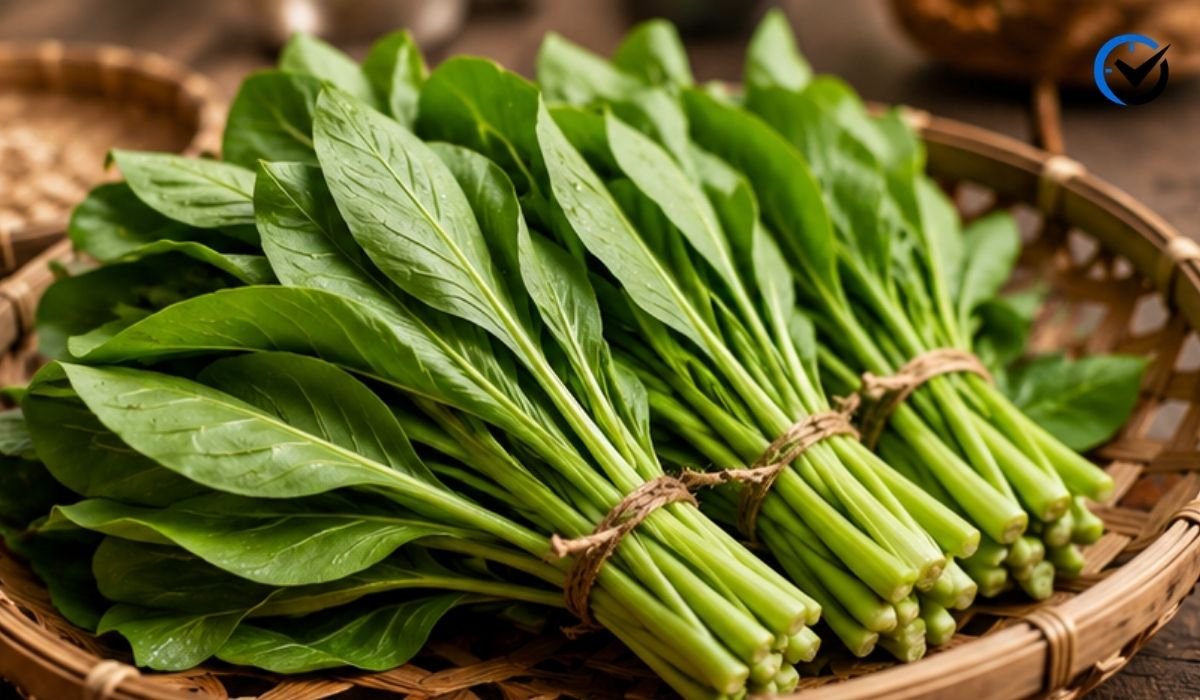
This is one of the biggest sources of confusion surrounding the term. Some recent online pages describe Yalla Choy as a leafy vegetable, sometimes connecting it with water spinach or other Asian greens. That identification should not automatically be accepted simply because “choy” appears in the name. Water spinach and choy sum are recognized vegetables with different botanical identities. Without a reliable source establishing Yalla Choy as a standard name, it is safer to treat the food interpretation as context-dependent rather than universal.
The Water Spinach Connection
Water spinach is a tropical and subtropical leafy vegetable known scientifically as Ipomoea aquatica. It has hollow stems and grows in or around moist environments. It is widely used in several Asian cuisines and has regional names such as kangkong and ong choy. Because “ong choy” sounds somewhat similar to Yalla Choy, online discussions can blur the names. That similarity, however, is not enough to establish Yalla Choy as another official name for water spinach.
The Choy Sum Connection
Choy sum is another possible source of confusion. It is a leafy vegetable in the Brassica group and is widely used in Chinese cooking. It has tender stems, leaves, and small yellow flowers when mature. It is not the same plant as water spinach, even though both can appear in Asian vegetable dishes. If a source uses Yalla Choy as a vegetable name, readers should examine details such as the plant’s leaves, stems, flowers, growing conditions, and regional names before deciding what plant is actually being discussed.
Possible Tea Associations
Another interpretation connects “choy” with tea-related words found across Asian and neighboring language traditions. This is understandable because forms such as cha and chai have traveled widely through trade, migration, and cultural exchange. Still, similar sounds do not automatically establish a direct etymological connection. There is not enough reliable evidence to state that Yalla Choy originated as a traditional phrase meaning “let’s have tea.” That may be a creative modern interpretation, but it should not be presented as a proven historical definition.
Where Did Yalla Choy Come From?
The exact origin of the combined phrase is difficult to verify. Current online explanations generally point toward modern language mixing rather than a documented traditional expression with one clear birthplace. This distinction matters because “yalla” has a well-established history in colloquial Arabic, while the complete pairing with “choy” does not have the same level of documentation. It is therefore more accurate to describe the combined term as a modern or informal expression whose precise origin remains uncertain.
Cross-Cultural Language and Modern Speech
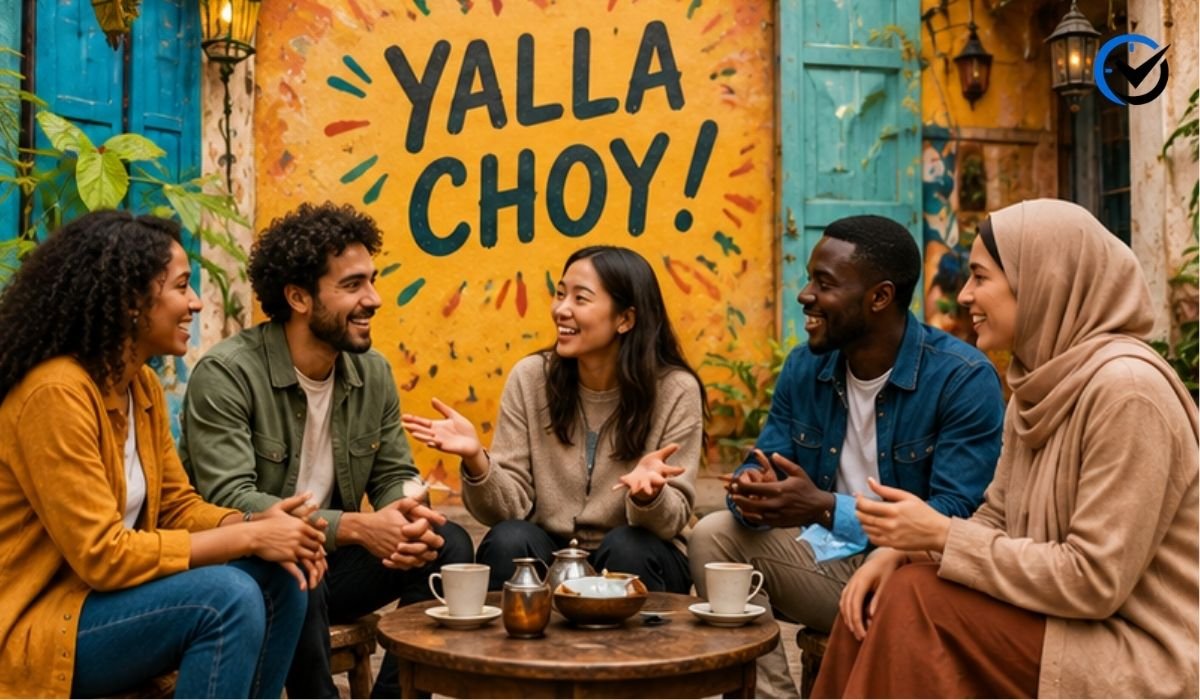
The uncertainty surrounding the phrase also demonstrates how language changes when communities interact. People who speak multiple languages often borrow words, reshape expressions, and create combinations that make sense within a particular social setting. Migration, travel, international workplaces, food culture, entertainment, and online communities can accelerate this process. A phrase may begin as a joke or informal expression and later be repeated by people who know only part of its original context. This kind of linguistic mixing is common in multilingual environments.
How Social Media Can Change a Phrase
Social media gives short expressions an unusually fast route into public conversation. A phrase that is distinctive, easy to pronounce, and memorable can spread through captions, comments, short videos, memes, and group chats. As it moves between communities, its meaning may become broader or less precise. Yalla Choy appears in current online discussions in several different ways, with some writers treating it as an informal call to action and others giving it food or cultural interpretations. That variety is a reminder that online popularity does not necessarily create a fixed definition.
How It May Be Used in Conversation
When used casually, the expression can function as a friendly push toward action. Someone might use it jokingly while encouraging friends to leave, begin an activity, finish getting ready, or join a plan. The tone matters because “yalla” itself can range from warm encouragement to genuine impatience. Adding an unusual second word can make the statement sound humorous rather than demanding. Since the complete phrase is not standardized, it is most suitable for relaxed situations where the people involved understand its intended tone.
Cultural Context Matters
Using a multilingual expression respectfully requires some awareness of its individual parts. “Yalla” is not simply a decorative foreign word; it is a genuine everyday expression with cultural and linguistic history. Similarly, words represented by “choy” can belong to specific Asian languages and food traditions. Treating all these meanings as interchangeable can create confusion. A better approach is to recognize that the combined phrase may be playful and modern while still respecting the separate linguistic traditions that may have influenced how people interpret it.
Why There Is Conflicting Information
Much of the confusion comes from online explanations presenting interpretations as established facts without clearly showing how those claims were verified. One page may describe Yalla Choy as slang, another may connect it with a vegetable, and another may associate it with tea. These are not necessarily three versions of one definition. They may represent different attempts to explain an unfamiliar phrase. The safest interpretation is therefore based on context: first determine what the writer or speaker is discussing, then consider which meaning fits.
How to Identify the Intended Meaning
Context provides the strongest clue. If the surrounding discussion mentions recipes, vegetables, gardens, markets, stems, leaves, or cooking, the writer may be using the term as a food-related label. If it appears in a chat, meme, caption, or casual message, it is more likely functioning as an informal expression. If it appears beside words such as tea, café, or chai, a beverage-related interpretation may be intended. Looking at the surrounding language is much more reliable than assuming that every use has the same meaning.
Is It an Official Dictionary Term?
There is no clear evidence that Yalla Choy is a standardized dictionary entry with a universally recognized definition. That does not make the phrase meaningless. Informal language, nicknames, slang, and internet expressions can become useful without appearing in major dictionaries. Established dictionaries generally document language that has developed sustained and recognizable usage, while online expressions can change much faster. For now, the combined term is best treated as informal and context-dependent rather than as a formally defined word.
Common Misunderstandings
One common mistake is assuming that every part of a combined phrase has one fixed translation. Another is treating the most frequently repeated explanation online as proof of historical origin. A third is confusing similar vegetable names such as choy sum and ong choy with a term that may have been created for another purpose. These mistakes are understandable because unfamiliar phrases invite simple answers. A reliable explanation should instead distinguish documented meanings from possible interpretations.

Why the Phrase Is Interesting
The importance of Yalla Choy is not necessarily that it has one secret definition waiting to be discovered. Its real interest comes from the way modern language can develop between established vocabulary and creative invention. One part may come from a widely used spoken language, while another gains meaning through sound, food culture, humor, or online experimentation. This kind of blending reflects how people communicate across borders and how digital communities can create expressions that are difficult to classify using traditional language categories.
What Readers Should Remember
The most reliable takeaway is that Yalla Choy does not currently have one firmly established meaning that explains every use. “Yalla” has a clear colloquial Arabic sense connected with encouragement, movement, or urgency. “Choy” is more ambiguous in this particular combination and may lead to food, tea, or playful interpretations. Claims identifying the complete phrase as the official name of one specific vegetable, traditional saying, or ancient expression should therefore be treated cautiously unless strong supporting evidence exists.
Final Thoughts
Yalla Choy is best understood as an emerging and informal term rather than a phrase with one universally accepted definition. Its clearest component is “yalla,” a familiar Arabic expression used to encourage movement or action, while “choy” remains open to several interpretations depending on context. Recent online discussions have connected the phrase with slang, food, vegetables, tea, and cultural blending, but those connections should not automatically be treated as historical facts. For readers trying to understand the term accurately, context is the strongest guide. The phrase is interesting precisely because it shows how modern language can develop across cultures, communities, and digital spaces before a stable meaning emerges.
Frequently Asked Questions
1. What does Yalla Choy mean?
In current informal usage, it is generally interpreted as a playful or energetic expression associated with “come on,” “let’s go,” or encouragement. However, the complete phrase does not have one universally accepted dictionary definition, so its meaning can change according to context.
2. Is Yalla Choy an Arabic phrase?
Not in the sense of being a standard, established Arabic expression. The word “yalla” is clearly associated with colloquial Arabic, but the complete pairing with “choy” does not have the same documented status. It is more accurate to describe it as a modern expression incorporating a familiar Arabic word.
3. Does choy mean tea?
Not universally. Similar-sounding words connected with tea exist across several Asian and neighboring language traditions, but “choy” also appears in food terminology, particularly in names for vegetables. Its intended meaning in this specific phrase cannot be established from spelling alone.
4. Is Yalla Choy a vegetable?
There is no reliable basis for treating Yalla Choy as the standardized name of one specific vegetable. Some online sources use the term in connection with leafy greens, but those claims can confuse distinct plants such as water spinach and choy sum. The actual plant should be verified from botanical or culinary context.
5. Is Yalla Choy the same as water spinach?
Not necessarily. Water spinach is a recognized plant with the scientific name Ipomoea aquatica and regional names including kangkong and ong choy. A similar-sounding name does not establish that Yalla Choy is an accepted synonym.
6. Is Yalla Choy the same as choy sum?
No established botanical evidence supports treating the two as the same thing. Choy sum is a distinct leafy vegetable in the Brassica group. If a source uses the names interchangeably, additional information is needed before accepting the identification.
7. Where did Yalla Choy originate?
The exact origin of the combined expression is uncertain. There is no well-established historical record identifying one specific country, person, or community as its creator. Current interpretations are more consistent with modern informal language and cross-cultural communication.
8. Can Yalla Choy be used in a formal email?
It would generally be better to avoid it unless you know the recipient understands the expression and the communication is intentionally informal. Because the phrase is not standardized, a professional audience may not understand what you mean. Conventional wording is safer in formal settings.
9. Why is Yalla Choy appearing online?
Its unusual sound, short length, and cross-cultural character make it suitable for social media, casual posts, memes, and online discussions. Interest can also increase when different websites offer competing explanations. Online attention does not necessarily mean that a phrase has developed one settled definition.
10. What is the safest way to understand Yalla Choy?
Look at the context before assigning a meaning. In casual conversation, it may function as an energetic or playful call to action. In food-related material, it may be connected to a vegetable or culinary idea, although the specific identification should be checked. The key is to avoid treating an uncertain interpretation as a proven fact.
Recommended: Voozon: Complete Guide to the Digital Media and Guest Posting Platform





One Comment