

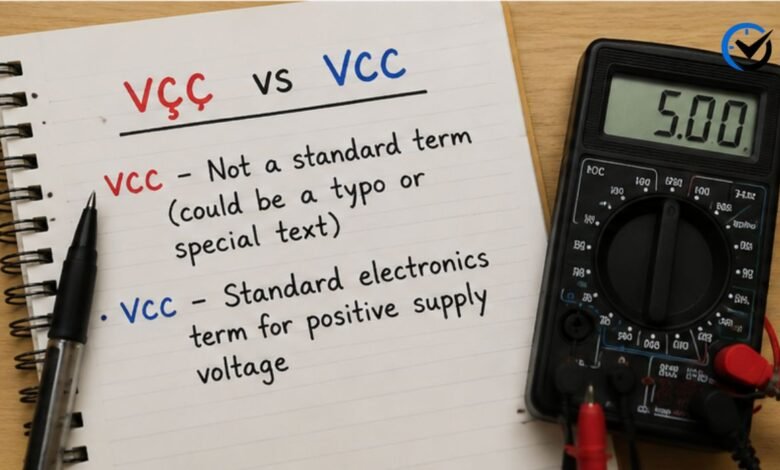
The term vçç can be confusing when you first encounter it. It looks like a word, abbreviation, or technical label, yet it does not have one universally accepted definition. The unusual character “ç” makes it especially easy to mistake for a foreign-language expression, a typing error, or a modified version of another term. In online spaces, it may appear as unusual text, a stylized expression, or a copied string. In technical material, it can sometimes be connected to VCC, a standard electronics label. Understanding that distinction is important because the meaning depends strongly on context. This guide explains what the term may represent, where it can appear, why the spelling causes confusion, and how to identify the intended meaning without making assumptions.
What Does vçç Mean?
There is no established dictionary definition that gives vçç one fixed meaning. Unlike common abbreviations with widely recognized expansions, this character sequence can be produced or used in several different ways. In many cases, it is simply an unusual digital spelling, a formatting artifact, or a stylized form created intentionally by an internet user. Because the term has no universally recognized definition, it is not accurate to claim that every appearance represents the same concept. The safest interpretation is therefore based on the surrounding information. Where it appears, what words are near it, and whether the setting is technical or casual can provide much more useful information than the characters alone.
Why Does the Spelling Look Unusual?
The most noticeable part of the term is the letter ç, known as c with a cedilla. This character is used in several languages, including Portuguese, French, Turkish, and Catalan. It is therefore a legitimate character, but it is not normally used in standard English spelling. When two such characters appear inside a short sequence, English-speaking readers may naturally wonder whether the text has been altered. The unusual appearance can result from intentional styling, multilingual typing, copying between systems, or simple text mistakes. Digital documents are frequently moved between websites, applications, keyboards, and file formats, so unexpected characters can sometimes appear where ordinary letters were originally intended.
vçç and VCC Are Not Automatically the Same
One of the most important distinctions is between vçç and VCC. They look similar, but the two forms should not automatically be treated as identical. VCC is a recognized electronics abbreviation commonly used for a positive supply voltage, particularly in circuits associated historically with bipolar transistor technology. By contrast, vçç is not the standard notation used in engineering documentation. If the unusual spelling appears on a circuit diagram, copied datasheet, electronics tutorial, or hardware document, it may be a distorted representation of VCC. However, the original source should be checked before treating it as a technical label.
The Technical Meaning Behind VCC
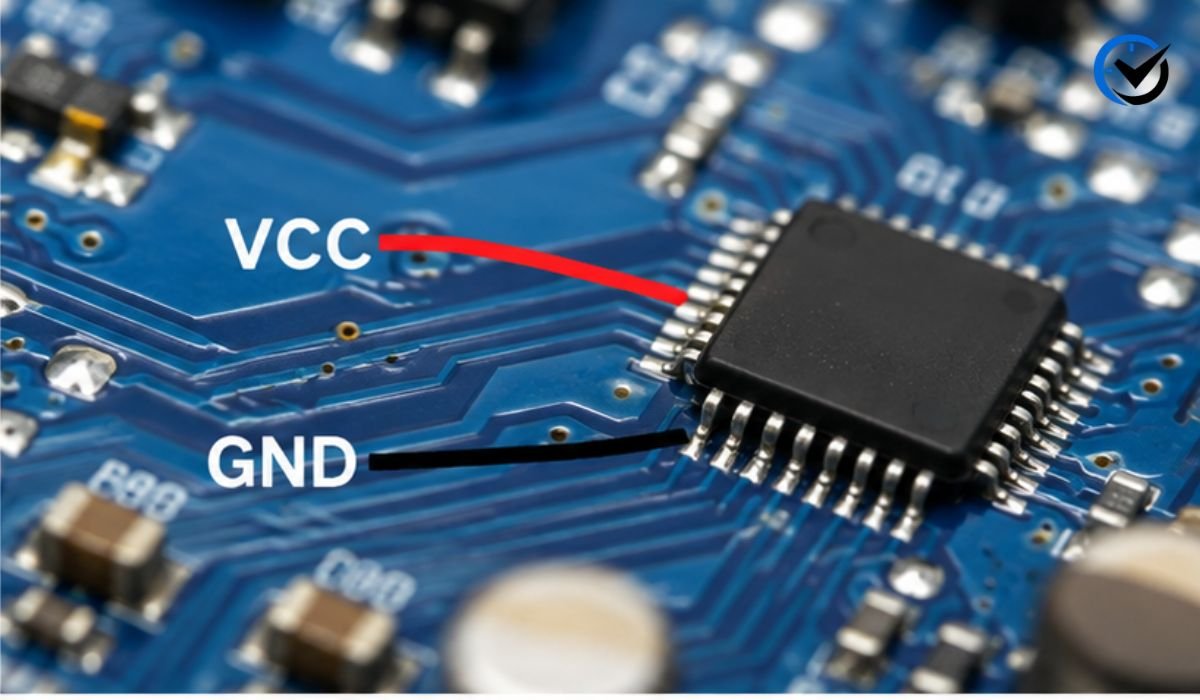
To understand why the two terms are sometimes confused, it helps to know what VCC means. In electronics, VCC commonly identifies a positive supply voltage. The notation has historical roots in bipolar junction transistor circuits, where the collector connection was associated with the supply rail. Over time, VCC became widely used beyond that original situation and can now be seen in many circuit diagrams, integrated-circuit documents, development boards, and electronic projects. The exact voltage represented by VCC is not universal. One device might use a 3.3-volt supply, another might require 5 volts, and another could have a different specified value. The device documentation always takes priority.
How VCC Works in a Circuit
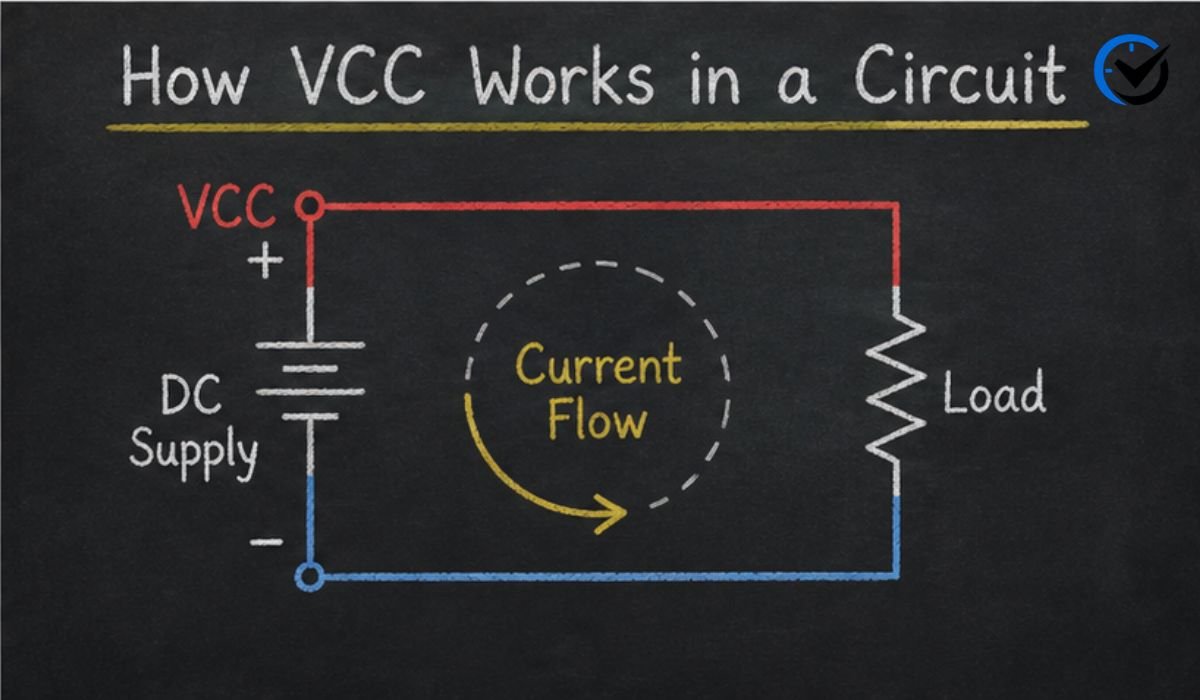
A power supply label such as VCC identifies an electrical potential that components use as part of their operating circuit. Current flows through a complete electrical path, so a positive supply normally works together with a reference or return connection. Depending on the design, that reference may be labeled GND, VSS, or another appropriate name. The voltage difference between supply and reference allows electronic components to operate. Integrated circuits, sensors, microcontrollers, logic devices, and other components may have dedicated supply pins. For anyone working from a schematic, correctly identifying these connections is essential because power pins are not interchangeable simply because they appear similar.
VCC, VDD, VSS, and GND
Another reason beginners can become confused is that electronic diagrams use several related power labels. VCC is commonly associated with a positive supply and has historical ties to collector terminology. VDD is commonly associated with the drain terminology used in MOSFET-based designs and is also frequently used for a positive supply. VSS is traditionally associated with the source and is often used for the lower supply or reference connection in CMOS systems. GND generally identifies the ground reference. These labels can vary between devices, so they should never be interpreted solely from memory. A datasheet or schematic is the best authority for determining exactly what a particular pin requires.
Why Can vçç Appear in Digital Text?
There are several practical reasons an unusual sequence like vçç can appear online. A document may have been copied from one program to another, a character may have been substituted during conversion, or text may have been entered using a multilingual keyboard. Optical character recognition can also produce unexpected characters when it reads scanned documents or unusual fonts. In other cases, a person may deliberately choose the spelling because it looks distinctive. Usernames, display names, test strings, and informal posts often contain characters that would never appear in formal writing. Therefore, the appearance of vçç alone is not enough to determine its origin.
vçç in Online Communication
On social platforms and informal communities, unusual character combinations can function as stylistic text rather than formal vocabulary. People often experiment with spelling, punctuation, symbols, and accented characters to make a username or message visually distinctive. A short sequence may also become an inside expression within a small community without developing a recognized meaning outside that group. This is common in fast-moving digital communication, where context and shared understanding can matter more than traditional definitions. If someone uses vçç in a comment or profile, it may therefore be a personal or community-specific choice rather than an established term.
Is vçç a Real Word?
The answer depends on what is meant by “real word.” The character sequence itself is real text and can be typed, displayed, stored, and searched. However, that does not make it a standard English word. It does not have the same status as an ordinary dictionary entry with a stable definition and established usage. A string can become recognizable through repeated online use without becoming a formal word. This distinction is useful because internet culture constantly produces temporary spellings, abbreviations, memes, and stylized expressions. Some disappear quickly, while others become established parts of everyday language.
Could vçç Be a Typing or Encoding Error?
Yes, that is one reasonable possibility, especially when the term appears in a technical document where VCC would make more sense. Text can change during copying, conversion, translation, or character encoding. A document created in one language or software environment may not always display perfectly in another. Fonts can also affect how unusual characters appear. However, it would be too strong to say that every occurrence of vçç is an error. If the term appears repeatedly in a username, social profile, or informal conversation, intentional styling may be more likely. Context is what separates a likely mistake from deliberate usage.
How to Identify the Intended Meaning
When you encounter vçç, begin by examining the material around it. If you see circuit diagrams, voltage values, IC pins, transistors, microcontrollers, or labels such as GND and VSS, the term may be a corrupted or stylized version of VCC. If it appears in a username, comment, meme, gaming conversation, or casual social post, it is more likely to be informal text. Checking the original document is especially useful when the term appears in copied material. Looking at the source file can reveal whether the unusual characters were present from the beginning or were introduced during conversion. This simple process prevents unnecessary assumptions.
Why Context Matters So Much
Short strings are particularly dependent on context because they contain very little information by themselves. A three-character sequence can represent an abbreviation, a name, a typo, a label, or an intentionally created expression. The same letters may therefore have completely different meanings in different environments. This is not unique to vçç. Many abbreviations used in technology, business, medicine, education, and online communication have several possible interpretations. Treating an unfamiliar term as if it has only one meaning can create errors. Reading the surrounding text first is usually the most reliable way to understand what the writer intended.
Use in Electronics and Hardware Projects
If vçç appears in an electronics project, caution is important. A beginner should not connect power based only on visual similarity between vçç and VCC. Instead, the project’s schematic, component documentation, or manufacturer datasheet should be checked. VCC often represents a positive supply rail, but the required voltage depends on the specific component. Connecting the wrong voltage can prevent a circuit from operating and may damage sensitive hardware. This is especially important with microcontrollers, sensors, integrated circuits, and development boards. In professional technical work, the standard form VCC should be used rather than replacing it with the unusual spelling.
Use in Software and Digital Documents
Outside hardware, the term can also appear because digital systems preserve unusual characters exactly as entered. Modern text systems support a wide range of Unicode characters, allowing letters from many writing systems to coexist in the same document. This makes multilingual communication easier but also means that visually similar strings can be different characters internally. Two terms may look almost identical while being encoded differently. This matters when searching, sorting, programming, or comparing text. A character such as ç is not simply another version of the ordinary letter c; it is a distinct character with its own encoded representation.
Why Unusual Terms Attract Attention
People naturally notice text that looks different from what they expect. A short sequence containing an uncommon character can stand out in search results, comments, usernames, and documents. That visual difference can encourage people to search for an explanation, even when the original appearance was accidental. Once people begin discussing an unusual term, additional examples may appear online, making the string easier to find. This does not necessarily mean that the term has acquired a universally accepted definition. It simply shows how digital visibility can grow around something that began as a typo, formatting issue, personal style, or unexplained character sequence.
Common Mistakes When Interpreting vçç
The biggest mistake is assuming that the term has one official meaning without checking where it appears. Another mistake is automatically changing every instance to VCC, especially in a document where the writer may have intentionally used the unusual spelling. It is also unwise to treat online claims as proof of a formal definition. A term can be repeated across many websites without having an authoritative origin. The better approach is to separate established facts from possible interpretations. In technical contexts, use recognized terminology and verify specifications. In casual contexts, consider the possibility that the term is simply a stylistic or community-created expression.
Should You Use vçç Yourself?
There is no general reason to use the spelling in formal communication unless you are specifically discussing the term. For engineering documents, educational materials, circuit diagrams, and professional instructions, standard terminology is clearer. If you are writing about the unusual string itself, however, reproducing its exact spelling can be useful so readers know what is being discussed. In social or creative settings, unusual characters may be used intentionally for visual identity. The key issue is clarity. When a reader needs to understand a technical instruction, conventional notation is almost always preferable to an unfamiliar variation.
The Importance of Accurate Technical Labels
Technical writing depends heavily on precision. A single changed character can make a familiar label appear unfamiliar or create confusion about a component connection. This is why engineers rely on standardized notation, datasheets, schematics, and manufacturer instructions. VCC is useful precisely because readers familiar with electronics understand what the label generally indicates. An altered spelling can interrupt that shared understanding. The lesson extends beyond this particular term: whenever an unfamiliar label appears in a technical document, confirm it against the original source before making a connection or drawing a conclusion.
What the Term Ultimately Represents
Taken on its own, vçç should be viewed as an ambiguous character sequence rather than a word with one proven definition. It may be a stylized online expression, an unusual personal identifier, a formatting or encoding artifact, or a distorted form of VCC in technical material. These possibilities cannot always be separated by appearance alone. The surrounding context provides the strongest clue. Understanding this prevents both overconfidence and unnecessary confusion. Instead of searching for a single universal answer, readers should ask where the term appeared, what surrounded it, and what the original source intended.
Final Thoughts
vçç is best understood as an ambiguous digital character sequence rather than a term with one universally accepted definition. Its unusual spelling can result from intentional styling, multilingual text, typing or encoding issues, or confusion with the established electronics notation VCC. The distinction becomes especially important in technical settings, where VCC has a recognized purpose and should be written accurately. When the unusual form appears elsewhere, its meaning should be judged from the surrounding context instead of assuming a single explanation. By checking the original source, considering the environment, and separating established terminology from informal usage, readers can understand vçç more accurately and avoid unnecessary confusion.
Frequently Asked Questions
1. What does vçç mean?
vçç does not have one universally recognized meaning. It may be used as stylized digital text, appear as a formatting or typing artifact, or resemble VCC in copied electronics material. The correct interpretation depends on the context in which it appears.
2. Is vçç an official technical abbreviation?
No, vçç is not a standard electronics abbreviation. The recognized technical form is VCC, which commonly identifies a positive supply voltage. If vçç appears in a circuit-related document, the original source should be checked to determine whether it was intended to represent VCC.
3. Is vçç the same as VCC?
Not officially. VCC is a recognized electronics notation, while vçç uses the different character ç. In some documents, vçç may be a distorted representation of VCC, but it should not automatically be treated as the same term.
4. What does VCC mean in electronics?
VCC commonly refers to a positive supply voltage in an electronic circuit. The name has historical connections to the collector terminals of bipolar transistors, although modern electronics uses VCC more broadly. The actual voltage must always be confirmed from the relevant device documentation.
5. Why does vçç contain the letter ç?
The letter ç is called c with a cedilla and is used in several languages. Its presence may result from multilingual typing, intentional styling, text conversion, encoding problems, or other digital processes. It is a distinct character from the ordinary letter c.
6. Can vçç be a typing mistake?
Yes. It can occur through typing, copying, formatting, encoding, translation, or document-conversion problems. However, not every occurrence is necessarily accidental because people can deliberately use unusual characters in usernames, posts, and creative text.
7. Where might someone encounter vçç?
It may appear in online conversations, usernames, social posts, copied documents, technical material, or other digital text. The environment provides an important clue about whether it is intentional, informal, or related to another established term.
8. Should vçç be used in electronics documentation?
It is better to use the standard notation VCC in electronics documentation. Clear and conventional labels reduce the chance of misunderstanding. If the unusual spelling is being discussed as an example, it can be mentioned separately and explained.
9. How can I determine what vçç means in a document?
Look at the surrounding text, diagrams, labels, and original source. If it appears alongside power pins, voltage values, GND, or VSS, it may be a distorted form of VCC. If it appears in casual online content, it may have a personal or community-specific meaning.
10. Why is understanding vçç important?
Understanding the term is mainly useful because it prevents confusion between an unusual character sequence and established terminology. In everyday digital communication, context can explain its intended use. In electronics, recognizing the difference between vçç and VCC can help readers avoid misunderstanding an important power-supply label.
Recommended: Supermaked: Everything to Know About Modern Grocery Shopping and Retail




One Comment