

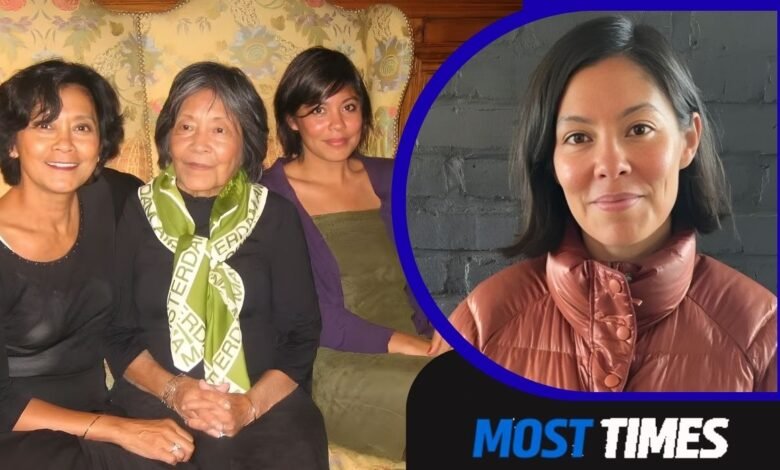
Tin Swe Thant is best known publicly as the mother of journalist and television host Alex Wagner, but that description only captures one part of a much larger family story. Born in Burma, now Myanmar, Tin Swe Thant eventually built a life in the United States and became an important link between Alex Wagner’s American upbringing and her Burmese heritage. Her story touches on immigration, education, family, cultural identity, and the complicated question of belonging. Much of what is known about her comes through Alex Wagner’s memoir Futureface, interviews, and biographical accounts rather than from Tin herself, because she has largely remained outside the public spotlight.
Quick Bio of Tin Swe Thant
| Detail | Information |
|---|---|
| Full name | Tin Swe Thant |
| Known for | Mother of Alex Wagner |
| Birth country | Burma, now Myanmar |
| Burmese connection | Maternal roots of Alex Wagner |
| National background | Burmese-born American |
| Immigration | Moved from Burma to the United States |
| U.S. education | Swarthmore College |
| Field of study | Political science |
| Husband | Carl Wagner |
| Daughter | Alex Wagner |
| Family significance | Important part of Alex Wagner’s ancestry story |
| Major literary connection | Futureface |
| Public profile | Primarily private |
Tin Swe Thant’s Early Life in Burma
Tin Swe Thant’s story begins in Burma during a period of enormous historical change. She was born into a Burmese family while the country was moving through the final years of British colonial influence and the transition to independence. That setting matters because identity, language, names, and cultural traditions were not simply personal matters during this era; they were also connected to broader questions about power and national identity. Later accounts of Tin’s childhood describe an experience in which her original Burmese identity came into tension with colonial expectations, a detail that became especially meaningful to Alex Wagner as she grew older. Rather than viewing her mother’s background as a collection of distant historical facts, Alex came to understand it as part of the emotional inheritance passed from one generation to another.
The Journey From Burma to America
Migration became a defining part of Tin Swe Thant’s adult life. Accounts connected to Alex Wagner’s Futureface describe her mother’s family leaving Burma during the 1960s, eventually bringing Tin into a very different American environment. Moving between countries involves much more than changing an address: it can mean adapting to a different education system, social expectations, language environment, and understanding of identity. Tin’s transition is especially significant because she did not simply abandon her Burmese background after arriving in America. Instead, her life became an example of how immigrant families can combine an inherited culture with experiences in a new country. That combination later became one of the most important threads in Alex Wagner’s exploration of her own ancestry.
Education and Swarthmore College
Education represents another important chapter in Tin Swe Thant’s American story. Public biographical accounts identify Swarthmore College as part of her educational journey and state that she studied political science after becoming a U.S. citizen. That detail provides useful context because political science examines institutions, government, power, citizenship, and society—subjects that fit naturally into a life shaped by migration and changing national circumstances. It is also important not to embellish the record with unsupported claims about grades, awards, or specific academic achievements. What can reasonably be established is that higher education became part of Tin’s transition into American life, while her later family story connected her Burmese background with the political and cultural environment in which her daughter grew up.
Tin Swe Thant and Carl Wagner
Tin Swe Thant’s family story also became intertwined with that of Carl Wagner, an American political consultant. Carl came from Iowa and became involved in Democratic politics, including work connected to Bill Clinton’s 1992 presidential campaign. His background was substantially different from Tin’s Burmese heritage, creating a household in which multiple cultural and family histories came together. Their daughter, Alex Wagner, grew up within that blended environment in Washington, D.C., surrounded by her mother’s Burmese roots and her father’s American political world. This family combination became particularly significant later because Alex’s professional life developed around journalism, politics, culture, and questions of identity. Carl died in 2017, but the family history created by Tin and Carl continues to be discussed through Alex’s work.
How Tin Swe Thant Shaped Alex Wagner’s Identity
The connection between Tin Swe Thant and Alex Wagner becomes clearest when looking at Alex’s childhood and her understanding of being mixed-race in America. Alex grew up with a Burmese mother and a white American father, a background that made her family different from many of the households around her. Experiences that seemed confusing during childhood later became questions about race, culture, ancestry, and belonging. Her mother’s history gave Alex a direct connection to Burma, while her father’s family connected her to a very different American tradition. Instead of treating those identities as mutually exclusive, Alex eventually began investigating how they could coexist. In that sense, Tin Swe Thant was not simply a parent in Alex’s biography; she was one of the central reasons Alex became interested in understanding where her family came from.
The Meaning Behind Her Burmese Heritage
Tin Swe Thant’s Burmese heritage has significance beyond nationality because it became a living part of the Wagner family across generations. Alex’s interest in her mother’s background demonstrates how cultural heritage can survive even after a family moves thousands of miles away. Food, names, family memories, stories about relatives, and knowledge of an earlier homeland can all become ways for children to understand a culture they did not personally experience in the same way as their parents. The Wagner family story illustrates this process particularly well because Alex grew up in the United States but continued to investigate the Burmese side of her family. Her later writing shows that heritage is not always a simple answer to the question of who someone is; sometimes it creates more questions that take years to understand.
Tin Swe Thant and Futureface
Perhaps the most important reason Tin Swe Thant remains relevant today is Alex Wagner’s 2018 memoir, Futureface: A Family Mystery, an Epic Quest, and the Secret to Belonging. The book follows Wagner as she investigates her ancestry and considers the complicated relationship between race, immigration, DNA, family stories, and American identity. Tin’s Burmese background forms a major part of that personal investigation. The book is not simply a biography of Wagner’s mother; instead, Tin’s history becomes one of the pathways through which Alex examines her own identity. The publisher’s description presents the memoir as a search for answers about ancestry and belonging, making Tin Swe Thant’s story essential context for understanding why Alex began that search in the first place.
Why Her Story Matters Beyond Celebrity
It can be tempting to view Tin Swe Thant only through the lens of her daughter’s fame, but doing so misses the broader meaning of her story. Her life reflects themes experienced by many immigrant families: leaving one country, adapting to another, preserving cultural memory, and watching children develop identities that are more complex than either parent’s experience. Tin’s journey also demonstrates why family history can become more important with age. A person may grow up knowing basic facts about a parent’s homeland without fully understanding what those facts mean until adulthood. Alex Wagner’s later interest in ancestry illustrates exactly that process. Her mother’s experience became a doorway into larger questions about American identity, race, history, and belonging.
What Is Known About Tin Swe Thant’s Private Life
A trustworthy biography should also recognize what is not known. Tin Swe Thant has not maintained the kind of highly visible public career associated with her daughter, and there is no comprehensive authoritative record detailing every stage of her professional and personal life. Online articles sometimes provide exact birth years, ages, net-worth figures, residences, or other personal details without showing reliable evidence. Those claims should not automatically be treated as fact. The more defensible information concerns her Burmese origin, migration to the United States, education, marriage to Carl Wagner, motherhood, and significance in Alex Wagner’s family-history writing. Respecting those boundaries makes the story more accurate and avoids turning a private person into a fictionalized celebrity biography.
Tin Swe Thant’s Lasting Family Legacy
The most lasting part of Tin Swe Thant’s public story is the way her heritage continued into the next generation. Alex Wagner’s work demonstrates that family influence does not always appear through famous achievements or public appearances. Sometimes it appears through the questions a child learns to ask, the culture a parent preserves, and the stories that remain meaningful decades later. Tin’s Burmese background became part of Alex’s understanding of herself, and that understanding eventually became material for a widely discussed memoir. Her influence therefore extends beyond the simple description of “Alex Wagner’s mother.” She represents a connection between Burma and America, between an immigrant generation and its American-born children, and between personal family memory and a larger conversation about belonging.
Final Thoughts
Tin Swe Thant’s story is meaningful because it reaches far beyond her connection to Alex Wagner. Her journey from Burma to the United States, her education, her family life with Carl Wagner, and her role in Alex’s understanding of ancestry created a bridge between different cultures and generations. Through Futureface, Alex Wagner turned that family history into a wider exploration of identity, immigration, race, and belonging. Although Tin Swe Thant has remained largely private and many details about her personal life are not publicly confirmed, the information that is documented already provides a compelling picture of a woman whose Burmese roots became an important part of her daughter’s life and public work.
Frequently Asked Questions (FAQs)
1. Who is Tin Swe Thant?
Tin Swe Thant is best known publicly as the mother of American journalist and television host Alex Wagner. She was born in Burma, later moved to the United States, and became an important part of Alex’s exploration of Burmese heritage and family identity.
2. Is Tin Swe Thant Alex Wagner’s mother?
Yes. Tin Swe Thant is Alex Wagner’s mother, while Carl Wagner was Alex’s father. Alex’s mixed Burmese and American family background became a major theme in her memoir Futureface.
3. Where was Tin Swe Thant born?
Public biographical sources identify Tin Swe Thant as being from Burma, with references to Rangoon, now known as Yangon. Her Burmese origin is one of the central facts behind Alex Wagner’s exploration of her maternal ancestry.
4. When did Tin Swe Thant move to the United States?
Accounts based on Wagner’s family history place her migration during the 1960s. The exact circumstances and timeline of every stage of her move are not comprehensively documented in public sources, so specific details should be treated cautiously.
5. Did Tin Swe Thant attend Swarthmore College?
Yes, established biographical accounts of Alex Wagner identify Swarthmore College as part of Tin Swe Thant’s educational journey. Sources describe her as becoming a naturalized U.S. citizen before attending the college.
6. What did Tin Swe Thant study?
Public accounts identify political science as her field of study at Swarthmore College. However, detailed information about her academic record, activities, or graduation circumstances is not widely documented.
7. Who was Tin Swe Thant married to?
Tin Swe Thant was married to Carl Wagner, an American political consultant. Their daughter, Alex Wagner, later became a nationally recognized journalist and author.
8. How did Tin Swe Thant influence Alex Wagner?
Her Burmese heritage and immigrant experience gave Alex a personal connection to questions surrounding culture, race, ancestry, and belonging. Those subjects later became central to Alex’s writing, particularly in Futureface.
9. What is Futureface about?
Futureface is Alex Wagner’s memoir about investigating her family history and ancestry while considering immigration, race, identity, and belonging. Her mother’s Burmese background is an important part of that personal investigation.
10. Is Tin Swe Thant a public figure herself?
Tin Swe Thant is primarily known through her connection to Alex Wagner rather than through an independent celebrity career. She has generally maintained a private life, which is why reliable information about her is more limited than information about her daughter.
11. Is Tin Swe Thant’s exact age publicly confirmed?
A dependable public source establishing her exact birth date was not identified in the material reviewed. For that reason, specific age claims circulating online should be regarded as estimates unless supported by stronger documentation.
12. Why are people interested in Tin Swe Thant today?
Interest in Tin Swe Thant largely comes from readers who want to understand Alex Wagner’s family roots and Burmese heritage. Her story also connects with wider subjects such as immigration, cultural identity, ancestry, and the experience of belonging to more than one cultural tradition.
Recommended: Who Is Caesar Lorenzo Newton? Facts About Cam Newton’s Son





One Comment