

The Detroit Lions and San Francisco 49ers produced one of the most entertaining games of the 2024 NFL regular season when they met at Levi’s Stadium on December 30, 2024. Detroit earned a 40–34 victory after recovering from an eight-point halftime deficit. The matchup featured 74 combined points, explosive passing plays, two important interceptions, and several outstanding individual performances. This Detroit Lions vs 49ers Match Player Stats breakdown covers the final score, leading players, turning points, and numbers that explain how the Lions completed their comeback.
Which Lions vs 49ers Game Does This Breakdown Cover?
Detroit and San Francisco faced each other twice during the 2024 calendar year, which can create confusion when readers look for their game statistics. The 49ers defeated the Lions 34–31 in the NFC Championship Game on January 28, 2024. This article covers their next meeting, a Week 17 regular-season game played on December 30, 2024. The Lions won that contest 40–34, improved their record to 14–2, and recorded their first road victory over San Francisco since 1975.
Final Score and Essential Game Details
The 49ers entered halftime with a 21–13 advantage after scoring touchdowns on each of their first three possessions. Detroit answered with 18 points in the third quarter and nine more in the fourth. San Francisco scored a late touchdown but could not recover the following onside kick. The high-scoring result reflected strong offensive production from both teams, although Detroit’s ability to avoid turnovers ultimately separated the two sides.
| Game detail | Detroit Lions | San Francisco 49ers |
|---|---|---|
| Final score | 40 | 34 |
| Halftime score | 13 | 21 |
| Total yards | 439 | 475 |
| Passing yards | 303 | 377 |
| Rushing yards | 136 | 98 |
| Turnovers | 0 | 2 |
| Team record after game | 14–2 | 6–10 |
How the First Half Developed
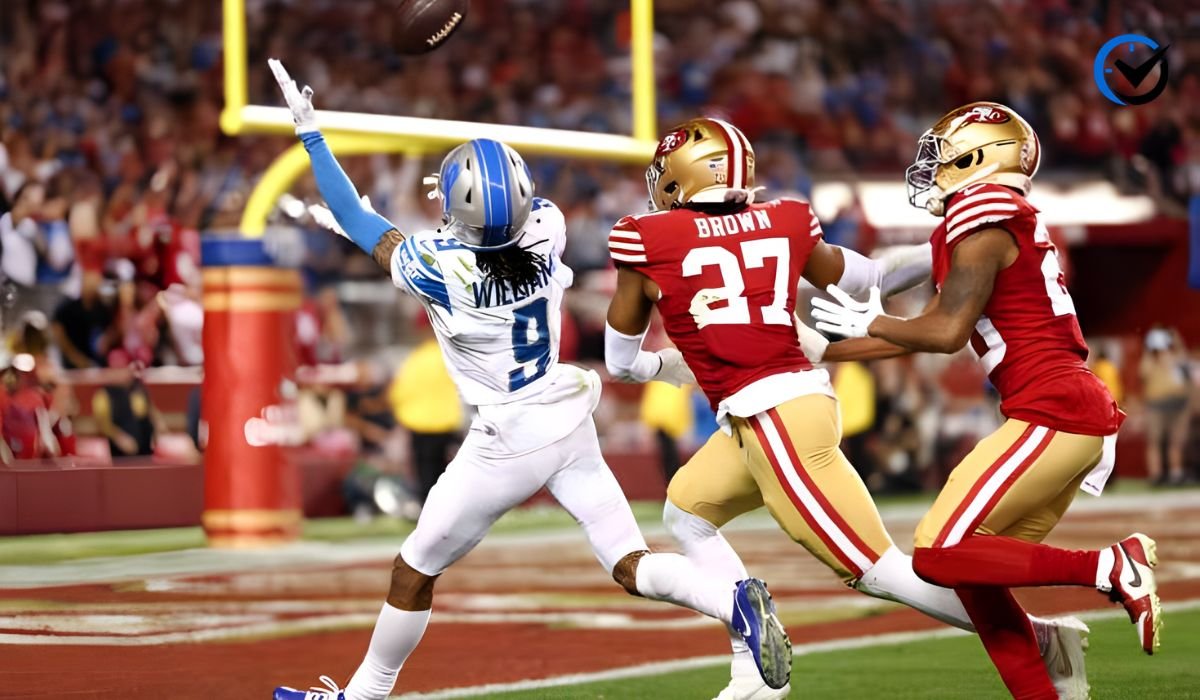
San Francisco began with excellent rhythm as Brock Purdy completed passes across the middle and outside the numbers. His three-yard touchdown pass to Ricky Pearsall opened the scoring, but Jameson Williams answered with a three-yard rushing touchdown. Purdy later found Kyle Juszczyk for a nine-yard score before running nine yards for another touchdown. Jared Goff’s 41-yard scoring pass to Williams kept Detroit close, although a missed extra point left the Lions trailing by eight at the break.
Detroit’s Second-Half Comeback
The Lions opened the third quarter with a controlled drive that ended in a six-yard touchdown pass from Goff to Sam LaPorta. Goff then connected with Tim Patrick for a two-point conversion, tying the score at 21. Purdy answered with a touchdown pass to Deebo Samuel, but Detroit refused to lose contact. A long field goal, two Kerby Joseph interceptions, and touchdowns by Amon-Ra St. Brown and Jahmyr Gibbs allowed the visitors to take command during the closing stages.
Jared Goff’s Efficient Performance
Jared Goff completed 26 of 34 passes for 303 yards, three touchdowns, and no interceptions. His 76.5 percent completion rate showed how well he handled a defense that still featured experienced playmakers. Goff remained composed after San Francisco’s fast start and delivered accurate throws during Detroit’s comeback. His touchdowns went to Williams, LaPorta, and St. Brown, while his careful decision-making ensured the Lions finished without a giveaway. That clean performance was especially important in a game decided by only six points.
Brock Purdy’s Productive but Costly Night
Brock Purdy completed 27 of 35 attempts for a career-high 377 yards and three passing touchdowns. He also added a nine-yard rushing score, giving him four total touchdowns. His first half was nearly flawless, and San Francisco scored on its opening three possessions. However, Purdy threw two interceptions to Joseph after halftime. Both mistakes helped Detroit score touchdowns, turning an impressive statistical performance into a difficult result. Purdy later left the game after hurting his right elbow during San Francisco’s final full possession.
Jahmyr Gibbs Leads Detroit’s Ground Game
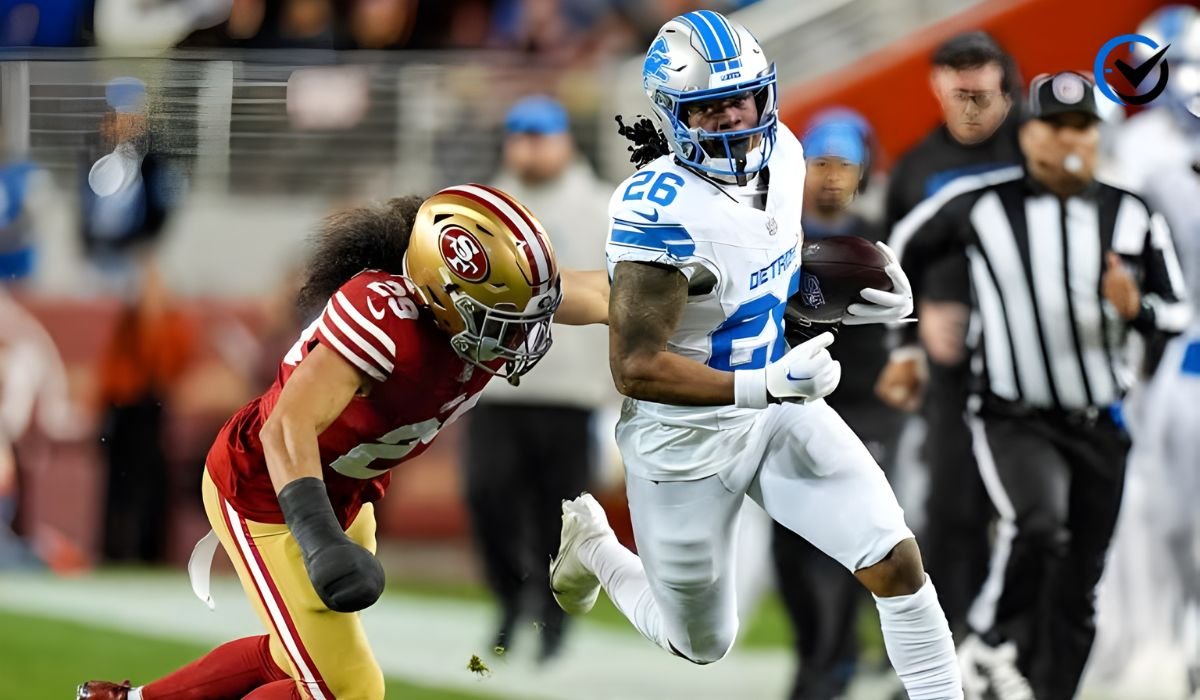
Jahmyr Gibbs carried the ball 18 times for 117 yards and one touchdown, averaging 6.5 yards per attempt. He also caught four passes for 46 yards, giving him 163 yards from scrimmage. His biggest moment came late in the fourth quarter when he broke through the defense for a 30-yard touchdown. That run increased Detroit’s lead to 40–28 and forced San Francisco into an urgent comeback attempt. Gibbs supplied speed, patience, and balance to an offense playing without injured running back David Montgomery.
Jameson Williams Delivers Two Touchdowns
Jameson Williams provided Detroit’s early explosive plays. He scored on a three-yard run in the first quarter and later caught a 41-yard touchdown pass from Goff. Williams finished with five receptions for 77 yards and showed why his speed can change the shape of a defense. San Francisco had to respect his ability to get behind the secondary, which created more space for Detroit’s shorter passing game. His two scores helped the Lions survive a first half in which the 49ers controlled most of the action.
Amon-Ra St. Brown and Sam LaPorta Make Their Mark
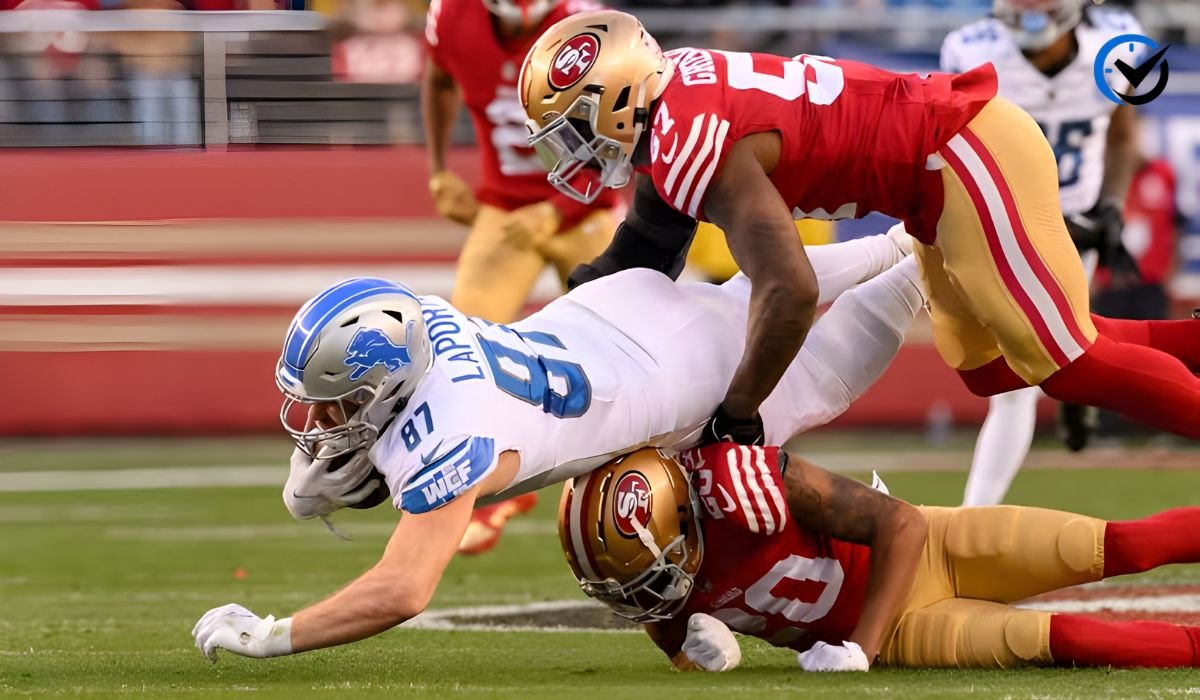
Amon-Ra St. Brown caught eight of ten targets for 60 yards and a touchdown. His four-yard scoring reception gave Detroit its first lead of the night during the fourth quarter. Sam LaPorta added six catches for 64 yards, including a six-yard touchdown early in the second half. Neither player needed a massive yardage total to influence the outcome. Their route running, dependable hands, and ability to find openings gave Goff reliable options whenever Detroit needed to sustain a drive or finish inside the red zone.
Ricky Pearsall Records His Breakout Performance
Rookie receiver Ricky Pearsall delivered the best statistical game of his first NFL season. He caught eight passes for 141 yards and a touchdown, leading all players in receiving yards. Pearsall’s three-yard touchdown opened the scoring, while his larger gains repeatedly moved San Francisco into Detroit territory. He showed confident hands, useful speed after the catch, and a strong connection with Purdy. Although the 49ers lost, his career-high performance offered an encouraging sign for a team evaluating its young offensive talent.
George Kittle Remains a Major Threat
George Kittle caught all eight of his targets for 112 yards and averaged 14 yards per reception. Detroit struggled to contain him between the numbers, where he created separation and gained extra yards after contact. Kittle did not score, but his production helped Purdy move the offense and gave the 49ers favorable field position throughout the night. The performance also pushed him beyond 1,000 receiving yards for the season, marking the fourth time in his career that he reached that important milestone.
Kerby Joseph Changes the Game
Kerby Joseph produced the defining defensive performance with two second-half interceptions. His first takeaway gave Detroit possession near midfield and helped create the drive that ended with St. Brown’s touchdown. His second interception provided the Lions with another short field before Gibbs scored on his 30-yard run. Joseph also finished with six total tackles and two passes defended. In a matchup dominated by offense, his anticipation and positioning created the two mistakes that San Francisco could not overcome.
Special Teams and Missed Opportunities
Detroit kicker Jake Bates made two important field goals, including a 57-yard attempt that tied the score at 28. He later converted from 42 yards to give the Lions a three-point lead. San Francisco’s Jake Moody had a more difficult evening, missing field-goal attempts from 51 and 58 yards as well as one extra-point attempt. Those missed kicks removed seven possible points from the 49ers’ total. In a six-point loss, that lack of execution became a central part of the final result.
Why Detroit Won Despite Allowing 475 Yards
San Francisco gained more total yards and produced the game’s leading passer and receiver, but Detroit controlled the most important situations. The Lions committed no turnovers, converted their best scoring opportunities, and responded effectively whenever the 49ers threatened to pull away. Goff protected the football, Gibbs provided rushing balance, and Joseph punished Purdy’s two risky throws. Detroit also scored touchdowns following both interceptions. The final numbers demonstrate why yardage alone does not decide games when turnovers and finishing drives carry greater weight.
What the Result Meant for Both Teams
Detroit’s victory improved its record to 14–2 and maintained its position in the race for the NFC’s top seed. The Lions still needed to defeat the Minnesota Vikings in Week 18 to secure the division title, a first-round bye, and home-field advantage. San Francisco fell to 6–10 after already being eliminated from postseason contention. For the Lions, the win also carried emotional value because it came at the stadium where their previous season had ended with a painful NFC Championship defeat.
Final Thoughts
The Detroit Lions vs 49ers Match Player Stats reveal a contest filled with elite offensive production and decisive defensive moments. Goff’s three touchdowns, Gibbs’ 163 scrimmage yards, and Williams’ two scores powered Detroit’s attack. Purdy, Pearsall, and Kittle posted excellent numbers for San Francisco, but Joseph’s two interceptions changed the direction of the game. Detroit won because it protected the football, converted takeaways into touchdowns, and remained calm after falling behind, completing a memorable 40–34 comeback.
Frequently Asked Questions
1. Who won the Detroit Lions vs 49ers game?
The Detroit Lions defeated the San Francisco 49ers 40–34 on December 30, 2024. San Francisco led 21–13 at halftime, but Detroit scored 27 points after the break. The Lions took their first lead in the fourth quarter and protected it after the 49ers’ unsuccessful onside-kick attempt.
2. Who was Detroit’s leading passer?
Jared Goff led Detroit’s passing attack by completing 26 of 34 attempts for 303 yards. He threw three touchdown passes and did not commit a turnover. His efficiency and composure helped the Lions recover after they fell behind during the first half.
3. How many yards did Brock Purdy throw for?
Brock Purdy passed for a career-high 377 yards. He completed 27 of 35 attempts and threw three touchdown passes, while also scoring once on the ground. However, two interceptions in the second half significantly reduced the value of his otherwise productive performance.
4. Who had the most rushing yards?
Jahmyr Gibbs led all players with 117 rushing yards on 18 carries. He averaged 6.5 yards per attempt and scored on a 30-yard run late in the fourth quarter. Gibbs also contributed 46 receiving yards, finishing with 163 total yards from scrimmage.
5. Who recorded the most receiving yards?
Ricky Pearsall led the game with 141 receiving yards on eight catches. The San Francisco rookie also scored the opening touchdown on a three-yard reception. George Kittle ranked second with 112 yards, while Jameson Williams led Detroit with 77 receiving yards.
6. How many touchdowns did Jameson Williams score?
Williams scored two touchdowns. He reached the end zone on a three-yard rushing play in the first quarter and caught a 41-yard touchdown pass in the second. His speed gave Detroit an explosive element while San Francisco controlled the early stages.
7. Who intercepted Brock Purdy?
Detroit safety Kerby Joseph intercepted Purdy twice in the second half. Both takeaways led to Lions touchdowns and played a major role in the comeback. Joseph’s ability to read the quarterback helped Detroit overcome a game in which its defense allowed 475 total yards.
8. Did the Lions commit any turnovers?
No, Detroit completed the game without a turnover. Goff avoided interceptions, and the Lions did not lose a fumble. That clean record gave Detroit a two-turnover advantage over San Francisco and prevented the 49ers from receiving any short-field scoring opportunities.
9. Why did Joshua Dobbs enter the game?
Joshua Dobbs entered after Purdy suffered an elbow injury late in the fourth quarter. Dobbs completed a short drive with a seven-yard rushing touchdown that reduced Detroit’s lead to six points. San Francisco then attempted an onside kick, but the Lions recovered it and ended the comeback threat.
10. Was this the NFC Championship rematch?
Yes. The regular-season meeting was the first matchup between the teams since San Francisco defeated Detroit 34–31 in the NFC Championship Game in January 2024. The Lions’ Week 17 victory did not erase that playoff loss, but it represented a successful return to Levi’s Stadium.
Recommended: Messagenal A Beginner’s Guide to Private Messaging and Secure Calls



One Comment