

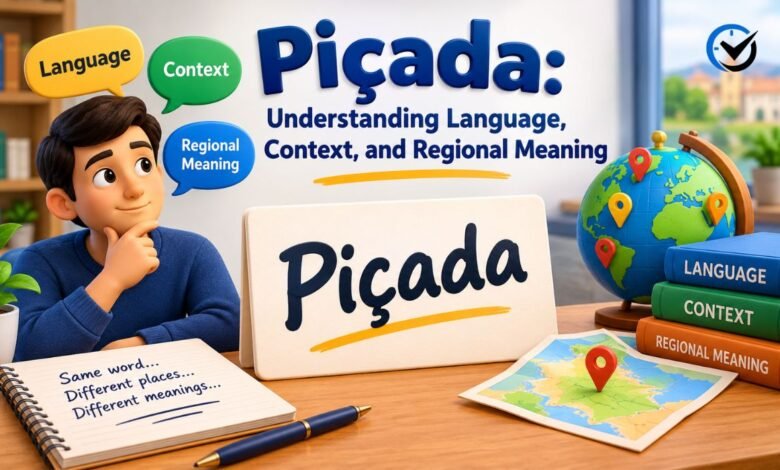
A word can carry different meanings depending on where it is used, who says it, and the situation around it. Piçada is a Portuguese slang term that illustrates this clearly. In some Portuguese usage, it refers to a sharp reprimand or scolding. It also has a vulgar sexual meaning, so it can sound crude or offensive. Readers may encounter it while searching for a food or regional expression, but that often involves a different word: picada, spelled without the cedilla. Understanding the spelling and setting helps prevent confusion.
This guide explains the meanings associated with the word, how its tone changes with context, and why it should be used with care. It also separates Piçada from the culinary term picada, which refers to different foods in different regions. Because slang can vary between communities and change over time, no single English translation captures every use. The safest interpretation comes from the surrounding sentence, the speaker’s location, and the relationship between the people speaking.
What Piçada Means in Portuguese
In Portuguese dictionaries, Piçada is recorded as an informal, vulgar word with more than one meaning. One sense is a harsh reprimand, rebuke, or scolding. In that use, it describes a verbal telling-off: someone has been strongly criticized or corrected. A second sense is explicitly sexual and refers to contact or impact involving the penis. That meaning is crude and unsuitable for polite or professional conversation. The two senses are not interchangeable, and readers need context to decide which one is intended.
The reprimand sense is the one most likely to appear in a sentence about a person being criticized by a parent, supervisor, teacher, or authority figure. It can suggest that the criticism was forceful, embarrassing, or delivered in a sharp tone. It does not simply mean “advice” or “feedback.” The word carries an informal edge, and the exact strength may vary by speaker. A neutral English translation such as “scolding” may communicate the basic idea, but it can understate the word’s coarse register.
Why Context Matters
Context is essential because the same written form may point to a verbal rebuke or a vulgar sexual reference. A sentence about a worker being called into an office after a mistake likely signals the reprimand meaning. A sexually suggestive conversation could point to the other sense. Grammar, nearby words, and the subject of the conversation all help. If a sentence gives little context, a reader should avoid guessing and check the source or ask a fluent speaker familiar with that variety of Portuguese.
Tone also affects interpretation. Friends may use strong slang playfully or teasingly, while the same term directed at a stranger can sound insulting. A speaker might use it to describe an unpleasant incident without intending to insult a particular person, but the word can still shock listeners. In written messages, where facial expression and voice are absent, the risk of misunderstanding is higher. When the speaker’s intent is unclear, a less charged paraphrase is usually more reliable than assuming the expression is harmless.
Regional Use and Variation
Portuguese is spoken across several countries and communities, and informal vocabulary does not always travel evenly between them. The reprimand sense is associated in some references and usage descriptions with Portugal. That does not mean every Portuguese speaker uses the term, recognizes it, or interprets it in exactly the same way. Regional vocabulary can be familiar in one city or social group and uncommon in another. Speakers’ age, background, and everyday language also shape whether a slang word feels current, old-fashioned, or especially offensive.
It is therefore better to describe Piçada as a word with documented Portuguese slang meanings than to claim that it has one universal meaning across all Portuguese-speaking regions. A dictionary entry can confirm that a sense exists, but it cannot show how often people use it in everyday conversation or how strongly different listeners react. For a translation, regional origin matters: a phrase that sounds like an ordinary complaint to one speaker may seem vulgar to another. When precision matters, seek context from a reliable speaker of the relevant variety.
Tone, Register, and Social Risk
Register is the level of formality or informality a word carries. Piçada belongs to informal slang, and at least one of its dictionary-recorded senses is explicitly vulgar. It is not a good choice for formal writing, workplace communication, school assignments, customer service, or conversation with people whose comfort level is unknown. Even when intended to mean “a scolding,” its crude sound may distract from the point. Choosing a neutral synonym helps keep attention on the event rather than the speaker’s language.
In English, “a stern reprimand,” “a sharp scolding,” or “a telling-off” may convey the nonsexual sense more appropriately, depending on the sentence. “Rebuke” is more formal, while “telling-off” is conversational, especially in British English. None is a perfect match in every situation because translation must preserve tone as well as definition. If the original speaker uses vulgar language deliberately, a translator may need to keep that force; if the goal is clear communication, a neutral equivalent is often better.
Pronunciation and Spelling
The letter ç, called cê-cedilha in Portuguese, signals an “s” sound before a, o, or u. In Piçada, the cedilla helps distinguish the sound of the first consonant in the second syllable. The word is commonly represented phonetically as pee-SAH-dah, though pronunciation varies with accent and speaking pace. This spelling detail is useful because a missing or changed character can turn the word into a different term, not simply a casual spelling variant.
Capitalization does not usually change a word’s meaning. At the beginning of a sentence or in a title, the initial letter may be uppercase; elsewhere it is generally lowercase in ordinary Portuguese writing. The cedilla, however, is part of the spelling and should not be dropped when writing the word accurately. Digital keyboards usually provide a way to type ç, and text editors often support Portuguese input. When copying a term from a source, preserving its accents and special characters makes it easier to distinguish from similar-looking words.
Piçada and Picada Are Different Words
A common source of confusion is the similarity between Piçada and picada. The words differ by one character, but they should not be treated as alternate spellings of the same term. Piçada, with a cedilla, is the Portuguese slang word discussed here. Picada, without a cedilla, is a separate word that can refer to a bite, sting, or puncture, among other meanings. In some Spanish-speaking culinary traditions, picada also names a shared platter of snack foods; in Catalan cooking, it can refer to a seasoning mixture.
These culinary uses belong to picada, not automatically to Piçada. Search results, machine translations, or casually edited articles may blur the distinction, especially when special characters are omitted. That can lead to incorrect claims that the slang term names a dish or has a food-related meaning. If the intended subject is a culinary tradition, use the spelling and regional name found in reliable food sources. If the subject is Portuguese slang, keep the cedilla and explain that the term is informal and potentially vulgar.
How to Interpret the Word in a Sentence
When encountering Piçada in a message or article, begin by identifying the language and topic. Look at the words around it: references to an argument, a workplace mistake, or an authority figure may support the “scolding” sense. Sexual language or an adult context may support the vulgar sense. Then consider the source’s region and audience. If the text has been translated, check whether a translator may have confused the term with picada. These clues narrow the possibilities, though they may not settle the meaning completely.
If the sentence remains ambiguous, do not confidently assign a meaning based on the spelling alone. A dictionary can provide documented definitions, but a fluent speaker who knows the relevant region may better explain whether a phrase sounds natural, dated, joking, or offensive. In a published translation, it may be useful to retain the original word briefly and explain its likely meaning in a note, if the audience needs that detail. In casual reading, a cautious paraphrase such as “a slang term that may mean a harsh scolding” can prevent overstatement.
Using Piçada Carefully
Most language learners do not need to use Piçada in everyday conversation. Recognizing it is more useful than adopting it, especially because of its vulgar sense and possible regional differences. If you want to say that someone received strong criticism, clearer alternatives include “was reprimanded,” “was scolded,” or “was sharply criticized.” In Portuguese, a learner should choose a standard, context-appropriate phrase with guidance from a teacher or fluent speaker rather than rely on slang that may be misunderstood.
There are situations where quoting the word is appropriate, such as explaining a dictionary entry, analyzing dialogue, or translating a text that uses it. In those cases, identify it as slang and signal that one meaning is vulgar. This gives readers the information they need without presenting the word as a neutral expression. Avoid using it toward someone unless you know the audience and understand the local meaning. A term that sounds funny or mild in one conversation can be insulting or explicit in another.
Final Thoughts
Piçada is a context-sensitive Portuguese slang word, not a neutral term with one simple translation. It can describe a harsh reprimand, but it also has a vulgar sexual meaning. Regional familiarity varies, so readers should consider who is speaking and what the conversation concerns. The food-related confusion comes from picada, a differently spelled word with distinct meanings in several languages and culinary traditions. Keeping the spellings separate, recognizing the slang register, and choosing a neutral alternative when speaking will help avoid misunderstandings.
Frequently Asked Questions
1. What does Piçada mean?
Piçada is a Portuguese slang term. It can mean a harsh reprimand or scolding, and it also has a vulgar sexual meaning. The intended sense depends on the sentence, the speaker, and the regional context.
2. Is Piçada a formal Portuguese word?
No. It is informal slang, and one recorded meaning is explicitly vulgar. It is not suitable for formal writing or situations where the audience’s familiarity with the term is uncertain.
3. Does Piçada mean “scolding”?
It can. In one usage, it refers to a sharp reprimand or telling-off. The word has a crude tone, however, so “scolding” or “reprimand” may be better choices when translating for a general audience.
4. Does Piçada have a sexual meaning?
Yes. Dictionaries record a vulgar sexual meaning involving contact or impact with the penis. Because of this sense, the term may be inappropriate even when a speaker intends the “scolding” meaning.
5. Is Piçada the same as picada?
No. They are different words. Piçada is Portuguese slang, while picada has separate meanings, including “bite” or “sting.” In some regions, picada also refers to culinary preparations.
6. Is Piçada the name of a traditional dish?
The word should not be assumed to name a dish. Culinary references generally use the spelling picada, without the cedilla, for particular foods or preparations. Check the exact regional spelling before describing a dish.
7. How do you pronounce Piçada?
A rough English pronunciation is pee-SAH-dah. Pronunciation varies across Portuguese-speaking regions, and the cedilla marks an “s” sound before the letter a.
8. Is Piçada used throughout the Portuguese-speaking world?
Its recognition and use vary. Some descriptions associate the reprimand sense with Portugal, but that does not establish that all Portuguese speakers use or interpret it the same way.
9. What is a polite alternative to Piçada?
For the nonsexual sense, use “scolding,” “sharp reprimand,” “rebuke,” or “telling-off” in English, depending on the tone. In Portuguese, choose a standard phrase suited to the situation.
10. How can I tell which meaning is intended?
Consider the topic, surrounding words, grammar, and speaker’s region. A sentence about criticism may signal the reprimand sense, while an adult or sexual context may signal the vulgar sense. If uncertain, check with a fluent speaker.
Recommended: Miuzo: The Business Thinking Behind the Digital Concept





One Comment