Protect Your Property’s Foundation: Why Erosion Control Matters More Than You Think

Soil doesn’t stay put on its own. Rain, wind, and runoff chip away at land every single day, often without anyone noticing until it’s too late. A driveway starts to crack. A slope near the house begins to slide. A once-sturdy retaining wall bows under pressure it was never designed to handle. These aren’t random occurrences — they’re the visible symptoms of a problem that’s been building underground for months or even years.
For property owners, erosion isn’t just a cosmetic nuisance. It threatens structural integrity, drainage systems, and the long-term value of land. Left unchecked, it can lead to costly repairs, drainage failures, and even safety hazards for anyone living or working nearby. That’s where proactive planning makes all the difference.
Cypress Edge Construction has spent years helping property owners stabilize vulnerable land before small issues become expensive disasters. Our approach blends practical engineering with site-specific strategy, because no two properties erode the same way. A hillside lot in a rainy climate faces different challenges than a flat commercial site with heavy foot traffic. Understanding these distinctions is the first step toward a lasting solution.
What Causes Soil Erosion on Residential and Commercial Properties?
Erosion rarely has a single cause. It’s usually a combination of factors working together to wear down soil over time.
Water runoff is the most common culprit. When rainwater can’t soak into the ground fast enough, it flows across the surface, carrying topsoil with it. Properties with poor grading or insufficient drainage systems are especially vulnerable.
Vegetation loss plays a major role too. Plant roots hold soil in place; when grass, shrubs, or trees are removed for construction or landscaping, that natural anchor disappears. Bare soil erodes significantly faster than land with established vegetation.
Slope steepness compounds the problem. Steeper grades mean faster water movement, which means more soil displacement with every storm. Even moderate inclines can experience serious erosion if they’re not properly managed.
Construction activity can disturb soil structure, especially when heavy equipment compacts or disrupts natural drainage patterns. This is why erosion control planning should happen before a project breaks ground, not after problems appear.
How Does Erosion Impact Property Value and Safety?
The financial and safety consequences of unmanaged erosion add up quickly. Foundations can shift when supporting soil washes away, leading to cracks in walls, uneven floors, and expensive structural repairs. Driveways and walkways lose their base support, creating trip hazards and accelerating pavement deterioration.
On a larger scale, erosion affects drainage systems. Sediment buildup in storm drains and retention ponds reduces their capacity, which increases flood risk during heavy rainfall. For commercial properties, this can translate into liability concerns and costly cleanup requirements.
Property value takes a hit as well. Visible erosion — exposed roots, gullies, sediment runoff onto neighboring land — signals neglect to potential buyers or tenants. Addressing the issue early protects both the physical property and its market appeal.
What Erosion Control Methods Actually Work?
Effective erosion management typically combines several techniques, tailored to the specific site conditions.
Retaining walls provide structural support for sloped areas, holding soil in place while allowing for usable land above and below the wall. These are especially valuable on properties with significant grade changes.
Terracing breaks a steep slope into a series of flatter steps, slowing water flow and giving it time to absorb into the soil rather than rushing downhill.
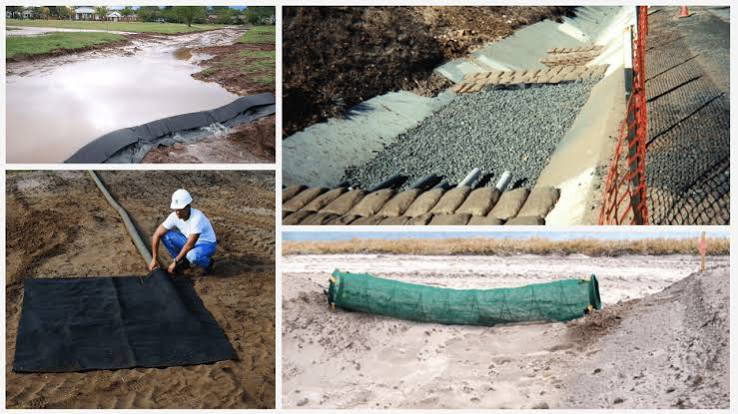
Strategic vegetation — including deep-rooted grasses, native shrubs, and ground cover — stabilizes soil naturally while improving the landscape’s overall appearance. This is often paired with erosion control blankets or mats during the establishment period.
Improved drainage systems, such as French drains, swales, and properly graded surfaces, redirect water away from vulnerable areas before it has a chance to cause damage.
Silt fencing and sediment barriers are commonly used during active construction to prevent soil displacement while a project is underway, protecting both the site and surrounding properties.
The right combination depends on soil type, slope, climate, and how the land is used. A property with heavy clay soil and seasonal flooding needs a different strategy than a sandy lot in a dry climate.
Why Choose Professional Erosion Control Services Over DIY Solutions?
It’s tempting to address visible erosion with a quick fix — a bag of mulch here, a few sandbags there. But these temporary measures rarely solve the underlying issue, and they often need to be redone every season.
Professional assessment identifies the root cause of erosion, not just the symptoms. A trained team can evaluate soil composition, water flow patterns, and slope stability to design a solution that lasts. This matters especially for properties near structures, septic systems, or shared property lines, where mistakes can create legal and financial complications.
Working with an experienced contractor also means access to the right materials and equipment. Properly installed retaining walls, for example, require adequate drainage behind them to prevent water pressure buildup — a detail that’s easy to overlook without technical expertise.
Ready to Safeguard Your Property’s Long-Term Stability?
Solving drainage and slope problems before they threaten your property’s value starts with Erosion Control designed around the specific conditions of your land. Cypress Edge Construction evaluates every site individually, considering soil type, water flow, vegetation, and structural needs to recommend a plan that holds up over time.
Whether you’re dealing with a sloped backyard that loses soil with every rainstorm, a commercial site facing drainage complaints, or a construction project that needs erosion management from day one, our team brings the technical know-how to get it right. We don’t believe in one-size-fits-all solutions, because erosion problems are never one-size-fits-all.
Addressing erosion now costs far less than repairing the damage it causes later. Foundations stay stable. Drainage systems function as intended. Landscapes stay intact instead of washing away one storm at a time.
If you’ve noticed warning signs on your property — exposed roots, sediment buildup, cracks near sloped areas, or standing water where it shouldn’t be — don’t wait for the problem to grow. Reach out to Cypress Edge Construction today to schedule a site evaluation and take the first step toward a more stable, protected property.