

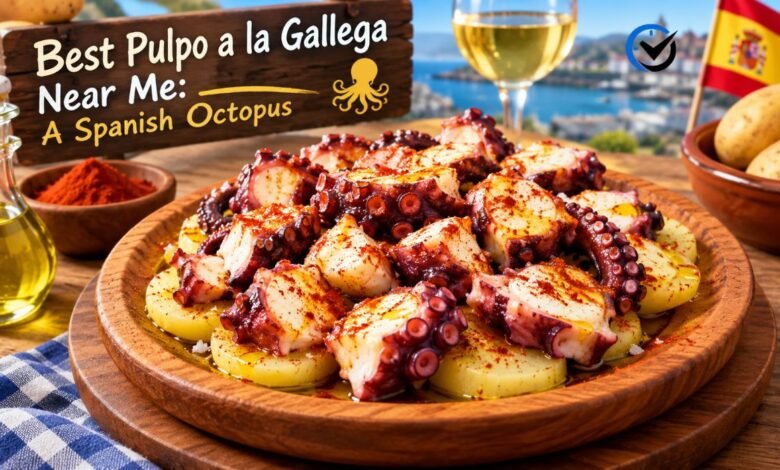
Pulpo a la Gallega is a traditional octopus dish from Galicia, a region in northwestern Spain. It is often served in slices with olive oil, paprika, and salt, sometimes on a bed of potatoes. Its ingredient list is short, but the result depends on careful cooking: the octopus should be tender, with enough flavor to stand up to its simple seasoning. If you are looking for the best Pulpo a la Gallega near you, knowing what the dish should taste and look like can help you choose a restaurant with confidence.
What Is Pulpo a la Gallega?
Pulpo a la Gallega translates to “Galician-style octopus.” In Galicia, it is also known as pulpo á feira, a name linked to the fairs and festivals where vendors traditionally prepared and served it. The dish is now found in Spanish restaurants around the world, though recipes and serving styles can vary. At its core, it features cooked octopus seasoned with olive oil, paprika, and coarse salt.
Why This Dish Is Known for Its Simplicity
The traditional version does not rely on a heavy sauce or a long list of ingredients. That simplicity makes the quality of the octopus and the cooking especially important. When it is prepared well, the seafood has a mild, clean taste, while olive oil adds richness and paprika brings warmth. Potatoes may be included, but they support the dish rather than take attention away from the octopus.
What to Expect from Its Flavor and Texture
Well-cooked octopus should be tender but still have some bite. The outer surface may be slightly firm, while the center remains soft rather than rubbery. Paprika adds a gentle smoky or sweet note, depending on the type used, and salt sharpens the natural seafood flavor. Olive oil ties these elements together without masking them. The dish should taste balanced, not overly oily, salty, or spicy.
How Restaurants Prepare It
Preparing octopus often involves cleaning it, cooking it until tender, and cutting it into serving-size pieces. Restaurants may use fresh or frozen octopus; freezing can help soften the flesh, though good cooking remains essential. Traditional cooks may simmer the octopus in water, then slice it after it has rested. Timing matters: too little cooking can leave it tough, while too much can make it soft and watery.
Signs of a Carefully Prepared Plate
Look for pieces that are evenly sliced and arranged so the seasoning reaches the surface without pooling heavily on the plate. The octopus should not look dry, shriveled, or covered in an unusually thick layer of oil. Paprika should be visible but not overwhelm the seafood. If potatoes are served underneath, they should be tender and lightly seasoned. These details cannot guarantee quality, but they can help you assess the dish.
Where to Look for It Nearby
Spanish restaurants are a natural place to begin, especially those that describe their menu as regional or tapas-style. Galician restaurants may be less common, but some Spanish kitchens feature dishes from several parts of the country. Seafood restaurants and tapas bars may also offer it as a special. Search local menus for “pulpo a la gallega,” “pulpo á feira,” or “Galician octopus,” since restaurants may use different names.
How to Compare Local Menus
Read the menu description before choosing a restaurant. A clear description usually explains whether the octopus comes with potatoes and how it is seasoned. Photos can show the portion and presentation, but they do not reveal tenderness or flavor. Recent reviews may offer useful clues if diners mention the octopus specifically. General praise for a restaurant is less helpful than comments about the dish’s texture, seasoning, and freshness.
Questions to Ask Before Ordering
If the menu is brief, ask whether the octopus is served warm or at room temperature, whether potatoes are included, and how large the portion is. You can also ask whether the kitchen prepares it in-house or serves it as part of a shared tapas plate. These questions help you understand what will arrive without expecting every restaurant to follow one exact regional recipe.
Understanding Portions and Prices
Octopus can cost more than many other tapas dishes because it is a seafood ingredient that requires careful preparation. Prices depend on the portion size, the restaurant, and local seafood costs. Check whether the listed price is for a small plate, a shared dish, or a larger entrée. If you are ordering for a group, ask how many people the serving is intended to feed before deciding how much to order.
How It Fits into a Spanish Meal
Pulpo a la Gallega is often served as a shared starter or tapas dish, though some restaurants offer a larger portion. Its savory flavor pairs well with other small plates, such as grilled vegetables, olives, or simple seafood dishes. If you are ordering several items, choose a mix of textures and flavors. A plate with potatoes can be filling, so consider the rest of the meal before adding multiple hearty dishes.
What It Is Traditionally Served With
Potatoes are a common accompaniment, often boiled and placed beneath or beside the octopus. The potatoes absorb some of the olive oil and seasoning, making them a useful part of the dish rather than a separate side. Some restaurants serve the octopus on a wooden plate, a presentation associated with traditional service. Neither potatoes nor a wooden plate is required for the dish to be enjoyable, but both may reflect a restaurant’s style.
Paprika, Olive Oil, and Salt
Paprika is central to the familiar appearance and flavor of the dish. Spanish kitchens may use sweet paprika, smoked paprika, or a blend, so the taste can differ from one restaurant to another. Quality olive oil contributes a fresh, fruity finish, while coarse salt adds small bursts of seasoning. These ingredients should complement the octopus. If one dominates every bite, the balance may be off.
Fresh or Frozen Octopus
A restaurant may use fresh or frozen octopus, and that fact alone does not tell you whether the dish will be good. Freezing can help break down the muscle fibers, which may make the octopus easier to tenderize. What matters most to the diner is the final texture, careful handling, and proper cooking. If you are curious about sourcing, ask the restaurant directly; staff can explain what they know about the ingredient.
Dining In or Ordering Takeout
The dish is often best soon after preparation, when its texture and seasoning are at their intended level. Takeout can still be satisfying, but travel time may cool the octopus and allow oil or moisture to collect in the container. If ordering delivery, check whether the restaurant packages the potatoes and seafood together or separately. When possible, picking it up yourself can shorten the time between cooking and serving.
Dietary Questions to Consider
Pulpo a la Gallega is typically made with octopus, olive oil, paprika, and salt, but restaurant versions may include additional ingredients or share kitchen equipment with other foods. Anyone with a shellfish or seafood allergy should speak directly with the restaurant about cross-contact. If you follow a specific diet, ask whether the potatoes, seasoning, or cooking process includes ingredients not listed on the menu. Avoid relying on a dish name alone.
Trying It for the First Time
If you have not eaten octopus before, this dish offers a relatively straightforward introduction because the seasoning is simple. Start with a small shared portion and taste the seafood before adding lemon or extra salt. Notice the texture as well as the flavor: properly cooked octopus should be pleasantly chewy, not tough. Sharing the plate also lets you compare it with other dishes and decide whether you would order a larger serving next time.
Making a More Informed Choice
A useful restaurant search combines several kinds of information. Look at the menu to confirm the dish is available, then check recent reviews for comments that refer to the octopus itself. Pay attention to portion size, serving details, and whether the restaurant describes the dish as a regular item or a special. If the menu changes seasonally, calling ahead can save you a trip and help confirm availability.
When the Dish Is a Special
Some restaurants prepare octopus only on certain days or offer it as a seasonal special. This may reflect supply, kitchen preparation time, or the restaurant’s menu plan; it does not automatically indicate better quality. If a listing online is old, confirm that the dish is still available before visiting. Ask whether the special is served as described on the menu and whether it is available in the portion size you want.
Beyond the Restaurant Search
Learning what goes into the dish can make a restaurant visit more enjoyable, but there is no need to judge every plate against a single version. Galician cooks and restaurants may differ in their seasoning, potato preparation, and presentation. A thoughtful kitchen can preserve the dish’s basic character while adapting to local ingredients or service. Focus on tenderness, balanced seasoning, and clear information from the restaurant.
Final Thoughts
Finding a memorable plate of Galician-style octopus starts with knowing what to expect: tender seafood, restrained seasoning, good olive oil, paprika, and perhaps potatoes. Compare current menus, look for specific comments from diners, and ask about portions or preparation when details are unclear. The best choice will depend on your location and taste, but these checks can help you find a restaurant that treats the dish with care.
Frequently Asked Questions
1. What does Pulpo a la Gallega mean?
Pulpo a la Gallega means “Galician-style octopus.” It is a traditional dish from Galicia, Spain, commonly made with cooked octopus, olive oil, paprika, and salt. Potatoes are often served with it.
2. Is Pulpo a la Gallega spicy?
Usually, it is not very spicy. Paprika gives it flavor and color, but the level of heat depends on the type used. Ask the restaurant whether its version includes hot paprika or chili.
3. Is octopus supposed to be chewy?
Octopus can have a pleasant, slight chew, but it should not be tough or rubbery. A tender texture usually indicates that it was cooked carefully. If it seems unusually difficult to bite, the preparation may be off.
4. Does Pulpo a la Gallega always come with potatoes?
No. Potatoes are common, but restaurants do not all serve them. Check the menu or ask whether they are included, especially if you are choosing the dish as a main course.
5. Is “pulpo á feira” the same dish?
The names are closely related. Pulpo á feira is a traditional Galician name for octopus prepared in the style commonly served at fairs. Restaurants may use either name for a similar dish.
6. Can I find this dish outside Spain?
Yes. Spanish restaurants and tapas bars in many countries serve Galician-style octopus. Availability varies by city and restaurant, so check current menus or call ahead before visiting.
7. What should I order with Galician-style octopus?
It works well as part of a shared meal with vegetables, olives, or other seafood dishes. If the plate includes potatoes, choose lighter sides so the meal stays balanced.
8. Is Pulpo a la Gallega safe for people with seafood allergies?
No. Octopus is seafood, so the dish is unsuitable for someone with an octopus or relevant seafood allergy. Ask the restaurant about cross-contact with other seafood before ordering.
9. How can I tell if a restaurant’s octopus dish is well prepared?
Look for tender pieces, balanced seasoning, and a reasonable amount of olive oil. Recent reviews that specifically mention texture and flavor can also help, though they cannot guarantee your experience.
10. Should I order it for takeout?
You can, but the texture and temperature may change during travel. Ask how the restaurant packs it and whether the octopus and potatoes are separated. Pickup may keep the dish warmer than delivery.
Recommended: Best Chairo Soup Near Me: Finding Authentic Bolivian Flavor





One Comment