

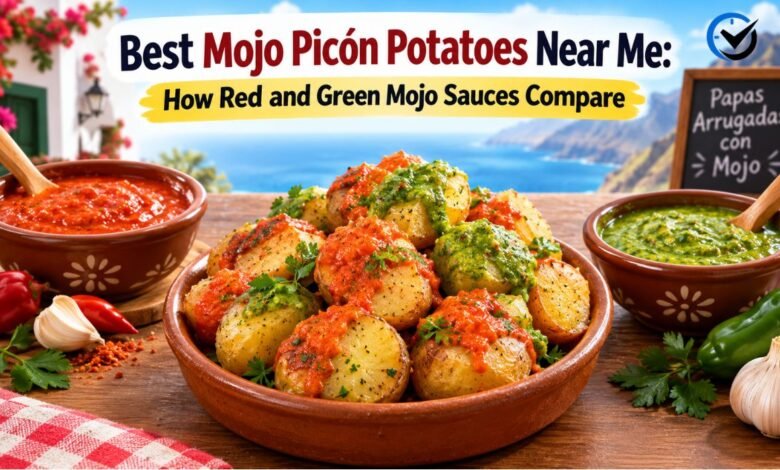
A plate of papas arrugadas—small, salt-crusted potatoes from the Canary Islands—can look simple, but the sauces served alongside it change the whole experience. Red mojo is usually bold, garlicky, and sometimes hot; green mojo tends to taste brighter and more herbal. Recipes vary by cook and restaurant, so the color offers a useful clue rather than a guarantee of exact flavor. If you are searching for Best Mojo Picón Potatoes Near Me, this guide explains how the sauces differ, what well-prepared potatoes should be like, and how to assess a restaurant’s version before ordering.
What Are Papas Arrugadas?
Papas arrugadas are potatoes cooked in their skins with plenty of salt. As they cook and the remaining water evaporates, the skins wrinkle and develop a fine salty coating. They are traditionally associated with the Canary Islands, where local potato varieties have long been part of the cuisine. The potatoes are generally served whole and eaten with their skins, accompanied by mojo sauce on the side or spooned over them. Spain’s official tourism guide describes them as small, skin-on potatoes cooked in very salty water and served with mojo verde or mojo rojo.
What Makes Mojo Picón Different?
“Mojo” refers to a family of Canary Islands sauces rather than one fixed recipe. Mojo picón is a red, savory version often made with garlic, oil, vinegar, cumin, paprika, and dried red pepper. The Spanish word picón suggests a sharp or spicy character, though the heat can range from gentle to pronounced. Some preparations are thick and concentrated, while others are looser and tangier. A restaurant may call its sauce mojo rojo or mojo picón, and the terms can overlap on menus. Ask how spicy the house version is if you prefer mild food.
How Red Mojo Tastes
Red mojo usually brings a deeper, warmer flavor than the green version. Garlic and cumin add savory notes, while paprika or red pepper gives the sauce its color and a rounded pepper taste. Vinegar provides acidity that cuts through the potato’s starchy texture, and oil carries the flavors across the palate. Chili may add heat, but not every red mojo is fiery. A balanced sauce should taste lively without being dominated by raw garlic, excess salt, or sharp vinegar. When it is served separately, try a little first so you can judge its strength.
How Green Mojo Tastes
Mojo verde is typically built around fresh herbs, often cilantro, parsley, or a combination, with garlic, oil, vinegar, and sometimes cumin or green pepper. Its flavor tends to be fresh, grassy, and tangy, with less of the roasted or dried-pepper character found in red mojo. The exact herb matters: cilantro gives a distinctive, citrus-like edge, while parsley is milder and more familiar to many diners. Green sauce is not automatically mild, since garlic and vinegar can still make it sharp. Ask which herbs the restaurant uses if you have a strong preference.
Red and Green Mojo: The Main Differences
The clearest difference is the ingredients that lead each sauce. Red mojo centers on red pepper and spices; green mojo gets its color and aroma from herbs. That gives red sauce a warmer, often more robust profile and green sauce a fresher, more plant-forward one. Both can be oily, garlicky, and acidic, and either may be mild or intense depending on the recipe. Neither color alone tells you how much chili a cook has used. If you want a useful comparison, taste each sauce on a plain potato rather than judging by color or aroma alone.
Which Sauce Goes Best With Potatoes?
Both sauces work well with papas arrugadas because their acidity and seasoning balance the potato’s soft, starchy center and salty skin. Red mojo is a natural choice if you like pepper, cumin, and a fuller savory taste. Green mojo suits diners who want herbal freshness or a sharper contrast. Some restaurants serve both, which is ideal for comparing them in one sitting. There is no single required pairing: the best choice depends on your taste and the sauce recipe. For a first order, try each in a small amount before adding more to the plate.
What Well-Cooked Potatoes Should Be Like
Good papas arrugadas should be tender inside without falling apart. Their skins should remain intact, with visible wrinkles and a light salt crust rather than a thick, gritty layer. The size of the potatoes affects the experience: smaller ones are easy to eat whole and provide more skin in each bite, while larger ones have a softer, more substantial center. A plate should arrive warm, since cool potatoes can make the fat in the sauce feel heavy. If the potatoes seem waterlogged, undercooked, or excessively salty, the preparation may not be at its best.
How to Find a Restaurant Serving Them
Start with menus from Canarian, Spanish, or tapas restaurants in your area, then search specifically for “papas arrugadas,” “wrinkled potatoes,” or “Canary Islands potatoes.” The dish may be listed under appetizers, tapas, or side dishes, and not every restaurant that serves Spanish food offers it. Photos and recent menu details can help, but confirm availability directly because restaurants change menus and may prepare the potatoes only on certain days. If you are comparing nearby options, look for a place that identifies both sauces or describes its mojo as house-made. That detail helps you ask more informed questions.
Questions to Ask Before Ordering
A short question can clarify whether the dish suits your taste. Ask whether the potatoes are boiled in their skins, whether the mojo is made in-house, and whether the red version is spicy. If only one sauce is offered, ask whether it is closer to a pepper-based red mojo or a herb-based green mojo. You can also request sauce on the side, which lets you control the amount and taste the potatoes first. These questions are especially useful when a menu uses a broad name like “mojo potatoes” without explaining the recipe or heat level.
How to Judge a Restaurant’s Mojo
A good mojo should complement the potatoes instead of masking them. Look for a clear flavor balance: pepper or herbs should come through, garlic should not overpower every bite, and vinegar should add lift without making the sauce harsh. Texture varies, so a smooth sauce is not necessarily better than a slightly coarse one. House-made sauce may taste fresher, but that claim alone does not guarantee quality. When reviews mention the potatoes and sauce separately, pay attention to those specifics rather than general praise. A useful review explains whether the potatoes were tender, the seasoning balanced, and the sauce served fresh.
Ordering Tips for First-Time Diners
If this is your first taste, order the potatoes with both sauces when available. Start with a bite of potato on its own, then add a little red mojo and a little green mojo to separate their flavors. This makes it easier to notice the salt, the potato’s texture, the herbs, and the pepper. If you are sensitive to spice, ask for the red sauce on the side and check its heat before dipping. Sharing the dish also works well because papas arrugadas are commonly served as a small plate or accompaniment rather than a full meal.
Final Thoughts
The choice between red and green mojo comes down to the flavor you want: red sauce often brings pepper and spice, while green sauce emphasizes herbs and freshness. Both can be excellent with properly cooked papas arrugadas, and recipes differ from one kitchen to another. When looking for a local version, check the menu for the dish’s Canary Islands name, ask how the sauces are prepared, and request them on the side if you are unsure. Trying both sauces on the same warm potato is the simplest way to find your favorite.
Frequently Asked Questions
1. What are papas arrugadas?
Papas arrugadas are small potatoes cooked in their skins with a generous amount of salt. The cooking method leaves the skins wrinkled and lightly coated. They are commonly served with mojo sauces and can be eaten skin-on.
2. Is mojo picón always spicy?
No. Mojo picón often contains red pepper or chili, but its heat level varies by recipe. Some versions are gently warm, while others have a stronger kick. Ask the restaurant how spicy its sauce is before ordering.
3. What is the difference between mojo rojo and mojo picón?
The names can overlap. Mojo rojo generally describes red mojo, while picón signals a sharper or spicier style. Restaurants may use the terms differently, so asking about ingredients and heat is more reliable than assuming the labels mean the same thing everywhere.
4. Is mojo verde milder than red mojo?
Often it tastes fresher and less pepper-forward, but it is not always milder. Garlic, vinegar, and green pepper can give it a strong bite. The recipe determines the intensity, so taste a small amount first if you are sensitive to sharp flavors.
5. Which mojo sauce is traditionally served with papas arrugadas?
Both red and green mojo are served with papas arrugadas. The pairing depends on the restaurant and local or family recipe. Many places offer both sauces so diners can choose or compare them.
6. Can I eat the potato skins?
Yes. Papas arrugadas are cooked and served with their skins, which are part of the dish. The skin should be tender enough to eat, though you can peel it if you prefer.
7. Are papas arrugadas vegetarian or vegan?
The potatoes and many traditional mojo recipes are plant-based, but ingredients vary. Ask whether the sauce contains animal products and whether the potatoes are cooked separately from meat or seafood if this matters to your diet.
8. How can I find papas arrugadas near me?
Check menus at Canarian, Spanish, and tapas restaurants. Search for “papas arrugadas,” “wrinkled potatoes,” or “mojo potatoes,” then call to confirm the dish is currently available. Menu listings can be outdated.
9. Should the sauce be served on the potatoes or on the side?
Either presentation can work. Sauce on the side lets you control the amount and compare flavors; sauce over the potatoes provides a more seasoned bite. Ask for it separately if you are unsure about the spice level.
10. What should I order with mojo potatoes?
They work as a tapas plate or side dish alongside grilled vegetables, fish, or meat. For a lighter meal, share the potatoes with another small plate. Consider the sauce’s intensity when choosing other dishes so the flavors complement one another.
Recommended: Best Eating Joints Near Me: How to Find Hidden Local Gems





One Comment