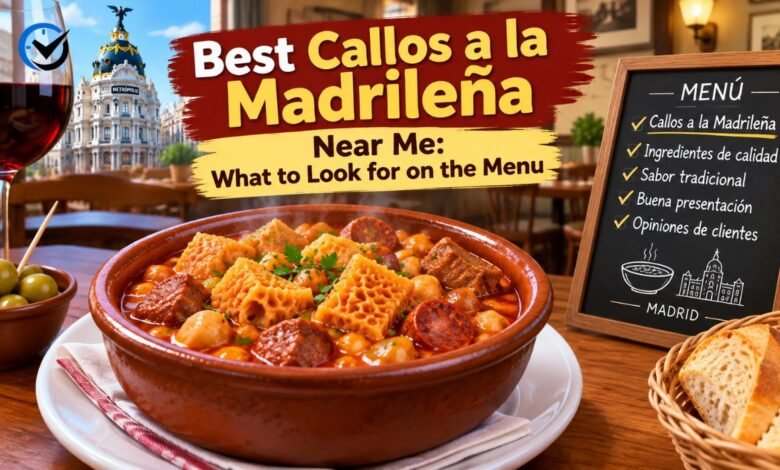
When looking for the best callos a la madrileña near me, it helps to know what the dish is and how it is usually prepared. This traditional Madrid-style stew is built around beef tripe, slowly cooked until tender in a rich sauce. Many versions also include chorizo, morcilla, or ham, which add smoky, savory flavors. Recipes vary by restaurant and family, so the name alone does not tell you exactly what will arrive at the table. This guide explains what to look for on a menu, how to assess a restaurant’s version, and what to consider before ordering, including portion size, ingredients, spice, and dietary needs.
What Is Callos a la Madrileña?
Callos a la madrileña is a hearty Spanish stew associated with Madrid. Its main ingredient is callos, or tripe, which is the edible lining of a cow’s stomach. The tripe is cleaned, cut into pieces, and simmered until soft enough to eat comfortably. It is served in a thick, savory sauce, often with pork sausage and seasonings. The result is a substantial dish with a tender, slightly chewy texture and deep flavor.
The stew is often linked with Madrid’s traditional taverns and home cooking. It suits cool weather and leisurely meals because it takes time to prepare and is typically served hot. Although it is known as a local specialty, restaurants outside Spain may also feature it on Spanish or regional menus. A menu description can help you tell whether a restaurant makes it in a Madrid-inspired style or offers a variation with its own ingredients.
Ingredients to Look for on the Menu
A menu may list tripe alongside chorizo, morcilla, or ham. Chorizo is a cured pork sausage seasoned with paprika, while morcilla is Spanish blood sausage. Ham can contribute saltiness and a rich, cured flavor. These ingredients are common in many versions, but not every restaurant uses all of them. Some cooks keep the recipe simple, while others add a broader mix of meats and aromatics.
The sauce often includes ingredients such as onion, garlic, paprika, and tomato, though proportions and methods differ. Paprika can bring warmth and color without making the dish sharply spicy. A restaurant may also use stock, herbs, or other seasonings to build the stew’s flavor. If the menu lists only “tripe stew,” ask whether it is the Madrid-style preparation and what else is included. That question can clarify both the taste and the ingredients before you order.
How the Stew Should Look and Taste
A well-made serving should arrive hot, with tender pieces of tripe in a flavorful sauce. The tripe should not be tough or rubbery, though it may retain a gentle chew. Its texture is different from that of stewed beef, so first-time diners should expect something soft and springy rather than smooth or flaky. Sausage pieces, when included, should taste integrated with the sauce instead of dominating every bite.
The sauce is usually savory and full-bodied, with a balance of seasoning and the flavors released by the meat during slow cooking. It can be rich without being excessively oily. Paprika may add a mild, warm note, but heat levels vary, so do not assume every version is spicy. A menu that describes the stew as slow-cooked or simmered may offer a useful clue about the cooking method, but the best way to understand a restaurant’s version is to ask how it prepares the dish.
Traditional Preparation and Restaurant Variations
There is no single universal recipe that every restaurant must follow. Ingredients can change according to local availability, family tradition, or the cook’s preferences. One kitchen may include both chorizo and morcilla; another may use one sausage or add ham. The sauce may be more tomato-forward in one version and more focused on paprika, stock, and meat in another. These differences do not automatically make a dish inauthentic.
The name points to a Madrid-style tradition, but a restaurant’s interpretation may reflect its own approach to Spanish cooking. Rather than judging a version by a strict checklist, look for a clear description and ask about the ingredients that matter to you. If you want a more traditional experience, seek out a Spanish restaurant that identifies the dish as a specialty or explains its preparation. A knowledgeable server should be able to describe the recipe without claiming that every Madrid kitchen makes it the same way.
What to Check on the Menu
Read the description closely before ordering. Look for an explicit mention of tripe and note whether the menu names chorizo, morcilla, ham, or other meats. Some restaurants list only the dish’s name, while others provide a fuller ingredient description. If the menu does not explain the sauce or the portion size, ask your server. A short conversation can help you decide whether the stew suits your tastes and whether it is substantial enough to share.
Check how the dish is categorized, too. It may appear under stews, traditional specialties, tapas, or main courses. That placement can offer a rough idea of serving size, though restaurants vary. If you are ordering it as a small plate, ask whether it is intended for one person or for the table. If it is listed as an entrée, find out whether it comes with bread, potatoes, or another side. These details make it easier to plan a complete meal and avoid ordering too much or too little.
Choosing a Restaurant for Callos
A good restaurant choice starts with a menu that is specific enough to help you understand what you are ordering. Look for Spanish dishes described with care, not just a long list of unfamiliar names. Staff who can explain the stew’s ingredients, preparation, and serving size are also useful, especially if you have never tried tripe. A restaurant’s focus on Spanish food may provide context, but it does not guarantee that every dish will match your preference.
Recent customer comments can give you clues about service, temperature, portion size, and consistency. Focus on reviews that discuss the actual food rather than relying only on a high overall rating. If several diners mention that the stew is tender, arrives hot, or tastes strongly of sausage, those details may help you decide if it sounds appealing. Reviews are personal impressions, not proof of a fixed recipe, so use them alongside the menu and, when possible, a direct question to the restaurant.
Flavor, Texture, and First-Time Ordering
If you are new to tripe, begin with a shared portion if the restaurant offers one. That lets you sample the texture without committing to a large serving. The tripe’s mild flavor absorbs the seasoning and sauce, while sausage and cured ham may make the overall dish taste richer and saltier. Bread is useful for soaking up the sauce, and it can make a small serving feel more complete.
Consider what you usually enjoy. If you like slow-cooked dishes, savory sauces, and pork sausage, the stew may suit you. If you prefer lean, lightly seasoned meals or dislike organ meats, it may be less appealing. Ask whether the restaurant can describe the tripe’s texture and the sauce’s intensity. Avoid asking the kitchen to make major changes if the stew is prepared in advance; a slow-cooked specialty may not be easy to alter once it is ready.
Portion Size and What to Serve With It
Callos a la madrileña can be filling because it combines tripe, sauce, and often several pork ingredients. A small portion may work as a shared starter, while a larger bowl can serve as a main course. Portion sizes differ across restaurants, so ask before deciding whether to order other dishes. If you are dining with a group, sharing the stew alongside lighter plates can be a practical way to try it without making the entire meal too heavy.
Bread is a common and convenient accompaniment because it pairs well with the sauce. Some restaurants may offer potatoes, rice, or other sides, but these are not guaranteed to come with the stew. Ask what is included and whether sides are ordered separately. For a balanced meal, you could pair a shared portion with a salad or vegetables, depending on the rest of the menu. The goal is to choose sides that complement the stew without covering up its flavor.
Dietary Needs and Ingredient Questions
This dish is generally not vegetarian because it contains tripe and often pork products. It may also be unsuitable for people who avoid specific meats or animal-derived ingredients. Even when a menu lists the main components, the sauce may contain stock or additional meats. If you have a dietary restriction, allergy, or religious requirement, tell the restaurant clearly and ask staff to confirm every relevant ingredient with the kitchen.
People monitoring sodium should ask about the sausages, ham, and seasoning. Cured meats can make the stew quite salty, and the restaurant may not be able to adjust a batch that has already been prepared. If you are sensitive to spice, ask whether the paprika is mild or whether the kitchen adds hotter seasonings. For a food allergy, do not rely on assumptions based on the dish’s name. Confirm the ingredients and preparation method directly before ordering.
Finding Callos Near You
To find nearby options, search restaurant menus for the full dish name as well as terms such as Madrid-style tripe stew or Spanish tripe. Some places may use a shortened name, so checking the menu itself is more useful than relying on a search result snippet. Search maps or local restaurant directories, then compare the dishes offered, hours, and customer comments. If a restaurant does not show the stew online, call and ask whether it is currently available.
Availability may change from day to day. A restaurant might serve the dish only on certain days, prepare a limited batch, or remove it from the menu temporarily. Call ahead if you are making a special trip, and confirm the serving size and ingredients while you are on the phone. This is especially helpful for smaller Spanish restaurants, where a traditional stew may be a rotating special rather than a permanent menu item.
Ordering for Takeout
Callos is a stew, so it may travel better than crisp or delicate dishes, but packaging and travel time still matter. Ask whether the restaurant packs the sauce and tripe together and whether the portion is large enough for one meal. A longer trip can affect temperature and texture, so choose a nearby restaurant or pick up the order promptly. Follow any reheating instructions provided by the restaurant, and heat it thoroughly before serving.
If you are ordering for a group, ask whether the restaurant offers family-sized portions or separate containers. Keep in mind that a stew can thicken as it cools, so the texture at home may differ slightly from a freshly served bowl. Bread or sides may need to be ordered separately. Confirm these details before checkout to avoid missing a key part of the meal.
Final Thoughts
Finding callos a la madrileña nearby is easier when you know what the dish contains and what questions to ask. Look for tripe, a slow-cooked preparation, and a clear description of any sausages, ham, or seasonings. Menus and recipes vary, so the most useful signs are a restaurant’s willingness to explain its version and details that match your preferences. Check portion size, confirm availability, and ask about dietary needs before ordering. Whether you try a small shared serving or make it the center of your meal, understanding the menu helps you choose with confidence.
Frequently Asked Questions
1. What is callos a la madrileña?
It is a Madrid-style Spanish stew made mainly with beef tripe. Many versions include chorizo, morcilla, ham, and a seasoned sauce, though recipes vary between restaurants and cooks.
2. What does callos a la madrileña taste like?
It is savory and rich, with a tender, slightly chewy tripe texture. Sausage and cured ham can add smoky, salty notes, while paprika and other seasonings flavor the sauce.
3. Is callos a la madrileña spicy?
Usually, paprika adds warmth and color rather than strong heat, but recipes differ. Ask the restaurant about its seasoning if you are sensitive to spice.
4. Is callos a la madrileña made with pork?
Many versions include pork products such as chorizo, morcilla, or ham. Ingredients vary, so check the menu or ask the restaurant before ordering.
5. Is callos a la madrileña suitable for vegetarians?
No. The dish is based on tripe and often contains pork. A restaurant may have other Spanish dishes that better suit a vegetarian diet.
6. How is tripe prepared for this stew?
The tripe is cleaned, cut into pieces, and simmered until tender. It is then cooked with the sauce and other ingredients so it can absorb their flavors.
7. What should I eat with callos a la madrileña?
Bread is a popular accompaniment because it works well with the sauce. Depending on the restaurant, potatoes, rice, or vegetables may also be available.
8. Is callos a la madrileña usually a main course?
It can be served as a main course or as a shared dish, depending on the restaurant and portion size. Ask how large the serving is before ordering.
9. Can I order callos a la madrileña for takeout?
Often, yes, but availability depends on the restaurant. Ask whether it is being served that day and how it is packaged for transport.
10. How can I find callos a la madrileña near me?
Check nearby Spanish restaurant menus using the dish’s full name and related terms such as “Madrid-style tripe stew.” Call ahead to confirm availability and ingredients.
Recommended: Best Pollo al Chilindron Near Me: How to Choose a Great Restaurant