

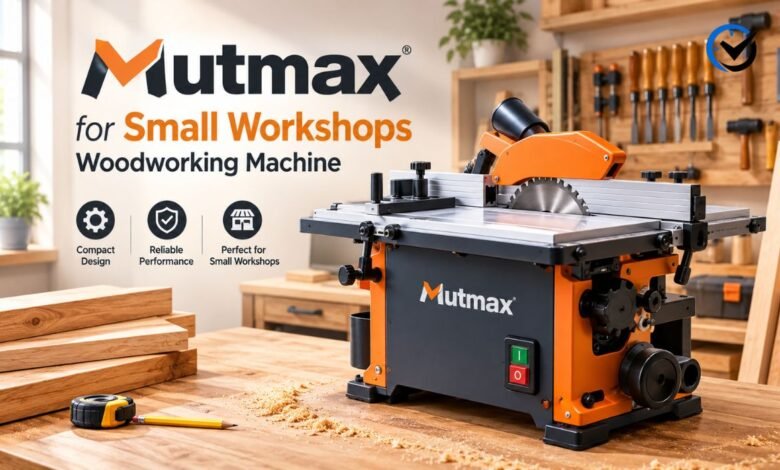
A small woodworking shop needs equipment that matches its work, floor space, power supply, and budget. The name Mutmax is associated with woodworking and furniture machinery, but buyers should confirm the exact machine, configuration, and seller details before making a decision. The right choice depends less on a brand name alone than on what the shop needs to produce. This guide explains how to assess a woodworking machine for a small workshop, what to ask before buying, and how to plan for safe, reliable use.
What the Name Refers To
Mutmax Makina is described in industry listings as a Turkish maker of woodworking and furniture machinery. Available listings include references to wood lathes and copying lathes, but online information does not provide a complete, independently verified catalog of current models and specifications. That makes it important to distinguish confirmed product details from general descriptions or reseller claims. Before treating any machine as part of the current range, ask the manufacturer or an authorized seller to confirm its model name, production status, and technical documents.
What Small Workshops Need from a Machine
A small shop may make furniture parts, turned legs, decorative pieces, repair components, or short production runs. Each job places different demands on machinery. A copying lathe, for example, is intended to reproduce a profile from a template or sample, while other machines may serve different shaping or finishing tasks. Start by listing the workpieces you expect to make, their dimensions, materials, and likely production volume. A machine is useful when its working capacity and function fit those needs. Buying extra capacity that rarely gets used can take up space and money better spent on extraction, tooling, or training.
Matching the Machine to the Work
Write down the steps involved in making a typical product, from preparing stock to final sanding. Identify where accuracy, repeatability, or speed currently limits your work. If you often make multiple turned components with the same profile, a copying system may reduce repeated manual shaping. If your work changes from piece to piece, a more flexible setup may be preferable. Consider the size of the largest part you expect to process, not only the average size. Also check whether the machine can handle the material types you use, such as solid wood or specific engineered panels. Do not assume compatibility without written confirmation.
Understanding Copying and Turning Operations
A copying lathe generally uses a reference profile to guide the production of a similar shape on another workpiece. This can help a craftsperson make matching components for chair legs, furniture details, or other turned parts. The process still depends on sound setup: the template must be accurate, the stock properly secured, and the cutting tools suitable for the material. A copied shape is only as consistent as its reference and operating procedure. Ask the seller to explain how the template is fitted, what adjustments are available, and what tolerances can reasonably be expected. A demonstration using a representative workpiece can reveal more than a brochure.
Evaluating Size and Workshop Layout
Measure the machine’s full footprint, including space needed to load stock, operate controls, change tools, and remove finished parts. Small workshops often underestimate clearance around long workpieces. Check the floor’s ability to support the machine, the route from the delivery point to its final position, and whether doors or stairs create access problems. Leave room for dust collection hoses and safe movement around the work area. A machine that fits on paper may still obstruct a walkway or force awkward handling. Sketch the shop layout before ordering and include space for stock storage, worktables, and emergency access.
Power, Dust, and Other Site Requirements
Confirm the required voltage, phase, frequency, motor load, and connection type from the machine’s documentation. Electrical standards vary by country, so a machine configured for one market may need an approved electrical adjustment elsewhere. Have a qualified electrician assess the supply before installation; improvised adapters or undersized circuits can create hazards and interruptions. Ask how dust and chips are collected, what extraction flow is required, and whether ports or guards are included. Wood dust can affect breathing, visibility, and machine performance. Plan extraction as part of the purchase rather than treating it as an accessory to add later.
Capacity, Accuracy, and Controls
Ask for measurable capacity information, such as maximum workpiece length and diameter, cutting range, spindle speed, and permissible material sizes, where applicable. Request the information in writing and confirm the units. Accuracy claims need context: ask how repeatability is measured, under what conditions, and whether results depend on operator setup or material variation. Inspect the controls and learn which adjustments are manual. A simple control system can be practical for a small shop if operators understand it and the machine performs the required tasks. More advanced controls may require training, maintenance support, or software that should be included in the cost calculation.
Comparing Total Cost and Value
The purchase price is only one part of ownership. Include shipping, customs charges, electrical work, installation, extraction, tooling, operator training, and routine maintenance. Ask which components are included and which must be purchased separately. Get written details about warranty duration, coverage, service response, and the process for obtaining replacement parts. Compare these costs with the value of the time saved, the volume of work expected, and the cost of outsourcing similar operations. A lower initial price may not be economical if parts are difficult to obtain or support is unavailable. Conversely, a more capable machine may not justify its cost if the shop rarely uses it.
Safety and Operator Training
Before operating any woodworking machine, read its manual and follow the manufacturer’s safety instructions. Confirm that guards, emergency stops, switches, and other safety features are present and functional. Operators should understand how to secure stock, set tools, keep hands clear of cutting zones, and stop the machine if vibration or unusual noise occurs. Wear suitable eye and hearing protection, and use dust control appropriate to the material and process. Avoid loose clothing and jewelry near rotating parts. Training should include setup, normal operation, tool changes, cleaning, and emergency response. Never bypass a guard or safety device to make a task faster.
Maintenance and Day-to-Day Use
A consistent maintenance routine helps a shop spot problems before they interrupt work. Follow the manual’s schedule for cleaning, lubrication, inspection, and adjustments. Keep the machine free of accumulated dust, and check that moving parts, belts, electrical connections, and guards remain in good condition. Cutting tools should be appropriate, sharp, and installed as instructed; dull or unsuitable tools can produce poor finishes and place added strain on equipment. Record maintenance dates and any changes in vibration, noise, accuracy, or performance. If a fault appears, stop work and consult a qualified technician or the supplier instead of making uncertain repairs.
Questions to Ask Before Buying
Ask the seller to identify the manufacturer, exact model, year or production status, and machine condition. Request a complete specification sheet, operating manual, wiring information, and a list of included accessories. Confirm whether a demonstration is available and whether it can use material similar to yours. Ask where service is provided, how parts are ordered, and whether technical support is available in a language you can use. Clarify shipping terms, installation responsibilities, warranty exclusions, and payment conditions in writing. If you are buying through a marketplace, independently verify the seller’s identity and confirm that the machine shown is the one described in the documents.
Final Thoughts
A woodworking machine can help a small workshop produce repeatable parts and manage certain tasks more efficiently, but the purchase needs careful checking. Mutmax is linked with woodworking machinery, while publicly available product details may be incomplete or vary between listings. Treat each model as a separate decision: verify its specifications, assess the shop’s power and space, confirm safety and service support, and compare the full cost of ownership. A clear list of jobs and requirements will help you choose equipment that fits the work you actually do. A demonstration and written documentation are especially valuable when product information is limited.
Frequently Asked Questions
1. What is Mutmax in woodworking?
Mutmax is associated with Mutmax Makina, a company described in industry listings as working in woodworking and furniture machinery. Online listings mention equipment such as wood or copying lathes, but available details may not establish a complete current product range. Verify any specific model with the manufacturer or seller.
2. Are Mutmax machines suitable for small workshops?
Suitability depends on the individual machine and the shop’s work, space, electrical supply, and budget. Check the machine’s footprint and capacity against the parts you plan to make. Also confirm that installation, extraction, training, and service support are practical for your location.
3. What does a copying lathe do?
A copying lathe uses a template or reference profile to guide the shaping of similar workpieces. It can be useful when a shop needs repeated turned shapes. The final result depends on the accuracy of the reference, secure setup, suitable tooling, and consistent operating practice.
4. What should I verify in a machine listing?
Confirm the exact model, specifications, condition, included accessories, and seller identity. Request the manual, electrical requirements, warranty terms, and service information. If the listing lacks clear details, ask for written answers and a demonstration before committing to a purchase.
5. Can one machine make every type of wooden part?
No single machine should be assumed to handle every woodworking task. Machines are designed for particular operations and workpiece sizes. Review the required process for each product and ask whether the machine can perform those operations safely and within its documented capacity.
6. How can I tell whether a machine will fit my shop?
Measure the machine and allow space for stock loading, operator movement, maintenance, dust extraction, and finished parts. Check delivery access and floor support as well. A scaled layout of the shop can reveal clearance issues before the equipment arrives.
7. Why is dust extraction important?
Wood dust and chips can reduce visibility, collect around moving parts, and affect air quality. Effective extraction helps control debris and keeps the work area cleaner. Ask the seller what extraction connection or airflow the machine requires, then plan a compatible system.
8. What safety checks should an operator make?
Operators should inspect guards, emergency stops, switches, and workholding before use. They should confirm that stock is secured and tools are correctly installed. Follow the manual, wear suitable protective equipment, and stop the machine if it behaves unusually.
9. What costs should I include beyond the purchase price?
Consider transport, taxes or customs, electrical installation, dust extraction, tooling, training, maintenance, and replacement parts. Warranty and service terms also affect long-term cost. Ask the seller to state clearly what is included in the quoted price.
10. Should I buy a machine based only on an online description?
No. Listings may omit important specifications or describe machines inconsistently. Request current documentation, verify the seller, and arrange a demonstration when possible. Compare the written details with the actual machine before making a decision.
Recommended: Piçada: Understanding Language, Context, and Regional Meaning





One Comment