

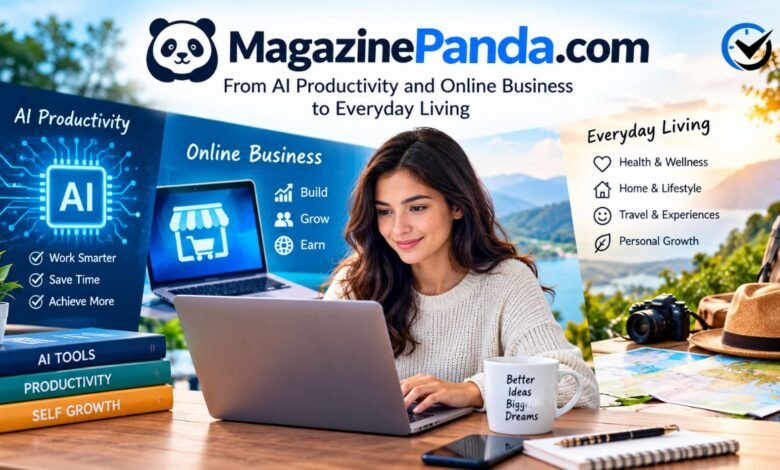
MagazinePanda.com is a general-interest publishing website with content that spans digital work and everyday life. Its indexed pages include articles on using artificial intelligence for business productivity, building an online business, understanding debt consolidation, planning family travel, and improving a home on a budget. That combination gives the publication a broad identity. Readers may arrive with a work question and discover a household topic, making its subject range more useful to understand than any single category label.
This guide explains what the platform covers, how its main subjects fit together, and what readers should consider when using its articles. The aim is to give a clear picture of the website without assuming that a wide topic range proves expertise in every field. For new visitors, the practical questions are straightforward: what can you read, which articles suit your needs, and how can you turn general information into a sensible next step?
What the Website Covers
The platform follows a digital magazine format rather than focusing on one narrow subject. Its category pages include technology, business, digital marketing, finance, travel, lifestyle, home improvement, education, entertainment, and several other areas. These labels help explain the site’s scope, although a category name alone does not reveal how frequently it receives new articles. The most useful way to understand the publication is to examine individual topics. An article on automotive sales technology serves a different purpose from a family travel guide or a kitchen makeover feature. This variety suggests an audience with mixed practical interests, rather than readers seeking a specialist publication devoted entirely to one profession or hobby. The subject range is broad enough to reward browsing, but a focused question still helps readers decide where to begin.
Similar Names and Different Websites
Search results can make the publication’s identity confusing because other web addresses use similar versions of the Magazine Panda name. Some add a word before the name, while others separate its words with a hyphen or use a different ending. A shared name does not establish shared ownership or an editorial relationship. When checking information about the publication, pay attention to the exact website address and the page where a claim appears. A review of a similarly named platform may describe different content or features. This distinction matters when reading descriptions of magazine downloads, subscriptions, publishing services, or contact details, since those descriptions should be checked against the particular website being discussed.
AI for Business Productivity
One article listed on the site addresses using AI for business productivity. This places artificial intelligence within its practical business coverage, alongside broader digital topics. For readers, the useful question is which specific task a tool could help complete. Business tasks worth evaluating include preparing a first draft of a customer email, organizing meeting notes, or sorting ideas for a project. A useful guide should explain the task, the information needed, and the checks required afterward. If you try an idea, begin with a small task and compare the time spent with your usual method. Include review time in that comparison, since a fast draft can still need substantial correction. Treat speed as one measure of usefulness alongside accuracy and suitability. Keep the first trial simple enough to judge fairly, and compare results across a few attempts before changing a regular process.
Building an Online Business
Another article listed on the site focuses on building a strong online business. That subject connects naturally with the publication’s business and digital marketing categories, but readers should distinguish broad guidance from a plan suited to their own circumstances. A small service business, an online shop, and a subscription publication face different costs and customer expectations. Useful business reading should help clarify what you offer, who needs it, and how you will deliver it consistently. For example, a shop owner might need better product information before investing in another promotional channel. A freelancer might benefit more from a clear service description and response process. Use an introductory article to identify your next question, then examine that question in detail. A practical plan needs attention to customer demand, operating costs, support, and the work required after launch. A useful starting point is a customer problem you can describe in one plain sentence.
Technology at Work
The technology coverage extends beyond general discussion of AI. Article titles include automotive AI in dealership sales and Microsoft Ink, showing a range from industry workflows to digital writing tools. These subjects offer different entry points for readers. Someone interested in a workplace system may want to understand how it changes a daily task, while someone exploring digital ink may care about device compatibility and ease of use. Read technology articles with your own setting in mind. A feature that helps a large sales team may have little value for an individual worker. Likewise, an appealing software capability may depend on equipment you do not own. The useful detail is how a tool fits a real task, with its requirements made clear. Check which device, software version, or business setting the article discusses before deciding whether the information applies to your own work.
Finance and Everyday Money Questions
The finance category lists an article about debt consolidation loans. This is a concrete example of the publication’s everyday money content and a reason to read beyond broad category descriptions. Financial explainers can introduce terms and questions, but their relevance depends on the reader’s location and circumstances. Lending rules, available products, fees, and eligibility requirements vary. When reading a general article, check whether it identifies the country or market it discusses and whether important conditions are explained. A clear definition is helpful, but it should leave you able to ask more precise questions rather than feeling that every situation has the same answer. Use current information from the relevant provider or official authority when considering an actual financial decision.
Home Projects and Practical Living
The everyday living side includes articles about budget kitchen makeovers, creating an urban balcony space, and handling unexpected home renovation problems. These topics give the publication a practical household dimension alongside its work-related content. Readers can use this kind of material to explore ideas before deciding on a project. The useful next step is to compare an idea with your available space, spending limit, and maintenance needs. A photograph or description may be appealing, but measurements, materials, and installation demands determine whether it fits. For a small improvement, consider the problem you want to solve first, such as poor storage or an uncomfortable seating area. That approach gives a makeover article a purpose and helps separate a workable change from an attractive suggestion. For rented homes, check what changes are allowed before making plans that involve permanent fittings.
Travel and Family Planning
The travel category lists a guide to family-friendly destinations for traveling with children, alongside material about Goa. These subjects show how the publication reaches beyond digital work into leisure planning. A destination article can help readers discover possibilities, but the details that make a trip workable need closer attention. Families may need manageable travel times, suitable accommodation, convenient transport, and activities that match their children’s ages. Readers from different countries will also have different starting points and entry requirements. Treat travel features as an early stage of planning, then check current details for your intended dates. Prices, opening hours, and transport arrangements can change. The strongest use of a destination guide is to narrow your options and identify what you still need to confirm. Build room for rest into family plans rather than judging a destination only by its attractions.
Finding and Evaluating Articles
MagazinePanda.com has category pages and a news page that can help readers explore its content by subject. Start with the area closest to your question, then choose articles by their specific titles rather than assuming every item in a category will be relevant. Once you open an article, look for a clear purpose, concrete examples, and enough detail to understand its claims. A date helps establish context, especially for software, travel, and financial topics. An author’s relevant experience and an explanation of where factual information comes from can also help you assess the piece. Apply these checks article by article. A publication’s broad scope makes it convenient to browse, but the value of a particular guide depends on how well it answers the question that brought you there.
Final Thoughts
MagazinePanda.com combines subjects that many readers encounter across both work and home life. AI productivity and online business sit alongside personal finance, family travel, and household improvements, giving visitors several ways to explore the publication. Its usefulness depends on finding articles that match a clear need and reading their details carefully. The broad mix can help you discover a topic or frame a question, while more specific decisions may require further information. For new readers, a sensible starting point is one article linked to a real task, followed by a check of what you can apply and what remains uncertain.
Frequently Asked Questions (FAQs)
1. What is MagazinePanda.com?
It is a general-interest website publishing content across technology, business, finance, travel, home improvement, and other subjects. Its category pages show a digital magazine format with articles grouped into categories. The range allows readers to explore practical topics connected to both work and personal interests.
2. Does it cover AI?
AI is one part of its content mix. Other titles also cover online business, debt consolidation, family travel, kitchen makeovers, and other subjects. Readers interested in AI can begin with the technology coverage, while the wider category structure offers several other areas to explore.
3. What is AI productivity?
The topic concerns using AI to assist with business tasks. A useful way to approach it is to identify one task, try a suitable method, and review the result. Judge the outcome by the total effort required, including checking and editing, rather than draft speed alone.
4. Is business content beginner-friendly?
An introductory business article can help beginners understand a topic and identify questions for further research. Its usefulness depends on how clearly it explains the subject. Read with your own business idea in mind, since selling products and providing services require different planning and daily work.
5. What home topics appear?
Listed titles include budget kitchen makeovers, balcony improvements, and unexpected issues during renovation. These can provide starting ideas for household projects. Before applying a suggestion, consider your space, materials, spending limit, and the work involved so the idea fits your actual situation.
6. Does it cover family travel?
Its travel category includes a title about family-friendly destinations for trips with children. Such content can help families explore potential places to visit. The final choice still requires checking practical details, including transport, accommodation, suitable activities, and current arrangements for the dates you plan to travel.
7. Is its content relevant worldwide?
Relevance varies by subject and by the setting described. A general business concept may travel well, while lending information, destination advice, and product availability can depend on location. Check whether an article identifies its intended market before using details that might differ where you live.
8. How do I find articles?
Begin with the category closest to your interest, such as technology, finance, travel, or home improvement. Read the article titles to narrow your choice. A specific question makes browsing easier, because it helps you recognize which piece is likely to provide the detail you need.
9. Are similar websites connected?
A similar name alone does not establish a connection. Websites may add words, use hyphens, or have different address endings. Check the exact address and the publication’s own information before treating another site’s articles, services, or contact details as part of the same platform.
10. How can readers assess quality?
Consider whether it answers a clear question, explains its claims, and gives details you can understand and assess. Check the date when timing matters. A useful article should help you take a practical next step or identify what you need to investigate further.
Recommended: Decker Nilsson Sixx: Nikki Sixx’s Son, Family, Early Life, and Career





One Comment