

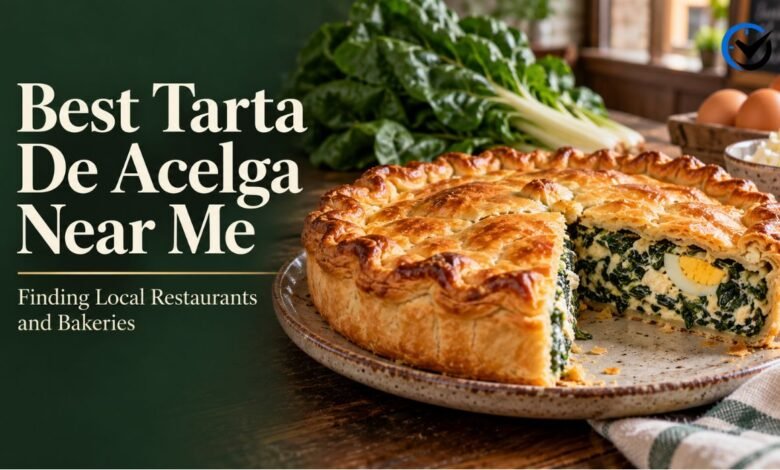
Finding a good Swiss chard tart can take more effort than finding pizza or sandwiches, especially if local menus use unfamiliar names. When you look for the Best Tarta De Acelga Near Me, the useful question is which nearby kitchen actually prepares it, rather than which business appears first. A restaurant may list it in Spanish, a bakery may sell it by the slice, and a caterer may require advance orders. Understanding those differences helps you find suitable options without wasting a trip. This guide explains what the dish contains, where to look, and how to compare what you find.
Because “near me” depends on your location, there is no single restaurant recommendation that works for every reader. Availability also changes with daily menus, opening hours, and delivery boundaries. A practical approach starts with identifying the dish, checking current listings, and confirming details directly with the seller. From there, you can compare crust, filling, portion size, and total cost. Whether you want a quick lunch, a vegetarian dinner, or a whole tart to share, the aim is to find a version that suits your preferences and is genuinely available when you need it.
What Is Tarta de Acelga?
Tarta de acelga is a savory tart filled with Swiss chard; “acelga” is the Spanish word for that leafy vegetable. Recipes vary, and the filling may include onion, cheese, ricotta, eggs, or other vegetables. Some versions have pastry underneath and on top, while others use an open crust. Chard provides the vegetable flavor, with cheese or eggs adding richness and structure. A published Argentine pascualina recipe, for example, combines chard with onion, pepper, ricotta, cheese, and eggs inside a covered crust. That is one recognizable version, rather than a formula every kitchen must follow. Knowing the basic ingredients makes menu descriptions easier to interpret.
Understand the Names on Local Menus
The same kind of meal may appear under several descriptions, including chard tart, Swiss chard pie, vegetable tart, or pascualina. These names are useful starting points, but they do not guarantee identical ingredients. A vegetable tart could contain spinach instead of chard, while a pascualina may include a different combination of greens and eggs. Read the description before deciding that an item matches what you want. Also distinguish a tart from a tortilla de acelga, which is a separate preparation rather than simply another pastry name. If a menu provides only a short label, ask whether the dish has a pastry crust and whether Swiss chard is its main filling.
Where to Look for Local Options
Start with Argentine restaurants, shops selling Argentine prepared foods, and bakeries that advertise savory tarts. These are reasonable places to investigate, although none should be assumed to carry the dish without confirmation. Expand your search to neighborhood cafés, delicatessens, takeaway kitchens, and caterers with rotating vegetable menus. Browse the food selection rather than relying entirely on the business category: a shop known for empanadas might also prepare whole tarts, while a restaurant focused on grilled meat might offer few pastry dishes. In areas with limited choices, asking a relevant bakery about special orders can be more productive than repeatedly checking the same restaurant listings.
Use Maps and Menus Together
A map listing helps you judge distance, but the menu tells you whether the trip is worthwhile. Add your town, neighborhood, or postal code when looking for the dish, and try both its Spanish name and its English description. Check the business’s own menu alongside any ordering platform because selections may differ. Look for a recent menu date or a current ordering option, then confirm anything unclear. One verified delivery menu in San Juan, Argentina, lists an individual chard and egg tart, illustrating how specific the item description can be. It is an example of a menu listing, not a recommendation for readers elsewhere.
Confirm Availability Before Traveling
Before leaving home, ask whether the tart is available that day and whether the seller can reserve your preferred portion. This matters particularly when the item appears on a photograph of a display case or an older menu. Confirm the collection window, since a kitchen may accept orders during hours when the shop itself is still open but food preparation has ended. If you want a whole tart, ask how much notice is required and whether it comes baked, chilled, or ready for you to finish at home. A brief conversation can settle these practical details and prevent confusion about what you are collecting and when.
Compare Crust, Filling, and Flavor
There is no universal “best” version, but you can evaluate how well a tart matches your taste. If you prefer a crisp base, ask how the portion is served and whether it is reheated before collection. For the filling, decide whether you want chard to dominate or prefer a creamier mixture with more cheese. Onion, pepper, and seasoning can also change the overall flavor. When tasting, consider whether the pastry feels cooked through, whether the filling holds together, and whether the salt level suits you. A softer tart is not automatically poorly made; the important distinction is between an intentional texture and one you personally find unpleasant.
Read Reviews and Photos Carefully
Customer reviews are most useful when they discuss the actual tart, rather than the business in general. A high overall rating could mainly reflect coffee, service, or another popular dish. Look for comments about portion size, pastry texture, filling, and whether the order matched its description. Photos can help you see crust thickness and the balance between pastry and vegetables, especially when they show a cut slice. However, they cannot establish taste, freshness, or ingredient quality. Check whether images are recent and whether they appear to show the same product currently offered. Treat a detailed pattern of comments as more informative than a single enthusiastic rating.
Compare Portions and the Full Price
A low displayed price means little until you know what it buys. One seller may offer a narrow slice, another an individual tart, and another a whole pie intended for sharing. Ask about diameter, weight, or suggested servings when the description is vague. Then compare the full amount you will pay, including delivery charges, service fees, packaging charges, and any required minimum order. For example, a tart priced at 12 currency units becomes a 17-unit purchase if delivery and fees add five. Those figures are illustrative, not a quoted local price. For a shared meal, dividing the total cost by the expected number of portions gives a clearer comparison.
Choose Pickup or Delivery Thoughtfully
Pickup gives you more control over collection time and lets you clarify the order in person. Delivery may be easier, but judge it by the estimated arrival time and the seller’s preparation instructions, rather than convenience alone. Ask whether the tart travels hot or chilled and whether it should be reheated before serving. A tightly closed container can trap steam around hot pastry, so the eating experience may differ from a freshly served restaurant portion. If you are ordering for guests, choose a delivery window that allows time to check the order and prepare it as directed. Keep any salad or sauce separate when possible.
Check Ingredients and Dietary Requirements
A vegetable filling does not tell you everything about the finished tart. Eggs, cheese, butter, and wheat flour may appear in the filling or pastry, while individual recipes can contain other ingredients. Ask about the complete preparation if you follow a vegetarian or vegan diet or need to avoid a particular ingredient. For an allergy, clearly explain your requirement and ask the seller about ingredient information and shared preparation equipment; a short menu label is insufficient. Avoid treating a crustless version as automatically suitable for every restriction. The useful question is whether this specific product, prepared by this kitchen, meets your needs.
Final Thoughts
Finding the Best Tarta De Acelga Near Me becomes easier when you connect the dish’s names with current local menus and confirm the details that matter. Begin with relevant restaurants and bakeries, then compare the filling, pastry, portion, and full price. Reviews and photos can narrow your choices, while direct contact establishes availability and ingredients. You do not need the most expensive option or the highest overall rating to enjoy a satisfying meal. You need a seller offering the right tart, in a suitable portion, at a convenient time. That approach makes the decision clearer wherever you live.
Frequently Asked Questions (FAQs)
1. What should I do if no nearby menu lists tarta de acelga?
Try looking for Swiss chard tart, chard pie, and pascualina, then read the descriptions carefully. Contact relevant bakeries or Argentine food businesses to ask about rotating menus and advance orders. If nothing matches, decide whether a spinach tart would satisfy you or whether you would rather wait for a chard version. Similar dishes are alternatives, not proof that the requested item is available.
2. Is tarta de acelga the same as pascualina?
The names can overlap, but you should not assume every seller uses them identically. Tarta de acelga identifies chard as the vegetable, while a pascualina listing may describe a particular covered vegetable and egg tart. Check the actual greens, pastry style, and egg preparation. Those details tell you more about your order than the name alone.
3. What does Swiss chard tart taste like?
Expect a savory vegetable filling, with the final flavor depending heavily on the recipe. A cheese-rich version will taste different from one centered on greens and onion. The pastry also affects the experience through its thickness and texture. If you dislike strongly flavored cheese or want mild seasoning, ask which ingredients the kitchen uses before ordering.
4. Can I order a whole tart instead of a slice?
That depends on the seller’s service model. A café may portion an existing tart, while a bakery or caterer may accept whole-tart orders with notice. Ask about size, estimated servings, collection time, and whether it is supplied hot or chilled. For a group, confirm the portion guidance rather than assuming every whole tart feeds the same number.
5. Is tarta de acelga always vegetarian?
Do not assume it is vegetarian solely because chard appears in the name. Ask whether the recipe includes meat, animal-based stock, or other ingredients relevant to your diet. If your vegetarian requirements include restrictions on cheese production, ask about the cheese too. A seller who can explain the full recipe is better placed to answer than a brief menu description.
6. Can I find a vegan version?
A vegan version would need suitable pastry and a filling without eggs, dairy cheese, or other animal ingredients. Simply removing visible cheese may leave eggs or butter elsewhere in the dish. Ask whether the kitchen offers a specifically vegan recipe and what replaces the usual binding ingredients. Availability will depend on your area and the businesses serving it.
7. Is a gluten-free version available?
Some sellers may offer an adapted recipe, but ordinary savory pastry should not be assumed to meet a gluten-free requirement. Ask about the flour, filling ingredients, and preparation arrangements. If you need strict avoidance, explain that clearly before ordering. A product described as vegetable-based or crustless still requires ingredient checks rather than an assumption based on appearance.
8. How can I tell whether a listing is current?
Look for an active ordering option, recent menu updates, and recent customer comments about the dish. These are useful clues, but direct confirmation is stronger when availability matters. Call or message the business before making a special trip. Ask about the exact item and collection time, because an open shop may still have sold out of its prepared tarts.
9. Should I choose the nearest shop or the highest-rated one?
Use distance and ratings as practical filters, then compare the actual product. A closer shop with a clear menu and suitable portion may serve your needs better than a highly rated restaurant whose reviews concern unrelated meals. Consider travel time, ingredients, price, and order reliability together. The most suitable choice depends on what you want from this particular meal.
10. What should I ask when placing my first order?
Ask which greens are used, whether the tart contains cheese or eggs, and what portion the listed price covers. Confirm whether it arrives ready to eat or requires reheating. Mention any dietary requirements before payment, and check the collection or delivery time. These questions help you understand the order without needing a detailed knowledge of the cuisine.
Recommended: Best Wireless Earbuds Under 200 Dollars 2024: Top Picks and Buying Guide



One Comment