
Brasssmile Explained: Website Overview, Main Categories, and What Readers Can Expect

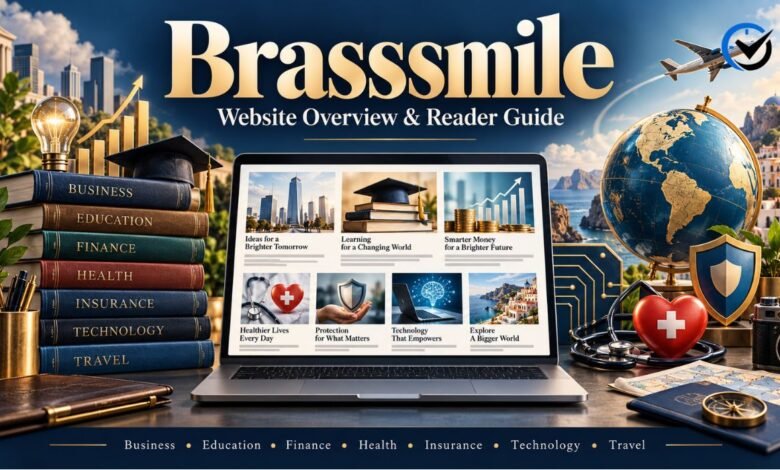
Brasssmile is a general-interest publishing website that brings together articles on several subjects, including business, education, finance, health, insurance, technology, and travel. Its name does not immediately explain that purpose, which can make a first visit confusing. Someone might expect a dental resource because of the word “smile,” while another reader may arrive after finding an article about banking or entrepreneurship. This guide explains the website’s main categories, how its content is organized, and what visitors can reasonably expect. The goal is to help you understand the publication and decide when its articles are useful starting points for further reading.
Understanding an unfamiliar website requires more than interpreting its name. Its navigation, article archive, author names, and publication dates provide a clearer picture of what it actually does. Here, those elements point to a broad article-based publication rather than a single specialized service. Readers can move between unrelated subjects without leaving the site, much as they would browse a general online magazine. That flexibility offers variety, but it also creates an important distinction: publishing across many fields does not establish expertise in all of them. The most useful approach is to evaluate each article according to its subject, evidence, and intended purpose.
What Kind of Website Is Brasssmile?
The site’s visible structure centers on published articles, category pages, and links to older posts. Its homepage presents article titles alongside dates, author names, short introductions, and options to continue reading. This arrangement helps visitors preview a subject before opening the full page. The publication includes both broad explainers and narrower industry discussions, so its content does not follow one consistent level of specialization. A beginner may find an accessible introduction in one article and a more demanding business topic in another. It is therefore best understood as a collection of informational content whose usefulness depends on the particular page you choose.
Why the Name Can Cause Confusion
The word “smile” naturally suggests teeth, oral care, or cosmetic dentistry, but a name alone cannot establish a website’s purpose. Online results also include similarly named websites that describe themselves differently, including resources focused on dental information. Those results should not automatically be treated as descriptions of the same publication. The practical distinction is between a shared or similar name and the actual website behind it. Before assuming an article belongs to a dental provider, a product company, or this general-interest publication, check the page’s branding and navigation. That small step prevents unrelated descriptions from being combined into one misleading account.
Business: Entrepreneurship and Industry Topics
Business is a prominent part of the homepage, with articles addressing subjects such as passive income, business verification, commercial trucking, and livestock trade. This combination brings together ideas for individual readers and issues affecting established companies. An introductory article about earning extra income serves a different purpose from a discussion of insurance placement in transport operations. Readers should identify that purpose early. Is the article explaining a concept, comparing approaches, or supporting a specific decision? Business guidance becomes more useful when it states the resources, effort, assumptions, and limitations involved, especially when an appealing idea depends on circumstances that beginners may not yet understand.
Finance and Insurance: Reading With Context
Finance and insurance appear as separate navigation categories, although their subjects can overlap with business. Visible articles include discussions of knowledge management in banking and factors connected with commercial trucking insurance. These are more specific than general budgeting advice, showing why readers should look beyond a category label when choosing a page. Financial explanations need context about the market, organization, or transaction involved. Insurance discussions also depend on policy wording, exclusions, jurisdiction, and the circumstances being insured. An article can introduce a useful question without establishing the answer for every reader. Treat broad explanations as preparation for examining the documents and rules relevant to your own situation.
Education and Technology: What to Look For
Education and technology are also listed in the main menu, giving visitors direct routes to those parts of the archive. Their presence establishes the publication’s broad scope, but it does not tell you how thoroughly every subject is covered. When reading education content, look for clear distinctions between general learning advice and claims about particular qualifications or institutions. Technology articles should identify the tools or systems being discussed and explain whether their observations apply to a specific version. These details matter because an otherwise readable article can become misleading when conditions change. Dates, precise descriptions, and clearly stated limitations help readers judge whether the information fits their needs.
Health and Travel: Relevance Depends on the Reader
Health and travel extend the site’s coverage beyond work and money into subjects that affect everyday decisions. Both categories require attention to personal context. A health explanation may help a reader understand terminology, but it cannot determine a diagnosis from general information. A travel article may offer useful background while still depending on nationality, destination, season, or local requirements. Before acting, identify which parts of the article describe a general principle and which depend on changing circumstances. This makes the reading more practical: instead of accepting the entire page as universally applicable, you can use it to recognize the questions that need individual or location-specific answers.
What the Homepage Tells Readers
The homepage’s article previews make it possible to assess the publication before committing to a long read. Titles show the subject, introductory text suggests the angle, and dates help establish when a page was published. Author names provide another point to investigate, although a byline alone does not prove relevant qualifications. Links to older posts also show that the homepage is an entry point rather than the complete collection. Readers interested in one field may find category browsing more efficient than scrolling through mixed subjects. This approach reduces distraction and helps you judge whether the archive contains sustained coverage of your interests or only occasional related articles.
How to Judge an Article’s Usefulness
A useful article answers a defined question and gives enough detail to explain its answer. Look for concrete examples, clear definitions, and a logical connection between claims and conclusions. Where the topic involves costs, outcomes, or comparisons, check whether the article explains the conditions behind those statements. Missing context can matter more than polished writing. For example, an income idea needs some discussion of ongoing work, while an insurance explanation needs boundaries around the coverage being described. Also separate an article’s educational value from its decision-making value. A page may be helpful for understanding a subject while remaining insufficient for choosing a treatment, investment, policy, or commercial arrangement.
Final Thoughts
Brasssmile offers a broad publishing format, with multiple categories and a homepage that introduces readers to varied articles. Its main attraction is that visitors can explore several areas of interest through one publication. Its main limitation is the same breadth: readers must assess individual pages rather than assume equal authority across every subject. Start with the category that matches your question, examine the article’s context, and identify anything requiring further verification. Understanding the website this way resolves much of the confusion surrounding its name. It also creates realistic expectations about what an informational publication can provide and where more specific guidance becomes necessary.
Frequently Asked Questions (FAQs)
1. What is Brasssmile?
It is a general-interest website organized around articles in several categories. Its main menu includes business, education, finance, health, insurance, technology, and travel. The homepage displays previews and links to full articles, allowing visitors to browse topics before choosing what to read. That structure is consistent with an online publication. It should be understood through its actual content rather than through assumptions about the meaning of its name or claims made about similarly named websites.
2. Is it mainly a dental website?
The website discussed here has a broad navigation menu and publishes articles on subjects well beyond dentistry. Its name can create a dental association, but that association does not accurately describe the overall publication. Separately, other websites with similar names present dental information. Readers should distinguish those sites before making comparisons. A health-related article within a general publication also does not, by itself, turn the entire website into a specialist dental resource or treatment provider.
3. What are its main categories?
The main navigation lists seven categories: business, education, finance, health, insurance, technology, and travel. These labels help visitors locate areas of interest, but the individual articles within them may differ considerably in depth and focus. Some address broad concepts, while others discuss particular industries or circumstances. Use the category as an initial filter, then read the title and opening text to determine whether the page addresses your question at an appropriate level.
4. Who writes the articles?
The homepage shows several author names attached to different posts, rather than presenting all content under one individual. However, a displayed name establishes authorship only as represented on the page; it does not independently establish credentials or specialist experience. If a writer’s expertise matters to your decision, look for background information relevant to the subject. The strongest assessment considers the author, the evidence in the article, and the clarity of the reasoning together.
5. Does a recent date mean an article is accurate?
A recent publication date helps readers understand timing, but it does not establish accuracy. An article can be newly published and still omit important context, while an older explanation may remain useful for a stable concept. The key question is whether the information depends on changing conditions. For technology, travel, finance, and insurance, timing can be especially relevant. Check whether specific claims remain applicable rather than treating the date as a complete quality measure.
6. Can readers rely on its financial or health articles?
Such articles can help explain terminology and introduce questions worth exploring. Their suitability for a personal decision depends on the evidence, scope, and relevance of the individual page. General health information cannot account for a reader’s medical history, and financial guidance may not reflect their obligations or tolerance for losses. Use the article to improve understanding, then verify consequential details through appropriate specialist information or professional advice that addresses the circumstances involved.
7. How can visitors find relevant content?
Begin with the main category closest to your question, then compare article titles and previews. This is usually more focused than browsing a homepage that mixes several subjects. Older-post links can help extend your search beyond the most visible entries. Once you open a page, check its intended audience and scope. An article aimed at an established transport company, for example, may offer little direct help to someone seeking a basic explanation of personal insurance.
8. Are similarly named websites connected?
A similar name does not establish shared ownership, management, or editorial standards. Different websites may use related wording while publishing different material and making different claims about their purpose. Evidence of a connection would need to come from clear ownership information or an explicit statement linking the publications. Until that evidence is available, evaluate each website separately. This avoids transferring the reputation, services, or claimed expertise of one site to another based only on branding.
9. What makes an article worth reading?
An article is worth reading when it addresses your question clearly and provides information you can understand and evaluate. Useful signs include specific examples, defined terms, relevant context, and conclusions that follow from the explanation. Equally important is knowing the article’s limits. A readable overview may be valuable even when it does not provide enough detail for a final decision. Judge whether it helps you understand the subject, identify uncertainties, or determine a sensible next step.
10. What should first-time readers expect?
Expect a mixture of subjects presented through article previews and category navigation. The publication’s breadth means one visit may lead to business ideas, an industry discussion, or content in another field entirely. Approach it with a defined question whenever possible, and assess the page you choose on its own merits. That creates a more useful reading experience than expecting a single specialist service. The site can introduce topics, while your evaluation determines how much weight to place on each explanation.
Recommended: What Is Harouxinn? Understanding the Name Behind Conflicting Online Claims





One Comment