


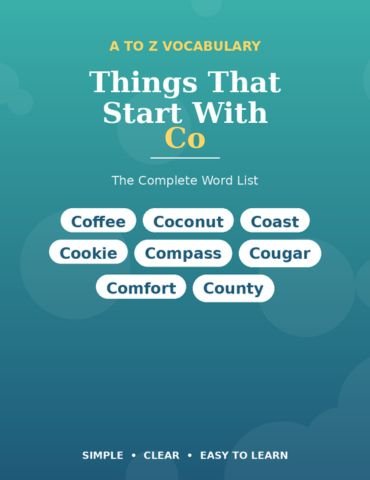
The English language is full of small building blocks that shape how we speak, write, and think, and the letter combination “Co” is one of the most productive of them all. From common household items to scientific terms, emotional expressions, and even place names, words that begin with “Co” appear in nearly every corner of daily conversation. Whether you are a parent helping a child expand their vocabulary, a teacher preparing a classroom activity, a writer searching for the right word, or simply someone curious about language, this guide brings together a wide and useful collection of things that start with Co. The goal here is not just to list words, but to explain them in a way that helps you understand where they fit into everyday life, why they matter, and how you can use them with confidence.
Why Words Starting With Co Matter
Many people underestimate how often the “Co” combination shows up in English. It appears in nouns, verbs, adjectives, and even prefixes that change the meaning of other words entirely. Think about words like “cooperate,” “coexist,” or “combine.” In each case, the “Co” prefix adds a sense of togetherness or shared action. This pattern alone makes the letter combination worth studying, because understanding it can help you decode unfamiliar words just by recognizing the pattern at the start. Beyond grammar, these words also carry real weight in science, food, geography, and emotion, which is part of why this topic continues to interest learners of all ages.
| Category | Examples |
|---|---|
| Everyday Objects | Coat, Coffee cup, Comb, Computer, Cot, , Couch |
| Food & Drink | Coconut, Corn, Cookies, Coffee, Collard greens, Cottage cheese |
| Animals | Cobra, Cockatoo, Cougar, Coyote, Cow |
| Nature & Environment | Coast, Cove, Climate, Cliff |
| Emotions & Traits | Courage, Comfort, Confidence, Compassion |
| Colors | Cobalt, Copper |
| Science & Technology | Cortex, Compound, Code, Cloud (computing) |
| Places & Geography | Colorado, Colombia, County |
| Professions | Coach, Counselor, Comedian, |
| Cooperation Words | Collaborate, Combine, Coordinate, Cohesive, Cooperate, Coexist |
| Sports & Recreation | Court, Competition, Coach |
| Music & Entertainment | Concert, Comedy, Cover (song) |
| Health & Medical | Cold, Convalescence, Contagious |
| Business & Economy | Company, Commerce, Cost |
| Words for Kids | Cow, Cop, Color, Coat |
Everyday Objects That Start With Co
When you look around your home, you will likely spot several items beginning with this letter pair without even trying. A coat hanging by the door, a coffee cup sitting on the counter, a comb resting on the bathroom shelf, and a computer humming quietly on the desk are all common examples. These are the kinds of practical, tangible things that make vocabulary building feel real rather than abstract. A child learning language for the first time often connects best with these physical objects because they can see, touch, and use them immediately, which makes learning stick.
Food and Drink Items Beginning With Co
Food is another category where this letter combination shows up frequently, and it offers a wonderful mix of familiar and lesser-known items. Coconut, corn, cookies, and coffee are staples in kitchens around the world, loved for their taste and versatility. Less commonly discussed but equally interesting are items like collard greens, a leafy vegetable popular in Southern cooking, and cottage cheese, a soft dairy product enjoyed for its mild flavor and high protein content. Exploring food-related words is a fun way to connect vocabulary learning with something people already enjoy, since food naturally invites curiosity and conversation.
Animals That Start With Co
The animal kingdom also offers a rich set of examples. The cobra, known for its distinctive hood and dangerous bite, is one of the most recognized reptiles in the world. The cockatoo, a colorful and intelligent bird, is admired for its playful personality and striking crest. Other animals include the cougar, a powerful wild cat found across the Americas, and the coyote, a clever and adaptable creature often associated with folklore and survival instincts. Learning animal names is especially popular among children, since animals capture attention easily and often come with interesting facts that make the words memorable.
Nature and Environment Related Words
Nature offers a surprising number of terms that begin with this combination. A coast refers to the land bordering an ocean or sea, a place many people associate with vacations, fresh air, and scenic views. A canyon-like formation called a cove is a small, sheltered bay often tucked between cliffs, offering calm water and a peaceful setting. Meanwhile, the word climate, though it starts slightly differently in sound, technically belongs to this same letter grouping and refers to the long-term weather patterns of a region. These nature-based words help connect vocabulary learning to real-world geography and environmental awareness, which is valuable for students studying science or social studies.
Emotions and Personal Traits
Words describing feelings and character are just as important as physical objects, and this category includes some genuinely meaningful terms. Courage describes the strength to face fear or difficulty, a quality admired across nearly every culture. Comfort refers to a state of ease or relief from stress, something everyone seeks in different ways. Confidence reflects a belief in one’s own abilities, while compassion describes deep concern for the suffering of others. These emotional and character-based words are especially useful for writers, students working on personal essays, and anyone trying to express feelings with more precision and depth.
Colors and Descriptive Words
Descriptive language also includes several useful entries. The word cobalt refers to a deep blue color often used in art, jewelry, and design, named after the mineral of the same name. Copper, both a metal and a reddish-brown color, appears frequently in design and fashion contexts. These color-based words are particularly helpful for artists, designers, and anyone working on visual projects who needs precise language to describe shades and tones accurately.
Science and Technology Terms
Science and technology contribute a significant share of vocabulary here as well. The word cortex refers to the outer layer of an organ, most commonly discussed in relation to the brain, where it plays a central role in thinking and decision-making. Compound is a term used in chemistry to describe a substance formed when two or more elements combine chemically. In the world of computing, the term code refers to the instructions written to create software, while cloud computing has become a widely used phrase describing data storage and processing done over the internet rather than on a local device. These terms show how deeply this letter combination is woven into modern scientific and technical language.
Places and Geography
Geography brings its own set of interesting entries into this collection. Colorado, a state in the western United States, is known for its mountains, ski resorts, and outdoor lifestyle. Colombia, a country in South America, is recognized for its diverse landscapes, rich culture, and coffee production. On a smaller scale, the word county refers to a division of land used for local government purposes in many countries, including the United States and the United Kingdom. These place names and geographic terms are especially useful for students studying world geography or anyone planning travel and wanting to learn more about different regions.
Professions and Roles
Several job titles and roles also begin with this letter combination, reflecting how language adapts to describe the work people do. A coach guides and trains individuals or teams, whether in sports, business, or personal development. A counselor offers guidance and support, often in educational or emotional contexts. A comedian entertains audiences through humor, while a curator manages and organizes collections, often in museums or galleries. These professional terms are useful for career discussions, resume writing, or simply understanding the different roles people play in society.
Household and Furniture Items
Beyond basic objects, the home offers more specific examples worth knowing. A couch, the centerpiece of many living rooms, provides comfortable seating for relaxing or entertaining guests. A cot is a simple, portable bed often used for camping or temporary sleeping arrangements. A cushion adds softness and support to furniture, while a cabinet, though starting with a slightly different sound pattern, is often grouped here in casual vocabulary lists because of its shared letters. These household terms are practical for anyone building basic vocabulary for daily conversation or home-related topics.
Words Related to Cooperation and Togetherness
As mentioned earlier, the “Co” prefix often signals shared action, and this pattern deserves closer attention. Collaborate means working together toward a common goal, a term frequently used in workplaces and educational settings. Combine means to join two or more things into one, while coordinate refers to organizing different elements so they work smoothly together. Cohesive describes something that sticks together well, whether that refers to a team, an argument, or a piece of writing. Understanding this pattern helps readers recognize new vocabulary more quickly, since the shared meaning across these words creates a helpful mental shortcut.
Sports and Recreation Terms
Sports and games also include useful vocabulary starting with this combination. A court is the marked playing area used in sports like basketball, tennis, and volleyball. Competition describes the act of striving against others to achieve a goal, a concept central to nearly every sport. The word coach reappears here as well, since coaching plays such a central role in athletic development. These terms are particularly helpful for young learners interested in sports, as they connect vocabulary building to activities they already enjoy and understand.
Music and Entertainment Related Words
The entertainment world offers its own share of relevant terms. A concert is a live musical performance, often bringing together large audiences to enjoy their favorite artists. A comedy is a genre of entertainment designed to amuse and entertain through humor. The word cover, when used in music, refers to a new performance of a song originally recorded by someone else. These entertainment-related words are useful for discussions about movies, music, and popular culture, making vocabulary learning feel current and relevant.
Medical and Health Related Terms
Health and medicine contribute several important words as well. A cold refers to a common viral infection affecting the nose and throat, something nearly everyone experiences at some point. Convalescence describes the period of recovery after an illness or medical procedure. Contagious describes something, usually an illness, that can spread from one person to another through contact. These medical terms are practical for everyday health conversations and can help readers describe symptoms or conditions more clearly when speaking with others or seeking care.
Business and Economic Terms
The business world relies heavily on vocabulary from this category. A company refers to an organization formed to conduct commercial or industrial activity, and it is one of the most frequently used business terms in the world. Commerce describes the buying and selling of goods and services on a large scale. Cost refers to the amount of money required to purchase or produce something, a term used constantly in personal and professional financial discussions. These business-related words are essential for anyone studying economics, running a company, or simply managing personal finances more effectively.
Words Useful for Children Learning Vocabulary
For younger learners, simple and familiar words work best as starting points. Cow, cat, and cup are among the earliest words children learn, thanks to their short length and clear, everyday meaning. Color, one of the first descriptive words taught in early education, opens the door to identifying and naming the world around them. These simple examples are ideal for preschool and kindergarten settings, where repetition and familiarity help build a strong vocabulary foundation before more complex words are introduced.
How to Use These Words in Daily Life
Learning new vocabulary is most effective when it connects to real situations rather than staying abstract. Try using new words in short sentences related to your day, such as describing your morning coffee, your commute, or a conversation with a coworker. Reading books, articles, or even product labels with attention to these words can also reinforce memory naturally. For children, turning vocabulary into a game, such as searching for objects around the house that start with this letter combination, makes the learning process enjoyable rather than repetitive or forced.

Common Mistakes to Avoid
One common mistake is confusing similarly spelled words, especially when the “Co” sound is present but the following letters change the meaning significantly, such as with “core” versus “corn” or “cost” versus “coast.” Careful reading and listening practice can help reduce these mix-ups over time. Another mistake is overusing complex vocabulary too early, which can overwhelm beginners. Starting with simple, familiar words before moving into scientific or business-related terms creates a smoother and more confident learning experience.
Final Thoughts
Words beginning with this letter combination offer far more variety than most people expect, stretching across food, nature, emotion, science, business, and everyday life. This range makes the topic genuinely useful for language learners, parents, educators, writers, and curious minds alike. Rather than memorizing an isolated list, the real value comes from understanding how these words connect to real experiences, conversations, and needs. With consistent exposure and practical use, vocabulary in this category becomes a natural and lasting part of everyday communication.
Frequently Asked Questions
1. What are some simple examples suitable for young children?
Simple and effective examples for children include cat, cow, cup, coat, and color. These words are short, familiar, and connected to objects or ideas children encounter daily, which makes them easier to remember and use in early conversations.
2. Are there scientific terms that begin with this letter combination?
Yes, several scientific terms fall into this category, including cortex, compound, and cell-related terms in biology. These words are especially useful for students studying subjects like chemistry, biology, and computer science.
3. Can this vocabulary help with professional or business writing?
Absolutely. Terms like company, commerce, cost, and collaborate are commonly used in professional settings, making this vocabulary highly practical for resumes, emails, presentations, and workplace communication.
4. What food items begin with this letter combination?
Common food examples include coconut, corn, cookies, coffee, and cottage cheese. These words are useful for everyday conversations about meals, recipes, and grocery shopping.
5. Are there any well-known places or countries that start this way?
Yes, notable examples include Colorado, a U.S. state, and Colombia, a country in South America. Both are widely recognized and offer good examples for geography lessons.
6. How can teachers use this vocabulary in the classroom?
Teachers can create simple games, flashcards, or scavenger hunts based on objects and words that start with this letter combination. This approach makes vocabulary learning interactive and helps students retain new words more effectively.
7. Do these words appear often in daily conversation?
Yes, many of these words, such as coffee, cold, cost, and coach, are used regularly in everyday speech, which makes learning them especially useful for improving general communication skills.
8. Is there a connection between meaning and words that share this beginning?
In many cases, yes. Words like cooperate, combine, and coordinate share a common idea of togetherness, since the shared prefix often signals shared action or connection between two or more things.
9. What animals are commonly known to start with this letter combination?
Some well-known animals include the cobra, cougar, coyote, and cockatoo. These animal names are popular in children’s education due to their distinct sounds and easily recognizable features.
10. Why is it helpful to study a specific letter combination like this one?
Studying a specific pattern helps learners recognize word structures more quickly, build vocabulary in a structured way, and improve reading comprehension by identifying familiar beginnings in unfamiliar words.
Recommended: 100 Things That Are White: A Complete Visual List



One Comment