
Snapchat Planets: Complete Guide to All 8 Planets, Meanings, Order, and Rankings

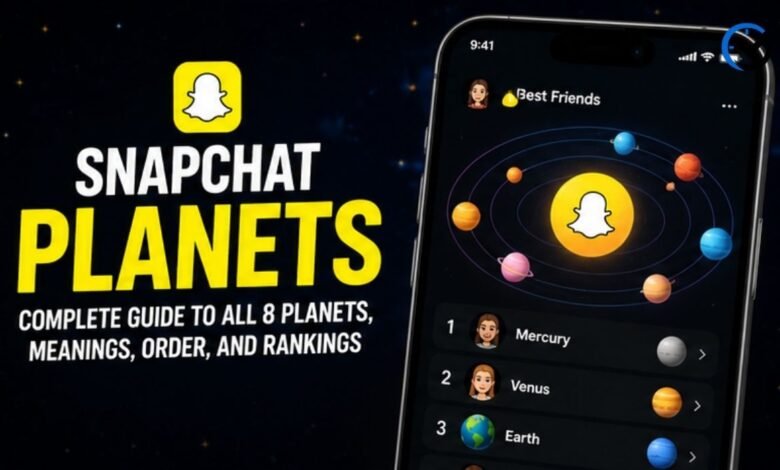
Snapchat has turned ordinary friendship rankings into a visual system called Friend Solar Systems. For Snapchat+ subscribers, a small planet can show where a particular friend sits in another person’s Best Friends list. The idea can seem confusing at first because the planets do not describe personality, compatibility, or astrology. They represent social closeness based on Snapchat activity. Understanding the order makes the feature much easier to read and also explains why the planet beside a friend may change over time.
What Are Snapchat Planets?
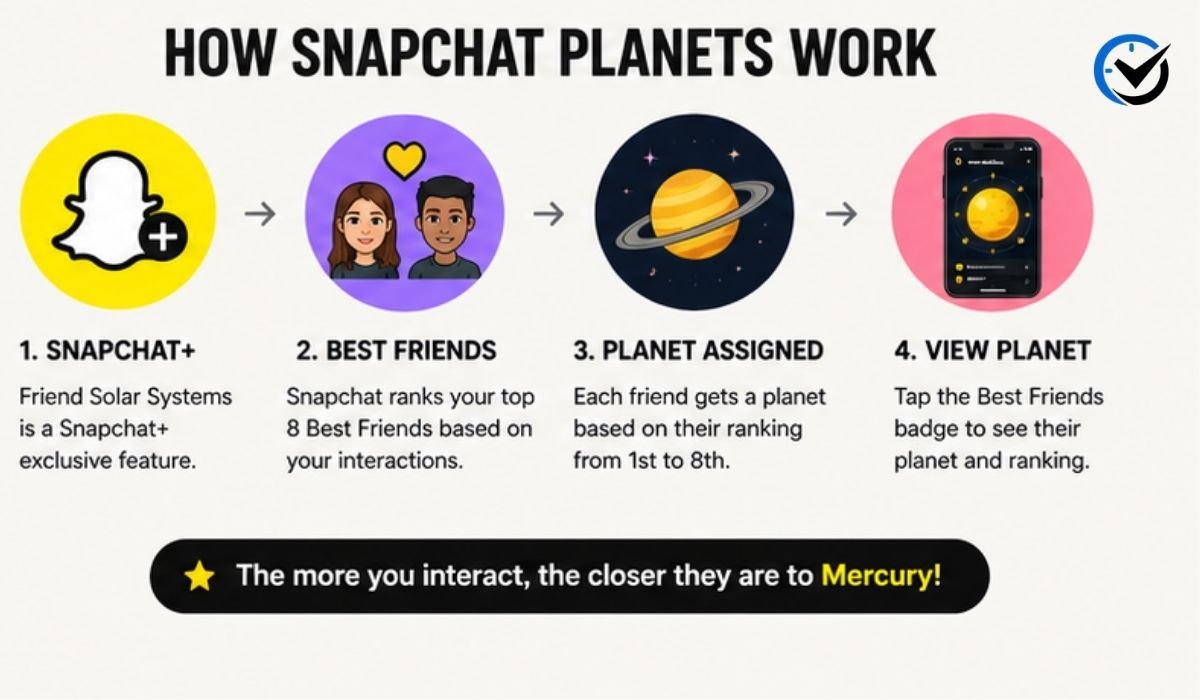
Snapchat Planets are part of Friend Solar Systems, a Snapchat+ feature that uses the solar system as a simple way to represent friendship rankings. If Friend Solar Systems are enabled, a subscriber can see a Best Friends badge or Friends badge with a gold ring on a friend’s Friendship Profile. Tapping the badge reveals a planet showing the friend’s position in that person’s Best Friends list. The eight planets correspond to the eight people with whom that user interacts most.
How the Friend Solar System Works
The system is based on Snapchat’s Best Friends concept rather than a public leaderboard. Snapchat identifies the people you interact with most frequently and places up to eight of them in the Best Friends group. The planet is then assigned according to position. This means your view is personal: being someone’s Earth, for example, does not automatically mean that person is your Earth. The feature is designed to show one side of the friendship ranking at a time, which is an important detail when interpreting the badges.
Snapchat Planets in Order
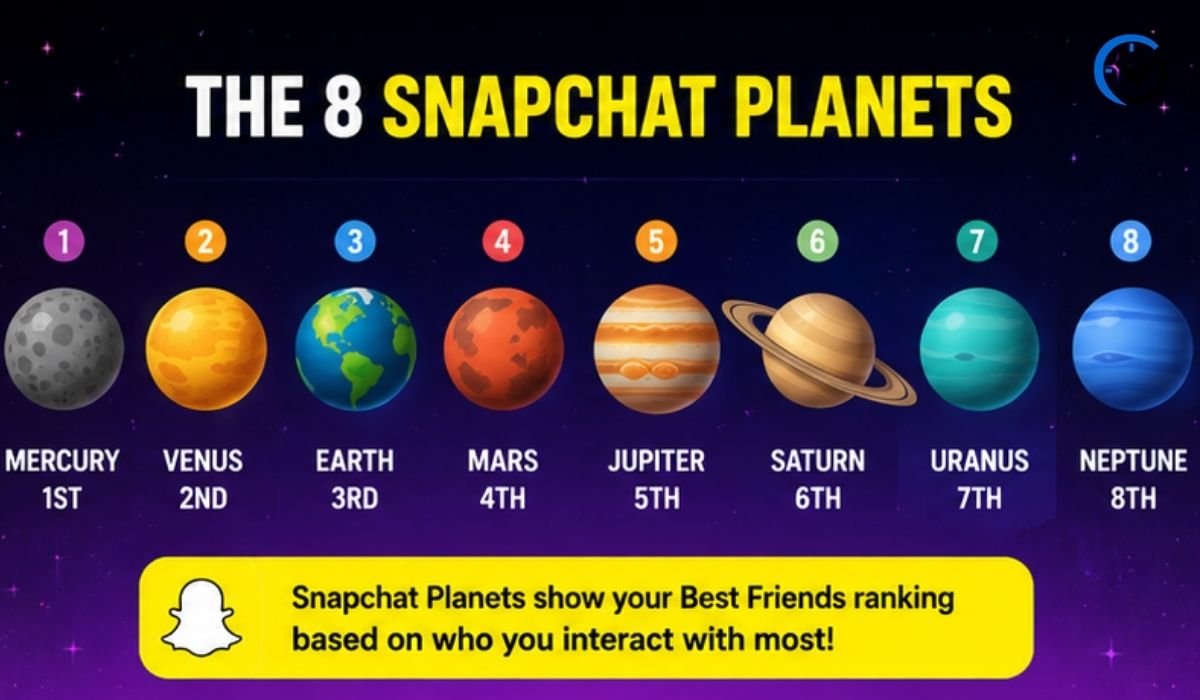
The planet sequence follows the traditional order of the solar system from the Sun outward. Mercury represents the closest position, followed by Venus, Earth, Mars, Jupiter, Saturn, Uranus, and Neptune. In Friend Solar Systems, that sequence maps to first through eighth place among Best Friends. The names were chosen because the solar-system model is easy to understand visually. The farther the planet is from the Sun, the lower the corresponding position in the Best Friends ranking.
Mercury: First Best Friend
Mercury represents the number-one position in the Friend Solar System. If someone appears as Mercury, that person is the friend at the top of the Best Friends ranking for the relevant Snapchat account. In practical terms, it indicates the strongest level of interaction within the group at that moment. It does not prove that the two people are equally close offline, nor does it measure the quality of their friendship. It is simply the highest position in Snapchat’s activity-based ranking.
Venus: Second Best Friend
Venus represents second place. A friend shown as Venus is ranked immediately behind the person in the Mercury position. The difference between the two positions may be small, especially when several friends have similar levels of interaction. Because rankings can change as people send Snaps and messages, a Venus position is not necessarily permanent. It should be read as a current snapshot of Snapchat activity rather than a lasting statement about a relationship.
Earth: Third Best Friend
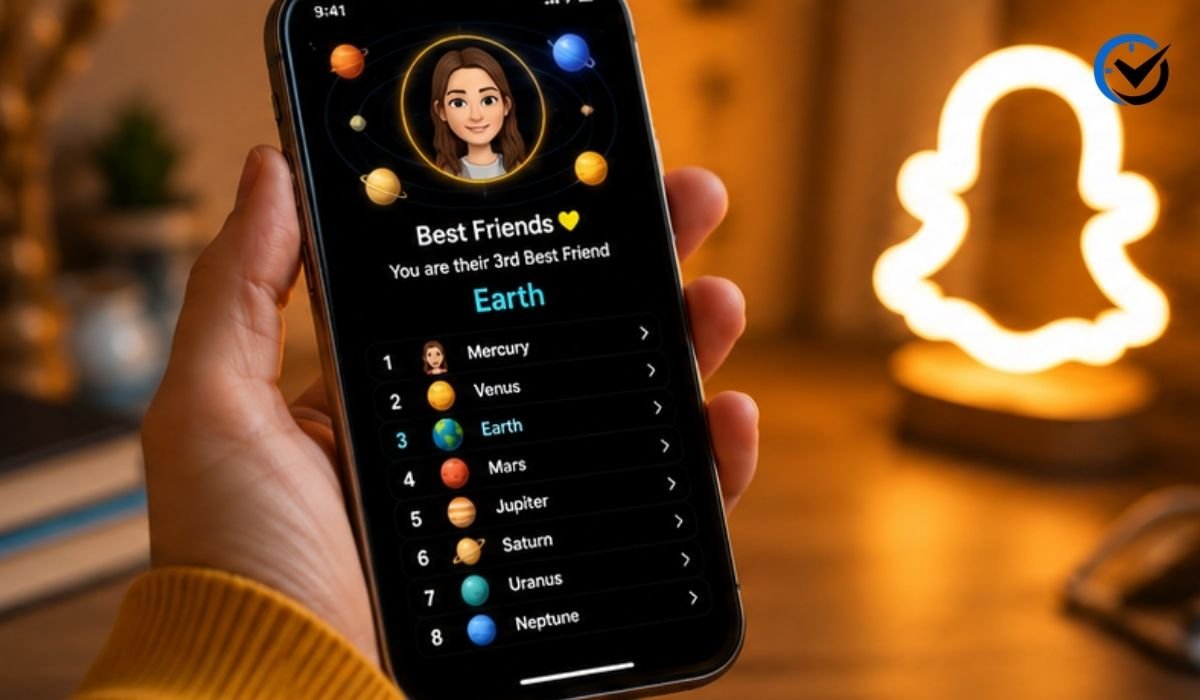
Earth corresponds to third place in the system. Its familiar name can make it seem especially important, but Snapchat does not assign extra meaning to Earth beyond its position. A friend represented by Earth is one of the account’s top three Best Friends according to the system. If activity patterns shift, that person can move higher, move lower, or leave the eight-person group. The planet therefore reflects changing use of the app rather than a fixed social label.
Mars: Fourth Best Friend
Mars marks fourth place among the eight Best Friends. At this level, the person is still within the account’s closest group on Snapchat, but three friends rank ahead of them. The ranking can be influenced by recent interaction patterns, so it should not be treated as an exact measurement of emotional closeness. Someone you speak with less often on Snapchat may still be very important in real life, while someone who receives a high ranking may simply have more activity on the platform.
Jupiter: Fifth Best Friend
Jupiter represents fifth place. It sits in the middle of the eight-planet sequence and shows that the friend is included among the account’s top eight Best Friends. This position can be useful for understanding why someone has a Best Friends badge even when they are not near the top. The system does not say that fifth place is good or bad; it only gives a relative position based on Snapchat’s ranking system.
Saturn: Sixth Best Friend
Saturn corresponds to sixth place. A Saturn friend remains within the eight-person Best Friends group but is closer to the lower end of that ranking. Changes in daily messaging and Snap activity can affect the position. Someone who becomes more active may move toward the inner planets, while reduced interaction can push a friend outward. The planet should therefore be understood as a dynamic indicator rather than a permanent status.
Uranus: Seventh Best Friend
Uranus represents seventh place, making it the second-lowest position in the Friend Solar System. The friend is still among the eight Best Friends, but only one person ranks below them. This distinction matters because the feature is about relative position, not a judgment. The person may be highly important outside Snapchat even if their app-based ranking is lower. Social media activity and real-world relationships do not always follow the same pattern.
Neptune: Eighth Best Friend
Neptune is the eighth and outermost planet in the Friend Solar System. It represents the last position within the eight Best Friends. Being Neptune does not mean a person is unimportant or that the friendship is weak in every sense. It only means that, among the friends included in this particular ranking, the person currently occupies eighth place based on Snapchat interaction. If another friendship becomes more active, the ranking can change.
How Snapchat Determines the Ranking
Snapchat’s Best Friends system is based on who you interact with most on the service. The exact underlying calculation is not presented as a simple public formula, so users should avoid assuming that one message or one Snap automatically changes a position. Interaction patterns develop over time, and rankings can move as activity changes. The safest way to understand a planet is as an indication of relative interaction within Snapchat, not as a precise score or complete picture of a friendship.
Best Friends and Friends Badges
The badges shown with Friend Solar Systems can be easy to misunderstand. A Best Friends badge indicates that the person is among your eight closest friends on Snapchat, while a Friends badge indicates that you are among their eight closest friends. These labels can help explain the direction of the ranking. The planet itself then provides the position within that relationship context. Because the system can be viewed from different sides, the two people involved may not necessarily have matching planet positions.
Do You Need Snapchat+?
Friend Solar Systems are a Snapchat+ feature, so users generally need an active Snapchat+ subscription to access the planet-based display. Snapchat has also provided a setting that allows subscribers to manage whether Friend Solar Systems are visible. This matters because the feature is not the same thing as the standard Best Friends list that Snapchat users may already know. The planets are a visual layer built around that ranking and are primarily intended as an optional Snapchat+ feature.
How to Check a Friend’s Planet
To see the planet associated with a friend, a Snapchat+ subscriber can open that person’s Friendship Profile and look for the Best Friends or Friends badge. When the relevant badge is available, selecting it can reveal the Friend Solar System position. The exact appearance of the interface may change as Snapchat updates its app, so users should focus on the Friendship Profile and the badge rather than relying on an old screenshot or outdated menu description.
Why Your Planet Can Change
A planet is not a permanent award. It can change because your interaction with different people changes. If you begin exchanging more Snaps or messages with one friend while interacting less with another, their relative positions can shift. Someone who was once Mercury may later become Venus, while another friend can move into the top position. These changes are normal and do not necessarily signal a problem in the relationship. They usually reflect changing activity on the platform.
Are Snapchat Planets Mutual?
They are not necessarily mutual. This is one of the most important points to understand. If you are someone’s Mercury, that does not automatically mean they are your Mercury. Each account has its own Best Friends ranking based on that account’s interactions. Two people can therefore hold different positions in each other’s Friend Solar Systems. The planet describes your position from the other person’s Snapchat perspective, not a shared ranking created between both accounts.
Privacy and Social Context
Because a planet can reveal information about relative interaction, it is worth treating the feature as a social indicator rather than a serious measure of friendship. People may use Snapchat differently, and some users communicate more through group chats, calls, other apps, or in person. A lower planet should not be used to accuse someone of ignoring you, and a high planet should not be taken as proof of a deeper relationship. Context matters more than a badge.
Common Misunderstandings
One frequent misunderstanding is that the planets have personality meanings similar to astrology. They do not. Another is that Neptune means a friend is unimportant; it does not. Some users also assume that planet positions are automatically reciprocal, which is not how the system works. Finally, the ranking should not be treated as a permanent record. It can change with activity, making the planets more like a live snapshot than a fixed friendship score.
Final Thoughts
Snapchat Planets make the platform’s Best Friends system easier to visualize, but they are best understood as a snapshot of interaction rather than a definitive measure of friendship. Mercury through Neptune represent first through eighth place, with each position reflecting a person’s place among the account’s top Snapchat contacts. Once that distinction is clear, the feature becomes much less mysterious. It can be a fun way to understand Snapchat activity, but real friendships are broader than any app ranking and cannot be fully captured by a single planet.
Frequently Asked Questions
1. What do Snapchat Planets mean?
They show a friend’s position within the eight-person Best Friends ranking through the Friend Solar Systems feature. Mercury is first and Neptune is eighth.
2. Which planet is number one on Snapchat?
Mercury represents the first position. It indicates the friend ranked highest among the account’s Best Friends at that time.
3. Which planet represents the eighth Best Friend?
Neptune represents eighth place, the outermost position in the Friend Solar System.
4. Is Earth the most important Snapchat planet?
No. Earth is simply the third position. Its name does not give it a special ranking or emotional meaning.
5. Can Snapchat Planets change?
Yes. Positions can change as interaction patterns change. A friend may move inward or outward in the ranking over time.
6. Are the planets the same for both friends?
Not necessarily. Each person has an individual Best Friends ranking, so two people can have different positions for each other.
7. Do Snapchat Planets show real friendship strength?
Not exactly. They reflect activity on Snapchat and should not be treated as a complete measurement of an offline relationship.
8. Do you need Snapchat+ to use Friend Solar Systems?
Friend Solar Systems are a Snapchat+ feature. Access to the planet display is therefore associated with a Snapchat+ subscription.
9. Can I hide Friend Solar Systems?
Snapchat+ includes controls for managing Friend Solar Systems, so subscribers can check the feature settings in the app if they do not want to use the display.
10. Why did my friend’s planet change?
The position can change when your interaction patterns with different friends change. The ranking is dynamic, so movement between planets is normal.
Recommended: Constraint on Bavayllo Explained: Complete Guide to Rules, Limits, and Compliance





One Comment