

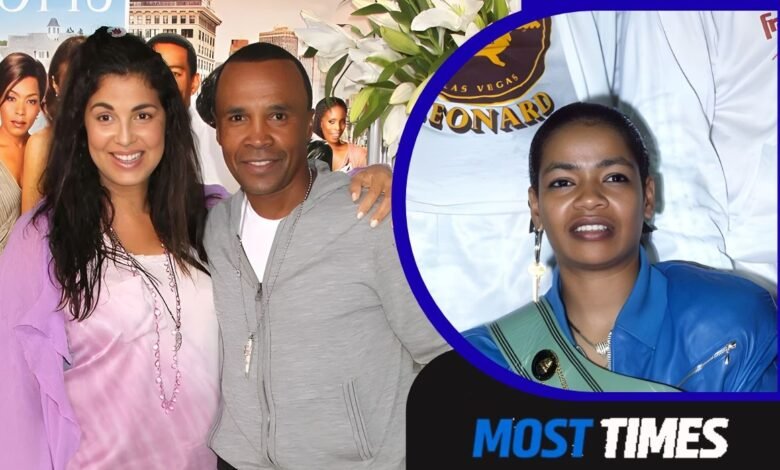
Juanita Wilkinson knew Sugar Ray Leonard before championship belts and television fame changed his life. Their relationship began in Maryland, grew into a family, and eventually ended in a highly public divorce. Yet accounts of Leonard’s career often give her little space beyond the label “first wife.” Her story deserves a closer look: early parenthood, life around a dangerous sport, business interests, and her own statements about moving forward. Contemporary reporting offers a fuller picture, while also showing where the public record ends.
Quick Bio Table
| Detail | Information |
|---|---|
| Name | Juanita Wilkinson |
| Married name in historical coverage | Juanita Leonard |
| Known for | First wife of Sugar Ray Leonard |
| Early community | Palmer Park, Maryland |
| Relationship background | Leonard’s teenage sweetheart |
| First child | Ray Leonard Jr. |
| First child’s birth year | 1973 |
| Second child | Jarrel Leonard |
| Second child’s birth year | 1984 |
| Wedding date | January 19, 1980 |
| Wedding location | Landover, Maryland |
| Length of marriage | Nearly 11 years |
| Divorce finalized | December 1990 |
| Parenting arrangement after divorce | Joint custody |
| Documented business activity | Clothing boutique ownership |
| Later marriage | Otis Nixon, reported in 1993 |
Juanita Wilkinson Before Sugar Ray Leonard’s Fame
Their romance began in Palmer Park during the early 1970s, before Leonard became a household name. That starting point matters in two ways. First, this was a relationship formed around school years and shared surroundings, rather than a meeting arranged through celebrity circles. Second, their later marriage followed years of personal history. Reading their story only through Leonard’s championship record misses that foundation. Juanita belonged to the part of his life that existed before managers, major purses, and national attention became defining features of his public identity.
Becoming Parents While Still Young
Their first son, Ray Leonard Jr., was born in 1973, years before the wedding. Parenthood and marriage therefore followed separate timelines, a distinction that helps explain the family’s early history. Juanita was already a mother during Leonard’s amateur career, while he was still working toward the sporting opportunities that would change their circumstances. Their story combines two experiences that are often presented separately: raising a child at a young age and watching a partner pursue an uncertain career. Later financial success should not erase the responsibilities that came first.
The Olympic Breakthrough and Its Family Context
Leonard won Olympic gold in Montreal in 1976 and turned professional in February 1977. Those milestones placed the family alongside a rapidly changing career, but an Olympic medal did not immediately produce guaranteed financial security. In a later interview, Leonard discussed both disappointing endorsement prospects and family financial pressures when explaining his move into professional boxing. The distinction is useful: sporting recognition and dependable income were separate challenges. Juanita’s place in the story began before either was settled, which makes her more than a supporting figure who appeared after success arrived.
Why the Early Paternity Coverage Needs Context
A paternity proceeding became part of the publicity surrounding the young boxer. Historical reporting explained that it was a welfare department formality and that Leonard had not denied fatherhood. Two points deserve emphasis here: a legal filing can serve an administrative purpose, and headlines can make that purpose difficult to recognize. Describing the episode simply as a dramatic dispute over a child leaves out essential context. For readers researching Juanita Wilkinson, this is an example of why the original reporting matters more than a shortened version repeated across celebrity profiles.
Juanita Wilkinson and Sugar Ray Leonard’s Wedding
Juanita and Leonard married on January 19, 1980, in Maryland, when both were 23. Their wedding brought together a longstanding relationship and a newly prominent sporting career. By then, Leonard had already won a world welterweight title, so the ceremony took place after his professional breakthrough. The chronology corrects two possible misunderstandings: they were parents before becoming spouses, and they were married after he became a champion. Their marriage formalized an existing family relationship during a period when public interest in Leonard was growing quickly.
Family Life During a Boxing Career
The couple later welcomed a second son, Jarrel, in 1984. Their household now included children at different stages of childhood, while Leonard’s career continued through changes in training, competition, and retirement plans. Family photographs also preserve a quieter perspective, including portraits of Juanita, Leonard, and Ray Jr. at their Maryland home in 1981. These images document family moments beyond the arena. They do not establish how happy the marriage was, but they widen the historical picture beyond fight results, celebrity appearances, and the eventual divorce coverage.
Health Concerns Behind the Comebacks
Leonard’s decisions about returning to boxing also affected his family. Contemporary newspaper coverage of his 1984 comeback described a private discussion with Juanita and Ray Jr. before he announced another retirement. This episode adds two dimensions to the familiar comeback narrative: the physical uncertainty surrounding a fighter’s future and the involvement of relatives who would live with the consequences. Fans could judge the performance from outside the ropes. His family had a more personal stake in what happened afterward. Supporting a boxer’s ambitions and worrying about his health could exist at the same time.
Juanita Wilkinson’s Business Interests
Juanita owned a clothing boutique near Tysons Corner, according to contemporary newspaper reporting. That detail gives her biography an identity beyond marriage and motherhood. It also illustrates the limits of the available evidence: historical ownership supports describing a business interest, but it does not establish current employment, lasting commercial success, or a present income. Many celebrity biographies turn a single business reference into a sweeping career description. A more accurate account keeps the useful fact and leaves the unsupported additions aside. Her work deserves recognition without an invented résumé attached to it.
Separation and the End of the Marriage
The relationship eventually moved toward divorce, and contemporary reporting states that Leonard filed in March 1990. The financial negotiations involved support payments and a prenuptial agreement, showing that the legal process addressed both immediate family needs and earlier arrangements. These issues should be distinguished from the emotional reasons the relationship ended. A court dispute can document what people requested or negotiated; it cannot fully describe years of private experience. For Juanita and Leonard, the public record captures a difficult transition from a shared household to separate lives while they remained parents to the same children.
What the Reporting Said About Abuse
The marriage’s breakdown included serious allegations of physical abuse. In 1991, reporting on divorce testimony said Leonard had acknowledged physical abuse and substance use; he subsequently publicly acknowledged cocaine use. These details deserve plain language rather than treatment as celebrity gossip. They also require clear attribution: the account comes from reporting about testimony and later statements, not independent access to the complete court record. Substance use provides part of the reported background, but it does not excuse harm. An accurate biography can acknowledge Leonard’s boxing achievements while taking the reported treatment of Juanita seriously.
The Divorce Settlement and Their Children
The divorce was finalized in December 1990, and the couple retained joint custody of their sons. The financial terms remained confidential, which separates a confirmed legal outcome from the estimates circulating in later profiles. Joint custody also meant that the marriage’s end did not end their shared parental responsibilities. Juanita’s statement at the time described an intention to continue raising the children together and supporting each other’s business endeavors. That was her stated position at the conclusion of the case; it should not be stretched into a claim about every year that followed.
Her Own Plans After Divorce
Juanita also announced plans for a book intended to help women establish lives beyond their spouses’ influence. News coverage discussed the proposal in December 1990 and again the following spring. This is a revealing part of her story because it records an ambition in her own terms. It suggests the subject she wanted to address, rather than simply what journalists wanted to ask about Leonard. However, announcing a project and publishing it are different events. The reporting reviewed here supports the planned book, but it does not establish that a finished volume reached publication.
Later Marriage and the Limits of Current Information
Contemporary reporting in February 1993 said Juanita had married Atlanta Braves player Otis Nixon the previous December. Her story therefore continued beyond her first marriage, even though Leonard remains the connection through which many readers encounter her name. Current details require more caution. The sources reviewed for this article do not establish her present occupation, relationship status, or net worth. That gap does not justify inventing a quiet retirement, a new career, or a specific lifestyle. A biography can trace documented events and still acknowledge that much of a person’s later life is outside its scope.
Final Thoughts
Juanita Wilkinson’s story brings family history into a boxing career usually told through victories and rivalries. She knew Leonard before his professional success, raised two sons with him, pursued business interests, and spoke about building an independent future after divorce. The “untold” part is best understood as overlooked history rather than a promise of hidden revelations. Her life deserves careful attention on its own terms, with the same respect for evidence and personal complexity that readers should expect from any account of Sugar Ray Leonard.
Frequently Asked Questions (FAQs)
1. Who is Juanita Wilkinson?
Juanita Wilkinson is Sugar Ray Leonard’s first wife and the mother of their two sons. Their relationship began before his professional boxing fame.
2. When did Juanita Wilkinson marry Sugar Ray Leonard?
They married on January 19, 1980, in Maryland. Contemporary coverage identified both of them as 23 at the time of their wedding.
3. How many children did they have together?
They had two sons, Ray Leonard Jr. and Jarrel Leonard. Their children were born in 1973 and 1984, respectively.
4. When did Juanita Wilkinson and Sugar Ray Leonard divorce?
Their divorce was finalized in December 1990, after nearly 11 years of marriage. Contemporary reporting stated that they retained joint custody of their sons.
5. What did Juanita Wilkinson do for work?
Historical reporting documents her ownership of a clothing boutique near Tysons Corner. The available reporting does not establish her current occupation or whether she remains involved in retail.
6. Did Juanita Wilkinson marry Otis Nixon?
Yes, contemporary reporting identifies former baseball player Otis Nixon as a later husband. Coverage published in February 1993 stated that they had married the previous December.
7. What is Juanita Wilkinson’s net worth?
Her current net worth is not verified by the sources reviewed here. The Leonard divorce settlement was confidential, so it cannot support a reliable personal wealth calculation.
8. Where is Juanita Wilkinson now?
The reporting reviewed does not establish her current whereabouts or daily activities. Older coverage can explain her history, but it should not be presented as a current personal update.
Recommended: Karen McCollum Biography: Her Connection to Scottie Pippen





One Comment