

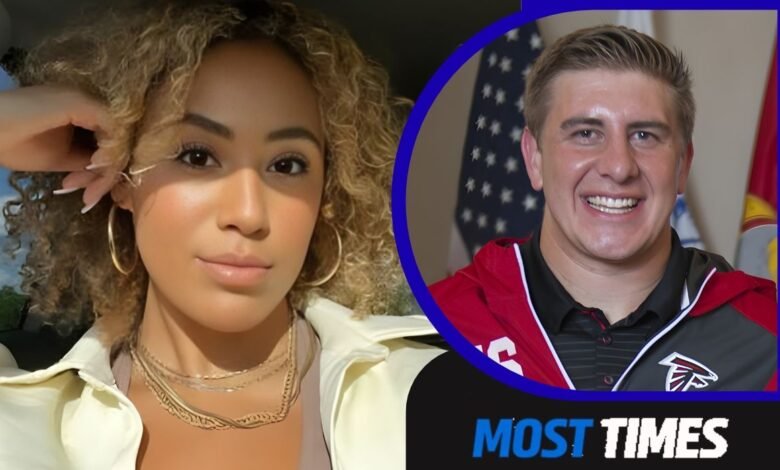
Tori Baldwin and Daniel Brunskill built their sports careers in different settings, but their paths share a clear theme: becoming someone a team could count on. Baldwin made her mark in Division I volleyball at Virginia Commonwealth University, while Brunskill worked through college football, practice squads, and an alternative league to establish an NFL career. Their stories become more interesting when viewed beyond headlines about their personal connection. One developed into a record-setting middle blocker; the other turned positional flexibility into professional opportunity. Looking at their backgrounds, turning points, and results shows how each earned a place in competitive team sports.
Quick Bio Table
| Detail | Information |
|---|---|
| Featured athletes | Tori Baldwin and Daniel Brunskill |
| Baldwin’s sport | Volleyball |
| Baldwin’s hometown | Liberty, North Carolina |
| Baldwin’s high school | Providence Grove |
| Baldwin’s college | Virginia Commonwealth University |
| Baldwin’s college seasons | 2015–2018 |
| Baldwin’s position | Middle blocker |
| Baldwin’s listed height | 6 feet 3 inches |
| College conference | Atlantic 10 |
| Baldwin’s career blocks | 519 at VCU |
| Major volleyball honor | First Team All-Atlantic 10, 2017 and 2018 |
| Brunskill’s sport | American football |
| Brunskill’s college | San Diego State University |
| Brunskill’s college positions | Tight end and offensive tackle |
| Brunskill’s NFL entry | Undrafted free agent, Atlanta Falcons, 2017 |
| Brunskill’s alternative-league team | San Diego Fleet, 2019 |
| Brunskill’s NFL breakthrough | San Francisco 49ers, beginning in 2019 |
Tori Baldwin’s Volleyball Foundation
Baldwin’s development began before college, with school competition and later club volleyball providing different kinds of experience. In a college-era interview, she explained that she started volleyball during her freshman year of high school and entered club competition as a junior. That timeline matters because it shows how much development followed her first exposure to the game. School volleyball gave her regular competition, while club coaching helped her understand the sport at a higher level. Her account credits coaches with expanding her skills, offering a more useful picture of athletic growth than the idea that height alone made college success inevitable.
Learning to Compete at the Division I Level
Moving to VCU meant learning how to perform against stronger, more experienced opponents. Baldwin described the transition as difficult and credited the college coaching staff with helping her improve. Two demands stand out: adjusting individual technique and becoming dependable within a faster team system. A middle blocker must move quickly along the net, identify attacking options, and coordinate with nearby defenders. Physical reach helps, but being late or poorly positioned can undo that advantage. Her experience illustrates why a promising high school player still needs substantial development after earning a college roster spot.
Why the Middle Blocker Role Suited Her
The middle blocker position combines visible defensive stops with less obvious offensive work. On defense, a player must read the setter and close blocking gaps; on offense, she must present a credible attacking option even when the ball goes elsewhere. Baldwin described consistency as central to her approach and explained that drawing an opposing blocker’s attention was part of her job. That detail helps readers understand her contribution beyond scoring totals. A well-timed approach can create space for a teammate, just as a coordinated block can help defenders anticipate where an attack will travel.
Confidence and Leadership on the Court
Baldwin’s college interview also offered a candid account of the mental side of competition. She identified confidence after mistakes as an area she had worked to improve, while describing energy and leadership as strengths. Those points belong together: leadership does not require an athlete to feel certain on every play, but it does require a useful response when things go wrong. Her emphasis on keeping teammates composed shows how emotional steadiness can support a team’s execution. It also gives her story a human dimension, with growth involving reactions and communication as well as technical skill.
VCU’s Breakthrough 2017 Season
The 2017 season placed Baldwin’s development within a major team achievement. VCU finished 30–3, won its first Atlantic 10 championship, and returned to the NCAA Tournament for the first time since 2005. Two details show the scale of that run: the Rams won 27 consecutive matches before the tournament loss, and their season ended against Pittsburgh in the opening round. Baldwin contributed five kills and three blocks in that final match. The broader lesson is that a strong individual career can develop alongside a program’s rise, with team success bringing both greater pressure and a larger competitive stage.
A Record That Reflected Sustained Contribution
Baldwin reached a significant individual milestone on September 11, 2018, when she became VCU’s career blocks leader during a match against Virginia Tech. The circumstances add useful perspective: she reached the record in a team defeat, showing that personal achievement and the match result do not always align. By the end of her college career, her total stood at 519 blocks. She also earned first-team conference recognition in her final two seasons. Those achievements establish a substantial college volleyball record, although they should not be presented as evidence of a later professional playing career without further documentation.
Daniel Brunskill’s College Football Starting Point
Brunskill’s path began with a different challenge: finding a role at San Diego State after joining the program as a walk-on. He initially played tight end before returning to the offensive line, a position he had played in high school. That background helps explain two parts of his later development. Tight end experience exposed him to blocking assignments within the offense, while the position change required him to build skills suited to full-time line play. His route shows how a college career can take shape through reassessment rather than a fixed plan established before the first season.
Switching Positions Created a New Opportunity
Before his senior season, Brunskill moved to offensive tackle and started all 14 games at right tackle in 2016. He earned second-team All-Mountain West recognition, giving the change a measurable result. The move mattered in two ways: it opened a regular starting role and gave professional evaluators game film of him at an offensive line position. A successful switch still requires more than general athletic ability. Tackles must manage footwork, hand placement, and protection responsibilities against varied defensive approaches. His senior season provided evidence that he could handle that assignment over a full schedule.
Atlanta and the Practice Squad Years
Brunskill entered the NFL with the Atlanta Falcons as an undrafted free agent in 2017 and spent that season and the next on their practice squad. Those years are an essential part of his story, even though they did not produce regular-season appearances. Practice squad work offers continued exposure to professional coaching and competition, but it does not guarantee a future starting job. For a developing lineman, the task is both immediate and long term: prepare well enough to help the team practice while improving enough to compete for a larger role. His breakthrough came after that extended period outside the spotlight.
The San Diego Fleet Offered Game Experience
In 2019, Brunskill joined the San Diego Fleet in the Alliance of American Football and started eight games at tackle. The league’s short life did not erase the value of those competitive snaps. Unlike practice work, games created fresh evidence of his performance against opponents trying to win under live conditions. They also placed him in another coaching environment, with former NFL head coach Mike Martz leading the Fleet. San Francisco signed Brunskill that April. The sequence shows how an opportunity outside the NFL can become a practical bridge back to it, without making such a route predictable or easy.
Establishing Himself With the San Francisco 49ers
Brunskill’s 49ers career turned professional opportunity into regular playing time. He appeared in 14 regular-season games with seven starts in 2019, then started every regular-season game in both 2020 and 2021. Two measures help explain the progress: moving from a practice squad background to game-day responsibility, and sustaining a starting role across consecutive seasons. His ability to work at different offensive line positions added value because teams must respond to injuries and lineup changes. That flexibility is a practical skill, requiring familiarity with different assignments rather than simply the willingness to stand in another spot.
Taking His Experience to Other NFL Teams
Tennessee signed Brunskill in 2023 after his four seasons with San Francisco. He made 14 starts that year and another 10 in 2024, extending his record beyond the organization where he first broke through. Miami then signed him in July 2025, and he appeared in 16 games with five starts that season. These moves highlight two realities of professional football: experience can create opportunities with new teams, while playing roles can change from season to season. Evaluating his career therefore means looking at both longevity and responsibility, rather than assuming that every contract brings the same place in a lineup.
Final Thoughts
Tori Baldwin and Daniel Brunskill built sports careers through different combinations of development, specialization, and adaptability. Baldwin’s college record shows the value of a defined role performed consistently, while Brunskill’s route shows how changing positions and accepting less visible opportunities can keep a career moving. Their achievements also deserve separate attention: an accomplished Division I volleyball career and an established NFL career operate on different scales and timelines. For readers interested in how athletes progress, the most useful takeaway is concrete. Coaching, competitive experience, and dependable execution mattered at each stage, long before either story could be summarized by a headline.
Frequently Asked Questions (FAQs)
1. Who is Tori Baldwin?
Tori Baldwin is a former VCU volleyball player who competed as a middle blocker. She finished her college career in 2018 with 519 blocks and earned First Team All-Atlantic 10 honors in her junior and senior seasons.
2. Where did Tori Baldwin play college volleyball?
She played at Virginia Commonwealth University in Richmond, Virginia, from 2015 through 2018. Her college career included VCU’s 2017 Atlantic 10 championship season and an NCAA Tournament appearance.
3. What position did Tori Baldwin play?
Baldwin played middle blocker, a position involving blocking, quick attacks, and coordination along the net. The role also includes drawing defensive attention to create attacking opportunities for teammates.
4. What was Tori Baldwin’s biggest college record?
She finished her VCU career as the program’s career leader in total blocks, with 519. That describes her standing when she finished playing, rather than claiming that the record remains unbeaten today.
5. Where did Daniel Brunskill play college football?
Brunskill played at San Diego State University, beginning as a walk-on tight end. He moved to offensive tackle before his senior season and earned second-team All-Mountain West honors in 2016.
6. Was Daniel Brunskill selected in the NFL Draft?
No, Brunskill entered the NFL as an undrafted free agent with Atlanta in 2017. After practice squad seasons and time with the San Diego Fleet, he established himself with San Francisco.
7. Why is Daniel Brunskill considered versatile?
He has experience at guard, tackle, and center, giving teams options across the offensive line. Those positions involve different responsibilities, so versatility reflects preparation and positional knowledge as well as physical ability.
8. Did Tori Baldwin and Daniel Brunskill play the same sport?
No, Baldwin competed in college volleyball, while Brunskill built a professional career in American football. Both worked in team roles that depend on timing, communication, and coordinated movement.
Recommended: Shelley Covel Rowland: Meet Toby Keith’s Eldest Daughter



One Comment