

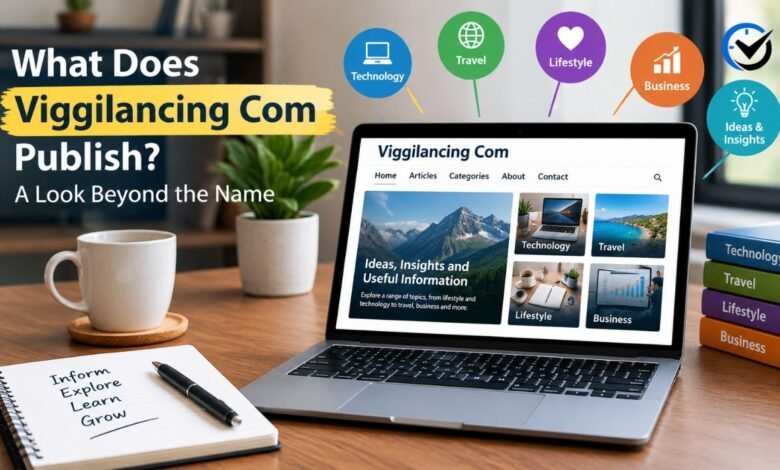
Viggilancing Com is best understood as a general interest content website. Its publicly indexed introduction names technology, business, finance, health, and education among its subjects. That gives readers a more useful starting point than trying to guess its purpose from an unusual name. The important distinction is between what the website says it covers and what individual articles actually deliver. This guide explains that distinction, addresses conflicting descriptions, and shows how to judge the material you encounter. It does not assume that a broad topic list proves specialist knowledge or that every description published elsewhere accurately represents the website.
What the Website Publicly Describes
The clearest available description presents the site as a place to explore written content across several fields. This supports calling it a broad online publication, although it does not establish the size of its article archive, publishing schedule, or editorial team. Direct inspection of the full website was not possible during preparation of this overview, so its indexed introduction should be treated as a description of its stated scope. Claims about specific tools, account features, article quality, or current navigation need separate confirmation. A useful overview should make these limits clear instead of filling missing details with confident guesses.
What Its Topic List Reveals
A topic list tells readers where a publication intends to focus, but it cannot show how thoroughly each subject is covered. Technology and business can overlap in articles about workplace software, while education and technology can meet in discussions of digital learning. Those connections help explain the appeal of a general interest format. Someone can explore related ideas without moving between several specialist publications. For instance, a guide to digital learning should distinguish the learning method from the software used to deliver it. However, a category name alone does not reveal whether its articles offer original reporting, introductory explanations, personal opinions, or product promotion. Readers need to open the actual pages before deciding what kind of coverage is available.
What Makes Technology and Business Coverage Useful
For technology material, practical detail matters more than fashionable language. An explanation should identify the product or system involved, the problem it addresses, and any conditions that affect its use. A clear review also names the version being discussed and explains whether observations come from actual use or supplied product information. Business writing benefits from the same precision: advice for a small shop may not apply to a large international company. These are standards for evaluating articles, rather than descriptions of particular posts on this website. A helpful piece should leave readers with a clearer understanding of a process, decision, or tradeoff. Broad promises about innovation or success add little unless the article explains how its reasoning works in practice.
Putting Finance, Health, and Education Topics in Context
The other named subjects require attention to context. A finance article may explain a concept clearly while leaving out local fees, eligibility rules, or currency differences. Health writing needs to distinguish general explanations from evidence about a specific treatment or outcome. Education content may describe a qualification that has different recognition across countries. These distinctions matter to a worldwide audience because a readable article can still have a narrow application. Before acting on consequential information, identify the country, circumstances, and evidence behind it. The useful question is whether the explanation fits your situation, rather than whether the topic sounds familiar.
Why the Name Creates Confusion
Some outside descriptions associate Viggilancing Com with digital monitoring or oversight, while others describe an article website. These accounts should not be combined into a single description without evidence. A name that sounds connected to vigilance does not establish that its owner provides tracking software, automated alerts, or security analysis. Demonstrating those functions would require clear product information and observable features. Until that evidence is available, the site’s stated publishing focus offers the sounder basis for an introduction. Readers can understand the naming confusion without accepting every proposed meaning as a genuine service offered by the same organization.
Similar Names Do Not Establish Shared Ownership
Another source of uncertainty is the appearance of similarly named websites. A matching title, familiar logo, or slightly different web address does not establish that two pages share an owner. One may be discussing another publication, using a similar brand, or operating independently. Comparing the spelling, publisher information, and contact details helps clarify which site an article describes. This matters when an outside review attributes a feature to the wrong destination. A claim about one website should stay attached to that website unless a clear connection is demonstrated. Similarity is a reason to check identity, not evidence of affiliation.
What Can Be Said About Authors and Editorial Standards
The available homepage description does not establish who writes the articles or how their work is reviewed. Words suggesting expertise or reliability express an ambition; they do not demonstrate an editorial process. Useful evidence would include identifiable authors, relevant experience, clear distinctions between reporting and opinion, and an accessible way to request corrections. An accessible corrections process matters because even careful publications make mistakes; accountability depends on how those mistakes are handled. An author can explain a subject well without holding a formal title, but readers should be able to understand the basis of that person’s knowledge. Where such details are missing, assess the argument and supporting evidence directly instead of assuming a professional review has taken place.
Why Publication Dates and Updates Matter
An article’s usefulness can change after publication, especially when it discusses software, prices, services, or admission requirements. A visible date helps place the information in time, but an updated label is meaningful only when the substance has been checked. Look for signs that examples, screenshots, and instructions match the situation being discussed. If a page changes its recommendation, a brief explanation of what changed helps returning readers understand the revision. Older writing may remain valuable for explaining a stable concept, while a recent post may still contain outdated details. The strongest indication of currency is consistency between the article’s claims and the material it describes. A date provides context; it cannot establish accuracy by itself.
Distinguishing Explanation From Commercial Content
A general content website may contain independent articles, contributor submissions, advertising, or a mixture of formats. The evidence available for this overview does not establish which commercial arrangements apply here. Readers can still examine individual pages for clear sponsorship labels, explanations of financial relationships, and balanced treatment of products. A promotional article can contain useful facts, but its purpose affects how recommendations should be interpreted. Conversely, mentioning a brand does not automatically make a piece an advertisement. The important issue is whether readers receive enough information to recognize a commercial interest and assess the recommendation on its merits.
How to Decide Whether an Article Meets Your Needs
Begin with the question you want answered, then check whether the article addresses it directly. An introductory guide should define its subject and explain the essential steps or distinctions. A comparison should use consistent criteria, while an opinion piece should make its reasoning clear. For example, an article comparing two services is more useful when it explains who each service suits than when it simply declares a winner. If the headline asks a narrow question but the text never reaches a direct answer, further reading elsewhere is likely to be more productive. This approach keeps browsing purposeful. It also allows readers to appreciate a clear explanation without treating every statement from the same publication as equally useful, current, or well supported.
Final Thoughts
Viggilancing Com presents itself as a broad content website, and that stated purpose is a firmer starting point than the more elaborate identities suggested elsewhere. Its named subjects give readers an outline of its intended coverage, while questions about its authors, ownership, commercial arrangements, and specific services remain separate matters. The most productive approach is to judge individual articles by what they explain, how they support their claims, and whether their context matches your needs. That keeps expectations realistic and makes it easier to recognize useful information without giving unsupported descriptions more weight than they deserve.
Frequently Asked Questions (FAQs)
1. What is Viggilancing Com?
It appears to be a general interest publishing website, based on its publicly indexed introduction. The available description centers on reading content across multiple subjects. That is the best supported starting point, although it does not confirm the full range of material currently available or how the publication is managed.
2. What subjects does the website say it covers?
Its indexed introduction names technology, business, finance, health, and education. These are broad areas rather than a complete inventory of published articles. The presence of a subject in that description should not be taken as proof that the site maintains a large, regularly updated section devoted to it.
3. Is it a dedicated news organization?
The available information is insufficient to establish a dedicated news operation. Publishing articles does not necessarily involve original news reporting, a newsroom, or a regular reporting schedule. To judge that distinction, examine whether posts document recent events through identifiable reporting or mainly explain existing topics for a general audience.
4. Does it provide monitoring or security software?
No verified product evidence gathered for this overview establishes that it does. Some outside descriptions connect the name with monitoring, but a claimed association is different from a demonstrated service. A genuine software offering should provide a clear description of its functions, supported products, access method, and responsible operator.
5. Is it a platform for finding freelance work?
The available publishing description does not establish a freelance marketplace. Readers should not infer job listings, client matching, payments, or professional profiles from the name alone. A working employment platform would need to explain those functions directly. Articles about careers or business, if present, would serve a different purpose from arranging paid work.
6. Who owns or operates the publication?
Ownership was not independently verified during preparation of this article. It would therefore be misleading to supply a founder, company name, location, or launch story without stronger evidence. Publisher disclosures and contact information can help establish responsibility, but repeated claims in unrelated profiles should not automatically be treated as confirmation.
7. Are the similarly named websites part of one network?
Shared ownership has not been established here. Similar names can appear on independent websites, commentary pages, or publications discussing the same subject. To assess a connection, look for an explicit statement from the organizations involved and consistent publisher details. Matching visual elements alone are not enough to settle the question.
8. Does the website publish sponsored or guest articles?
This overview does not confirm its contribution or sponsorship arrangements. An outside advertisement offering placement would not, by itself, prove the publication’s current policy. Anyone considering a submission should seek clear terms from the publisher, including how contributions are reviewed, labeled, corrected, and distinguished from independently produced editorial material.
9. Is there an official mobile app?
An official app was not verified for this overview. Being able to open a website on a phone is different from having a dedicated application. If you encounter an app using the same name, check the developer’s identity and whether the publisher explicitly recognizes it before assuming that the two are connected.
10. Can readers worldwide use its information?
Readers can approach its general explanations with an international perspective, but the application of individual articles may vary. Check local context when a post discusses qualifications, services, regulations, or costs. A broad explanation may travel well across borders, while practical instructions can depend on conditions that the writer takes for granted.
Recommended: What Does Queekmag Com Publish? Exploring Its Editorial Mix

One Comment