

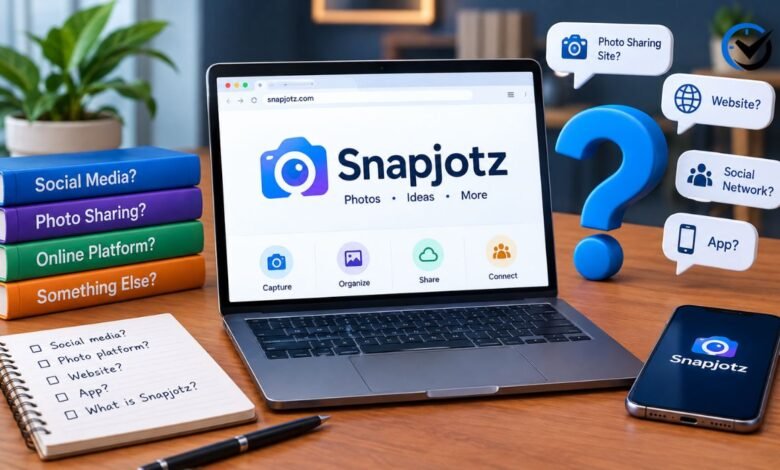
Snapjotz com is best understood, from its available indexed pages, as a website that publishes informational articles across different subjects. The confusion begins when other pages describe the same name as a digital notebook, creative workspace, or meeting assistant. Those descriptions should not be combined into one product profile. Published articles provide evidence of publishing activity, while software features need separate confirmation. This guide explains what the available material supports, why similar names can mislead readers, and how to judge the website without accepting unsupported claims. Its focus is practical understanding rather than promises about services that could not be verified.
What the Available Pages Actually Show
Indexed pages associated with the website include an accounting software comparison, an explanation of credit reports, and an article about functional capacity assessments. These examples point to a publication covering business, personal finance, and health-related subjects. They establish that articles have been indexed under the domain; they do not establish the accuracy of every article or the full range of current content. The main homepage could not be retrieved during this review, so its present layout and complete feature set remain unconfirmed. A description based on indexed material should therefore be read as a limited assessment, not a complete inspection.
Why the Name Creates Mixed Expectations
The name can suggest quick notes because “jot” commonly refers to writing something down. That association may shape a visitor’s expectations before a page even loads. However, an appealing name does not explain what a website actually offers. A publisher can use language associated with creativity without supplying a notebook application. Equally, an article about productivity does not make the website hosting it a productivity service. This helps explain how misunderstandings could develop, but the original cause of the conflicting descriptions has not been established. Naming, content, and working features need to be assessed separately.
Similar Names Can Belong to Different Websites
A separate website using the Snapjotz name presents itself as an AI meeting-notes service. Its homepage advertises transcription, summaries, and action items. That is evidence of what this other website claims, not proof that the article-publishing website offers those functions. A hyphen, an added word, or a different domain ending can lead to an entirely different destination. Similar branding alone does not establish shared ownership or a business relationship. Readers should compare the exact address, operator details, and service information before treating two pages as parts of the same organization. Without that connection, their descriptions should remain separate.
A Publication and an Application Serve Different Needs
An online publication primarily offers material to read. A note-taking application lets people create, edit, organize, and retrieve their own information. Some websites combine both functions, so finding a blog does not rule out a separate product. The useful test is whether the claimed activity can actually be performed or clearly documented. For a notebook service, that might mean a working editor and instructions explaining storage and access. For meeting software, it might mean a documented recording process. A service should also explain how users can export their material and what happens if they stop using it. A general statement about helping people capture ideas is not enough to confirm either capability.
What the Published Topics Mean for Readers
The available article examples address different kinds of everyday questions. An accounting comparison could introduce options to a business owner, while a credit-report explainer could help a reader understand unfamiliar terminology. A health-related article serves another audience again. This range may be useful for casual discovery, but it does not demonstrate specialist expertise across every subject. Each article needs to earn trust through its own explanation, evidence, and attention to context. Readers should also check whether examples apply to their country. Financial systems, workplace arrangements, and professional practices can differ substantially between locations. An article can explain a concept well while omitting local conditions that determine whether its advice applies to an individual reader.
How to Judge an Individual Article
Start with the question an article promises to answer, then check whether the text actually answers it. Useful writing explains relevant conditions, gives concrete examples, and distinguishes facts from opinions. Look for an identifiable author, appropriate subject knowledge, a meaningful publication date, and a clear basis for important claims. A polished design or confident tone cannot replace those details. Consider what the article leaves out as well. An accounting comparison that ignores business size, local availability, or changing product terms may offer an incomplete picture even when its general explanation sounds reasonable.
What Software Claims Need to Be Credible
Claims about cloud storage, team collaboration, or automated transcription should be supported by information tied to the exact service being described. Product documentation, a usable interface, and clear terms provide stronger evidence than repeated feature lists on unrelated pages. Numerical claims deserve particular care. A transcription accuracy figure means little without the testing conditions, languages, audio quality, and measurement method. Without a defined test set, a percentage cannot predict how a system will handle someone’s own recordings. Customer quotes may describe experiences, but they do not independently validate performance. Until supporting evidence is available, readers should treat advertised capabilities as claims rather than confirmed features of the publication discussed here.
Ownership and Editorial Transparency Matter
Clear operator information helps readers understand who takes responsibility for a website. An About page can describe its purpose, while contact details and editorial policies can show how questions or corrections are handled. These pages are useful signals, although their presence alone does not prove reliability. This review did not establish a verified owner, founding date, or complete editorial process for the main website. Those gaps should remain gaps instead of being filled with details from similarly named sites. A missing detail also does not, by itself, establish misconduct or explain why the information is unavailable.
Access Problems Require Careful Interpretation
The failed homepage retrieval limits what can be said about the website’s current appearance and functions. It does not establish that the site is unavailable to every visitor. Access restrictions, temporary server problems, and automated-request blocking can produce different experiences, but no specific cause was confirmed here. Indexed pages may also reflect an earlier version of a website. For that reason, this article does not claim to have tested its navigation, account system, downloads, or payment process. If the site changes, any description of its services should be checked against the newly available pages.
Deciding Whether the Website Fits Your Purpose
The practical decision depends on what brought you there. If you want an accessible explanation of a topic, assess the relevant article and use it as a starting point where appropriate. If you want software for private notes or meeting recordings, require direct evidence of those functions before making plans around them. If you want to contact the publisher, use information belonging to the exact website rather than another business with a similar name. This approach keeps the decision connected to your actual task and avoids treating a recognizable label as a guarantee of usefulness.
Final Thoughts
Snapjotz com has an identifiable publishing footprint, while claims about note-taking and meeting software require separate verification. The available evidence supports a measured description of an article website, with limits around its current homepage, ownership, and additional services. Readers can resolve much of the confusion by checking the exact destination, evaluating individual articles, and asking for direct support when a feature is advertised. That approach provides a useful basis for deciding whether the site meets a particular need while leaving unanswered questions open until better information becomes available.
Frequently Asked Questions (FAQs)
1. Is Snapjotz com a blog or a software service?
The available indexed article pages support describing it as a general-interest publishing website. They do not confirm a working notebook or meeting assistant. Because the homepage could not be retrieved during this review, a complete assessment of its current services was not possible. The most defensible description stays with the publishing activity that the available material actually demonstrates.
2. Why do some pages call it a digital notebook?
Some outside descriptions attach note-taking and workspace features to the name. The origin of those descriptions has not been verified. Similar branding and assumptions about the word “jot” are possible contributors, but neither explains every case. Repetition across several pages is not sufficient evidence that a particular feature belongs to the exact website being discussed.
3. Are similarly named websites connected to each other?
A connection should not be assumed. Separate web addresses can belong to different operators, even when their branding looks alike. Useful confirmation would include consistent business details and an explicit statement connecting the services. Until that relationship is established, information about ownership, subscriptions, privacy, and product capabilities should be attributed only to the website that actually publishes it.
4. Can visitors save notes or record meetings there?
Those capabilities were not verified for the article-publishing website. A separately addressed site promotes meeting-note functions, but that does not establish functionality here. Before choosing any such service, confirm that its recording or editing tools work and that its terms explain how files are stored, accessed, and deleted. Do not rely on a feature list copied into an unrelated review.
5. Is an account required to read the articles?
A current account requirement could not be confirmed. Indexed article text does not establish whether every visitor can now open every page without signing in. If a page requests registration, check what access the account provides and which website is requesting the information. Distinguish an article subscription from an account intended for storing personal notes or other private material.
6. Are there confirmed subscription prices or paid plans?
This review did not establish verified subscription prices for the main publication. Prices mentioned elsewhere should not be assigned to it without confirmation from the exact website. A fee could relate to another service or a different type of access. Before paying, establish what is included, who receives the payment, and which cancellation terms apply to that specific offer.
7. Is the website safe to use?
The information reviewed does not support a security guarantee or a finding that the website is malicious. Establishing a website’s publishing activity is different from auditing its security. A failed retrieval also cannot settle that question. Evaluate any request to download files, grant permissions, submit personal information, or make a payment according to the action involved and the evidence available.
8. Who owns the website and writes its content?
A verified owner and complete contributor list were not established during this review. Do not borrow names from similarly branded websites to fill those gaps. When available, examine the individual article’s author information alongside the publication’s operator details. An author’s name is a starting point for checking relevant expertise, rather than proof that every subject they cover is reliable.
9. Can students and researchers use the published articles?
They may be useful for discovering a topic or understanding basic vocabulary, depending on the individual article’s quality. For academic work, follow important claims to original studies, official documents, or other suitable primary material. A broad website’s explanation should not substitute for examining the underlying evidence. Check that your final material supports the precise statement you plan to make.
10. What if the homepage differs from an online review?
First confirm that the review discusses the same address and check when it was written. A redesign, service change, or confusion with another website could explain a mismatch, but each possibility needs evidence. Prefer a description supported by current, observable pages. If the discrepancy remains unresolved, leave the disputed feature unconfirmed rather than combining incompatible accounts into one confident explanation.
Recommended: MMSVEE24 Guide: Understanding Conflicting Definitions and Checking Online Claims




One Comment